
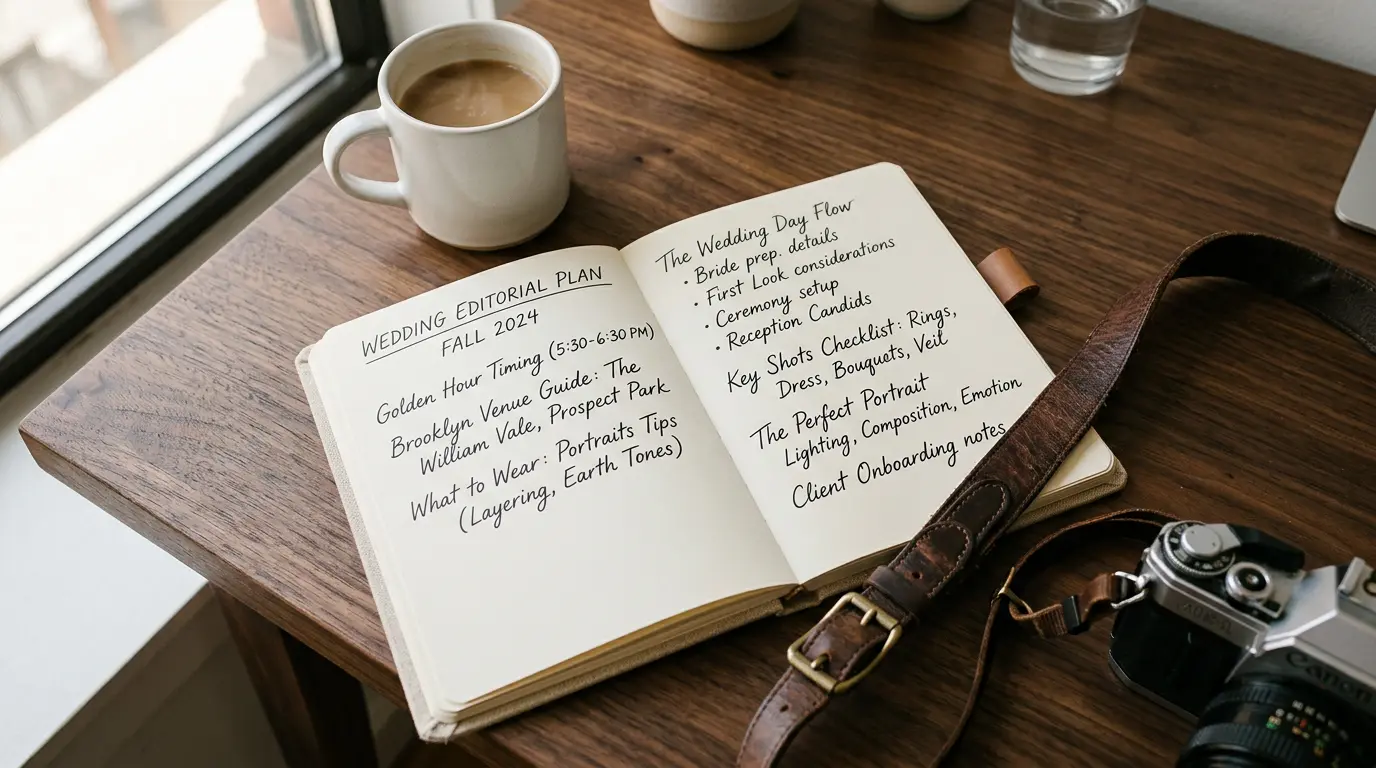
What This Journal Covers
Planning a wedding in Brooklyn involves hundreds of decisions, many of which affect how the day is photographed and remembered. This page is a resource for couples, families, and event planners who want to better understand what goes into visual storytelling on one of the most important days of their lives. The articles and updates shared here cover topics ranging from seasonal light conditions in specific Brooklyn neighborhoods to practical guidance on building a wedding day timeline that accounts for both ceremony logistics and opportunities for compelling imagery. Rather than generic advice, the content draws from years of working across Brooklyn’s diverse venues and streetscapes, offering observations grounded in real experience.
Vera Starling operates as a Wedding photographer based in Brooklyn, and much of what appears here reflects the particular challenges and advantages of working in this borough. Brooklyn is not a single environment — it is a patchwork of architectural eras, waterfront exposures, industrial conversions, tree-lined residential blocks, and cultural institutions, each of which presents different conditions for capturing a wedding. Understanding those conditions before the day arrives makes a measurable difference in the final images and footage. That understanding is what this journal aims to share, one topic at a time.
Seasonal Light and Weather Patterns Across the Borough
Brooklyn’s orientation along the western edge of Long Island means that much of its waterfront faces Manhattan and the setting sun, creating golden-hour conditions that shift dramatically between June and December. In midsummer, the sun sets well north of the Verrazzano-Narrows Bridge, casting long lateral light across venues in Red Hook and Sunset Park, while in winter the angle drops sharply and the golden hour compresses to a narrow window that demands precise scheduling. Couples planning outdoor ceremonies or portrait sessions benefit from understanding these shifts, because a thirty-minute miscalculation can mean the difference between soft directional light and flat overcast shadow. Wind off the harbor is another variable that intensifies between October and March, affecting veil placement, hairstyling durability, and the comfort of bridal parties standing on exposed rooftops or piers.
Spring in Brooklyn brings unpredictable transitional weather — a week of warm sun followed by cold rain — which is worth accounting for in timeline planning. Cherry blossoms in Prospect Park and Brooklyn Botanic Garden draw crowds in April, creating both beautiful backdrops and logistical congestion that affect how quickly a photography team can move between locations. Fall foliage, particularly along Eastern Parkway and Fort Greene Park, offers rich color but fades unevenly depending on tree species, so the window for peak autumn tones may be narrower than couples expect. Each of these seasonal realities has practical implications for how a wedding is photographed, and understanding them in advance helps couples make decisions that serve both the experience and the final visual record.
Brooklyn’s Venue Landscape and What It Means for Your Images
The borough’s venue options span a remarkable range, from restored industrial warehouses in Williamsburg and Bushwick to grand historic spaces like the Brooklyn Museum and Prospect Park Boathouse. Each type of venue presents distinct photographic conditions — a raw concrete loft with tall windows behaves entirely differently from a wood-paneled Victorian reception hall or a waterfront tent. Ceiling height, window orientation, wall reflectivity, and ambient light color all influence how a photographer works and what equipment is necessary. Couples who visit venues during the same time of day as their planned ceremony will have a much clearer sense of what the light actually looks like in that space, rather than relying on marketing images often shot under controlled conditions.
DUMBO remains one of Brooklyn’s most sought-after locations for wedding portraits, with the Manhattan Bridge archway and cobblestone streets providing instantly recognizable backdrops. However, working in DUMBO during peak hours means navigating significant pedestrian and tourist traffic, especially on weekends between May and October. Experienced photographers develop strategies for timing and positioning that minimize crowd interference while still capturing the iconic sightlines. Beyond DUMBO, neighborhoods like Greenpoint, Carroll Gardens, and Bay Ridge each offer distinct visual character — Greenpoint’s mix of Polish storefronts and glass-and-steel new construction, Carroll Gardens’ brownstone-lined streets with deep front gardens, Bay Ridge’s elevated views of the Narrows — and these differences matter when choosing where to spend portrait time on the wedding day.
Understanding Wedding Day Coverage: Photography and Film
Couples often begin their search knowing they want their wedding documented but uncertain about the practical differences between photography, videography, and hybrid approaches. Still photography captures decisive moments — the expression during a first look, the geometry of a ceremony space, the texture of a hand-tied bouquet — with an emphasis on composition and permanence. Wedding videography adds motion, ambient sound, spoken vows, music, and the temporal flow of the day in ways that still images cannot replicate. Many couples find that the two formats complement each other, with photographs serving as the images they display and share while video becomes the record they revisit on anniversaries to hear voices and see movement.
The question of how Wedding Photography and videography teams coordinate on a wedding day is worth understanding before booking either service. Two separate vendors working independently can create conflicts over positioning, especially during ceremonies in compact venues where angles are limited. A single provider handling both disciplines, or two vendors with established working relationships, can coordinate positioning and timing to avoid interference. This is particularly relevant in Brooklyn, where many ceremony spaces — converted lofts, restaurant back rooms, narrow chapel naves — offer limited vantage points, and efficient use of available angles directly affects the quality of both the photography and the film.
Preparing a Timeline That Serves Both the Day and the Documentation
One of the most impactful decisions couples make — often without realizing its significance — is the construction of their wedding day timeline. How much time is allocated between getting ready and the ceremony, whether a first look is included, how long the cocktail hour lasts, and when sunset falls relative to the reception entrance all shape what a photographer and videographer can accomplish. A compressed timeline with no buffer between events produces rushed coverage and missed moments, while a thoughtfully paced schedule creates space for candid interactions, environmental portraits, and the small in-between scenes that often become favorite images.
Travel time between locations within Brooklyn is another timeline factor that couples frequently underestimate. Moving from a getting-ready location in Park Slope to a ceremony venue in Williamsburg on a Saturday afternoon can take forty-five minutes or more, depending on traffic and route. If portrait locations are added as intermediate stops, each additional destination adds transit time, parking logistics, and re-grouping time for the bridal party. Realistic timeline planning accounts for these transitions rather than assuming best-case-scenario travel, and it’s one of the topics this journal returns to frequently because it directly affects both the couple’s stress level and the quality of the resulting images and footage.
Browsing Our Work and Exploring Options
For couples in the early stages of their search, reviewing actual work is more informative than reading about it. The Portfolio provides a visual record of weddings across various Brooklyn neighborhoods, venue types, and seasons, offering a concrete sense of style, approach, and the range of conditions in which Vera Starling works. Couples who want to understand how services are structured — what’s included, how packages are customized, and what the booking process involves — can find that information on the Services & Packages page. These resources are designed to help couples make informed comparisons without pressure, because the right fit between a couple and their photographer matters more than any sales pitch.
When questions arise that aren’t answered by browsing, the Contact page provides a straightforward way to begin a conversation. Initial consultations are an opportunity to discuss the specific details of a wedding — venue, timeline, guest count, priorities — and to determine whether the working relationship feels right for both sides. No two Brooklyn weddings are identical, and the planning process benefits from direct dialogue about the particular logistics, aesthetic preferences, and practical constraints that shape each event.
Find Vera Starling
Vera Starling
2483 E 22nd St, Brooklyn, NY 11235
+1917-386-8509
https://video-nyc.com/
Frequently Asked Questions
What topics does this journal typically cover?
Articles here focus on practical aspects of wedding photography and videography in Brooklyn, including seasonal light conditions, venue-specific logistics, timeline planning, and preparation guidance. Some posts address broader topics like how to evaluate a photographer’s style or what to expect during different phases of the wedding day. The content draws from real experience working across the borough and is intended to be useful whether or not a couple ultimately books with Vera Starling. New posts are added periodically as seasonal topics become relevant or as recurring client questions suggest subjects worth exploring in depth.
How often is new content published?
New articles are published on a rolling basis rather than a fixed weekly schedule. Publication tends to follow seasonal rhythms — pieces about spring and summer wedding planning typically appear in late winter, while fall and winter venue lighting topics are addressed earlier in the year. This approach ensures that content is timely and relevant rather than produced on a quota that might dilute quality. Couples can check back periodically or reach out directly with specific questions that may be addressed in future posts.
Are the insights here specific to Brooklyn weddings?
The majority of content is rooted in Brooklyn’s specific geography, venue landscape, and logistical realities. While some principles of wedding photography apply broadly, the value of this journal is in its local specificity — discussions of how light behaves in a particular neighborhood, what traffic patterns mean for timeline planning on a Saturday in Williamsburg, or which parks offer the best foliage in which weeks of October. Couples planning weddings elsewhere may find some general value, but the primary audience is people whose events will take place in Brooklyn or the surrounding areas.
Can I suggest a topic for a future article?
Yes. Couples and event planners who have questions about specific aspects of Brooklyn wedding photography are welcome to reach out through the contact page. If a question comes up repeatedly or touches on a subject that would benefit from detailed treatment, it may become the basis for a future post. This feedback loop helps ensure the journal addresses real concerns rather than hypothetical ones.
Do articles include pricing or package information?
Articles here do not quote specific prices or promote particular packages. The journal is an informational resource, not a sales channel. When topics touch on factors that affect pricing — such as venue complexity, travel logistics, or coverage duration — they are discussed in terms of what couples should consider and why those factors matter, not in terms of dollar amounts. For specific pricing and package details, the Services & Packages page is the appropriate resource.
Will reading these articles help me prepare for my own wedding photography?
That is the primary intention. Many articles address decisions that directly affect photography outcomes, such as timeline construction, venue selection, lighting conditions at different times of day, and how to coordinate getting-ready logistics for optimal coverage. Couples who engage with this material before their planning is finalized often make choices that benefit both their experience on the day and the quality of the images and video they receive afterward. Even skimming a few relevant posts can surface considerations that might not come up in a standard venue walkthrough or planner consultation.
Are the venues and locations mentioned in articles ones where Vera Starling has actually worked?
Yes. Venues, neighborhoods, and locations referenced in articles are places where real weddings have been photographed or filmed. The descriptions of light conditions, spatial constraints, and logistical considerations come from direct experience rather than secondhand research. This firsthand familiarity is what makes the observations specific and practical rather than generic.
How does this journal relate to the rest of the website?
This page serves as a knowledge resource that complements the portfolio, services information, and contact channels available elsewhere on the site. While the portfolio shows finished work and the services page outlines what’s offered, the journal explains the thinking, planning, and environmental factors behind that work. Together, these resources give couples a comprehensive picture of what working with Vera Starling involves, from initial research through final delivery.
Start a Conversation About Your Brooklyn Wedding
If any of the topics covered here have raised questions specific to your own wedding plans, the next step is a direct conversation. You can reach Vera Starling at +1917-386-8509 or through https://video-nyc.com/ to discuss your venue, your timeline, and what kind of visual documentation matters most to you. Every Brooklyn wedding has its own combination of location, season, and priorities, and an initial consultation is the most efficient way to determine how those specifics translate into a photography and videography plan. There is no obligation attached to reaching out — it is simply the beginning of figuring out whether the fit is right.