
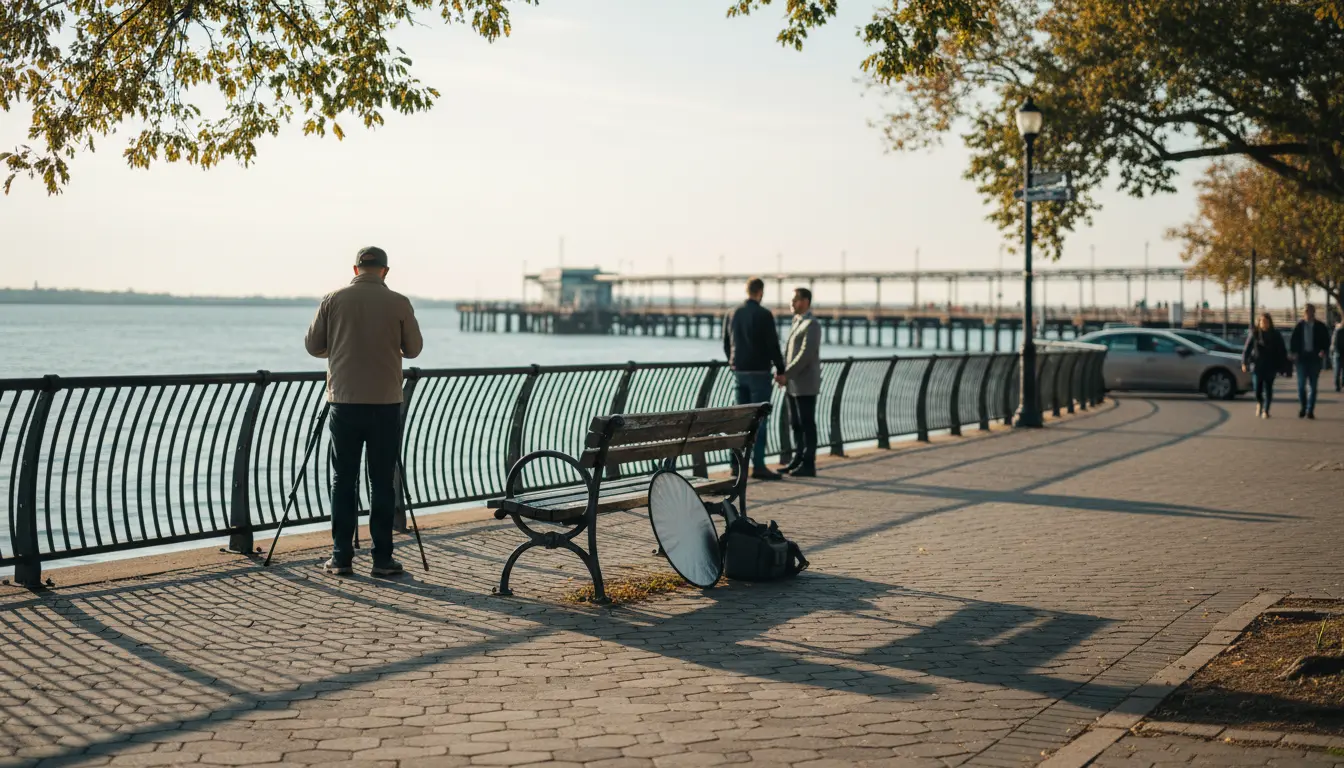
Bay Ridge in Brooklyn as a practical setting for wedding photography
Understanding Bay Ridge’s Edges and Nearby Areas
Bay Ridge occupies the southwest corner of Brooklyn, pressed up against the Upper New York Bay with a mix of dense commercial strips and quieter residential blocks. For couples and families, it often functions as the “end of the line” neighborhood before the Verrazzano-Narrows Bridge, with waterfront parks on the west and more tightly packed housing to the east.
Formally, descriptions of Bay Ridge, Brooklyn place it south of Sunset Park, west of Dyker Heights, and north of the Fort Hamilton military installation. In practice, most wedding-day movement comes down from the north via 4th Avenue or the Gowanus Expressway, then fans out toward Shore Road, 3rd Avenue, or interior residential streets in the 70s, 80s, and 90s.
To the north, Sunset Park acts as a mobility transition: traffic funnels under the expressway and continues along 4th Avenue into Bay Ridge. To the east, Dyker Heights blends into Bay Ridge through continuous residential blocks and shared park edges. At the southern edge, Fort Hamilton creates a hard boundary and breaks up the shoreline, which matters if you are expecting a continuous waterfront backdrop.
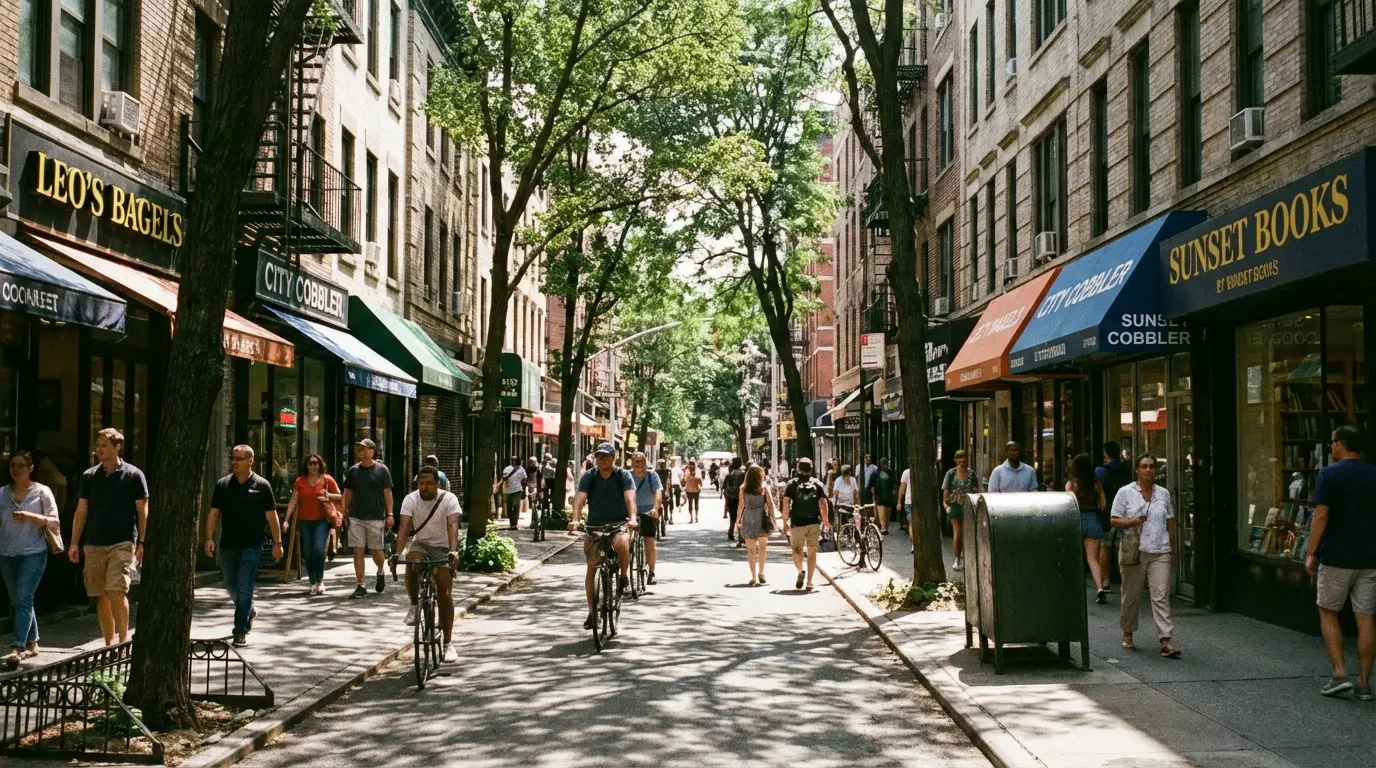
Verifies the 86th Street commercial corridor scale: narrow street geometry, awning shadows, tree canopy density, and typical pedestrian/parking patterns that affect light and access.
How People and Traffic Move Through Bay Ridge
For wedding parties, the main organizing spine is 4th Avenue. It runs north–south with predictable traffic and direct subway access, but also carries most of the siren noise from emergency vehicles heading through the area. This band feels distinctly louder and more hectic than the residential blocks just a few avenues west.
Shore Road and the adjacent park promenade form the slower, scenic edge. Cars move more gradually here, and pedestrian flow intensifies near key viewpoints and the 69th Street pier. On busy weekends, strollers, joggers, and cyclists can create constant background motion, which affects how easily a photographer can secure clear frames.
The Gowanus Expressway overhead cuts the neighborhood into segments, especially near Bay Ridge Parkway and 92nd Street. Passing under it, you can feel an immediate shift in sound and light: deep shade, amplified road noise, and visual clutter from columns and ramps. This matters for timing transitions between indoor church ceremonies inland and waterfront portraits afterward.
Farther inland, east–west streets such as Bay Ridge Parkway and 75th–86th Streets carry a mix of local traffic and double-parked vehicles, especially around churches and small banquet halls. These are workable for quick portraits or group photos on stoops, but curb space is limited and loading can be tight.
Typical Wedding Photography Use of Bay Ridge Spaces
Most couples use Bay Ridge not as a single backdrop but as a small cluster of locations: a church or home base inland, followed by a short drive or walk to the waterfront or a park. This is where Wedding Photography translates from a general idea into a series of very specific blocks and corners.
Shore Road Park and the promenade provide long views over the bay, railings to lean on, and benches for quick, informal portrait breaks. Owl’s Head Park adds elevation and grassy slopes with trees that filter light differently than the flatter waterfront. Residential side streets in the 70s and 80s, particularly west of 3rd Avenue, offer quieter stoops and tree-lined backgrounds for more intimate couple or family images.
Church steps and corner facades along 4th and 5th Avenues are often used for immediate family groups after ceremonies, subject to site-specific rules about where people can stand and how long they can remain. These locations are constrained by sidewalk width, passing pedestrians, and nearby storefronts, which all shape what is realistically possible in the time available.
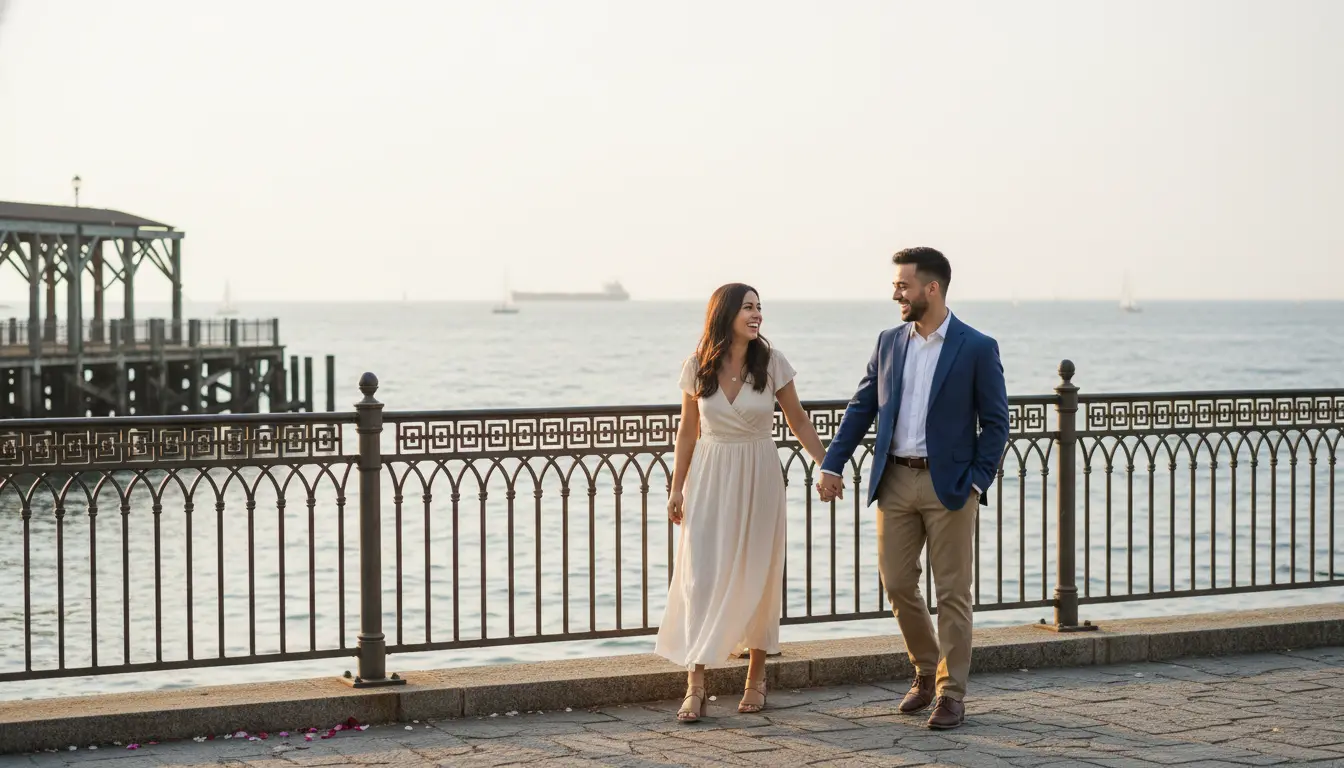
Shows where wedding photography commonly happens along the Shore Road edge: open sight lines to the bay, railing constraints, and how reflections and pedestrian traffic can affect positioning.
Comparing Bay Ridge Micro-Areas for Sessions
Within Bay Ridge, a few micro-areas behave very differently on a wedding day:
- “Shore Road Edge” – The waterfront strip from roughly 67th to 96th Street has a mix of promenade, benches, fenced overlooks, and sloped lawns. It offers the widest horizons but also the most unpredictable foot traffic, especially near the 69th Street pier.
- “Owl’s Head Slopes” – Elevated lawns and winding paths with mixed tree canopy. It feels more enclosed than Shore Road but still has glimpses of the bay, and the slopes can both help and complicate group posing.
- “86th Street Compression Zone” – Around 3rd, 4th, and 5th Avenues, the commercial corridor is tight, with signage, awnings, and steady pedestrian flow. It is practical for accessing venues and shops, but less forgiving if you need clean, uncluttered backgrounds.
- “4th Ave Transit Band” – Fast-moving traffic, subway entrances, and frequent sirens. This band is useful for quick city-feel frames, but noise and safety margins limit how long a wedding party can linger at the curb.
Shade tree canopy becomes a key variable here. Side streets between roughly 78th and 83rd Streets are known for mid-density trees, creating softer light and quieter pockets away from commercial noise. In contrast, corners near 86th Street mix residential stoops with storefronts, so you can stand in one spot and see both calm brownstone facades and busy awnings within the same frame.
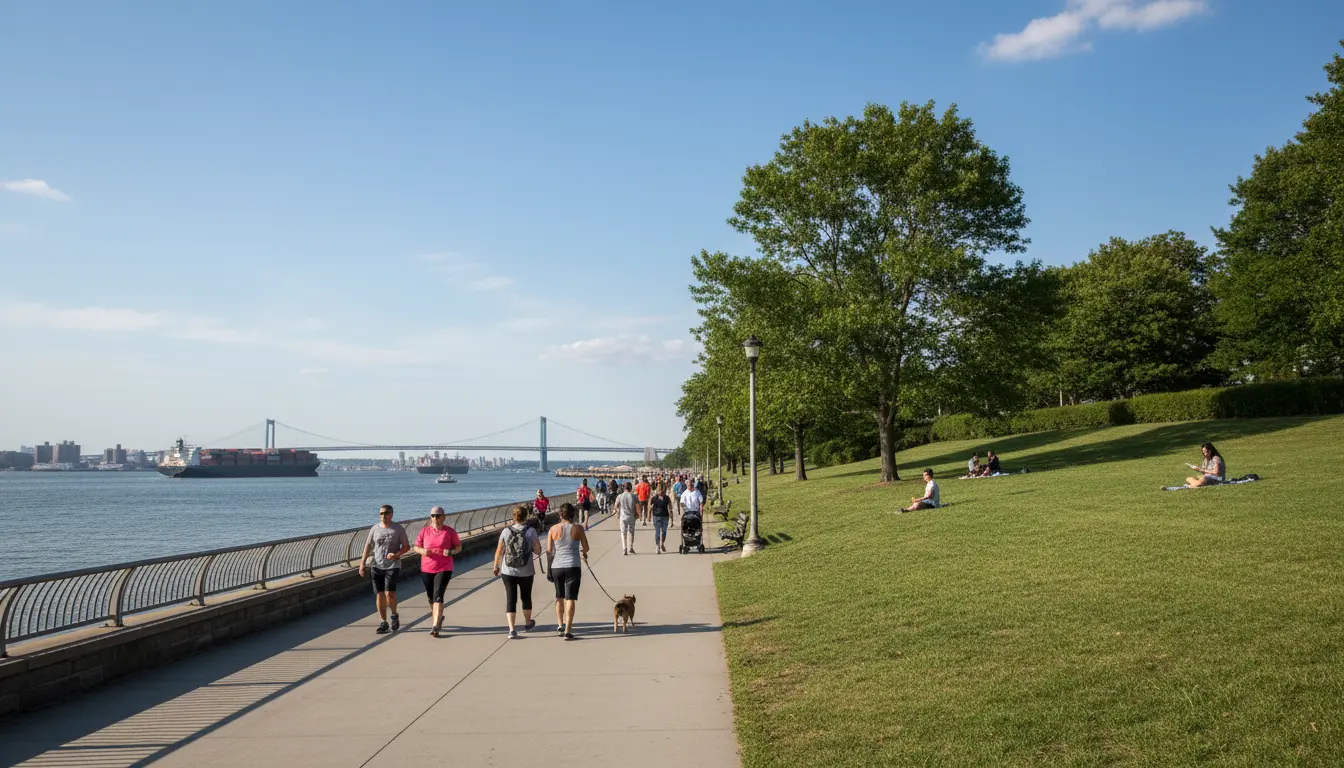
Helps compare micro-areas: confirms that busy waterfront circulation can sit next to quieter, sloped lawns within a short walk — useful for weighing privacy versus open views.
Professional Photography Options in Bay Ridge
Streetscape, Buildings, and Commercial–Residential Seams
Bay Ridge’s built environment is a mix of pre-war apartment houses, attached brick homes, and low-rise commercial rows. Many residential side streets are fairly wide, with parallel parking on both sides and mature trees. These streets are practical for small group portraits, but parked cars, utility poles, and overhead wires are common elements that must be managed in-frame.
The 86th Street commercial corridor is the clearest example of a “compression zone.” Storefront awnings cast deep shadows, signage competes for attention, and pedestrians move in both directions at most hours. This creates abrupt seams between commercial and residential space: you can step from a quiet stoop into a busy retail block within one or two doorways. For photography, that means background noise, visual clutter, and occasional sirens can spike without warning even if the immediate block feels calm.
Along 3rd Avenue, restaurant canopies and bar fronts add another layer of complexity. Evening sessions here are navigable but need awareness of delivery trucks, outdoor dining setups, and changing light as storefronts turn on interior illumination. Compared with Shore Road, these areas feel more compressed and visually busy, which can be either an asset or a distraction depending on the desired look.
Light Patterns Across Waterfront, Parks, and Side Streets
Morning light reaches Bay Ridge from the east, but inland blocks filter it through buildings, trees, and narrow street geometry. The waterfront slopes and paths near Shore Road often receive usable light earlier than the interior, because the open bay lets light clear the low rise of the neighborhood more quickly.
Afternoons reverse the story. The open western horizon over the Upper Bay gives Shore Road and the promenade much longer-lasting sunlight. Inland, streets like 86th and 3rd lose light earlier as building height, awnings, and sign canopies cast broader shadows. On these corridors, faces can fall into shadow well before official sunset, especially on the north-south avenues.
Reflections from the water add a subtle brightness boost near the railings and benches in and around Shore Road Park, but they also introduce glare pockets that can affect posing angles. Under tree canopy on residential blocks between about 78th and 83rd Streets, light tends to be softer and more diffuse, which helps with squinting but can reduce apparent contrast and sharpness if not accounted for.
Permissions, Crowds, and Physical Limits to Keep in Mind
Waterfront parks in Bay Ridge are heavily used at peak times. Shore Road Park and Owl’s Head Park both see weekend density that limits how far a photographer can back up, how easily a group can assemble, and how long a particular overlook can be held without others entering the frame. Weekday late afternoons are generally more manageable, with enough locals around to feel safe but less pressure on specific viewing points.
Wind is a recurring factor along exposed waterfront segments. Even on mild-weather days, gusts can be amplified by the open bay and the gaps between tree clusters, affecting veils, hair, and lightweight clothing. The slopes in Owl’s Head Park can intensify these gusts, particularly on the higher lawns and open plateaus.
For larger setups—light stands, reflectors, or coordinated group posing—park users should be aware that New York City Parks has permit frameworks for more structured use of space, especially if equipment or crowd size could interfere with public access. The same applies to amplified sound or semi-permanent props. This is less about routine portrait sessions and more about reducing risk if you plan something elaborate.
Churches and banquet halls in Bay Ridge vary in how they handle photography on steps or at entrances. Some sites are comfortable with brief, low-impact use of stairs and sidewalks; others enforce rules against tripods or extensive gear on the property. Rooftop access in local apartment buildings is generally controlled by building management and is not a reliable assumption without explicit permission.
How a Bay Ridge Wedding Shoot Usually Flows on the Ground
A typical wedding-day path in Bay Ridge might start at a home or apartment on a residential block, move to a church along 4th or 5th Avenue, then transition by car to Shore Road or Owl’s Head Park for portraits before returning to a venue or restaurant. Each of these segments involves crossing different light and noise conditions—from siren-heavy avenues to quieter side streets to exposed waterfront.
On church blocks, sidewalks are often narrow and shared with passersby. Steps can be wide enough for family groupings but leave little depth between the lowest step and the curb. Passing buses and double-parked cars are predictable interruptions, so a photography team often works in short, focused bursts between traffic cycles rather than prolonged setups.
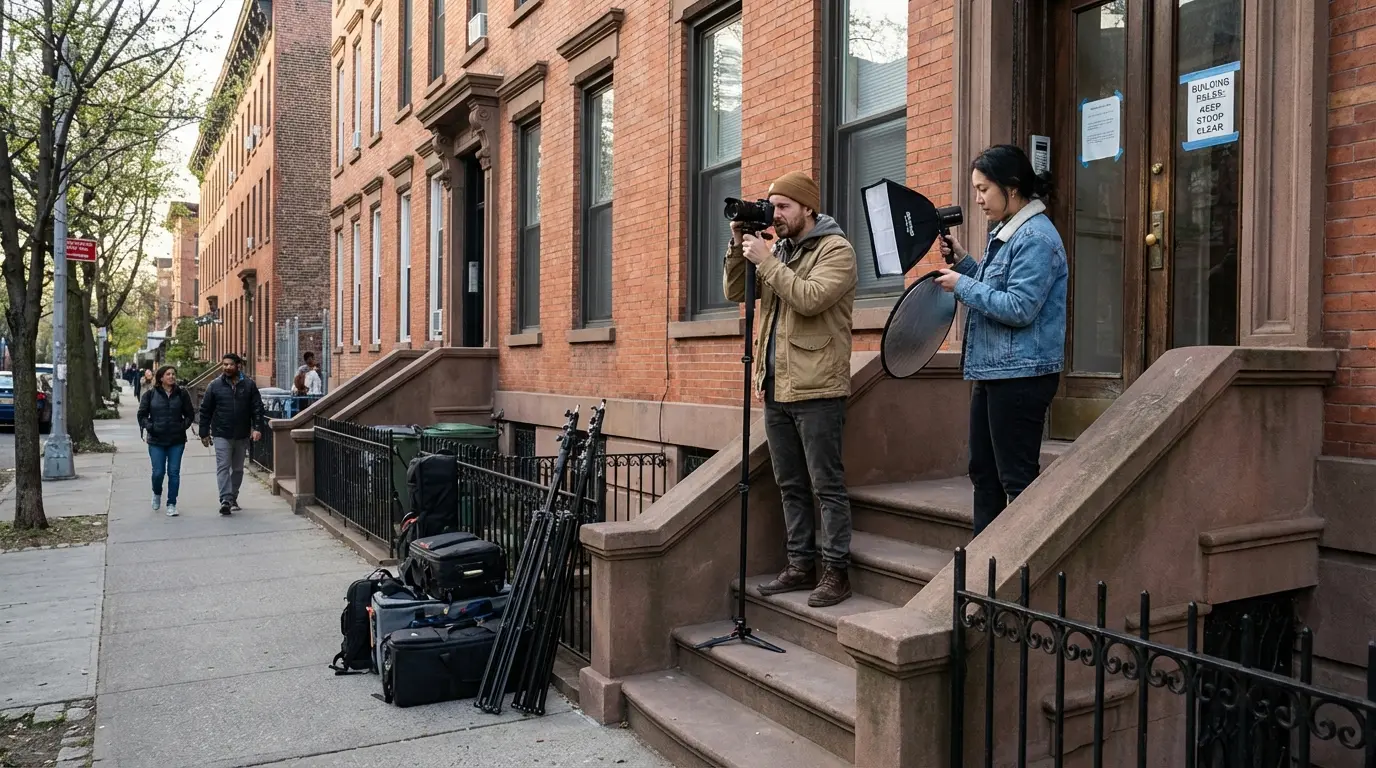
Shows realistic process and setup constraints in Bay Ridge: compact gear, limited sidewalk room, and common restrictions near church entrances or stoops that affect team size and staging.
Reducing Logistical Risk With Vehicles and Gear
Vehicle access decisions in Bay Ridge are shaped by curb widths, loading rules, and how quickly enforcement appears. Bay Ridge Parkway and other key cross streets have posted parking restrictions, bus stops, and active driveways that limit where a car or van can safely pause for loading.
Double-parking for brief equipment drops is common but carries risk around ticketing and traffic friction, especially beneath or near the Gowanus Expressway where visibility is lower and shade can make it harder for drivers to see people unloading gear. For larger wedding parties, planning exact pickup and drop-off points on calmer side streets often reduces stress.
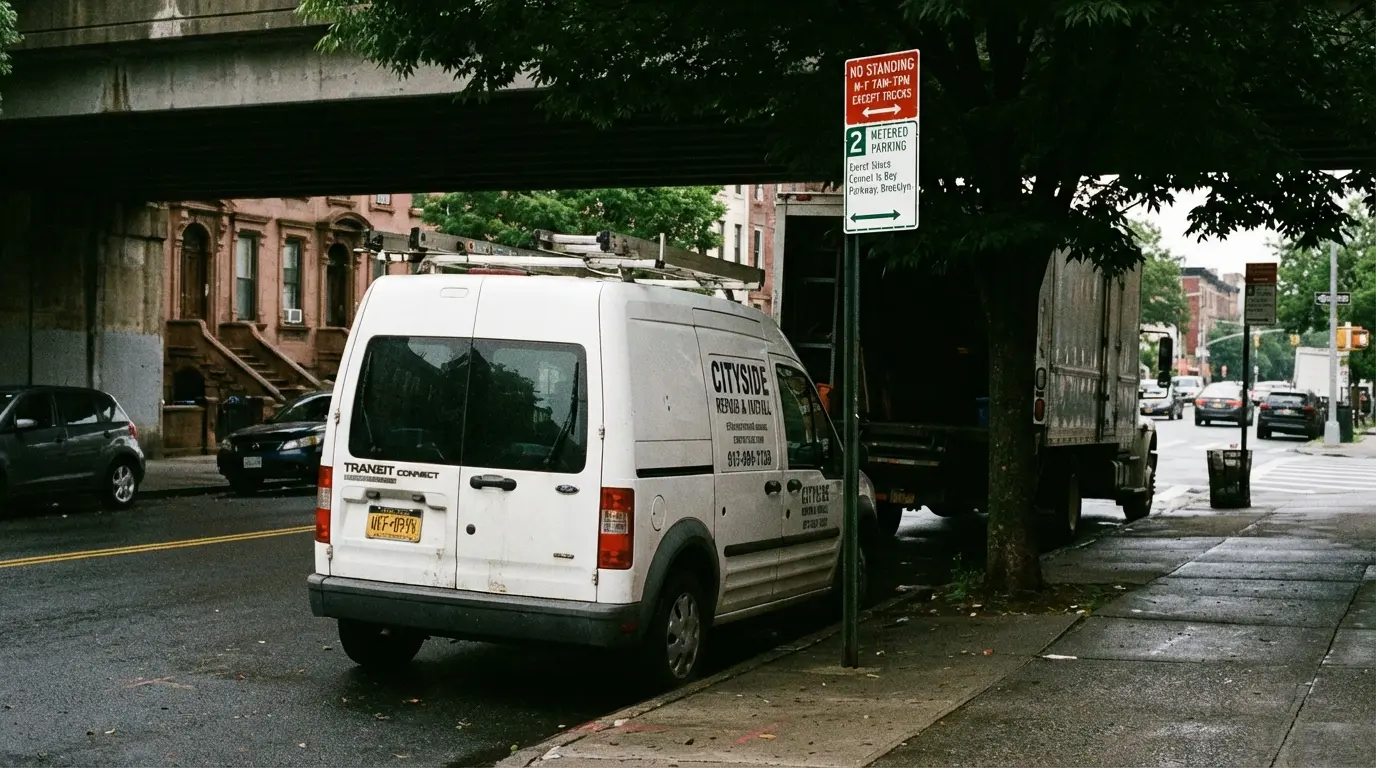
Verifies vehicle and loading constraints in parts of Bay Ridge: narrow curb widths, posted parking rules, and shaded overpass conditions that limit large-vehicle staging and require advance planning.
Visual Anchors That Confirm You’re Really on the Bay Ridge Waterfront
For those comparing multiple waterfront neighborhoods, a few physical markers firmly identify Bay Ridge. The 69th Street pier projects visibly into the Upper Bay, with Shore Road Park signage and characteristic railings along the promenade. The Verrazzano-Narrows Bridge often sits off to one side of the frame rather than dominating it, unlike many Staten Island viewpoints.
Benches, low fencing, and the relationship between park lawns and the promenade give Bay Ridge’s shoreline a distinct layering: park path, railing, pier, and distant shoreline. These spatial cues make it straightforward to verify that a set of wedding portraits or family photos was actually taken on the Bay Ridge edge rather than in a more generic Brooklyn waterfront segment.
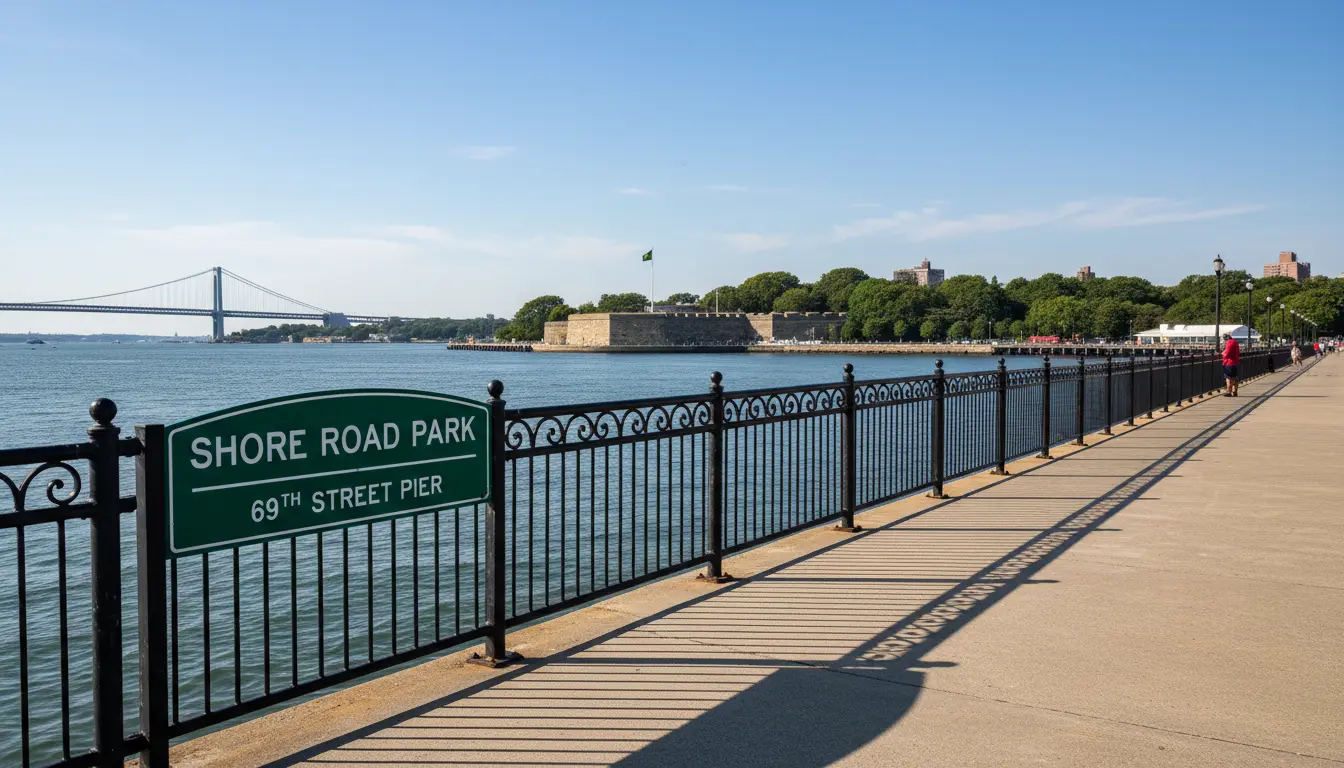
Confirms neighborhood specificity by showing the 69th Street pier and Shore Road Park features a buyer can use to verify exact Bay Ridge location and waterfront layout.
What Finished Prints and Albums Look Like in this Setting
Because many Bay Ridge sessions revolve around parks and outdoor spaces, final deliverables are often handled as a mix of prints and compact albums rather than highly staged, fragile objects. Clients frequently review or hand off items locally—on a park bench, at a cafe table, or at a family home—rather than in a studio environment.
The physical reality of Bay Ridge’s outdoor furniture and ambient conditions (worn benches, scattered leaves, variable light) means that albums and prints need to be durable enough for real-life handling. Modest-sized prints and smaller albums are more practical to carry between a car, a park, and a reception than oversized pieces that are difficult to protect from breeze, moisture, or surface wear.
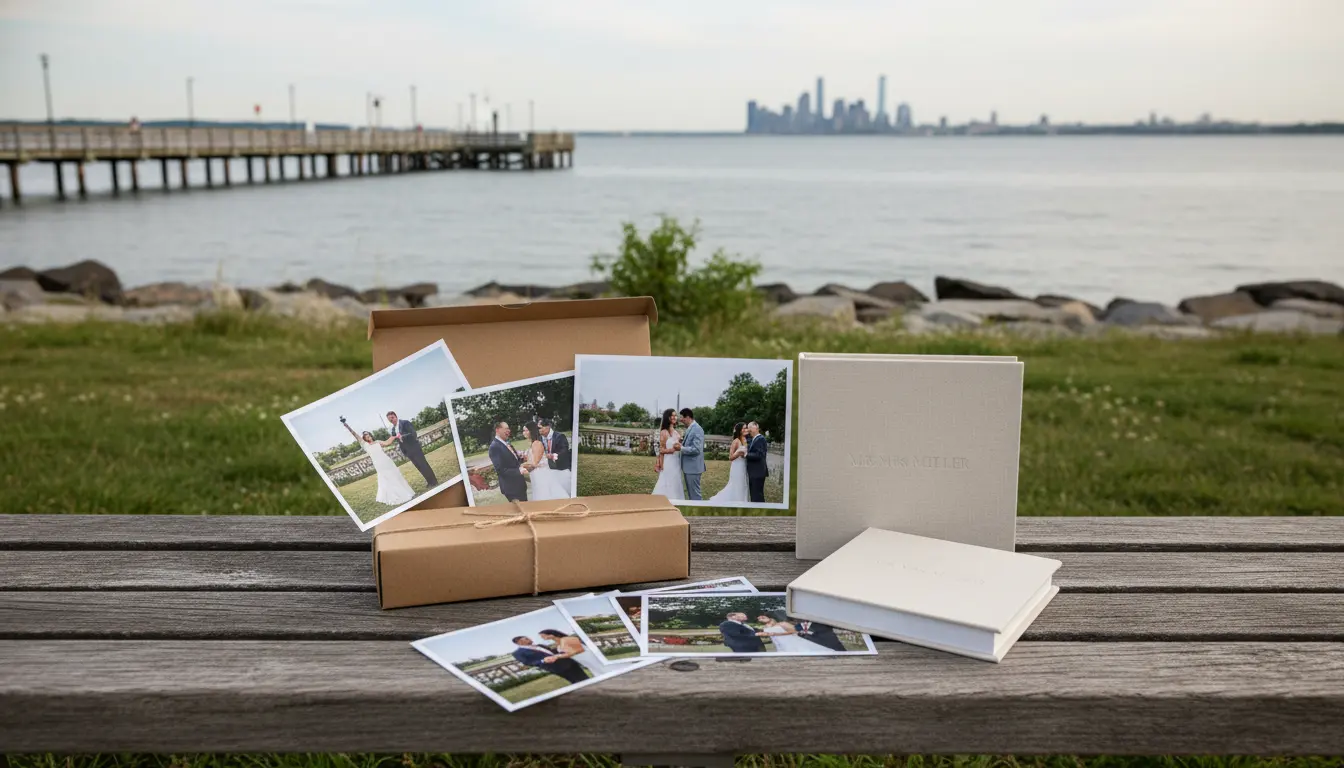
Shows a realistic delivery expectation in Bay Ridge: modest-sized prints and a compact album viewed in neighborhood context (bench wear, leaves, and ambient light indicate practical handling).
Noise, Trees, and Quiet Pockets: Everyday Variables
Bay Ridge is not uniformly calm or loud; it changes block by block:
- Sirens frequency is highest along 4th Avenue and near the expressway ramps, where emergency vehicles use the corridor to move between neighborhoods. On Shore Road and deeper residential streets, sirens are less frequent and more muted, which matters if you’re recording video vows or speeches alongside photos.
- Commercial–residential seams around 86th Street create unpredictable spikes in background activity. A group portrait on a seemingly quiet stoop can suddenly include shoppers passing with bags, delivery carts, or ride-hail pickups pulling up to the curb.
- Shade tree canopy across much of the 70s and 80s streets softens sound and light. In summer, dense leaves filter traffic noise and direct sun, but they also drop small debris on sidewalks and park benches—minor but visible in close-up detail shots.
- Quiet pockets exist even on busy days: small lawns in Owl’s Head Park, cul-de-sacs south of 90th Street, and side paths off the main promenade. These are useful when a couple needs a brief pause away from the flow of strollers and joggers.
Understanding these micro-conditions helps set realistic expectations: Bay Ridge offers genuine calm, but usually a half-block away from its movement corridors, not right on top of them.
Bay Ridge’s Role in a Broader Brooklyn Wedding Coverage Map
Within Brooklyn, Bay Ridge operates as a southwestern anchor that pairs well with a limited set of nearby options. Couples who live here often have relatives in adjacent areas and may move between them on the wedding day—for example, a ceremony in a Bay Ridge church, family photos at the Shore Road edge, and a smaller gathering in a Dyker Heights home or Sunset Park venue.
Compared with more central neighborhoods, Bay Ridge trades some indoor venue density for its waterfront and hillside parks. It suits couples who want long bay views and quieter, neighborhood-based celebrations rather than heavy nightlife. At the same time, its links northward along 4th Avenue and eastward through residential grids mean it can be combined with other Brooklyn neighborhoods without long travel gaps.
Other Brooklyn Communities in our coverage
Bay Ridge Wedding Photography FAQ
When is Bay Ridge quietest for waterfront wedding photos?
Weekday late afternoons generally offer the best balance: enough people around for safety, but fewer strollers and joggers competing for space along the promenade. Weekend mid-days near the 69th Street pier are the most crowded.
How windy does it get along Shore Road and the promenade?
Wind can pick up quickly along exposed stretches, especially where the path is closest to the water and less shielded by trees or buildings. Veils and lightweight fabrics move noticeably here even on otherwise calm days, so many couples favor slightly more sheltered lawns or paths set back from the railings.
Is parking reliable near Shore Road for wedding parties?
Street parking exists but fills up near popular viewpoints and playgrounds, particularly on weekends. It’s common to park a block or two inland on residential streets and walk into the park, rather than expecting curb space directly at a chosen overlook.
Does Owl’s Head Park get too crowded for wedding portraits?
The main entrances, playgrounds, and flat lawns can be busy, but many of the sloped paths and upper lawns remain usable even on weekends. Crowding is more about specific hotspots than the entire park; walking a few minutes up or down the hill usually reveals quieter areas.
Can we use church steps and stoops for group photos?
Often yes, but permission and tolerance levels vary by site. Some churches are comfortable with brief use of steps right after a ceremony; others prefer that groups move quickly to the sidewalk or a nearby park. Tripods and large light stands are more likely to attract restrictions than hand-held cameras and small modifiers.
How fast does Bay Ridge lose light along commercial streets like 86th?
Because of building height and deep awnings, 86th Street and nearby avenues can feel like they’re in shade long before sunset, especially on the south side of the street. If you need brighter, more open light later in the day, the waterfront or less built-up residential side streets usually hold usable light longer.
Will sirens and traffic noise interfere with ceremony or speech photos taken outdoors?
If you’re on or near 4th Avenue, sirens and bus noise will cut through regularly. Moving just a couple of blocks west or into a park usually reduces this significantly. For outdoor speeches or vows, choosing a quiet pocket in Owl’s Head or a deeper residential street makes a noticeable difference in background noise, even if you are still within Bay Ridge.