
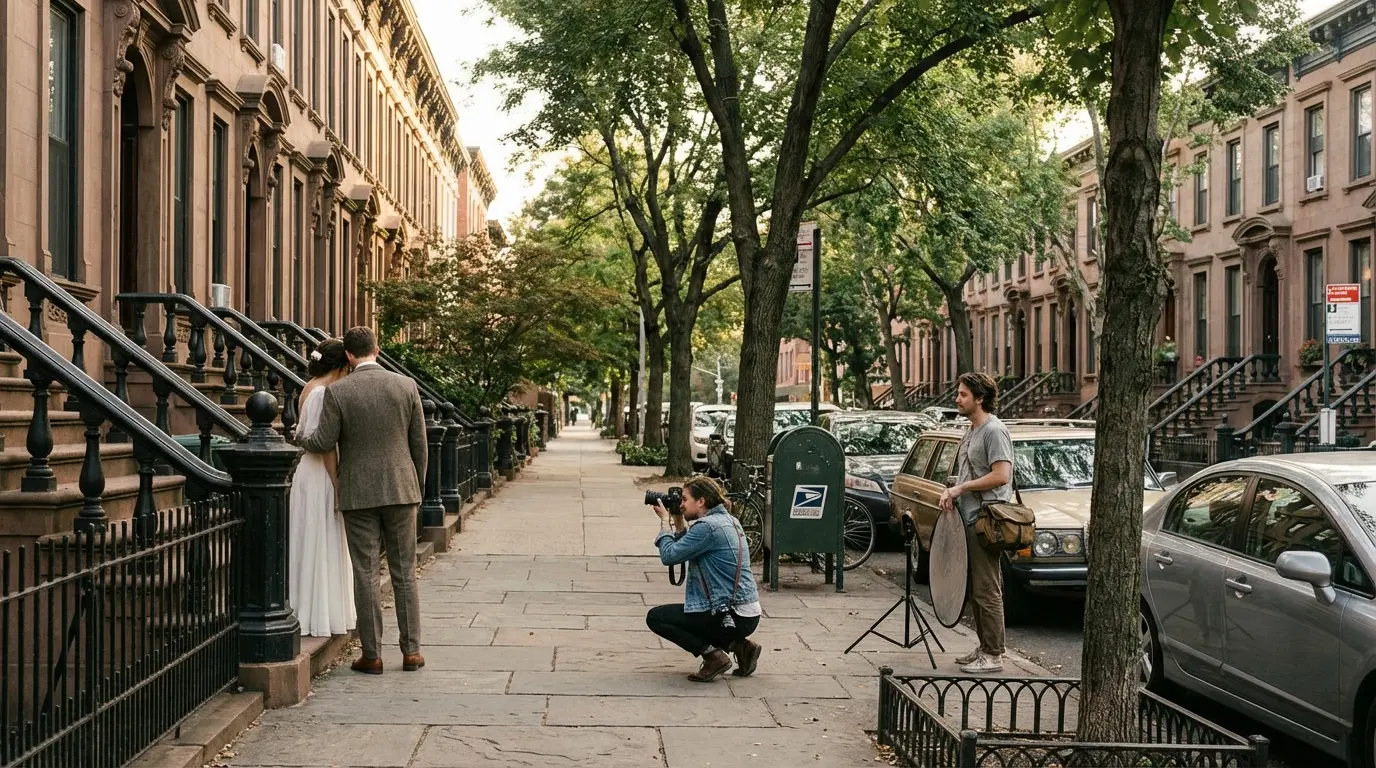
Bedford-Stuyvesant in Brooklyn as a practical setting for wedding photography
How Bedford-Stuyvesant fits into Brooklyn’s street grid
Bedford-Stuyvesant (Bed-Stuy) sits in central-north Brooklyn with a clear, walkable grid that many couples already know from everyday life. The neighborhood runs roughly between Atlantic Avenue to the south and Broadway to the northeast, with the residential fabric continuing into Crown Heights to the south and Clinton Hill to the west. Formal boundary descriptions line up with those documented on Bedford-Stuyvesant – Wikipedia, but what matters for on-location sessions are the block depths, tree cover, and traffic rhythms rather than the exact map lines.
To the west, the grid transitions gradually into Clinton Hill: the brownstone rhythm stays similar, but traffic and footfall shift as you approach the Fulton Street corridor. South of Atlantic Avenue, blocks begin to feel more like Crown Heights, with comparable rowhouse stock but slightly different commercial pockets along Nostrand and Bedford. To the northeast, the change toward Bushwick becomes noticeable around Broadway, where the elevated train, wider roadway, and more industrial/commercial edges replace the quieter interior brownstone blocks.
For a local Wedding photographer, this layout means most typical locations—stoops, side streets, small parks, and low-rise commercial strips—are within a few minutes’ walk of each other, but the feel and constraints can shift quickly from block to block.
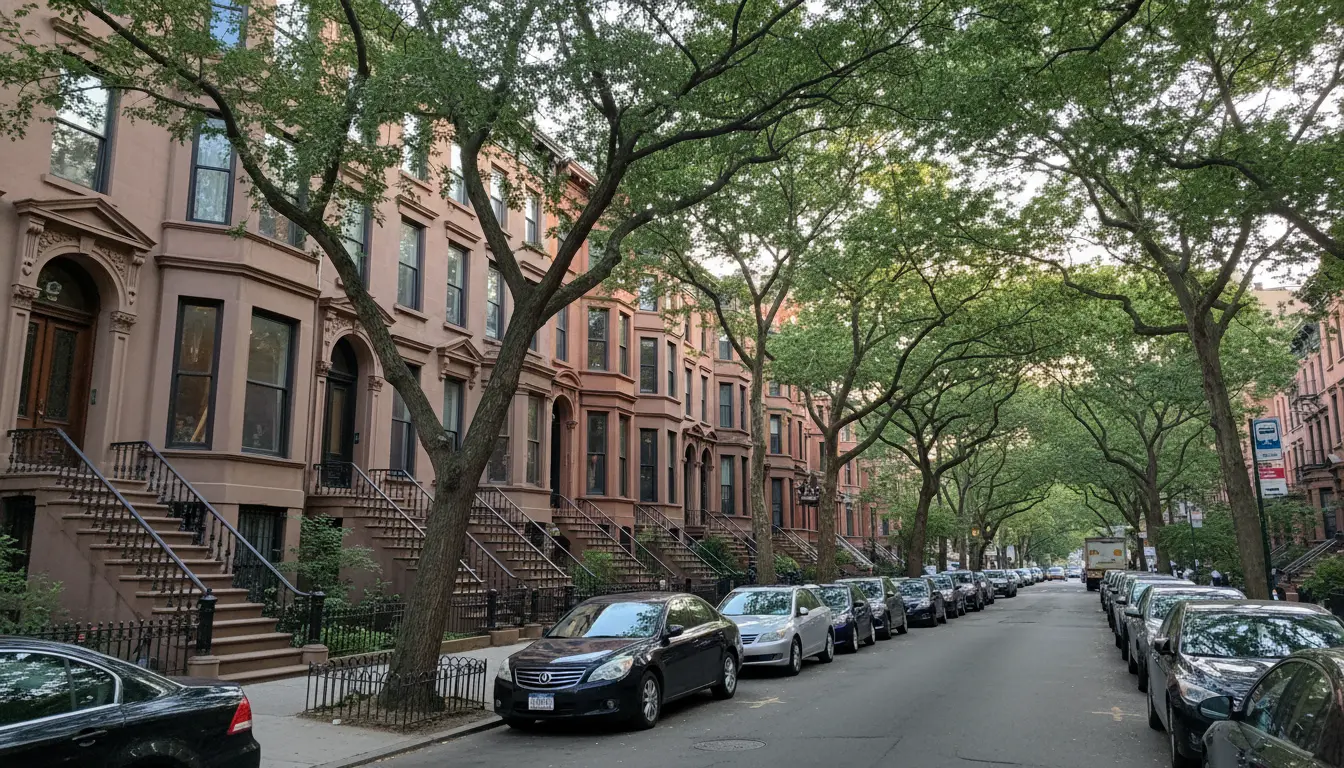
Typical Bed-Stuy brownstone block: buyers can verify block scale, stoop access, tree canopy coverage, and sidewalk width for planning shoots.
This image confirms the basic building height (3–4 stories), the narrow front setbacks, and the continuous stoops that define much of Bed-Stuy. It also shows real sidewalk width, typical curb parking, and tree canopy density—useful when assessing how many people and how much gear can realistically fit in frame.
Typical locations used for wedding and pre-wedding sessions
Within Bed-Stuy, most on-the-ground sessions cluster around a few reliable place types: brownstone stoops, tree-lined cross streets, small community parks, and quiet corners near churches or small event spaces. Couples using Wedding Photography here are often choosing blocks they already walk past daily, so the priority is usually “recognizable but clean” rather than hidden or dramatic.
Herbert Von King Park is a common choice for quick greenery and open-sky shots, especially along its perimeter paths and benches where you can keep a small footprint without staging a full production. The park follows standard NYC Parks norms—informal, low-impact setups usually blend into regular park use—something also reflected in the official information for Herbert von King Park – NYC Parks. Edges near community gardens or fencing often give just enough structure behind the couple without pulling focus from them.
On brownstone blocks—especially in areas like Stuyvesant Heights—sessions tend to center on one or two stoops rather than the entire block. Morning_rhythm affects this: interior streets stay very quiet until the school and work rush between roughly 8–9 AM, when quick bursts of strollers, kids, and commuters can suddenly fill an otherwise empty block. That quiet early window is often useful for pre-wedding portraits with minimal interruption.
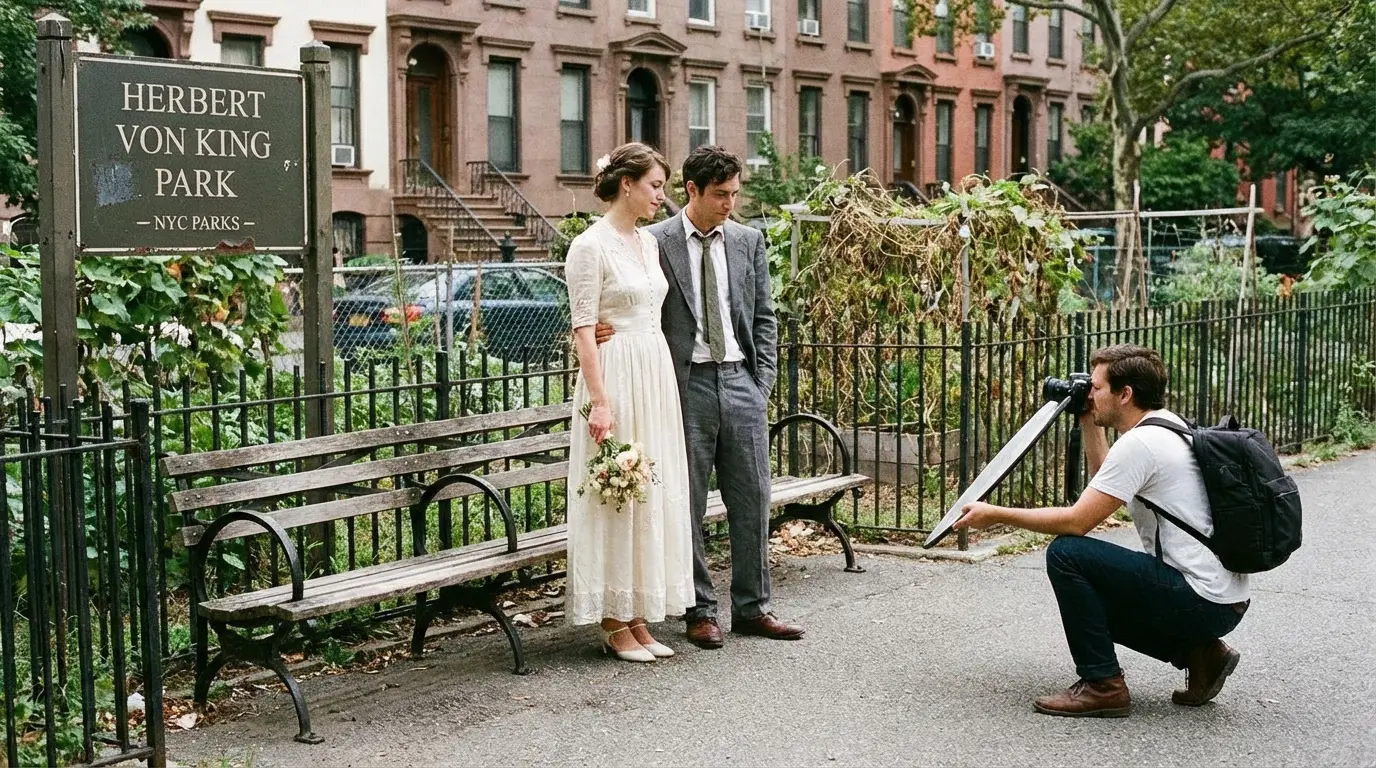
Example of a common Bed-Stuy location: buyers can verify the park edge environment, nearby foot traffic, and the small-footprint setup typically used without large crews or equipment.
Here you can see how close pedestrians pass to a small shoot at the park edge, the width of the path, and the scale of benches and fencing. It illustrates how a couple, a photographer, and perhaps one assistant can work without blocking circulation or needing heavy equipment.
How light behaves on Bed-Stuy blocks throughout the day
Because the brownstones in Bed-Stuy are relatively uniform in height, east–west streets like Greene Avenue or Lafayette Avenue produce long, consistent shadow bands from mid-morning to late afternoon. On those cross streets, front stoops often stay in shade longer, which can be useful for soft, even skin tones but less ideal if you want bright, sunlit facades.
North–south corridors—Tompkins, Bedford, Nostrand—behave differently. They open up to longer light windows, and tree canopy along these avenues softens the light, especially in the later afternoon. When foliage is dense, usable light on interior blocks can actually start later in the morning, because filtered sun doesn’t reach stoops until the sun is higher. Open-sky avenues, by contrast, receive stronger morning light earlier, and you can get clear directional sun on one side of the street while the other stays in shade.
Near Broadway, the elevated line introduces abrupt changes: one step can move a couple from harsh, direct light into a deep shadow band. Late in the day, the sun slipping under the elevated structure can create harsh streaks of brightness next to very dark underpasses. This exaggerated contrast affects both stills and any motion work, and is worth considering if you’re planning route-based coverage that moves from interior blocks toward the Broadway edge.
Wedding Photography Services in Bedford-Stuyvesant
Choosing between quiet side streets and busier avenues
Within the same few minutes of walking, couples can move from a nearly empty brownstone block to a busier corridor. Interior side streets—especially in Stuyvesant Heights and similar pockets—give more privacy and predictable light but may have tighter sidewalks and more parked cars in frame. Avenue corridors like Bedford Avenue and Fulton Street offer active storefronts and a clear sense of city energy, but they also bring shopqueueculture and delivery traffic into the background.
Along Fulton Street, market_days matter: pop-up produce vendors and small street sellers can appear outside corner delis and fruit stands, creating quick bursts of crowding around the curb, particularly in the morning. Bedford Avenue can show similar patterns, with morning café lines spilling past the doorway and forming informal queues along the curb edge. These elements can add authenticity to images but also make it harder to keep a clean, unobstructed background.
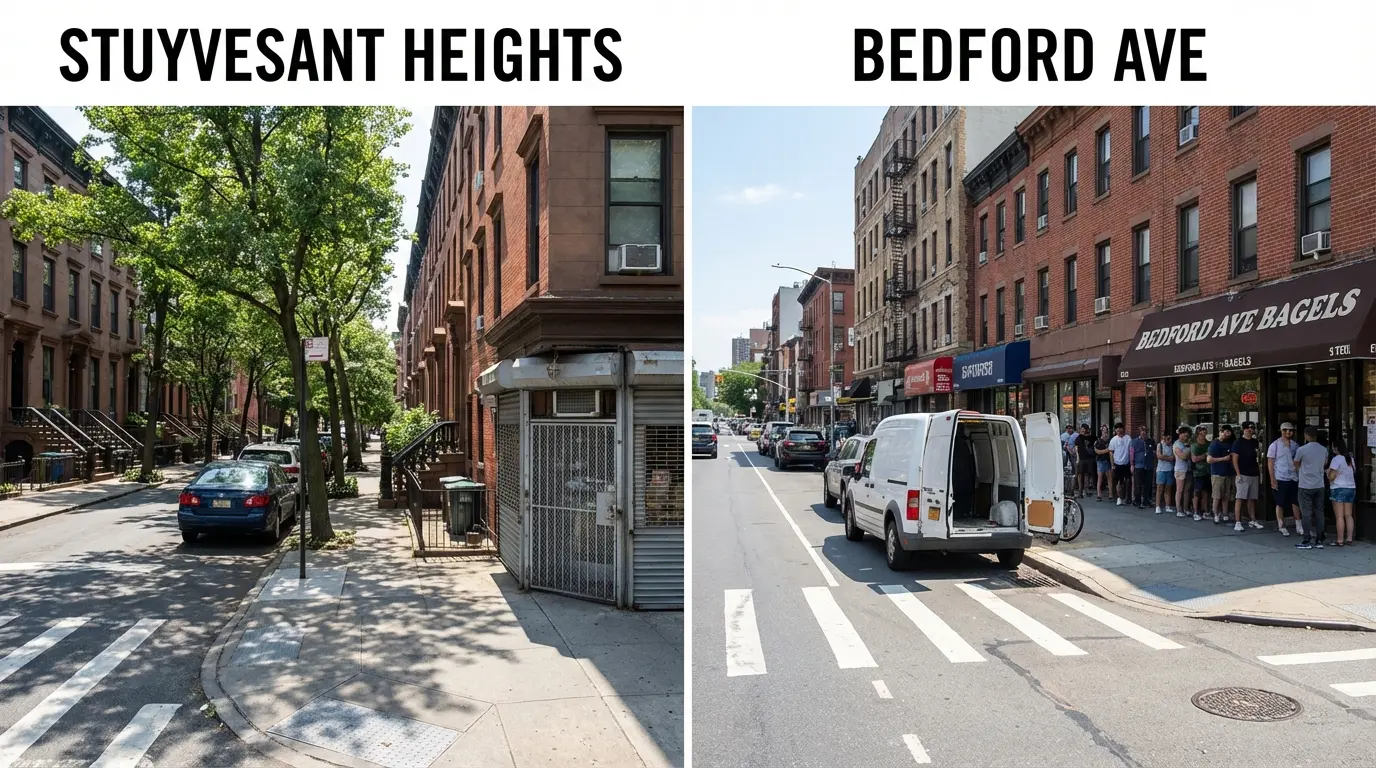
Visual comparison for decision-making: buyers can assess privacy levels, likely crowding, curb access for equipment, and storefront typology when choosing shoot locations.
This image highlights the scale difference between quiet residential blocks and active avenues: wider asphalt, more signage, varied storefront_typology, and visible queues. It helps set realistic expectations about how many bystanders, vehicles, and shopfront details will appear in the background depending on the chosen area.
Working within stoops, sidewalks, and building access
Stoop-front sessions are common in Bed-Stuy, but they happen within tight social and physical limits. Many brownstones have only a narrow landing and a short run of stairs; typically, only the couple and the photographer are on the stoop itself, with any additional crew and light stands staying on the sidewalk. Neighbor proximity is close—entry doors are often only a few feet apart—so permission and quick, respectful timing are standard practice rather than optional.
Community gardens, church steps, and small side yards are usually private or semi-private spaces; using them for any structured shoot generally depends on direct permission from owners or organizers. Rooftop access varies building by building; renovated multi-family buildings in particular often have controlled access and may not allow outside use at all.
Sidewalks along retail blocks can narrow suddenly where tree pits, outdoor displays, or sandwich boards sit close to the curb. Morning deliveries—especially around Fulton Street and Nostrand Avenue—can temporarily block curb access with vans and hand trucks. For gear that arrives by car, it’s common to load in quickly and then move the vehicle to a legal space a block or two away rather than occupying a curb directly in front of the building.
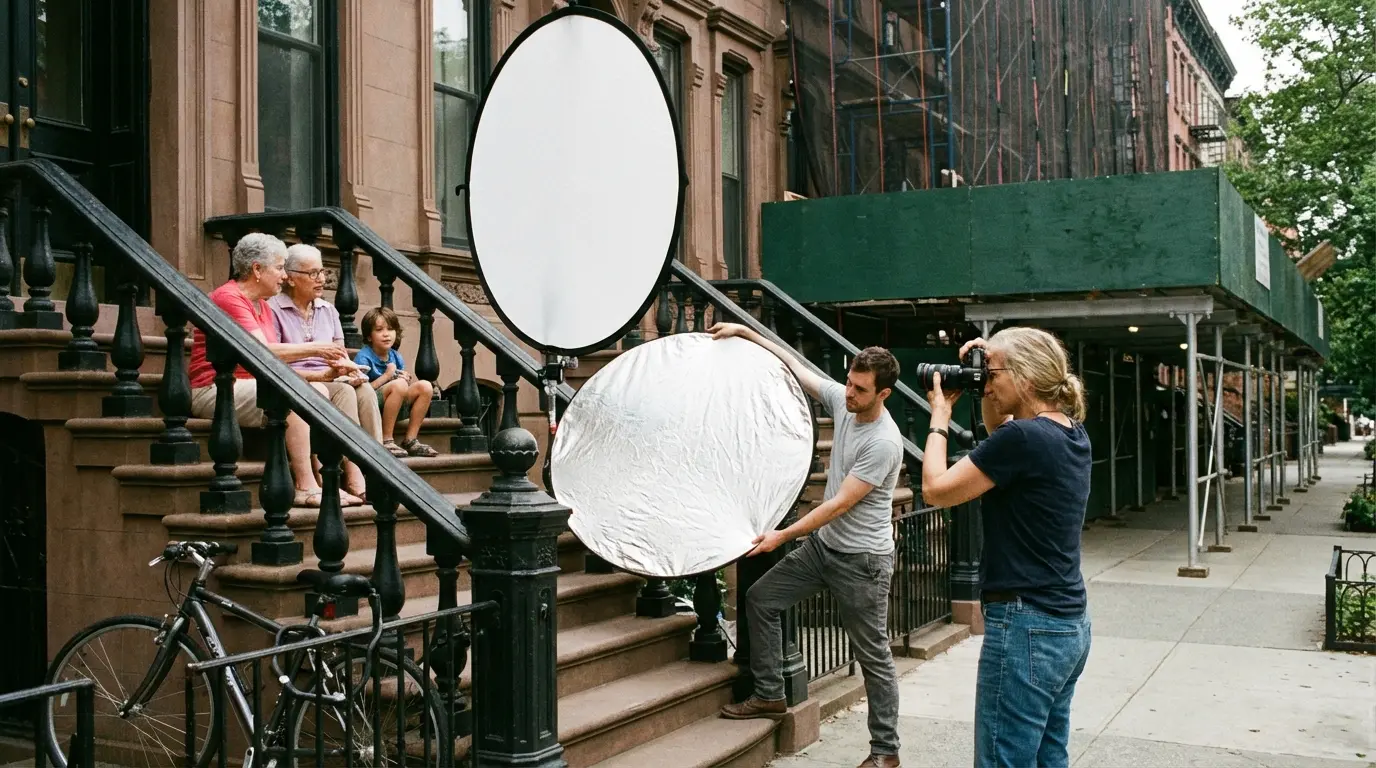
Realistic process view: buyers can verify typical setup footprint on stoops, close neighbor presence, and how nearby construction scaffolding can affect positioning.
The image shows how compact a stoop setup usually is: two crew members, light gear, and immediate adjacency to other residents’ doors and windows. Scaffolding on neighboring buildings is also visible, underlining how frequently ongoing renovations can force adjustments in framing or location choice at the last minute.
Managing noise, crowds, and timing risks
Environmental “noise” in Bed-Stuy is not only about decibels but also about visual interruptions and movement patterns. Under and around the Broadway elevated line, train noise spikes regularly and can drown out vows or spoken audio if you’re capturing sound. The steel structure also introduces vibrations that can be felt on some platforms and nearby sidewalks, which may affect longer-lens work or very steady video shots.
Crowd surges follow predictable patterns. School dismissal brings clusters of families and kids onto otherwise quiet side streets. On Tompkins Avenue and similar corridors, shopqueueculture is visible outside cafés and small eateries—lines stretch along the sidewalk, and people naturally occupy stoops while waiting. On weekend mornings, café queues, bakery pickups, and pop-up flower vendors can combine into continuous foot traffic on certain blocks.
Weather exposure differs by corridor. Tree-lined interiors can shelter couples from light rain and moderate wind, but open avenues like Broadway or Atlantic Avenue offer little protection; umbrellas and hair movement become more of a factor. On extremely bright days, the elevated tracks on Broadway create deep shadows that can cool down colors but also obscure faces if not accounted for.
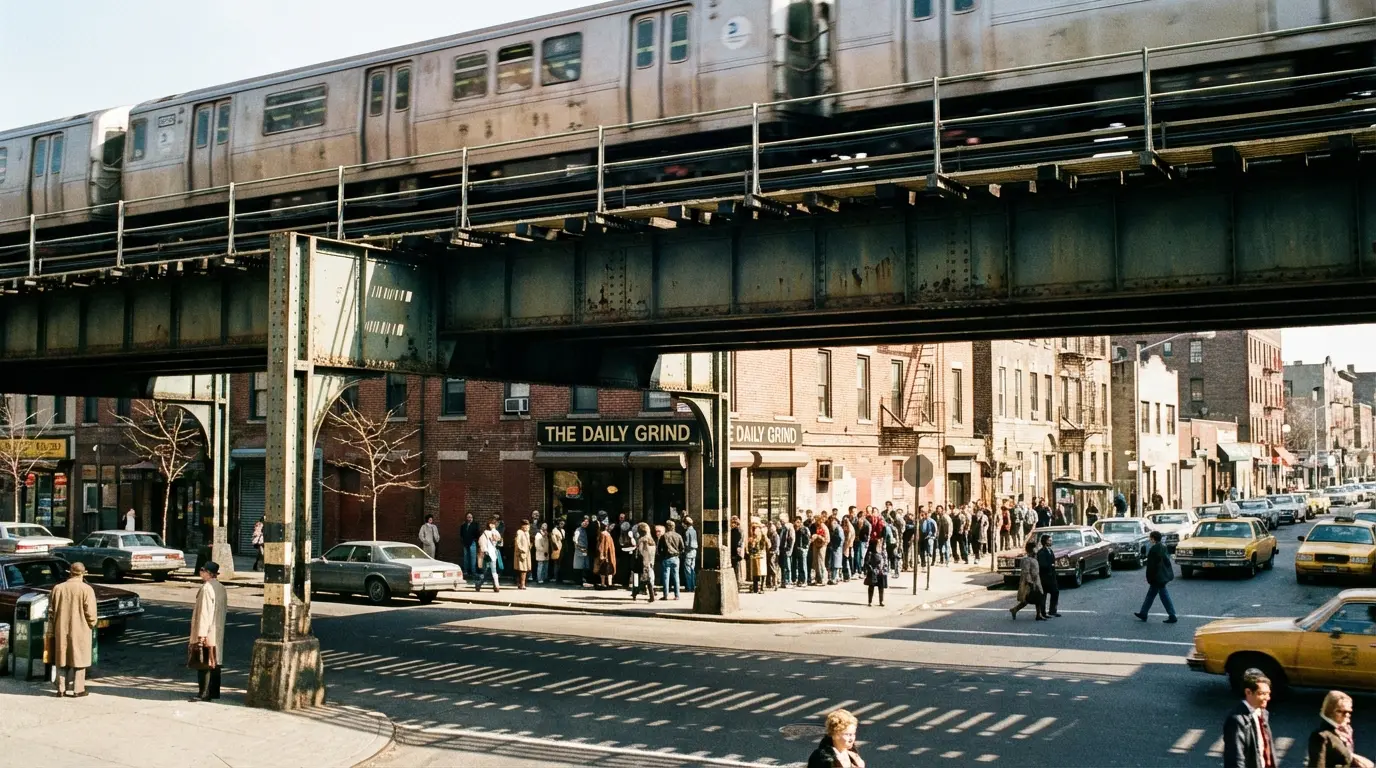
Constraint evidence: buyers can verify likely noise, sudden light/dark transitions under the elevated line, and nearby pedestrian queues that may affect shoot timing.
This image clearly shows the strong shadow band under the tracks, the heavy structure above, and active sidewalk use. It’s a practical reference for understanding how quickly light and sound change when you move a session toward Broadway.
Landmarks and corridors that anchor Bed-Stuy shoots
Several corridors serve as practical anchors when planning routes for sessions. The Tompkins Avenue corridor combines small retail, residential buildings, and civic anchors like Restoration Plaza; it is busy enough for energy but not as overwhelming as Fulton Street. Bedford Avenue functions as a spine through the neighborhood, with alternating retail and residential segments that can accommodate both quieter and more active backdrops within a short walk.
Herbert Von King Park, Restoration Plaza, and nearby churches create a loose triangle of familiar meeting points. Couples often meet at one of these landmarks and move outward to side streets with more controlled backdrops. Kosciuszko Street and its surroundings, particularly near the park, provide a transition between open green space and narrower rowhouse blocks.
Storefront_typology shifts clearly along these corridors. You’ll see legacy metal-gate delis on corners, modest bodega awnings, and newer glass-front boutiques in the same stretch. For image planning, that mix means signage, roll-down gates, and reflective glass may all appear in the background unless specifically avoided.
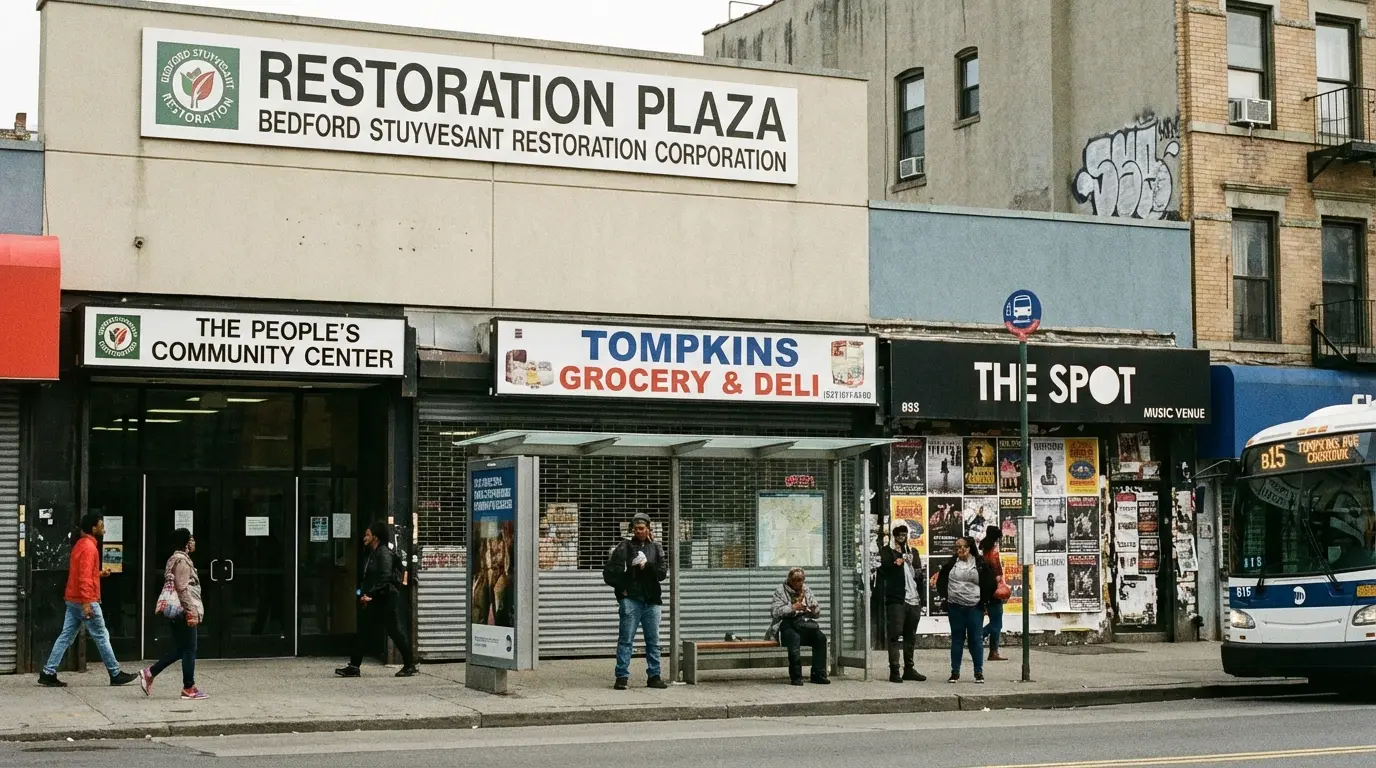
Neighborhood anchor: buyers can verify the presence of Restoration Plaza and the Tompkins corridor retail mix as orientation points for location planning.
This photo confirms the scale of Restoration Plaza, the width of Tompkins Avenue, and the mix of storefronts and community space. It helps couples visualize where they might meet, walk, or pause between more focused portrait spots.
What finished images from Bed-Stuy usually include
Final images from Bed-Stuy sessions typically balance the couple with the neighborhood’s texture rather than removing it. Brownstone stoops often include railings, window grates, and neighboring facades in frame; it’s rare to isolate a single building completely because of the tight spacing. Ambient elements—parked cars, a person walking a dog, a passing cyclist—often remain visible in the distance.
On avenue corridors, expect to see signage, crosswalk markings, and occasional pedestrians entering the edge of the frame. shopqueueculture around cafés and corner delis can translate into people holding coffee cups or grocery bags in the background. For many couples who live in the area, these cues are part of the appeal: they anchor the images to the real Bedford-Stuyvesant rather than a neutral set.
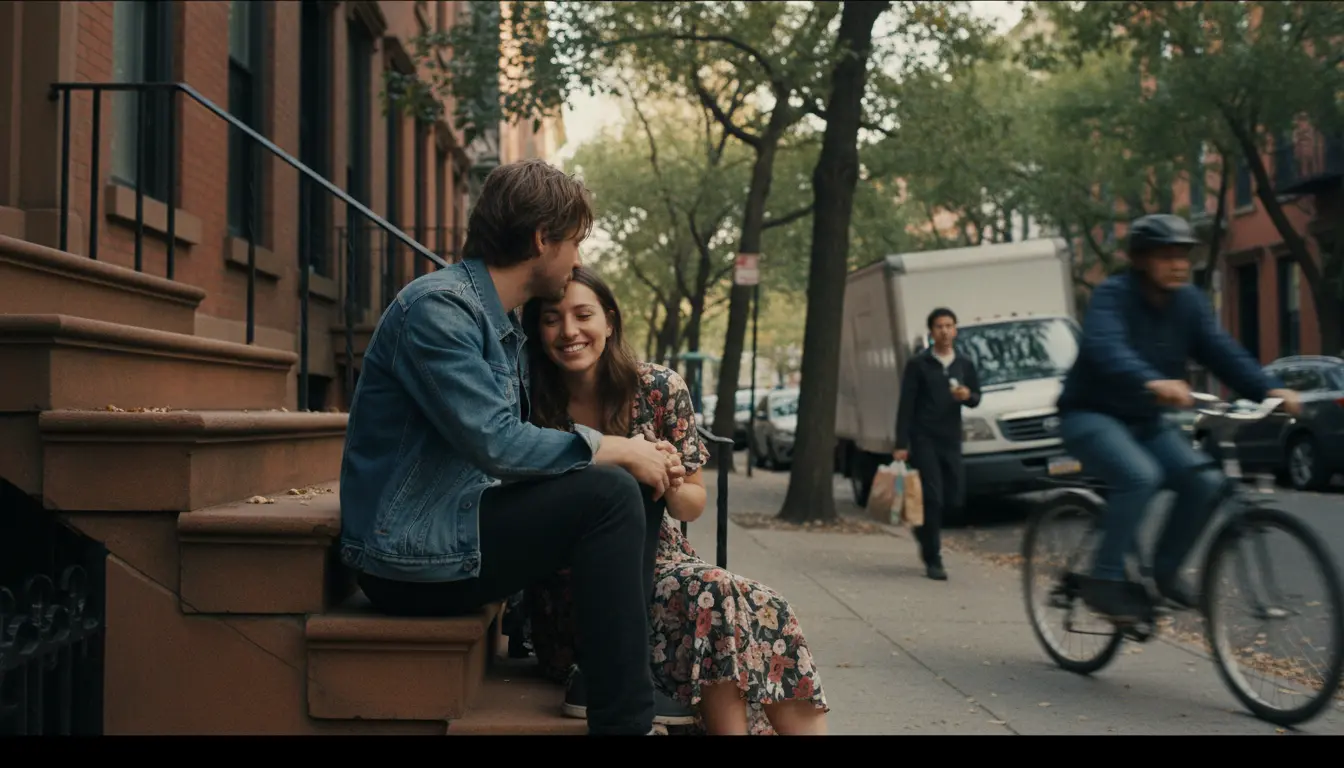
Delivery expectation: buyers can see a realistic, non-idealized outcome that includes ambient pedestrians, delivery activity, and natural light variation common in Bed-Stuy shoots.
The candid stoop image shows natural light variation across faces and facades, someone walking in the background, and small delivery elements such as boxes or carts. It reflects the kind of authentic, slightly unpredictable environment that often defines wedding and pre-wedding work in this neighborhood.
Extending sessions into nearby neighborhoods
Because Bed-Stuy edges into several other Brooklyn neighborhoods without a sharp visual break, couples sometimes plan sessions that start on a Bed-Stuy stoop and continue toward Clinton Hill, Crown Heights, or the more industrial parts of Bushwick. On foot, it’s feasible to move from quieter residential blocks in central Bed-Stuy to busier stretches toward those borders within a single session.
For example, a route might begin on a tree-lined block in Stuyvesant Heights, cut up to a busier Bedford Avenue corner for a handful of storefront shots, and then cross Atlantic Avenue into Crown Heights for a slightly different brownstone rhythm. Similarly, heading northeast toward the Broadway edge shifts the feel from leafy residential to elevated-train urban in a few blocks, which some couples pair with softer residential images for contrast.
Adjacent Neighborhoods we serve near Bedford-Stuyvesant
Frequently asked questions about Bed-Stuy wedding sessions
When is the best time of day for photos in Bed-Stuy?
On interior brownstone blocks, early morning (after sunrise but before the 8–9 AM school rush) offers soft light and minimal foot traffic. Because east–west streets stay in shade longer due to building height, late afternoon can also work well there. North–south avenues like Bedford and Nostrand get stronger directional light earlier, so mid-morning or late afternoon often gives good balance between brightness and comfort.
How crowded do the main corridors get?
Fulton Street and Bedford Avenue are consistently active, with heavier crowding around market_days and weekend brunch hours. Tompkins Avenue is moderately busy, especially near popular cafés where lines spill onto the sidewalk. Side streets in Stuyvesant Heights and similar residential pockets usually stay quiet, with brief surges at school arrival and dismissal time.
What should we expect for parking and vehicle access?
Most residential blocks rely on standard street parking; open spaces can be limited, especially overnight and early morning when residents’ cars are still parked. For sessions involving a car, it’s common to unload quickly and then re-park a few blocks away. Around major corridors, delivery trucks can temporarily block loading zones, so planning for a short walk from the vehicle to the shoot location is realistic.
How noisy is Bed-Stuy for capturing audio or video?
Interior streets are generally manageable, with typical city noise—distant traffic, occasional conversations, music from open windows. Near Broadway, the elevated train significantly raises the noise floor whenever trains pass. Along Fulton and busy avenues, bus traffic, shop music, and outdoor conversations add layers of sound that may be noticeable in video or live-audio coverage.
Do we need permission for stoops, rooftops, or community spaces?
Stoops are part of individual properties, so using a specific stoop for a focused session usually assumes the owner or tenant has agreed. Rooftop access is highly building-dependent; many multi-family buildings restrict it. Community gardens, church grounds, and similar spaces are typically managed by specific groups, and structured use should be discussed with them in advance. For casual, low-impact work along public sidewalks and in parks, formal permits are less frequently an issue, but larger crews, stands, or significant equipment are more likely to draw attention.
How does weather, especially near Broadway, affect sessions?
On tree-lined streets, light rain and mild wind can be partially shielded by canopy, but near Broadway and Atlantic Avenue, exposure is higher and the elevated structure can funnel wind along the corridor. Under the tracks, rain can drip from the structure even after a storm passes, and the deep shadows can exaggerate contrast on bright days. Planning a route that includes backup interior blocks or park edges with some cover helps manage these conditions without needing to cancel outright.