
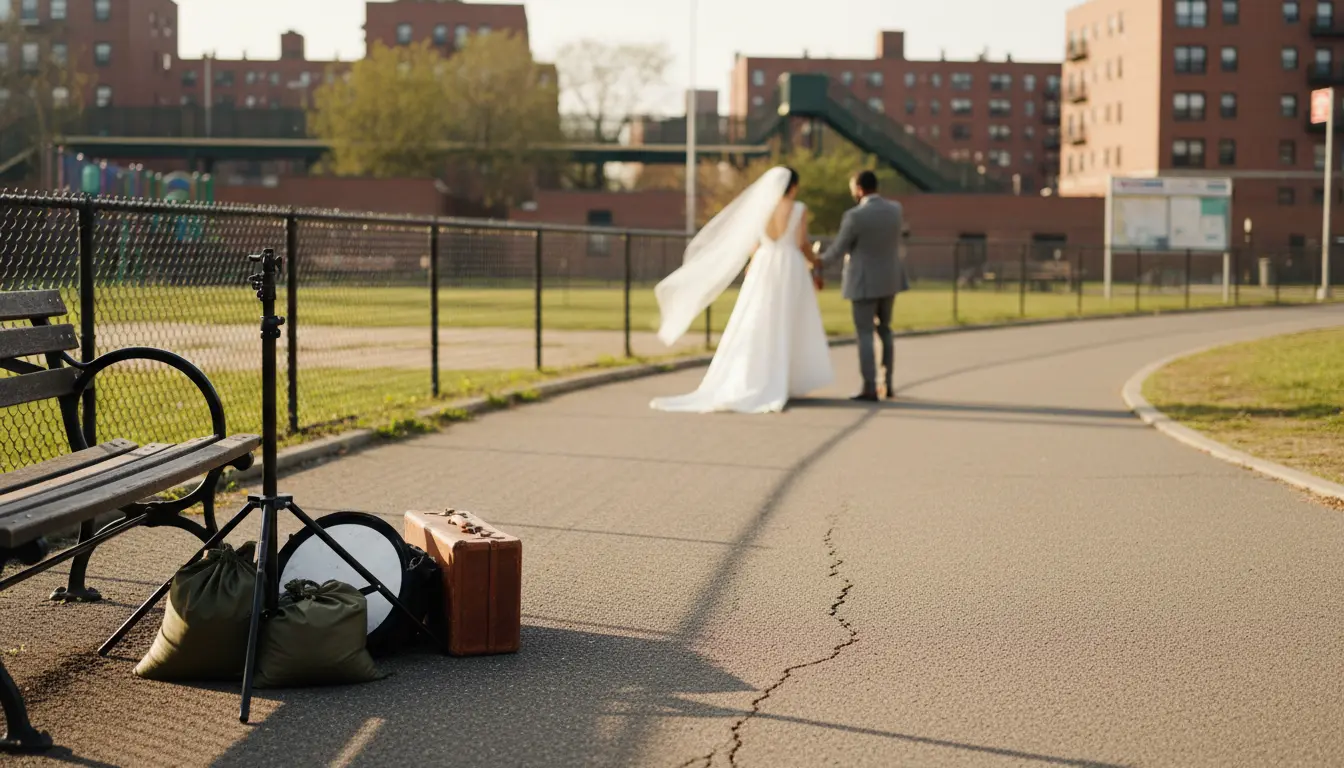
Brownsville in Brooklyn as a practical setting for wedding photography decisions
Brownsville’s place in Brooklyn and basic layout
Brownsville sits on the eastern side of Brooklyn, with a compact, mostly flat grid of mid-rise residential blocks and open recreational spaces. The neighborhood runs roughly between Ocean Hill to the west and East New York to the east, with Canarsie reached by continuing south along Ralph Ave and related corridors.
Within the broader definition of Brownsville, Brooklyn, couples planning local sessions are usually working along a few main axes: Pitkin Ave and Linden Blvd east–west, and Rockaway Ave and Mother Gaston Blvd north–south. These corridors define how easily people, vendors, and guests can move between home, ceremony, and photo locations.
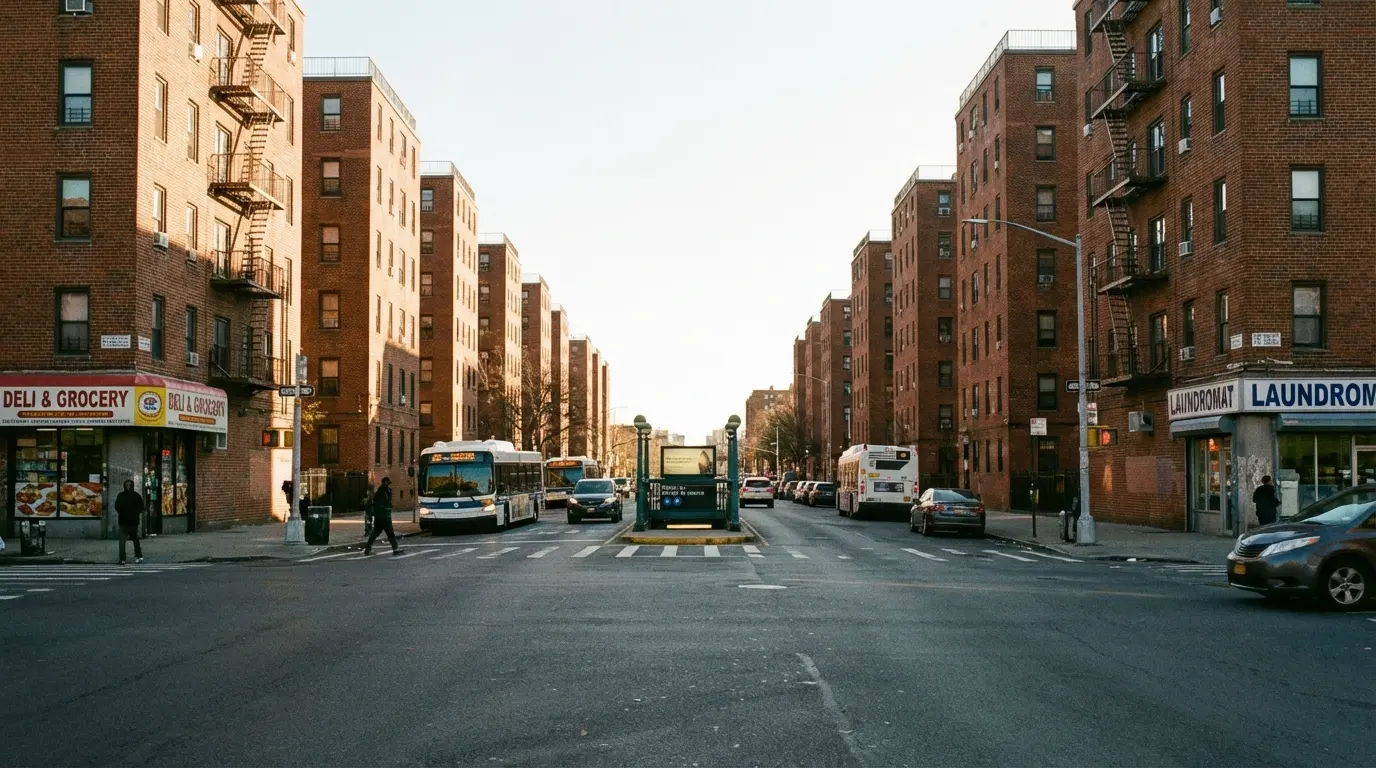
Morning street view on Pitkin Ave showing building scale, long sightlines and a nearby transit entrance; buyers can verify pedestrian flow, light direction and typical corner commerce.
This Pitkin Ave view confirms the neighborhood’s typical scale: long, straight corridors, NYCHA buildings framing the street, and a visible Rockaway Ave 3-line entrance within walking distance. For wedding photos, that combination means predictable east–west light and straightforward access but also steady pedestrian presence at key intersections.
Moving through Brownsville: streets, trains and walking routes
Mobility for wedding days in Brownsville is mostly grid-based. Rockaway Ave and Junius St stations on the 3 line anchor transit access, with Brownsville–East New York offering LIRR proximity just outside the immediate core. Couples, photographers, and small groups often move in straight lines along Pitkin Ave, Mother Gaston Blvd, or Rockaway Ave rather than cutting diagonally through smaller internal paths.
Walking patterns here are direct and purpose-driven: people tend to stay on the main boulevards between housing clusters, parks, bakeries, and community centers. For shoots that involve short walks in formal clothing, this reduces confusion but does create moments where a wedding party is sharing narrow sidewalks with regular neighborhood foot traffic and bus stop queues.
Common Brownsville backdrops for wedding photos
Most Brownsville wedding photos that stay within the neighborhood lean on three types of spaces:
- Open parkland in and around Betsy Head Park
- The Brownsville Recreation Center perimeter and surrounding playfields
- Side streets and courtyards between Brownsville Houses, Howard Houses, and other NYCHA clusters
For couples considering local Wedding Photography, these locations offer different trade-offs between space, privacy, and access. The Powell St / Dumont Ave axis, for example, has a mix of trees, open pavement, and visible “Brownsville” context without the constant traffic of Pitkin Ave.
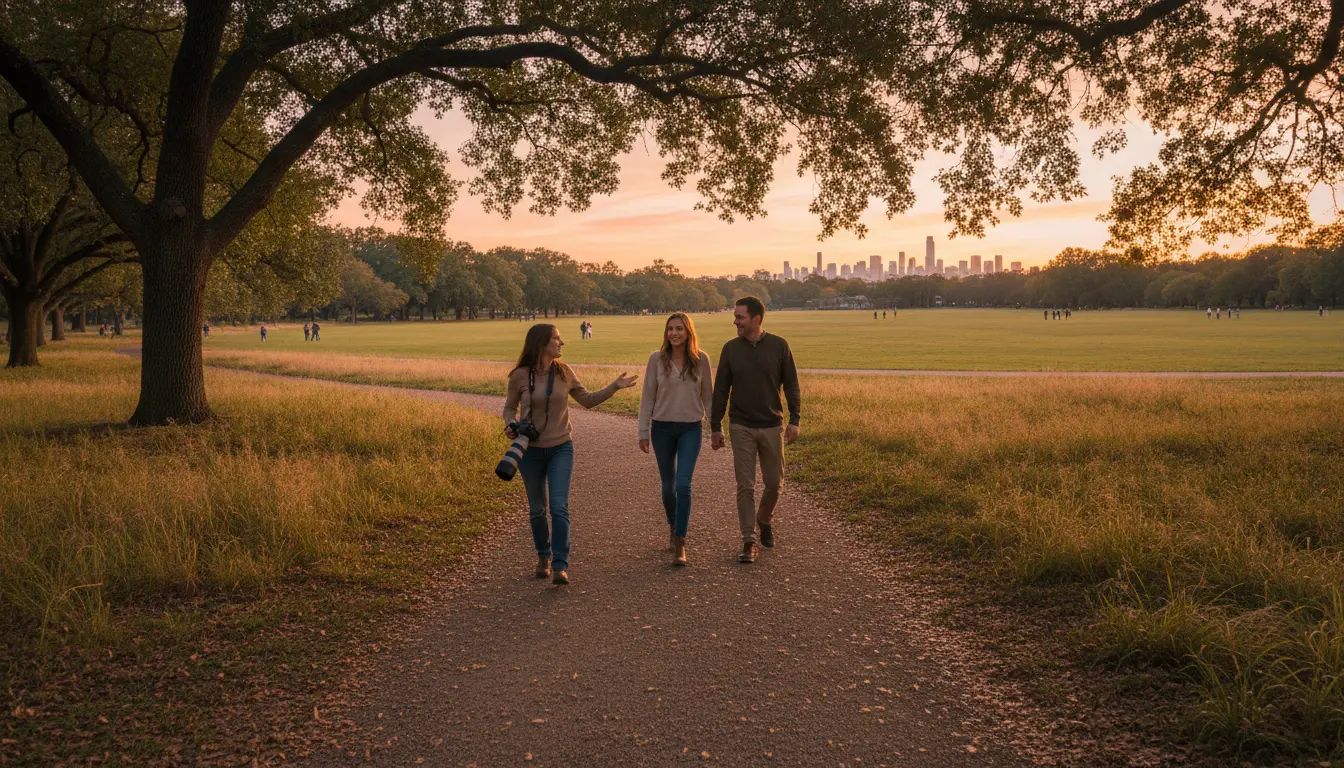
Photographer and couple using an open path at Betsy Head Park; buyers can verify park scale, public presence and available open-light conditions for sessions.
This image inside Betsy Head Park shows how a paved path, low-density park users, and open field combine to provide both scale and separation. It demonstrates that even during late morning, there is enough space to work without isolating the couple completely from neighborhood life.
Choosing between parks, corners and courtyards
When deciding where to place portraits, Brownsville couples typically weigh three main options:
- Park interiors (Betsy Head Park zone): more greenery and open sky, but higher visibility and occasional ball games or playground noise behind the frame.
- Intersection corners (especially along Pitkin Ave and Mother Gaston Blvd): strong urban context, easy pick-up and drop-off, but constant background motion and vehicle noise.
- Courtyard-adjacent edges (Brownsville Houses–Howard Houses corridor): quieter, consistent brick and tree lines, but with more sensitivity around resident privacy and security staff.
Bakery activity is a subtle but real factor in this choice. Early mornings, small corner bakeries near major intersections draw short queues that can expand unpredictably, adding background clusters around doorways that might otherwise seem like potential photo spots.
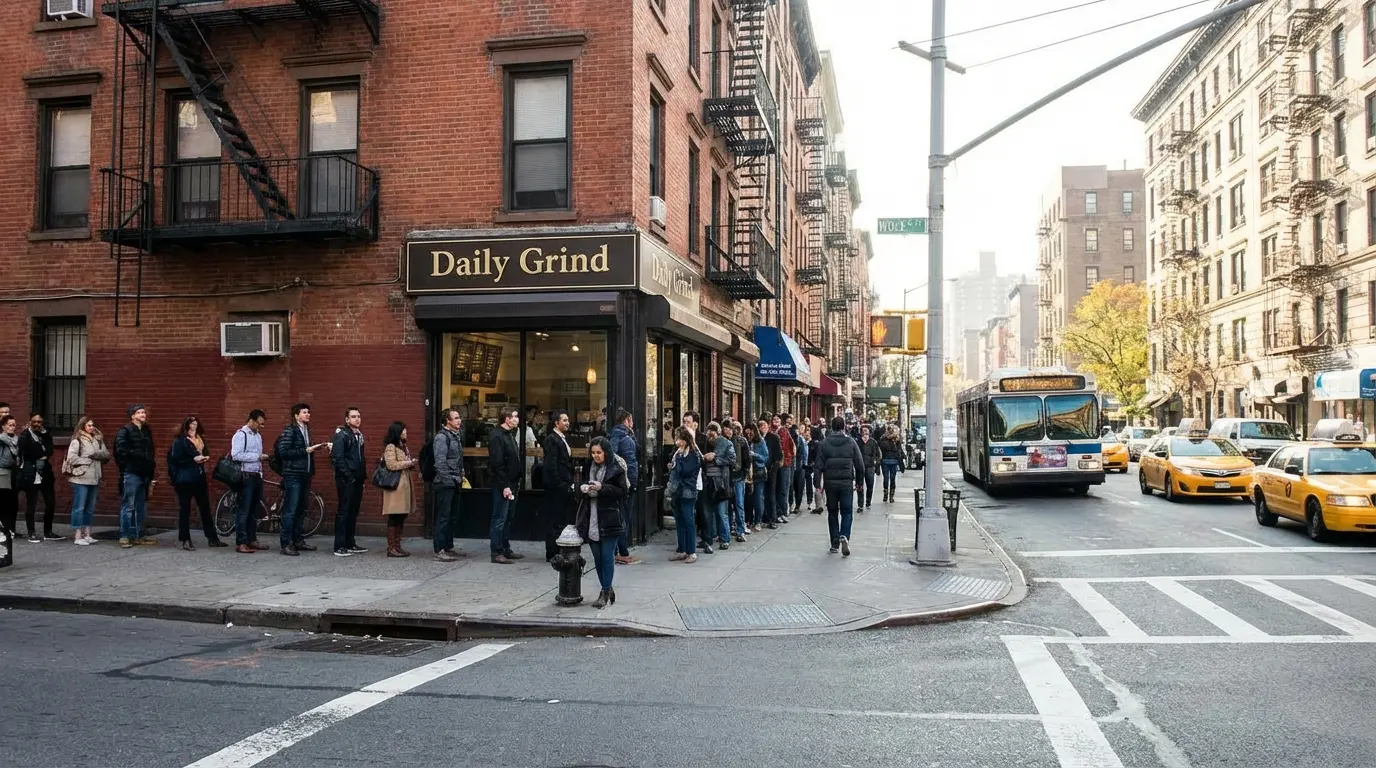
Corner commercial node with a short bakery queue beside a NYCHA courtyard entrance; buyers can compare likely crowding, street access and privacy between intersection shoots and courtyard sessions.
This scene highlights the contrast between a busy commercial node and a more contained courtyard entrance directly across the street. It verifies that even short bakery lines and bus riders can visually dominate a corner, while the courtyard gate offers more privacy but requires attention to building rules and resident flow.
How we serve Brownsville through Wedding photographer
- Wedding photographer
- Photography And Videography
- Rural wedding photography
- Beach wedding photography
How a typical wedding shoot unfolds on Brownsville streets
On a typical day, sessions that use Brownsville as a primary backdrop follow a predictable flow:
- Arrival by train or car near Rockaway Ave or Mother Gaston Blvd
- A short walk to a first location around Betsy Head Park, the Recreation Center, or a quieter side street
- A second stop that contrasts the first (for example, moving from park paths to a brick-lined facade or intersection edge)
Equipment staging is usually compact, using building edges and park perimeters rather than occupying open walkways. The Brownsville Recreation Center perimeter, in particular, provides a level, paved surface and a clear wall that can safely host bags and light stands without blocking doors.
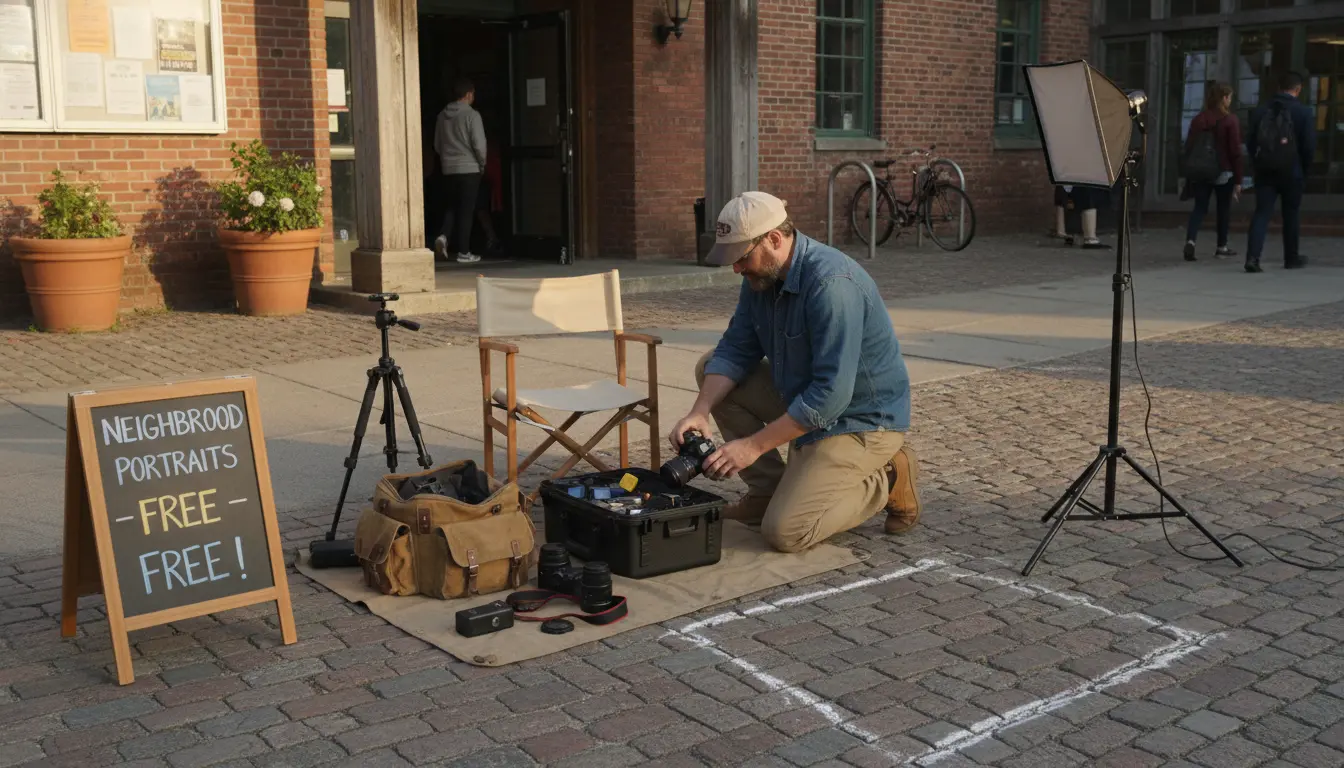
Low-footprint equipment staging against the community center perimeter; buyers can verify typical setup space, surface textures and proximity to building entries and notices.
This image confirms that there is just enough sidewalk width along the Recreation Center wall for compact setups. It also shows the typical brick texture and the proximity to bulletin boards and doors that must remain unobstructed during any session.
How Brownsville’s buildings and boulevards shape available light
Brownsville’s street grid and building massing create relatively predictable light behavior:
- East–west corridors (Pitkin Ave, Linden Blvd): long, straight channels mean the sun tracks directly along the street for much of the day, producing strong directional light and clear, elongated shadows.
- Open recreational spaces (Betsy Head Park and adjacent fields): with fewer tall buildings, these areas receive earlier usable morning light and maintain brighter conditions later into the afternoon.
- Inner courtyards between NYCHA blocks: taller buildings cast stable afternoon shadows into courtyards, softening light but reducing sky visibility.
For wedding photos, this translates into a small timing shift: “golden hour” warmth often arrives slightly later in the streets flanked by taller housing than in the open park fields. A sequence that starts in the park and ends along a side street can take advantage of this shift without long travel.
Weather, wind and practical constraints on the day
Open fields in Brownsville, especially in and around Betsy Head Park, are notably exposed to gusts. Light stands, veils, and loose floral elements are the first to react to sudden wind shifts. By contrast, Recreation Center awnings, bus shelters on Rockaway Ave, and building recesses along Powell St serve as micro-weather shelters when rain or wind picks up without warning.
Crowd patterns also change with the day of week. Weekday late afternoons bring more children and after-school activity into parks and courtyards, while weekend middays can be comparatively quiet in the residential lanes, with activity concentrating near churches, bakeries, and corner stores.
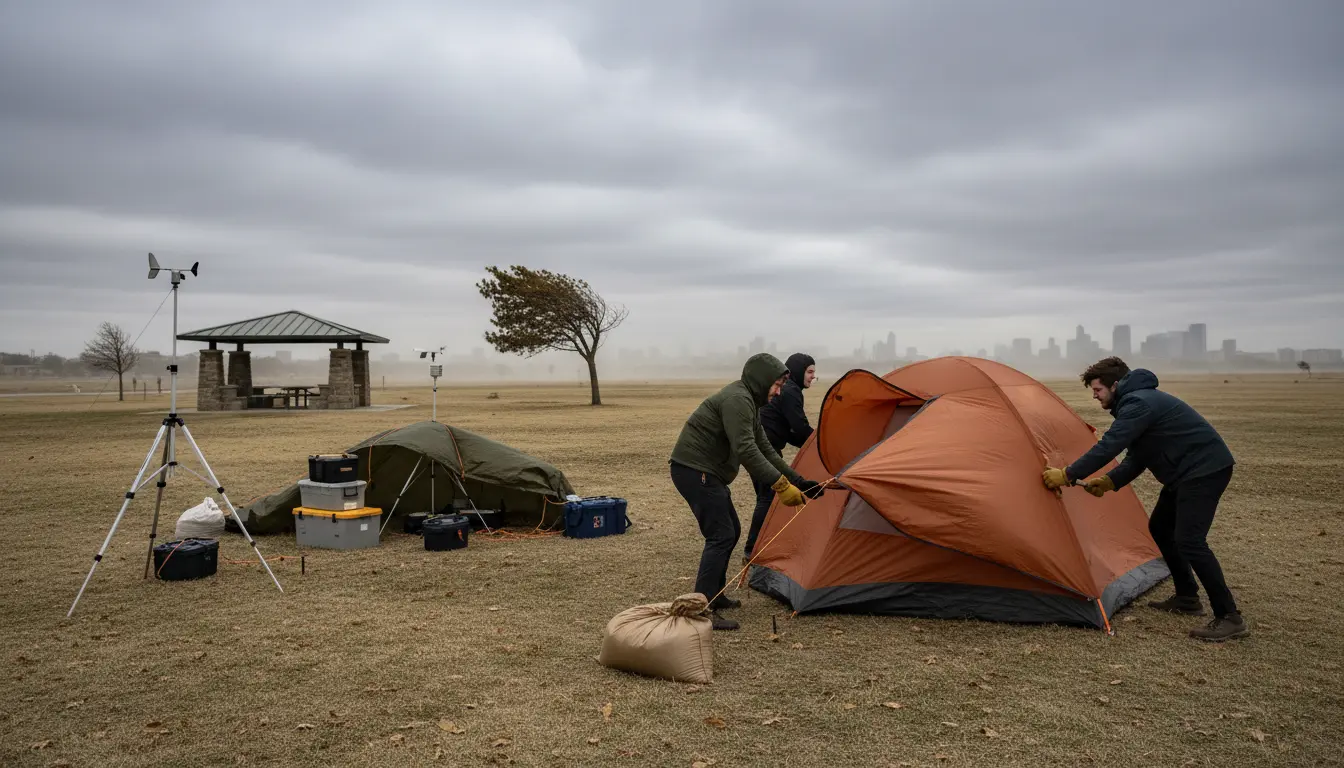
Sandbagged light-stand and staged windbreak near park benches and bus shelter; buyers can verify wind exposure, common shelter points and simple mitigation equipment used on site.
Here you can see how open flags and blowing leaves indicate gusty conditions, while simple sandbags and a portable windbreak keep equipment stable. The nearby awning and bus shelter confirm the kind of real, on-the-ground refuge available when weather shifts mid-session.
Permit and access constraints sit in the background of these choices:
- Organized setups in parks may require coordination or permits, especially if using light stands, backdrops, or larger crews.
- Residential courtyards, entryways, and rooftops are typically controlled spaces; using them for photos generally depends on building management and resident permissions, not just visual appeal.
Local landmarks that reliably show up in photos
Certain Brownsville features appear repeatedly in wedding galleries because they offer clear visual identity without overwhelming the couple:
- The Brownsville Recreation Center facade and signage
- Fencing and tree lines on the edges of Betsy Head Park
- Street signs and benches near the Powell St / Dumont Ave axis
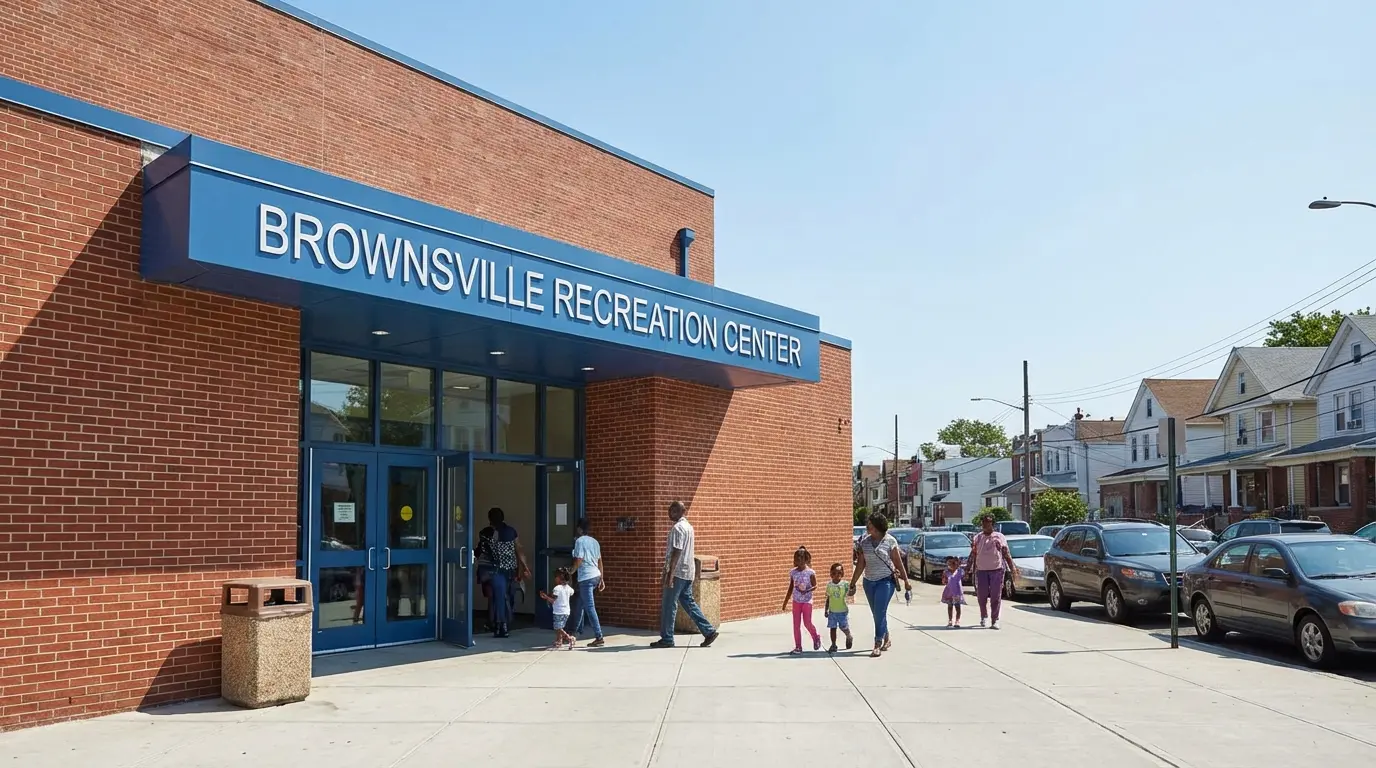
Named community anchor and surrounding textures (brick facade, playground fence); buyers can verify the exact local landmark and immediate surroundings referenced in the neighborhood page.
This view of the Recreation Center entrance, brickwork, fencing, and nearby bike racks confirms the typical textures and signage that appear in background layers of Brownsville wedding portraits.
What finished Brownsville wedding galleries usually look like
Final wedding galleries that use Brownsville settings usually mix:
- Wide frames showing NYCHA silhouettes, trees, and playground fencing for context
- Mid-length portraits on park paths or along brick walls, where Brownsville is implied by texture and signage
- Tighter close-ups that minimize background detail when crowding or street clutter would otherwise compete with the couple
Client and photographer reviewing on-site proofs that include visible Brownsville backdrops; buyers can verify the realistic look of delivered images and how neighborhood elements appear in final selections.
On the laptop screen, you can see how park paths, courtyard edges, and bakery storefronts translate into final image sequences. The combination of open sky, brick, and street detail matches the environments visible directly behind the bench.
Everyday patterns that can disrupt or help a shoot
Several “small” Brownsville patterns have outsized effects on whether a wedding shoot feels smooth or chaotic:
- Bakery and corner-store peaks: short morning lines outside bakeries on Pitkin Ave and similar corners can expand unexpectedly, filling what looked like a clean backdrop with delivery crates, strollers, and chatty lines.
- Weekday vs. weekend timing: weekday late afternoons favor dynamic, community-heavy images in parks and near schools; weekend midday is often calmer in residential lanes, with activity shifting to main corridors and churches instead.
- Micro-weather shelters: people instinctively cluster under bus shelters, Recreation Center awnings, and store overhangs during sudden rain. These same spots can serve as brief refuges for a dressed wedding party moving between locations.
- Walking routes: most people walk in straight lines along the main boulevards rather than cutting through internal courtyards. That pattern keeps some side streets comparatively empty but concentrates foot traffic along key photography corridors.
Understanding these behaviors in advance helps align timing and location choices with the reality on the ground, rather than just the map view.
Adjacent Neighborhoods we serve near Brownsville
Brownsville wedding photography FAQ
How busy is Betsy Head Park during typical wedding photo hours?
Late afternoons, especially on school days, are the busiest, with games, practices, and families using the fields and playgrounds. Late morning and early afternoon often offer clearer paths and more control over who appears in the background, particularly along the outer paths and edges.
Can Brownsville courtyards be used for wedding photos?
Visually, the courtyards and internal walkways between NYCHA buildings offer strong brick lines and greenery, but they are generally treated as resident spaces. Access usually depends on building policies and resident comfort, so most couples rely on perimeter paths, sidewalks, and park-adjacent zones instead.
What’s the most predictable light for portraits in Brownsville?
Open parks receive usable light earlier in the day, while the streets framed by taller buildings soften and warm up a bit later as the sun drops. Planning a sequence that starts in open fields, then moves to side streets or Recreation Center edges toward evening, typically yields the most consistent results.
How different are weekday and weekend shoots here?
Weekdays introduce more school and commuter activity around bus stops, bakeries, and park entries, which can add motion and background layers. Weekends tend to redistribute that activity toward religious centers and family gatherings, leaving some residential corridors and certain park areas noticeably quieter during midday.
Is it realistic to combine Brownsville locations with another area on the same day?
Yes, many couples treat Brownsville as either the preparation or portrait component and pair it with a ceremony or reception elsewhere in the city. Because the transit and road links are straightforward, it is practical to move between Brownsville and another setting—such as a beachfront or more rural-feeling venue—as long as travel time and rush-hour patterns are factored into the schedule.