
Canarsie Brooklyn as a practical setting for wedding-day photos and video
How Canarsie sits within southeast Brooklyn
Canarsie occupies the southeastern edge of Brooklyn, where residential grids run south and east until they meet parkland, marsh and the shoreline. The neighborhood’s feel shifts from enclosed house-lined blocks to sudden openness at the water, which matters if you are planning wedding-day photos that move between home interiors and outdoor spaces.
The area commonly described as Canarsie, Brooklyn stretches from the Flatlands and East Flatbush transition zones in the north down toward the Belt Parkway and the shore. To the west and northwest, routes from Brownsville and East New York feed into Rockaway Parkway and Remsen Avenue, which are the main through-lines couples and families actually use on a wedding day.
Along Avenue L and Avenue M you get long, mostly consistent stretches of low-rise houses. South and east, those same residential blocks eventually give way to Canarsie Park, Seaview Park, and the access roads serving Canarsie Pier and the waterfront. That abrupt boundary—houses for several blocks, then sky and water—is one of the defining layout features for any photo plan here.
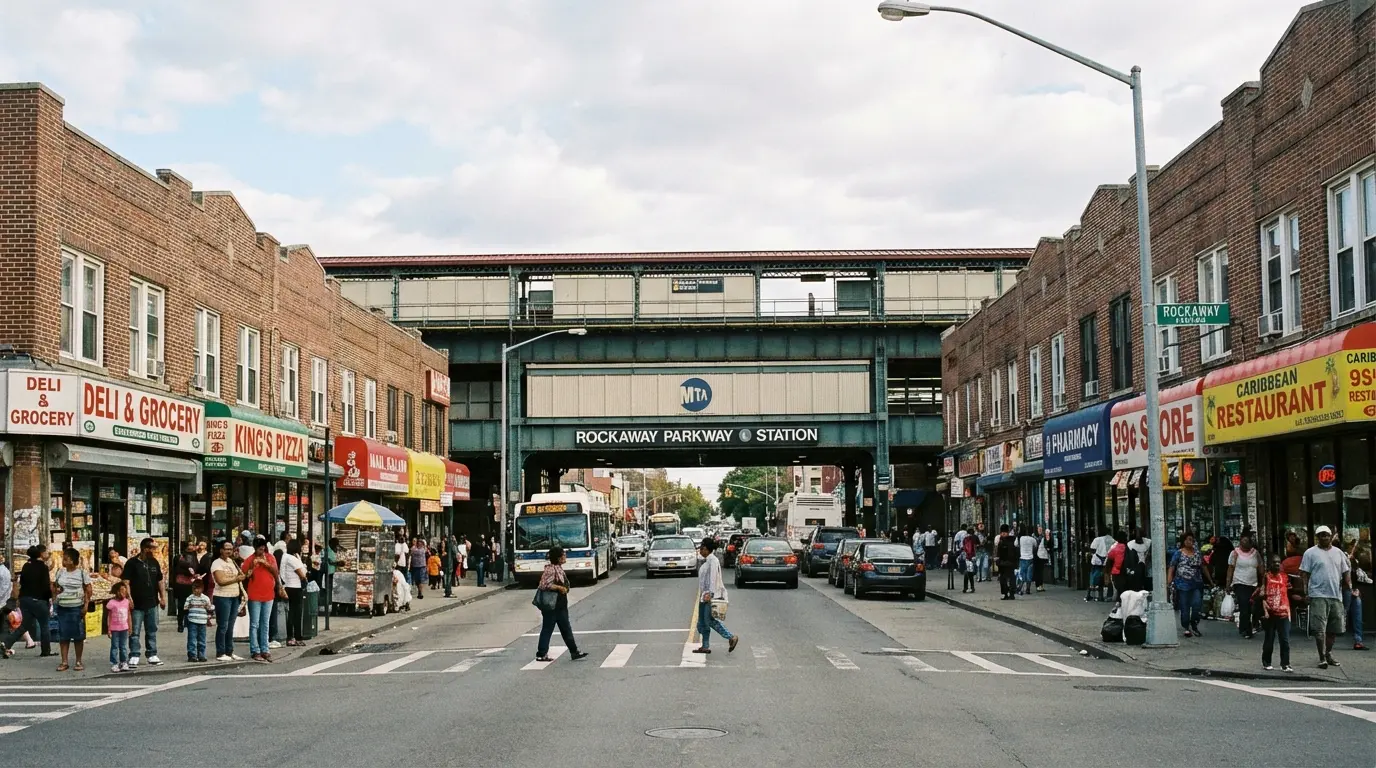
This Rockaway Parkway view shows the L train terminus, small storefronts, HVAC units and benches where people naturally gather. It’s a useful reference point for how dense (or not) the commercial spine feels when you are meeting up or moving a group through the area.
Mobility corridors and arrival patterns
For most Canarsie wedding days, movement is organized around a few predictable routes:
- Rockaway Parkway: runs north–south and carries both cars and bus lines. The L train terminus concentrates people at the western side of the neighborhood, so sidewalk space near the station can feel crowded at certain times, especially around rush hours.
- Remsen Avenue: another vertical line that couples use to move between homes in the mid-neighborhood grids and venues or houses closer to Flatlands.
- Belt Parkway: although it sits as an edge condition, traffic noise from the parkway is noticeable in waterfront and pier areas. Photo sessions near the water sometimes need short pauses when truck noise peaks.
Coming in from East Flatbush, Brownsville, or East New York, drivers usually funnel into Canarsie via Church Avenue, Linden Boulevard, or flat stretches of Avenue D and Avenue L and then drop down toward Rockaway Parkway or Remsen Avenue. That means car arrivals tend to stack up along those corridors, and street parking tightens on specific blocks long before others.
Near Rockaway Parkway, you also get pockets of constant mechanical hum from rooftop HVAC units and shop compressors. This droning sound doesn’t show up in still photos, but it is audible in video and can matter for ceremony snippets or live-audio vows recorded outdoors.
Where wedding photography sessions actually happen in Canarsie
Most couples using a Canarsie base don’t rely on a single location. Typical patterns include:
- Preparations and family formals in residential houses or apartments, often on or just off Avenue L/Avenue M.
- A short drive or ride to Canarsie Park or Seaview Park for greenery and open-sky portraits.
- A stop at Canarsie Pier if a waterfront look or wide-horizon background is important.
This mix uses the neighborhood’s structure: private interiors for getting-ready, mid-distance walks in parks, and a final open-water sequence. The residential-to-waterfront transition is sharp; one or two turns can take you from a quiet, car-lined side street to a windy pier with a clear horizon.
Once couples understand those transitions, it becomes easier to see how a local Wedding photographer might realistically move with them between home, park, and waterfront on a tight schedule.
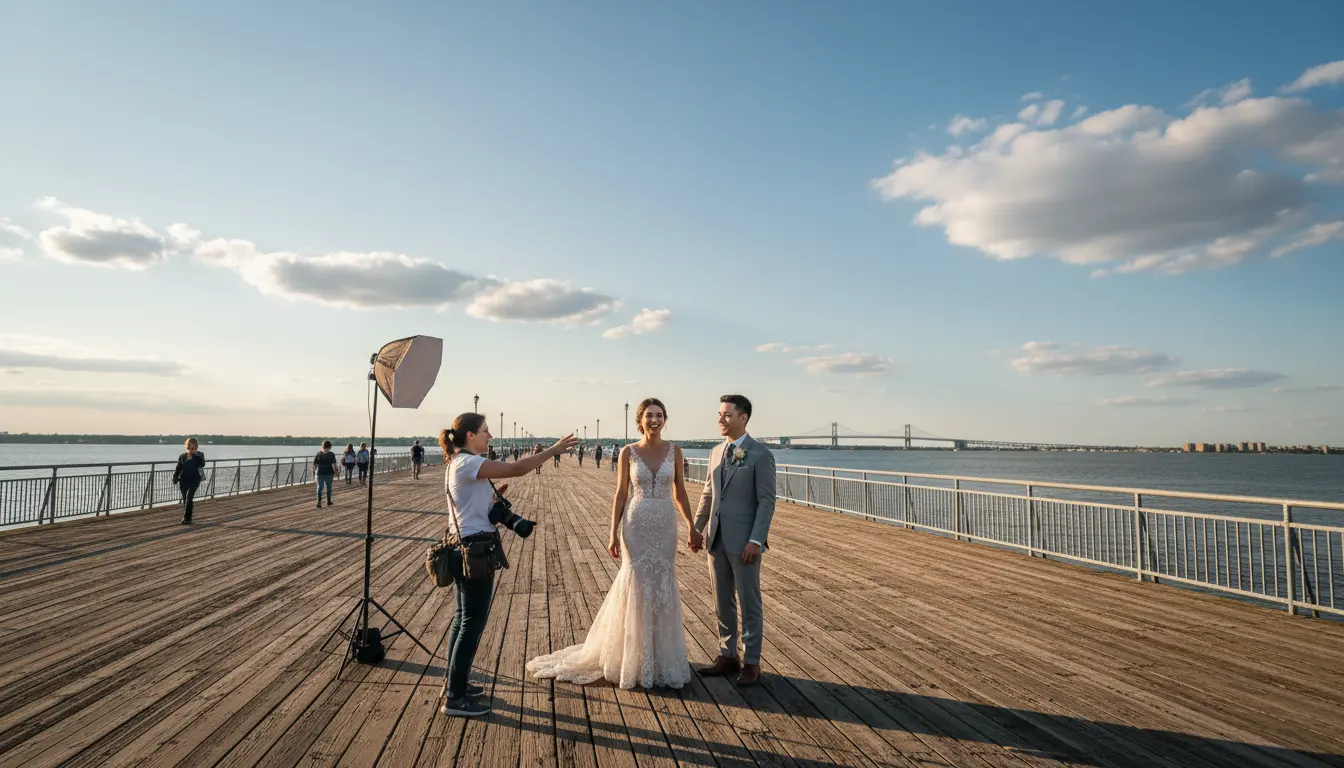
This pier image shows how much sky and water dominate the frame, how close pedestrians are likely to be, and how little heavy equipment can be set up without blocking the walkway.
Choosing between park, pier, and residential settings
Couples planning Wedding Photography in Canarsie often have to decide where limited time is best spent. Each micro-area has its own behavior:
- Canarsie Park: large open fields, soccer pitches, and perimeter paths. Space is abundant, but midday sun can feel harsh and there is little architectural cover. On weekends, sports activity increases background movement.
- Seaview Park corridor: a long, linear greenspace with a central path, benches, and intermittent trees. It works well for walking sequences and couple-focused material where the background stays relatively consistent for several minutes of video.
- Canarsie Pier and nearby shoreline: strongest sense of “arrival” because of the water and boat activity. However, wind is a constant variable, and tidal changes plus glare off the water affect timing.
- Residential blocks east of Remsen Avenue: quieter streets with more consistent low-rise homes. Sidewalk widths and tree coverage vary block by block, influencing how many people and how much gear can be staged without spilling into the roadway.
Street-by-street, the noise and privacy level shifts quickly. A corner facing a busy soccer field reads very differently on camera than the next block over, which may have only passing dog walkers and parked cars.
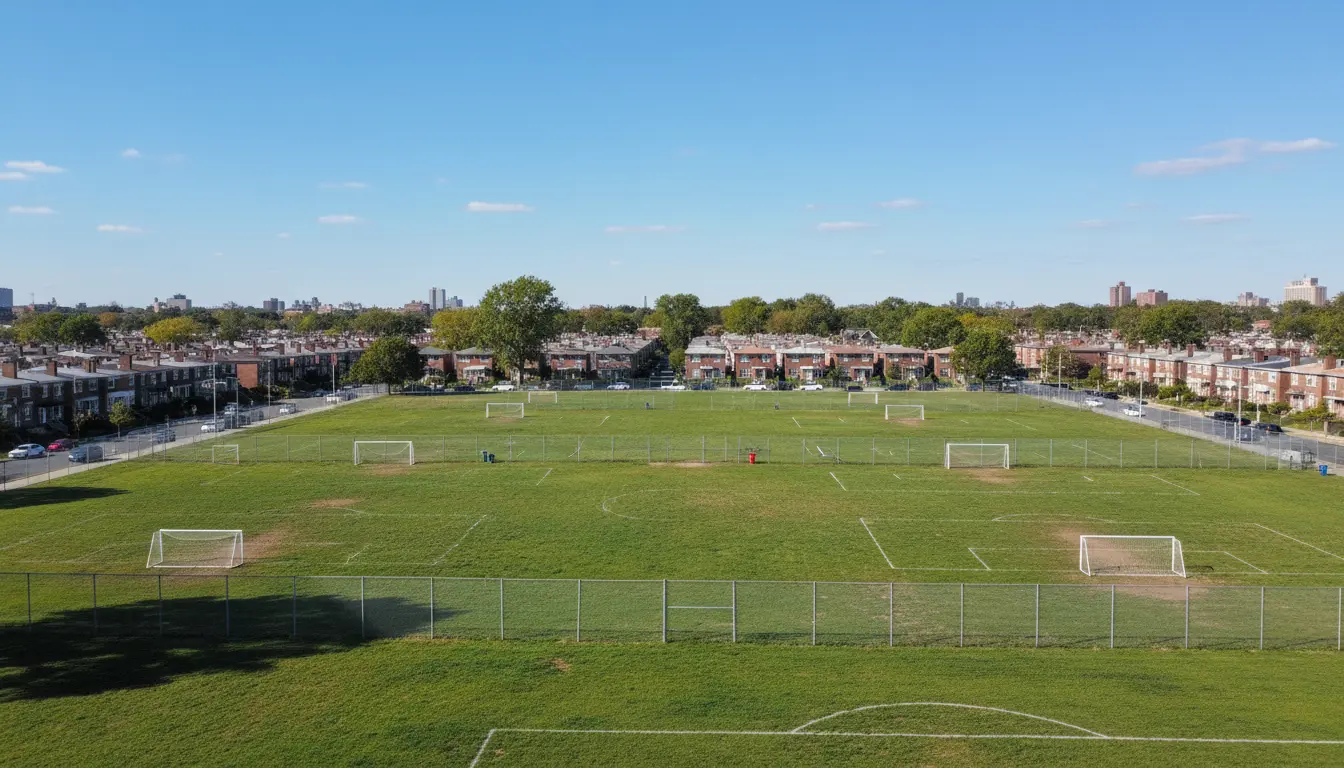
In this view of Canarsie Park, the open fields, benches, access paths, and direct sight-lines into homes across the street are all visible. It shows how exposed a park session can feel compared with a stoop or living-room setting just one avenue away.
How we serve Canarsie through Wedding photographer
- Photography Session
- Cinematic Wedding Videographer
- Wedding preparations photography
- Bridal Portraits
These services naturally map onto the local mix of home interiors, parks, and waterfront, even when everything happens within just a few contiguous blocks.
What Canarsie streets and buildings actually look like in photos
Canarsie’s building stock is mostly detached or semi-detached low-rise homes with occasional small apartment clusters. For visual planning, that means:
- Large sky slices in most frames, especially on side streets without tall trees.
- Façade repetition, where similar brick or siding patterns run for several houses, giving a uniform backdrop for family groups on the sidewalk.
- Occasional visual noise from overhead wires, utility poles, and clustered trash cans near curb cuts.
Along Rockaway Parkway and some intersecting avenues, commercial signage is prominent. Metal roll-down gates, awnings, and hanging signs can either be used intentionally as texture or avoided in favor of quieter residential side streets only a block away.
There are also small industrial-feeling pockets—often just a single building with mechanical stacks or a utility structure at the edge of a park—where a continuous mechanical hum is present. These spots matter less for stills, but they can influence audio quality and the general ambiance of any nearby video work.
Daylight, shadows, and weather across the neighborhood
The low-rise profile of Canarsie means the sun clears the horizon early and stays visible across most of the day:
- Morning: waterfront areas near the pier and shoreline receive usable light first. Because there are no tall buildings blocking the east or southeast, the sun rises into clean sky over the water.
- Midday: open zones like Canarsie Park’s fields and Seaview Park’s central path experience strong overhead light and limited shade except where trees line the path. Shadows are short, and bright patches can cause squinting during group shots.
- Late afternoon: an unobstructed western sky gives long, soft light that skims across residential façades and park edges. Tree-lined avenues can develop alternating bands of shade and sun, which affect how even a group photo looks from one step to the next.
At the pier, afternoon light often reflects sharply off the water, creating strong highlights and deeper facial shadows. Wind over the water also contributes to visible motion in hair, veils, and clothing, which can be an intentional effect or something to minimize, depending on the couple’s preferences.
Permissions, crowds, and basic feasibility in parks and at the pier
In practice, casual couples’ portraits and small family groupings in Canarsie’s public spaces are common, but certain setups can trigger permit or enforcement questions:
- Structured sessions with light stands, tripods, or larger crews in parks may fall under NYC Parks regulations.
- Larger groups—wedding parties, extended family, or staged first-looks with onlookers gathering—can draw attention from park staff, especially around entrances and high-traffic paths.
- Weekends bring more recreational usage to fields and picnic areas, which can reduce privacy and introduce more background activity.
The area commonly referred to on maps as Canarsie Beach Park (including Canarsie Park and the waterfront belt) is covered by standard city park rules posted at entrances. Those signs outline expectations for group activity, equipment, and amplified sound—details that matter if part of your wedding day timeline includes extended time there.
Crowd levels at Canarsie Pier are variable. Early mornings on weekdays can be surprisingly empty, while weekend afternoons see a mix of families, anglers, and casual walkers. That variability directly affects how “private” a pier sequence feels, even if the frame looks open and expansive.
How a wedding day typically moves through Canarsie homes and streets
For many local families, preparations begin in a parent’s or relative’s house. On typical Canarsie blocks, that means:
- Narrow front yards or stoops used as staging areas for portraits between indoor and car segments.
- Sidewalks that accommodate a few people and a light stand or reflector, but not a full crew without extending into the street.
- Close proximity to neighbors’ doors and windows, which can limit loud music or extended blocking of shared walkways.
Once preparation segments are complete, couples often step out for quick portraits on the stoop, then move to a park or pier. These transitions are short in distance but can be complicated by parked cars stacked bumper-to-bumper, delivery vehicles briefly blocking driveways, and sudden changes in tree coverage that shift available light within a few meters.
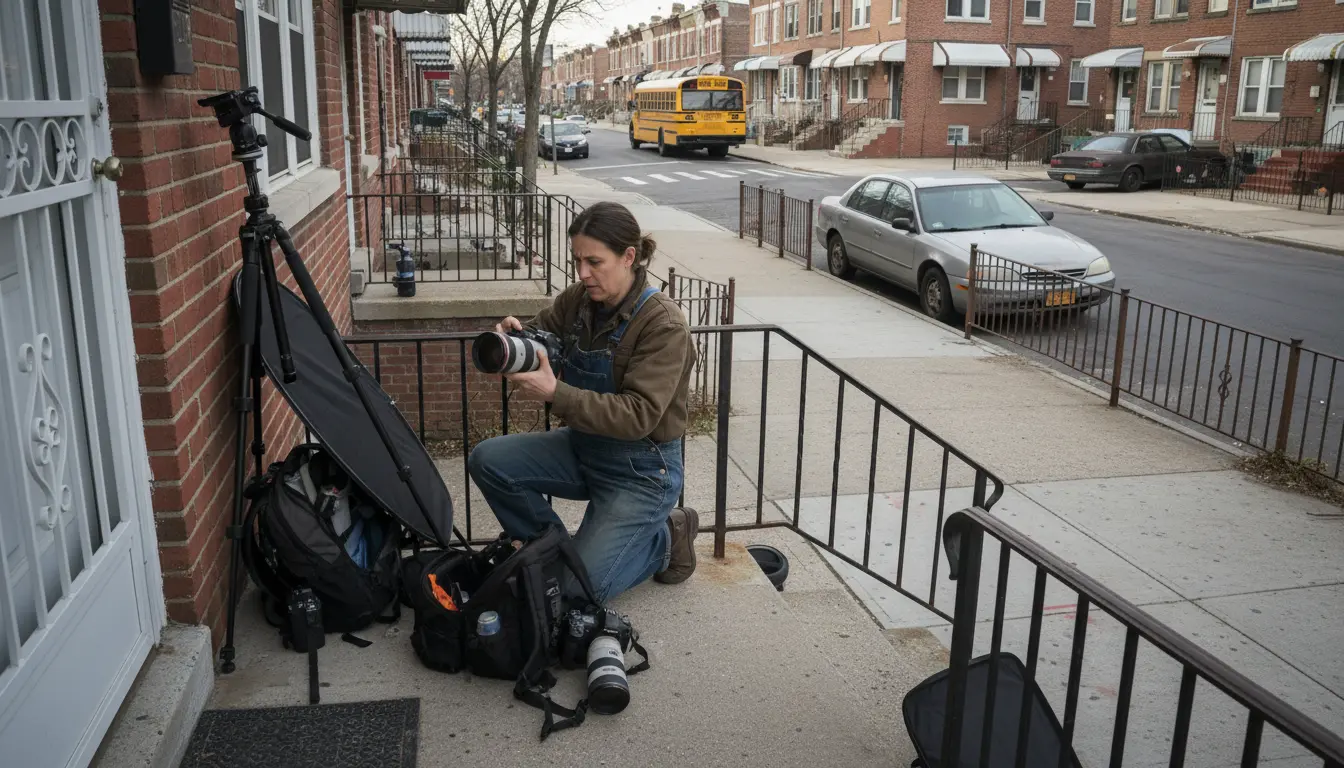
This stoop setup illustrates the real spatial limits: equipment shares space with parked cars, tree shade cuts across the frame, and neighbors’ façades sit only a few feet away. It’s representative of how many Canarsie prep locations feel on the ground.
Managing waterfront wind, equipment, and other on-site risks
Waterfront sessions at Canarsie Pier and along the shoreline introduce specific, predictable constraints:
- Wind: gusts can be strong enough to topple unweighted light stands or flip veils and dresses unexpectedly. Wind direction shifts over the course of a session, particularly when weather fronts move over the bay.
- Glare and reflections: bright sun reflecting off the water can cause squinting and lens flare. Sunglasses on guests and reflective surfaces in the background are common.
- Walkway width: the pier and adjacent paths are shared with anglers, cyclists, and families. Large setups that block movement are not practical, so most crews rely on compact gear and handheld configurations.
Near the park edges, small industrial or utility structures sometimes contribute a faint mechanical bed of sound. This “industrial hum” blends with traffic noise from the Belt Parkway and is barely noticeable in person, but sensitive audio recording for vows or spoken toasts may need to account for it.
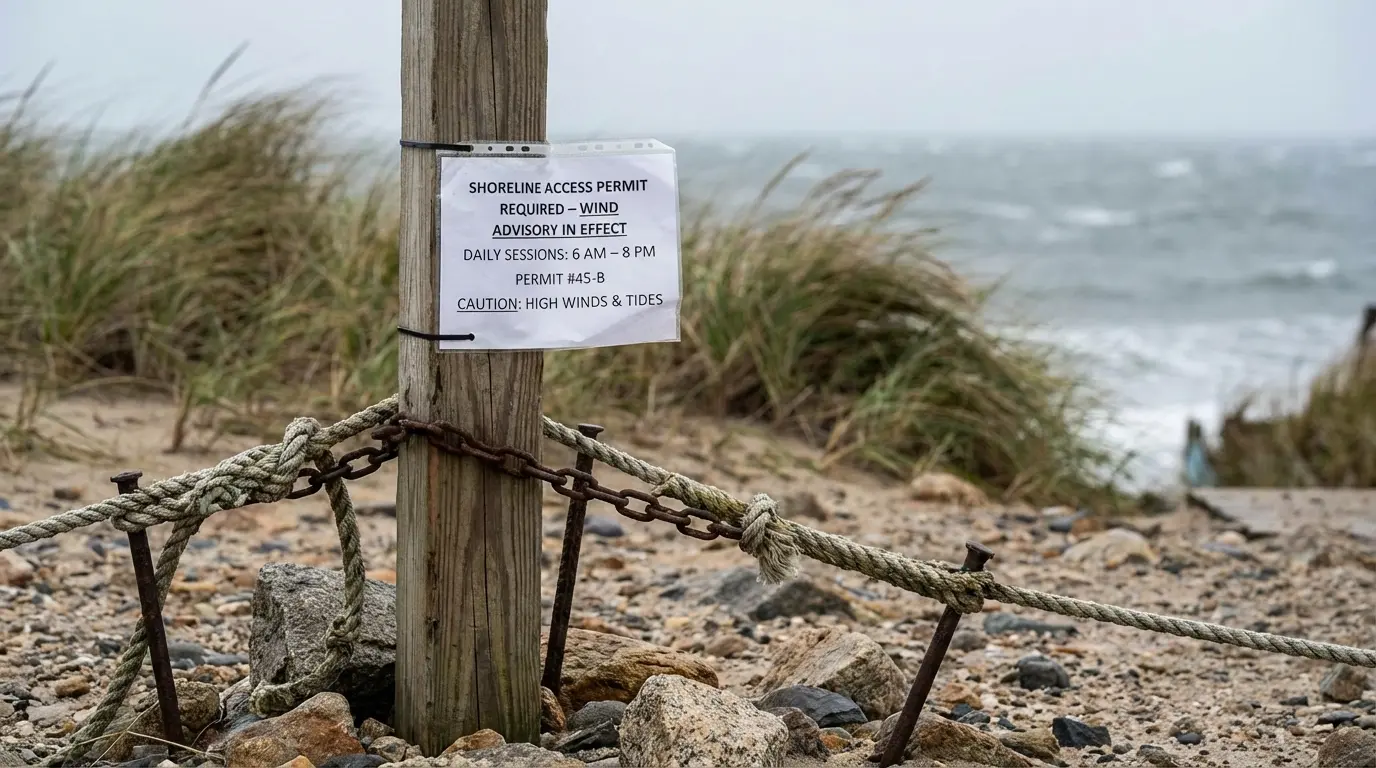
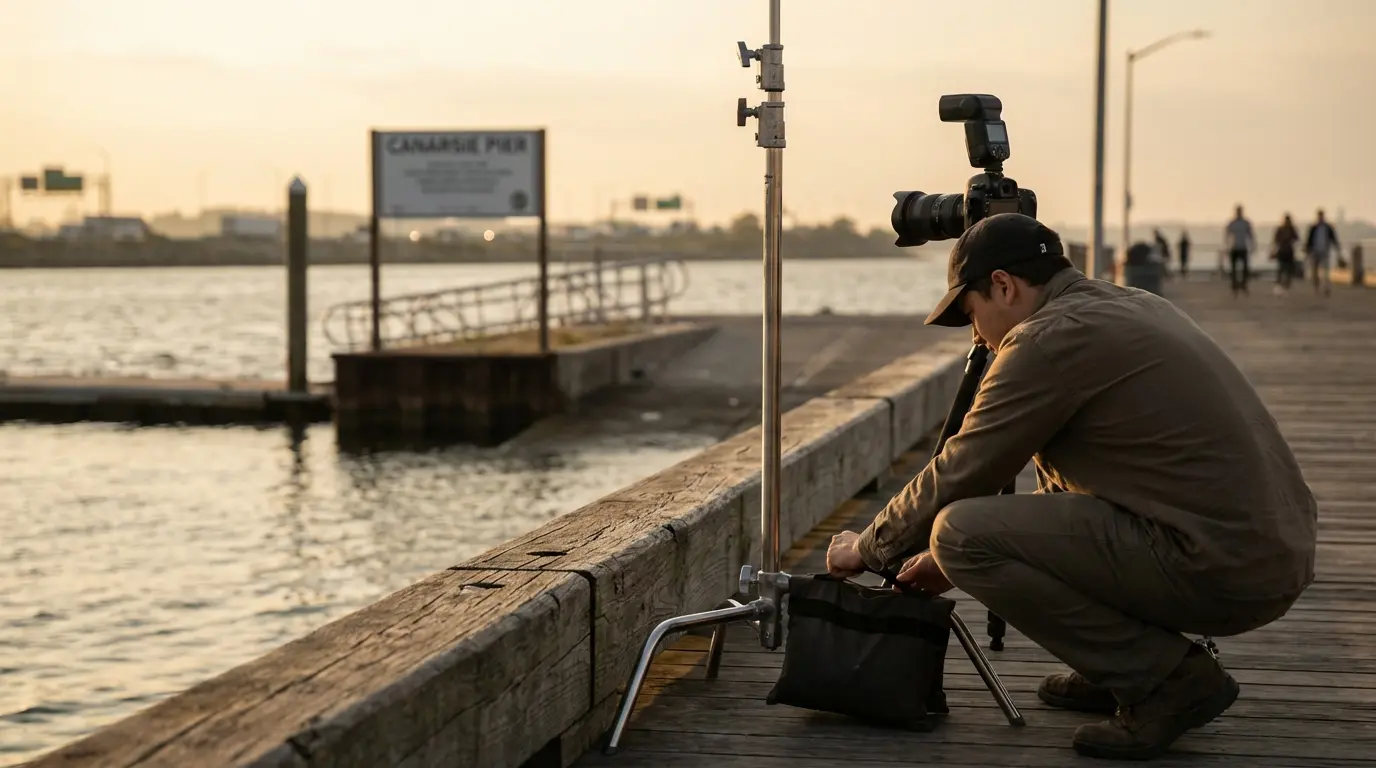
Here you can see sandbags securing the stand to the railing and a visible rules/permit sign in the background, alongside rippled water indicating active wind. This is the sort of mitigation that’s routinely needed at shoreline locations.
Landmarks that confirm you are in the right Canarsie locations
Because Canarsie’s residential grids can feel repetitive, recognizable markers are useful when coordinating multiple cars or vendors:
- The Canarsie Pier entrance sign and boat launch area stand out against the otherwise low-profile shoreline.
- The transition from Avenue L’s residential stretch into the access road for the pier is abrupt; once you see the signage and the change in pavement treatment, you know you’ve reached the waterfront micro-area.
- At park entrances, combinations of fencing, path layouts, and posted rules boards indicate the boundary between neighborhood sidewalks and city-managed greenspace.
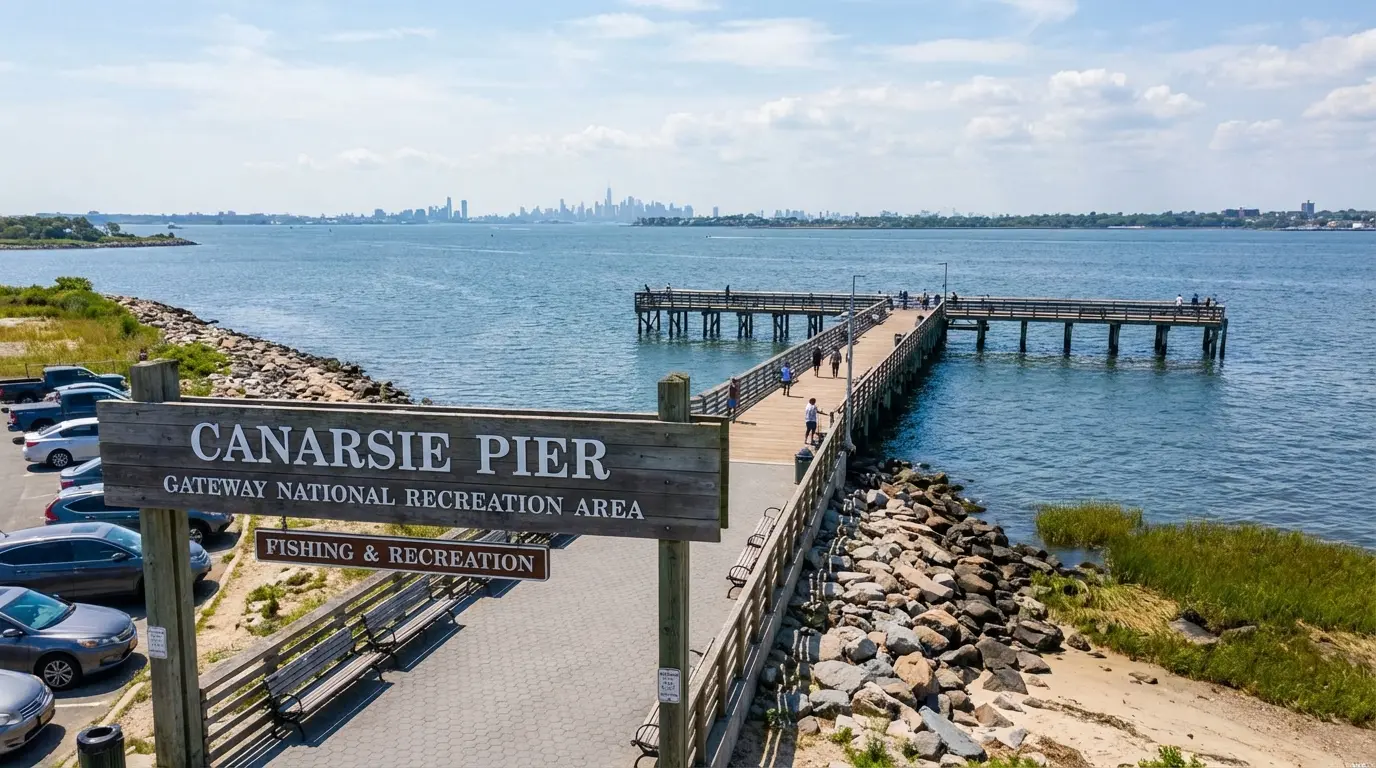
This image focuses on the pier entrance sign, walkway, and boat launch area, with shoreline textures and distant roadway elements visible. It’s a clear visual confirmation of the specific pier location used for many Canarsie waterfront sessions.
How finished Canarsie sessions tend to look
Finished galleries that use Canarsie as a backdrop often show:
- Wide, open-sky frames at the pier with thin horizon lines and water dominating the lower third.
- Linear compositions along Seaview Park’s path, where the couple moves through repeating trees, benches, and lamp posts.
- Domestic, close-up prep images in living rooms and on stoops, where neighboring houses are blurred but plainly present in the background.
Rather than iconic skyline shots, the visual story leans on neighborhood textures: brick fronts, siding, parked cars, and long stretches of grass and path.
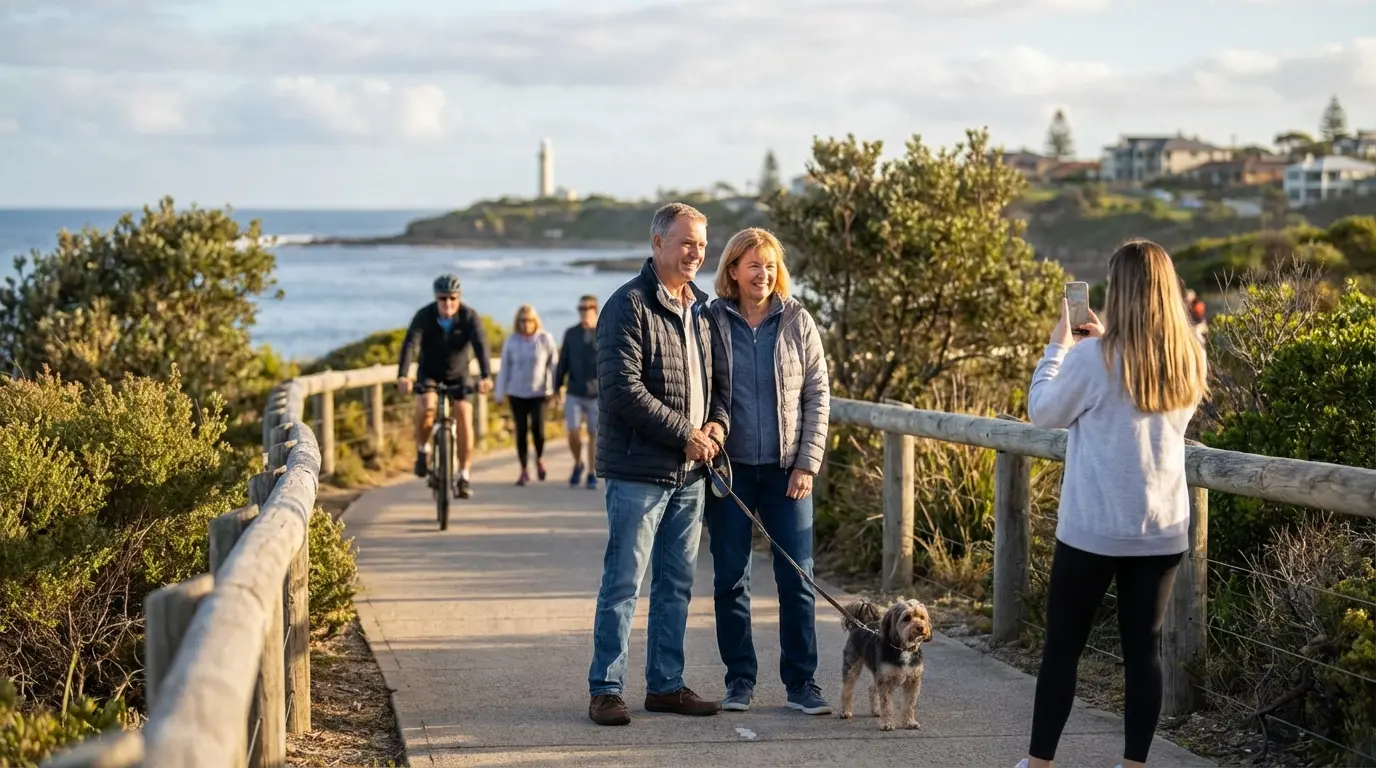
In this Seaview Park corridor frame, the low-rise surroundings allow a large sky area, while benches, trees, and distant homes show the real context that will appear—subtly or clearly—in most late-afternoon shots.
Connecting Canarsie coverage with the rest of Brooklyn
Many couples using Canarsie as a base also have events, religious services, or receptions in other parts of Brooklyn. The neighborhood’s direct street connections to Flatlands, East Flatbush, Brownsville, and East New York mean a wedding-day timeline can start with preparations in a Canarsie home, move to a ceremony elsewhere in the borough, and still return to the pier or parks for portraits.
Because the local street grid feeds into major arterials relatively quickly, travel time is often more impacted by traffic volume than by distance. Knowing where micro-boundaries shift—from tightly packed side streets to faster, multi-lane corridors—helps keep schedules realistic when multiple stops are involved.
Street-by-street changes and ambient noise to factor in
Several small-scale patterns in Canarsie influence how comfortable and effective on-location work feels:
- Micro-boundaries: turning off Avenue L onto some north–south side streets can instantly drop noise and foot traffic, while a similar turn nearer to Rockaway Parkway may land you in front of a busy shop or bus stop.
- Informal meeting spots: corners near the L train terminus often attract small groups waiting for rides, chatting, or buying from nearby shops. Likewise, benches along Seaview Park and by the soccer fields act as casual gathering points. These spots can make backgrounds look busier than a map alone would suggest.
- Street-by-street shift in greenery: some avenues have mature trees forming partial canopies, while the next street over might have newer plantings and more uninterrupted sun. That difference is visible in both shadows on faces and the feeling of the block.
- Edge noise from Belt Parkway: within earshot of the parkway, low-level traffic roar becomes part of the soundscape. It rarely dominates, but it makes truly “silent” audio difficult outdoors.
Understanding these micro-conditions is often as important as knowing the major landmarks when deciding where to schedule quiet moments, first looks, or more candid walking sequences.
Adjacent Neighborhoods we serve near Canarsie
These nearby areas often share families, venues, and travel routes with Canarsie, so many wedding-day plans naturally span more than one of them.
FAQ for planning wedding photos and video in Canarsie
When is the best time of day for outdoor sessions in Canarsie?
Early mornings and late afternoons are typically most usable. Mornings work well at the pier and shoreline, where the sun rises over the water with minimal obstructions. Late afternoons provide soft, directional light along residential streets and park paths, though tree-lined blocks can create patchy shadows that require slight position adjustments.
How crowded does the waterfront get, and will that affect photos?
Crowd levels at Canarsie Pier fluctuate. Weekday mornings are often quiet, while weekend afternoons can bring steady foot traffic, anglers, and families. In practice, this means occasional waiting for clear backgrounds and some onlookers during more formal poses, especially near the main railings and boat launch.
Do I need a permit for wedding photos in Canarsie Park or along the waterfront?
Casual, low-impact photography is common in Canarsie’s parks, but structured sessions with tripods, light stands, or larger groups may fall under NYC Parks permit requirements. Signs at park entrances outline the basic rules. For anything beyond a small, quick session, it’s wise to assume you may need to check current permit expectations rather than assuming every setup is allowed.
Is there parking available at Canarsie Pier?
Yes, there is a dedicated parking area near the pier, but availability varies by time and day. On pleasant weekends, spaces can fill quickly with park users and anglers. When the lot is full, cars spill back toward nearby streets, so it’s useful to allow extra time for parking and walking gear to the actual pier.
Where do preparation photos typically happen in Canarsie?
Most preparation and getting-ready images occur in private homes or apartments, often on or just off Avenue L, Avenue M, or similar residential corridors. Short stoop and sidewalk segments in front of these homes are frequently used for quick portraits before leaving for the ceremony or park locations.
How exposed is the shoreline to weather, and what does that mean for sessions?
Canarsie’s shoreline is open to wind and weather shifts. Even on days that feel calm inland, gusts at the pier can be strong, affecting hair, clothing, and lightweight equipment. Cloud cover and glare change quickly as weather moves over the bay, so expecting variable conditions—rather than a perfectly stable environment—leads to better planning.
What are the main differences between shooting in parks versus residential zones here?
Parks like Canarsie Park and Seaview Park offer space and greenery but come with more background activity, especially on weekends. Residential zones provide more privacy and easier access to bathrooms and indoor backup options, but they also introduce visual elements like parked cars, overhead wires, and close neighbors. Both options are valid; the choice depends on how much openness versus control you want.
Is an indoor session feasible if the weather turns bad on the day?
In Canarsie, many families plan for backup indoor segments in the same homes used for preparations. While room size and natural light vary from house to house, the prevalence of low-rise buildings and street-facing living rooms often allows for workable indoor setups with a mix of window light and modest supplemental lighting.