
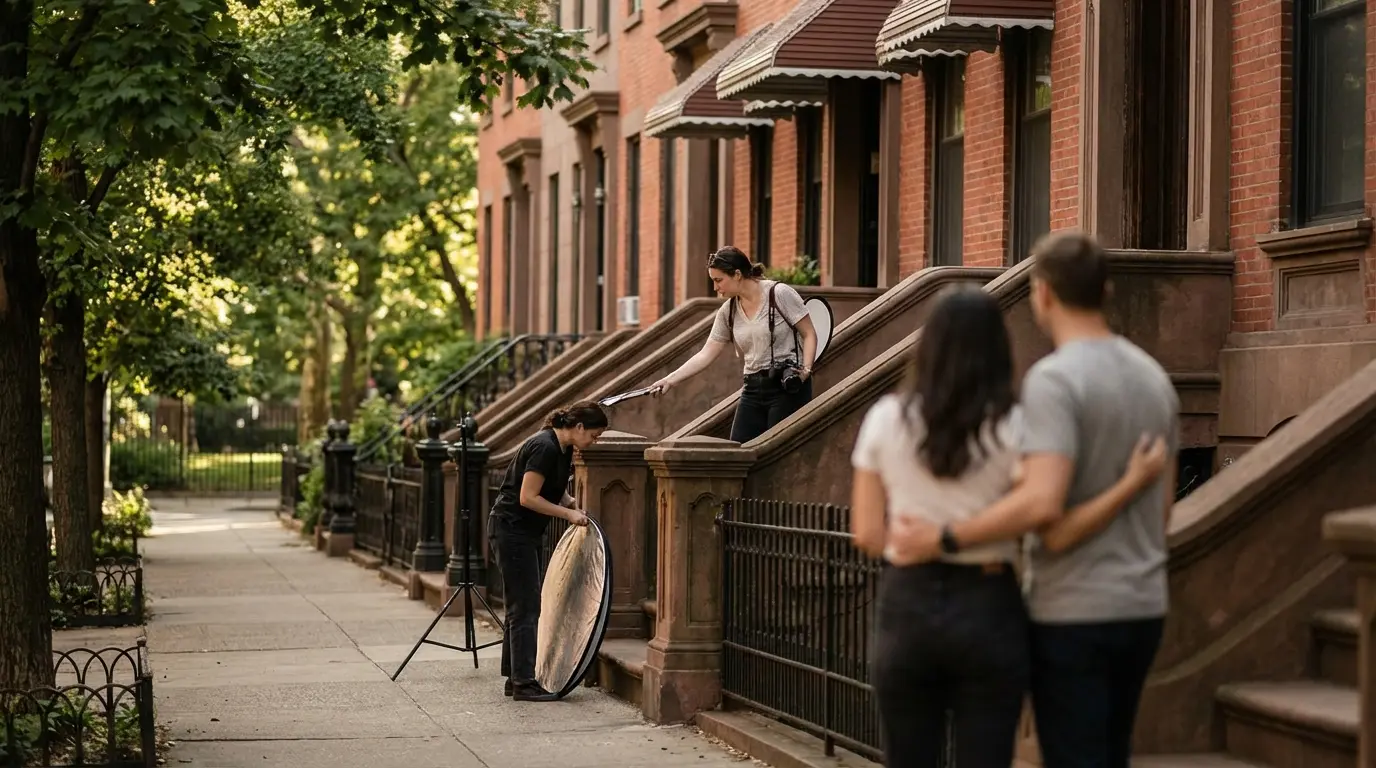
Carroll Gardens in Brooklyn for neighborhood-based wedding photography planning
How Carroll Gardens fits into the local wedding-photo map
Carroll Gardens is a compact, low-rise neighborhood in south-central Brooklyn where most streets read as residential first, with retail and restaurants concentrated on a few main corridors. For couples, it functions less as a formal-venue district and more as a place to build portrait time into a day that may start or end in nearby neighborhoods.
Official descriptions of Carroll Gardens align with what you see on the ground: brownstone blocks running between Court St and Smith St, with the grid opening out toward Gowanus and tapering off before the Red Hook waterfront. North, the streets blend almost seamlessly into Cobble Hill; a few blocks farther bring you toward Boerum Hill and eventually Brooklyn Heights. All of these sit within the broader Brooklyn context that couples often move through in a single wedding day.
For photography, this means the neighborhood is best understood as a series of adjacent, walkable backdrops rather than a single “hero” location. Court St and Smith St carry most of the commercial energy; the smaller side streets provide the brownstone stoops and tree canopies many couples are looking for.
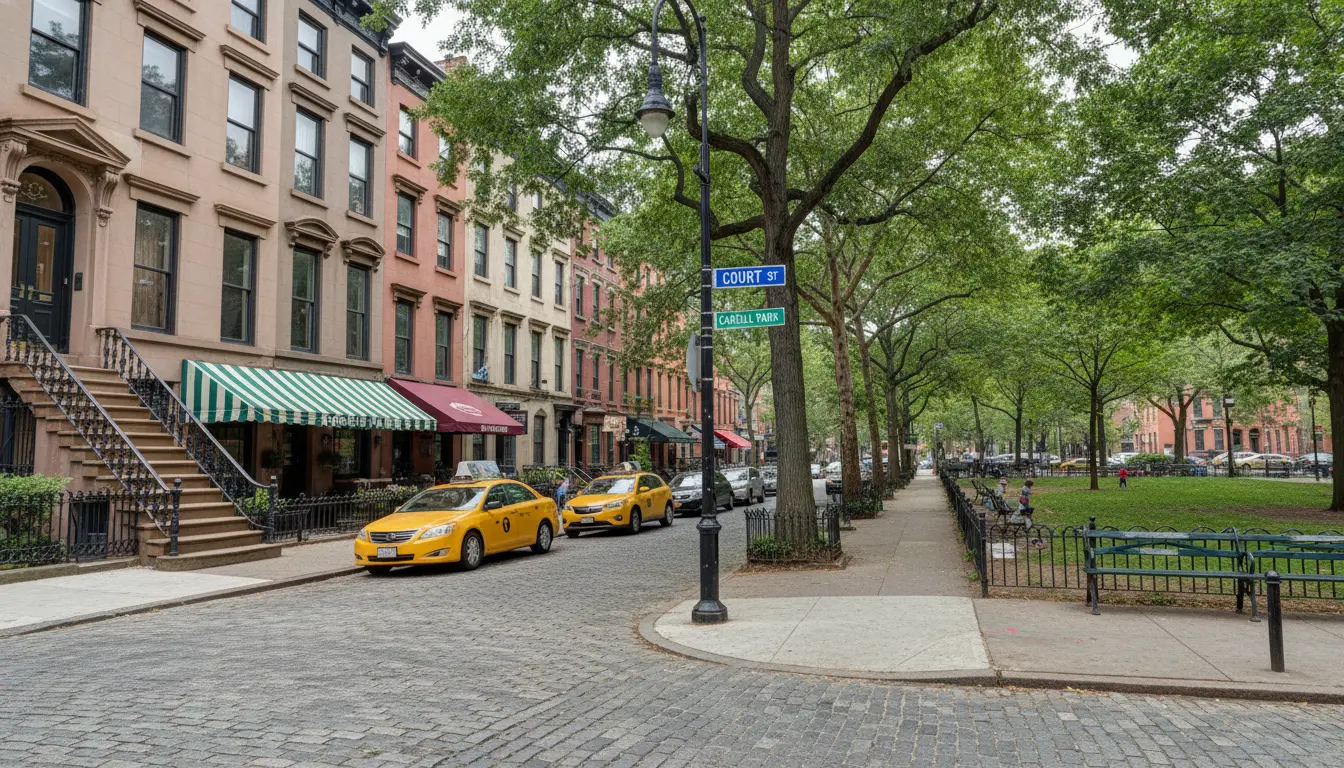
Shows a typical Court St block adjacent to Carroll Park; buyers can verify brownstone scale, retail frontage, tree canopy density, and pedestrian presence.
This image is a good reference for actual block width, canopy coverage, and how pedestrians and parked cars share the space couples will be walking and posing in.
Getting around: streets and subway patterns that shape sessions
The F and G lines at Carroll St and Bergen St are the main transit anchors. Most couples and guests arrive via these stations and then walk along Smith St or Court St before cutting over to a residential side street or Carroll Park. That predictable flow makes it fairly easy to time when blocks will be busiest.
Mobility characteristics that matter for sessions:
- Court St and Smith St act as the spines: steady vehicular traffic, frequent deliveries, and consistent foot flow to pharmacies, groceries, and bakeries. You regularly see “errand chains” where residents move pharmacy → grocery → bakery without leaving the corridor, which produces small surges of pedestrians in the late afternoon.
- East–west side streets (especially near Carroll Park) are narrower, tree-heavy, and calmer, but they can feel tight once you add a photographer, a couple, and any assistant.
- Toward Gowanus, especially along Union St, blocks widen and building heights drop, creating more flexible staging space and easier vehicle access for anyone arriving by car or rideshare.
These patterns are important when you’re deciding whether a quick portrait stop can be done on foot or whether a car should be held nearby for a fast move to the next location.
Where wedding portraits actually happen in Carroll Gardens
Most couples using Carroll Gardens are not holding the ceremony here; they live nearby or are using venues in Cobble Hill, Gowanus, or further into Brooklyn, and they slot in portrait time on the way. Pre-ceremony or engagement-style Wedding Photography sessions tend to cluster in a few repeatable scenarios:
- Short sessions on low-traffic brownstone blocks within a couple of minutes’ walk of Carroll Park.
- Edges of Carroll Park, using the park fence and trees as soft background rather than shooting deep inside the playgrounds.
- Wider corners along Court St or Smith St where gaps in the tree canopy let in more consistent light.
Because sidewalks are narrow and stoops are private property, most setups stay extremely compact—camera, a small reflector, and any handheld accessories only.
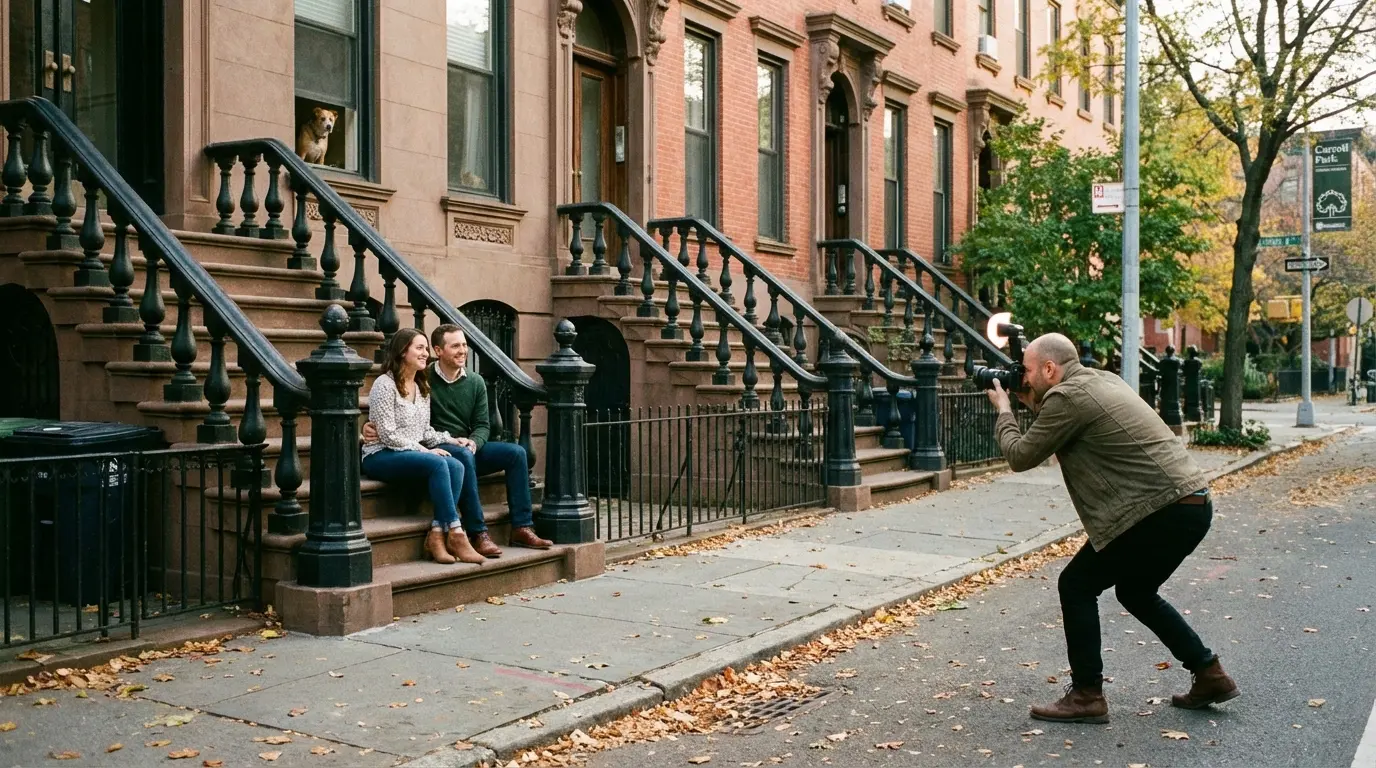
Depicts a realistic small-footprint session on a Carroll Gardens residential block; buyers can verify sidewalk width, stoop backgrounds, and manageable equipment needs.
This shows how little physical room there is between stoops, parked cars, and the curb—useful when deciding how many people and how much gear to bring.
Choosing between Carroll Gardens micro-areas
Within the neighborhood, a few micro-areas behave very differently on camera:
- Carroll Park block cluster: The park’s perimeter gives consistent, recognizable backgrounds but can get busy with families, strollers, and school pickups, especially on weekdays after 2:30 pm.
- Court St retail frontage: Good for “errand day” realism—bakery bags, pharmacy signs, sidewalk conversations. Not touristy, but definitely lived-in, including delivery trucks and trash pickup that may drift into the frame.
- Smith St restaurant corridor: Strong lines from awnings and signage, but outdoor dining narrows the sidewalk and intensifies foot traffic in the evening.
- East-side blocks toward Gowanus: Fewer trees, more sky, and occasional industrial facades. Useful if you want less foliage and more open light.
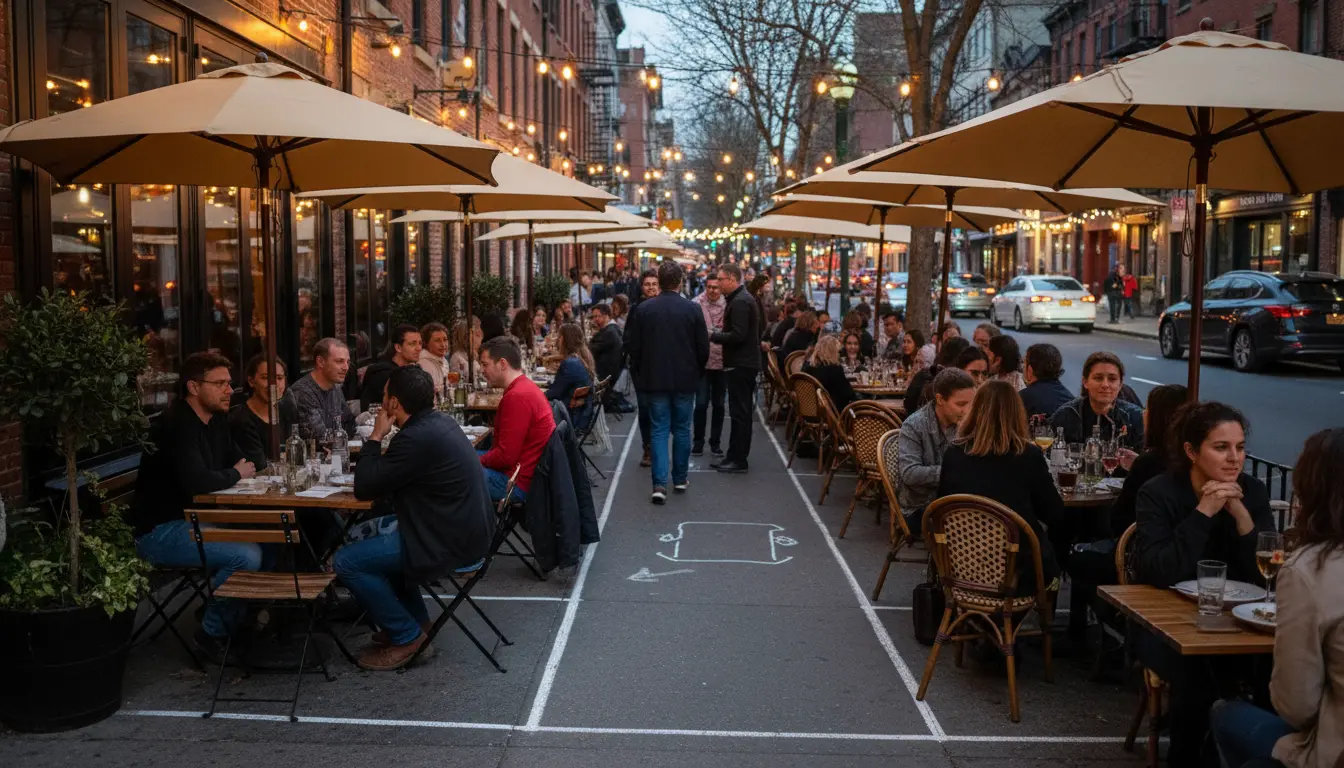
Verifies how outdoor dining on Smith St reduces sidewalk clearance and increases pedestrian density; useful when comparing privacy and timing across micro-areas.
You can see how little buffer exists between tables and the curb, which is why Smith St is better for brief, candid-style passes than extended posed sequences in the evening.
How we serve Carroll Gardens through Wedding Photography
- Wedding photographer – For couples based in Carroll Gardens who want a professional on hand as they move between apartments, parks, and nearby venues.
- Photo editing – Useful when tree canopy or mixed storefront lighting creates uneven exposures that need thoughtful correction afterward.
- Wedding Photographers – For pairs comparing coverage styles across dense residential neighborhoods like Carroll Gardens, Cobble Hill, and Gowanus.
- Wedding photo packages – Often used when portraits happen on Carroll Gardens streets, but ceremonies and receptions take place elsewhere in the city.
How light actually behaves on Carroll Gardens streets
Light behavior here is driven by three factors: tree canopy, low-rise building massing, and proximity to the more open Gowanus side.
- Tree-lined brownstone blocks: For most of the day, you get broken shadows across faces and facades. Morning light is delayed because trees and stoops block the low sun; mid-morning to early afternoon is when the light becomes more workable, but still patchy.
- Court St and Smith St: Fewer trees and wider cross-streets create stronger, more predictable light corridors east–west. Intersections are particularly useful; they open to the sky and reduce the risk of stray branches cutting across the frame.
- Union St toward Gowanus: With fewer tall buildings and open lots, golden hour lingers a bit longer. You can often keep shooting in usable light here after side streets closer to Court St have already fallen into shadow.
This extended “tail” of golden hour on the Union St side is one of the quieter advantages of working in Carroll Gardens, especially if you’re threading portraits between ceremony and reception.
Session flow and movement on a typical shoot day
On a practical level, couples frequently map sessions like this:
- Meet near Carroll Park or a nearby apartment.
- Work a few angles on a residential side street where traffic is light and neighbors are used to occasional photo activity.
- Cut over to Court St for a few frames that show the daily-life side of the neighborhood—bakeries, corner stores, and the constant churn of local errands.
- If time and schedule allow, push toward Union St and the Gowanus edge to catch that last, more directional light before heading to the actual venue.
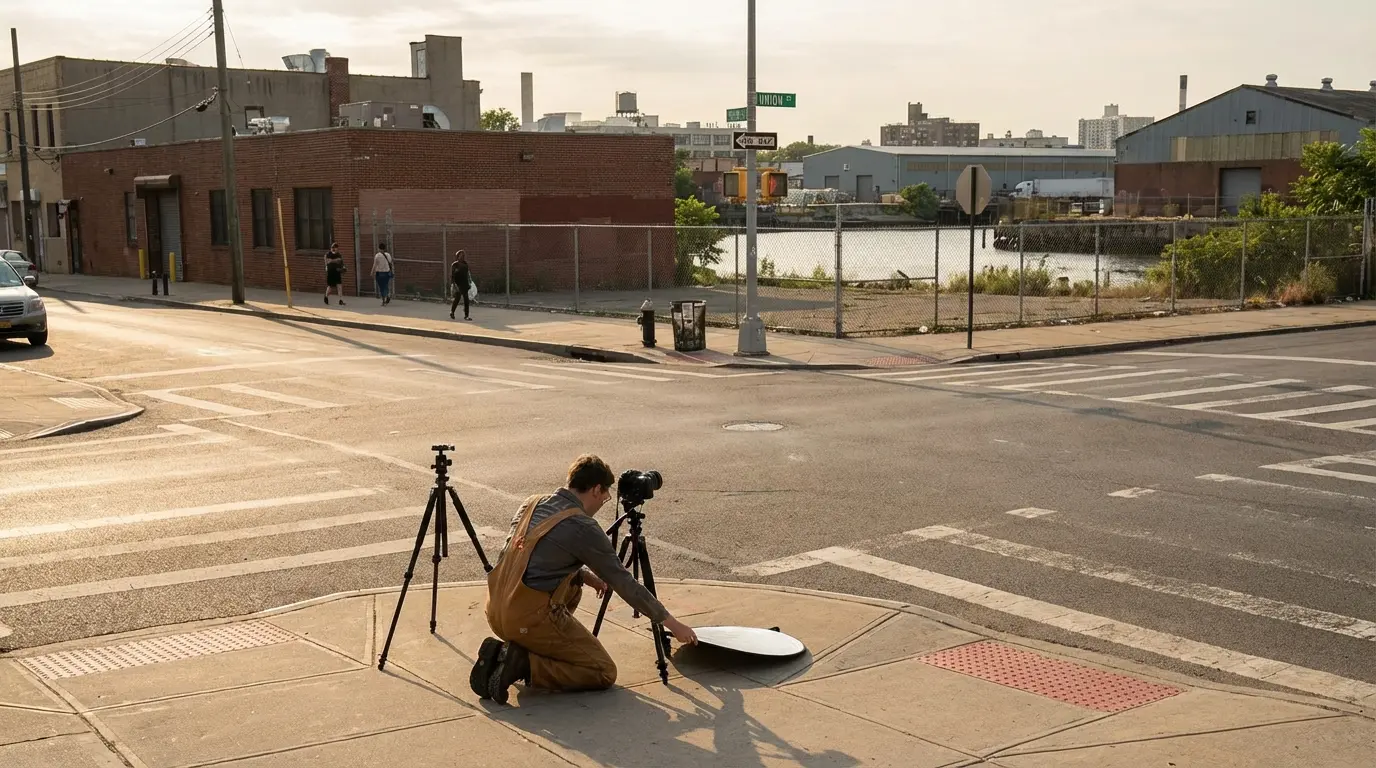
Shows a practical, small-footprint setup at a wider Carroll Gardens intersection; buyers can verify staging space, sightlines for golden-hour light, and nearby vehicular access.
The wide sightlines and reduced tree cover at Union St-style intersections are what make them reliable for late-afternoon portrait sets without heavy crew or equipment.
Seasonal and environmental constraints couples should factor in
Carroll Gardens looks easygoing on a clear day, but some less-visible constraints affect how sessions run:
- After-school congestion: The blocks around Carroll Park and nearby schools get a fast spike in strollers, scooters, and kids between roughly 2:30 and 4:00 pm on school days. That changes both noise levels and how much time you can reasonably spend staging on a corner.
- Restaurant rushes: Smith St tightens considerably at dinner, with outdoor tables encroaching on the sidewalk and delivery cyclists making quick lane changes.
- Wind and exposure toward Gowanus: As the built environment opens up, crosswinds pick up, which can be an issue for veils, lightweight dresses, or reflector use.
In winter, snow management creates its own micro-hazards. Corners next to the park and busier crosswalks often end up with plowed piles that melt slowly, leaving slush bands where you might otherwise stage.
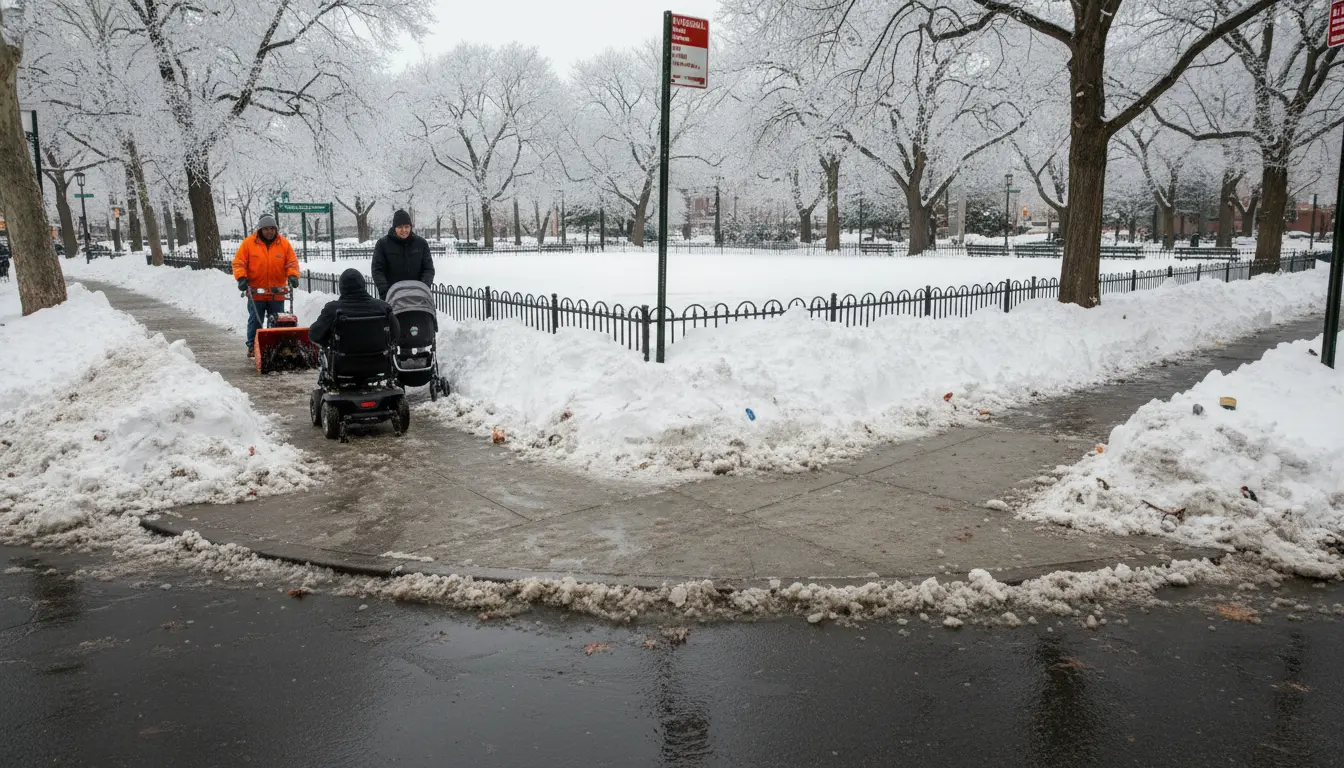
Documents winter slush accumulation at the park edge that can limit staging space and affect tripod stability or footwear choices during winter shoots.
You can see how the usable walking path narrows; in these conditions, most photographers skip stands and work handheld to reduce slip and trip risk.
Carroll Park and other anchors that prove you’re really in Carroll Gardens
Carroll Park is the closest thing this neighborhood has to a central square. Its interior brick paths, play areas, and perimeter fencing are instantly recognizable to people who live nearby, and they frequently appear in engagement and family sessions where couples want their everyday environment to be visible.
The park is officially managed by NYC Parks; the page for Carroll Park | NYC Parks gives a sense of its footprint and facilities. On the ground, most wedding-related photos take place just inside the entrances or on the sidewalks along Court St and Smith St, where you can frame both the greenery and surrounding brownstones without blocking playgrounds.
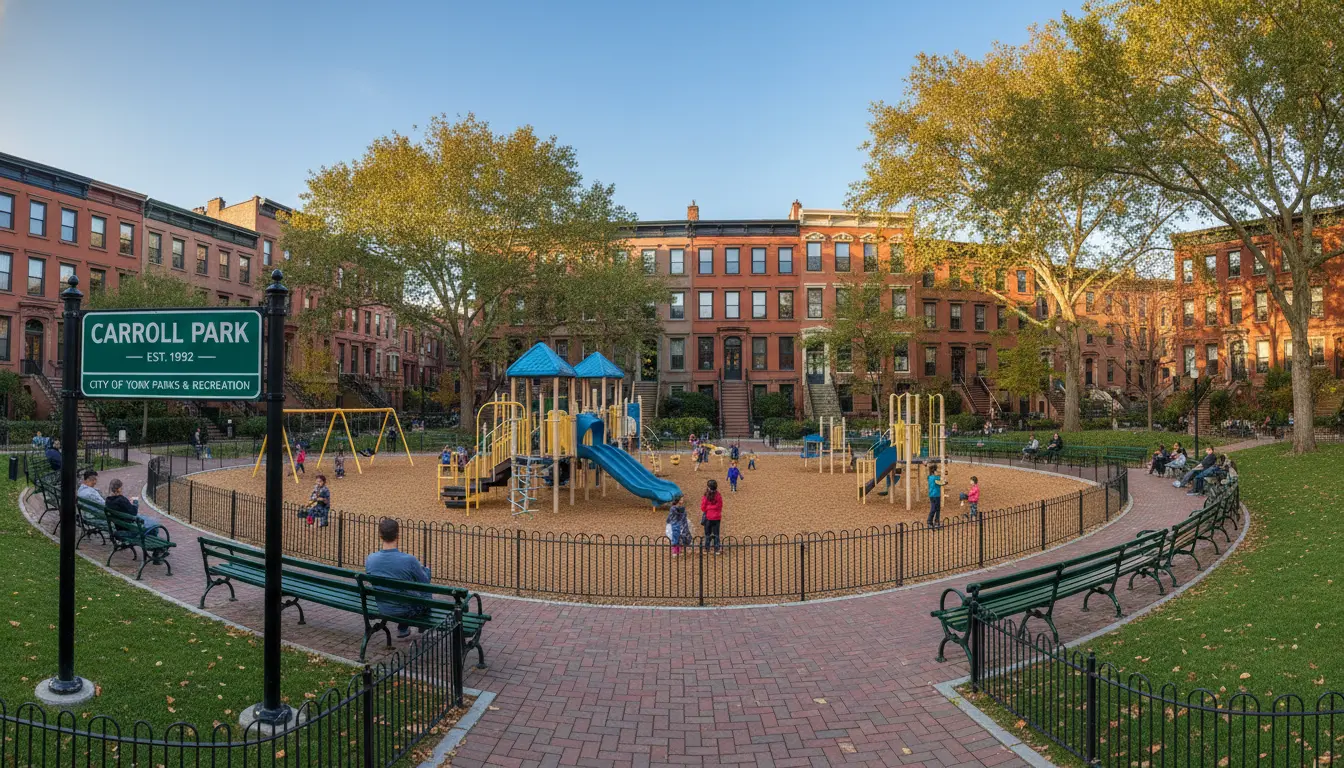
Verifies proximity to Carroll Park and the park’s scale and background elements that are commonly used for portraits; buyers can see fencing, paths, and typical park activity.
Benches, playground equipment, and visible brownstones beyond the fence are the elements that typically end up in background layers during park-adjacent sessions.
What finished images look like after working with Carroll Gardens light
The same tree canopy and mixed-use streets that make Carroll Gardens feel lived-in create specific post-production needs. Patchy shadows across faces, mixed color temperatures from storefront lighting, and details like parked cars or trash bags in the frame often require deliberate cropping and editing rather than heavy on-site staging.
Many couples use nearby cafés on Court St as informal review spaces, looking at a few back-of-camera previews between locations. Final galleries usually retain some of the neighborhood’s texture—brick, stoops, signage—but with balanced contrast and controlled highlights so that the environment feels present without overpowering people.

Example of a deliverable adjusted for Carroll Gardens’ tree-filtered light; buyers can verify the typical shadow patterns and the level of post-session editing given neighborhood lighting conditions.
The view out the café window back onto Court St underlines how closely the final images are tied to real local conditions—awings, pedestrians, and broken light patterns.
Non-tourist details that still affect your photos
Several “invisible” layers of neighborhood life show up in images and logistics, even though they rarely appear in guides:
- Service alleys and back-of-house zones: Just off Court St, narrow service routes behind shops provide clean brick or painted walls that residents pass daily but visitors ignore. These work as neutral backdrops when the main street feels too busy.
- Waste and collection timing: Depending on the block, trash bags and recycling bins can dominate stoop areas on certain evenings. That can affect whether a particular favorite block is usable at a given hour.
- Winter slush hotspots: Beyond the park edges, corner curb cuts at busier intersections tend to collect meltwater and refreeze. This is more about safety and footwear than aesthetics, but it does change how close you can safely work to the street.
- Errand-driven crowds: Because this is a residential area first, bursts of foot traffic are tied to school dismissals, grocery runs, and pharmacy lines, not tour groups. Photos often carry that “real life in progress” feel whether or not people are sharply in focus.
These details don’t prevent sessions from happening, but they explain why timing, footwear, and a flexible shot list matter more here than in a closed, purely event-focused venue.
Adjacent Neighborhoods we serve near Carroll Gardens
- Cobble Hill – Directly north, with almost continuous brownstone blocks and a smooth transition along Court and Clinton Streets.
- Red Hook – Southwest, offering the closest true waterfront backdrops once you leave Carroll Gardens’ residential grid.
- Boerum Hill – Just beyond Cobble Hill, adding slightly wider streets and more mixed-use buildings into a typical wedding-day route.
- Brooklyn Heights – A short transit or car hop away, often paired with Carroll Gardens portraits when couples want at least one skyline or promenade view.
FAQs about using Carroll Gardens for wedding photography
Is Carroll Gardens walkable enough for portraits between events?
Yes. Most key spots—Carroll Park, Court St, Smith St, and nearby brownstone blocks—are within a 5–10 minute walk of each other. Just factor in extra time if you’re moving during school dismissal or weekend brunch windows.
When is the best time of day to shoot here?
Late afternoon into golden hour works well, especially toward the Union St–Gowanus side where open sky keeps light usable a bit longer. Midday can be challenging on tree-heavy streets due to broken shadows.
Does Carroll Park require permission for wedding photos?
Small, low-footprint portrait sessions are generally treated like regular park use. Larger setups, lighting stands, or anything that feels like a production can attract attention from staff or community members, so it’s wise to keep gear minimal and be prepared to move if asked.
How crowded do Court St and Smith St get?
Court St is consistently busy but manageable; you can usually find a doorway or intersection with a bit of breathing room. Smith St compresses more in the evening because of outdoor dining and sidewalk seating, so longer posed sequences are better scheduled earlier in the day.
Can we get waterfront views without leaving Carroll Gardens?
Not really. For true waterfront backdrops, couples typically plan time in Red Hook or another shoreline neighborhood, using Carroll Gardens for the residential and park segments of the day.
Are indoor options available nearby if weather turns?
Carroll Gardens is mostly small restaurants, cafés, and shops. Using interiors typically requires prior arrangements with owners and an understanding that spaces may be tight, especially during service hours.
How noisy is the neighborhood on camera?
Side streets stay relatively calm, with typical city noise from traffic and occasional construction. The main corridors pick up bus traffic, deliveries, and restaurant sound, which matters more for video or recorded vows than for still portraits.
What about parking or loading for cars and vans?
Street parking is competitive, especially near Carroll Park, but ride-shares and livery cars can usually stage briefly on corners or hydrant gaps. Wider intersections toward Gowanus make loading and unloading gear less stressful than on the narrowest brownstone blocks.
How do trees affect timing and planning?
The mature canopy is both an asset and a constraint. It softens harsh sun but also creates unpredictable patterns across faces, especially earlier in the day. Many photographers plan for slightly later start times on tree-lined streets than they would in more open parts of the city.