
Cobble Hill in Brooklyn for grounded wedding photography logistics
How Cobble Hill fits into the Brooklyn grid
Cobble Hill sits as a compact, walkable rectangle in northwest Brooklyn, with a clear street logic that matters for anyone planning wedding-related photography. To the north it transitions into Boerum Hill along a continuous Court St commercial spine; to the west it steps down toward Brooklyn Heights at Atlantic Ave; and to the south it blends into Carroll Gardens along the Henry/Smith corridors.
Most mapping sources treat Cobble Hill as a distinct pocket within greater Cobble Hill, Brooklyn – Wikipedia, with Cobble Hill Park acting as the interior anchor and Atlantic Ave forming the busiest edge. Within the broader Brooklyn context, it’s a small area, but the internal difference between Court St, Henry/Clinton, and the park ring is significant for timing, privacy, and sound.
Walking north–south, Clinton St and Henry St give a calm, tree-lined residential run, while Court St carries more storefronts, buses, and delivery stops. East–west, short blocks connect quickly from the relatively quiet park ring out to Atlantic Ave, where signals, turning traffic, and crosswalk waits can add drag to a tightly scheduled session.
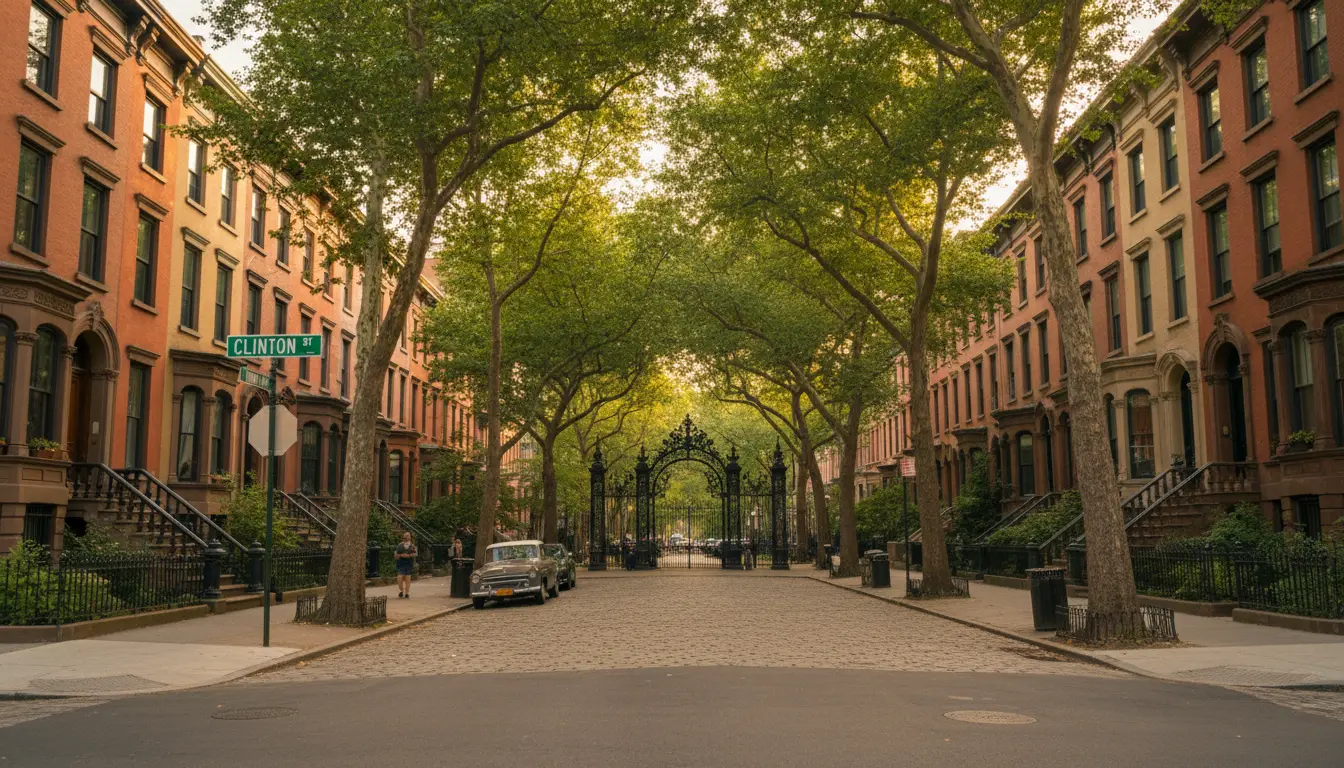
Verifies park proximity, tree-lined street scale, and brownstone density near Cobble Hill Park; useful for judging walking time and entry points.
This view shows how quickly a couple can move from a Clinton St brownstone backdrop to the Cobble Hill Park gate without needing a car or long reset.
How wedding-related sessions actually use Cobble Hill
Most wedding-focused photography in Cobble Hill relies on a small set of repeating spaces: the ring of blocks around Cobble Hill Park, brownstone stoops along Henry and Clinton, and short hops onto Court St for a more urban layer. Local couples, nearby families, and Manhattan-based pairs often use Cobble Hill as a quieter “pre-wedding” or wedding-day portrait pocket because the blocks are compact and predictable.
Typical Wedding Photography flows here avoid large crews and heavy rigs. Instead, sessions favor minimal setups that respect the narrow sidewalks and stoops, keeping the footprint realistic for a busy residential area. Cobble Hill Park is often used for brief greenery segments, with the surrounding streets providing the brownstone context that most people expect from this neighborhood.
Mornings lean toward Henry/Clinton for softer, angled light; late afternoons often shift to west-facing facades or bench lines with more stable shade. Wedding-day schedules frequently build in a five–ten minute walk radius from a getting-ready location or rehearsal dinner site, so being precise about which corners give the right mix of privacy and access is more important than covering a large area.
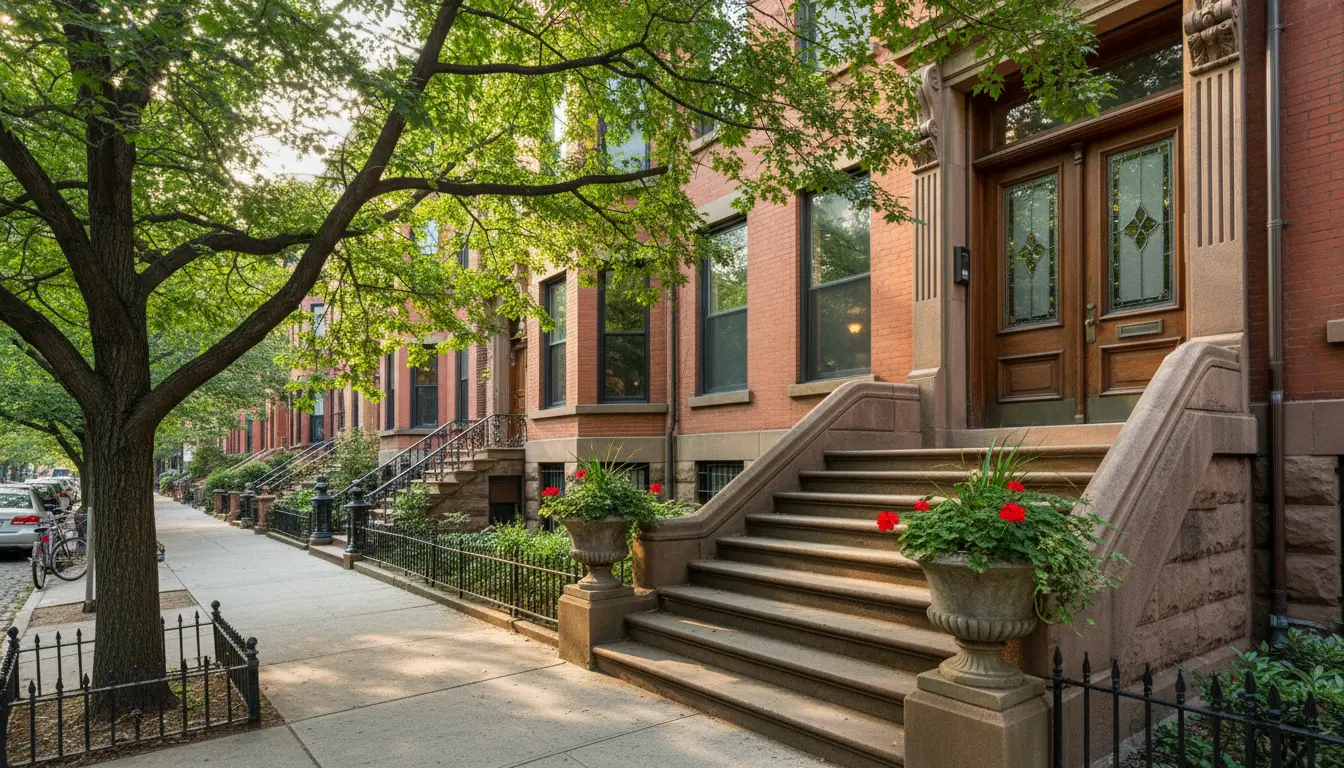
Shows usable stoop area and narrow sidewalk width on Henry St, letting buyers verify feasibility for solo or couple portraits and confirming that setups must avoid blocking pedestrian flow or stroller paths.
The visible stroller and bike give a realistic sense of how little extra room exists once a couple is on the steps, which is why stoop shots here tend to be quick and tightly framed.
Choosing between park, stoop, and Court St backdrops
Within just a few blocks, Cobble Hill gives three very different backdrops:
- The Cobble Hill Park block ring (Clinton–Verandah–Congress) works for small, contained pauses. The park interior is compact, so photographers often use edges—fence lines, gates, and the northwest benches—to avoid feeling crowded.
- Henry/Amity and nearby cross-streets offer quiet brownstone stoops and consistent tree cover. These are good for moments that need more privacy, like first looks or solo bridal portraits.
- The Court St commercial band from roughly Bergen to Pacific introduces storefront glass, awnings, and more visible street life for couples who want an urban layer.
On “market day” weekends and midday grocery rushes, Court St can feel compressed: delivery vans double-park, people queue at specific storefronts, and sidewalk space narrows around those pinch points. That makes it better for quick, walking-in-motion frames than for extended posing.
Cobble Hill Park adds a different sort of constraint. Its small footprint and clear sight lines mean you are almost always sharing space with families, dog walkers, and strollers. Rather than expecting an empty lawn, couples planning portraits here benefit from assuming a shared background and working along the periphery, where benches and paths give more controlled angles.
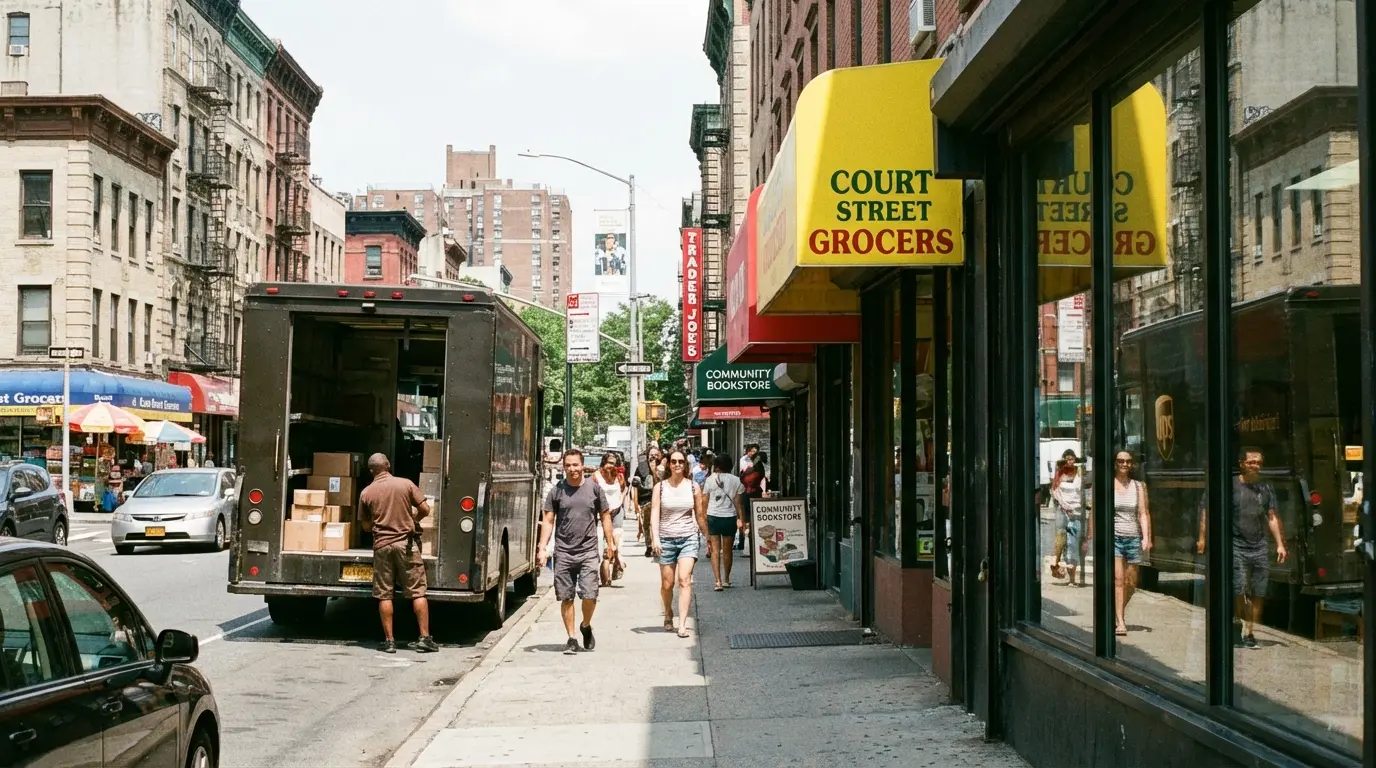
Helps buyers compare Court St’s higher pedestrian and delivery activity versus quieter residential blocks; confirms potential congestion during market days and midday periods.
The parked delivery van and people working around it illustrate why extended, static posing on Court St is rarely practical, especially on busy days.
Light and shadow patterns across a typical Cobble Hill day
Light behavior in Cobble Hill is strongly shaped by brownstone height, street-tree density, and corridor width:
- Morning: East light comes in across Henry and Clinton, but mature trees break it into patches. Faces can alternate between highlight and shade within a few steps, so positioning often tracks gaps in the canopy rather than specific door numbers.
- Midday: Court St, with its varied building heights and reflective glass, produces alternating bands of hard shadow and bright sun. Reflections off storefront windows near Pacific can briefly act as additional fill, but the overall contrast is high.
- Late afternoon: West-facing facades warm up, especially on side streets off Henry and Clinton. Inside Cobble Hill Park, perimeter trees cause the interior lawn and paths to lose usable light earlier than the surrounding streets.
- Atlantic Ave edge: Because the avenue is wider, sky exposure lasts later into the day. This can be helpful if inner blocks have already fallen into deep shade, but the trade-off is traffic and wind.
For wedding and couples sessions, this means park segments are usually front-loaded in the schedule, with brownstone stoops and broader corridors used as light levels drop. On overcast days, the contrast reduces but tree cover can still make under-canopy areas noticeably darker than open intersections.
Wedding photographer Services in Cobble Hill
Photography needs in Cobble Hill often span more than one type of session—engagement-style walks around the park ring, rehearsal coverage between a local restaurant and a townhouse, or focused bridal portraits on a specific stoop. The compact geography makes it realistic to combine multiple looks within a short window, as long as movement paths respect narrow sidewalks and resident flow.
Related services used in and around Cobble Hill:
Couples often use a lighter pre-wedding or engagement-style session to map which corners feel right, then return to a smaller subset of those locations for wedding-day or rehearsal coverage.
Moving people and gear along Cobble Hill’s sidewalks
From a logistics perspective, Cobble Hill is walk-first. Most movements happen on foot between park, stoop, and a few agreed waypoints.
- Clinton and Henry: These are the main “spines” for calm movement—tree-lined, with relatively even sidewalks but frequent strollers and dog walkers. Stoops are close to the curb, so any staging needs to tuck in against railings or recessed entries.
- Cross streets: Short east–west blocks make it easy to pivot from shade to sun or from a quieter side street onto Court St.
- Court St: Useful for transit access and as an orientation line, but not ideal for large groups to stand still. Delivery trucks and ride-share drop-offs create sudden bottlenecks.
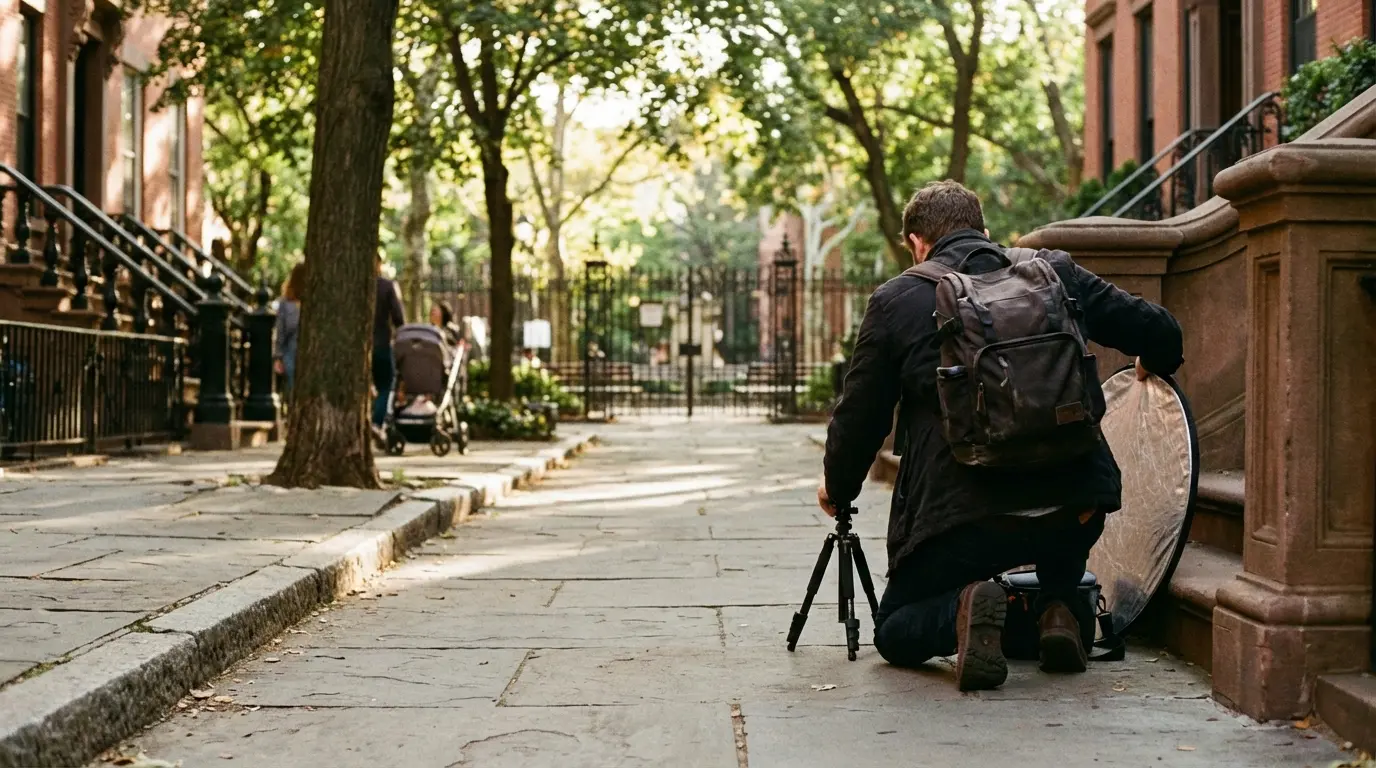
Most wedding-focused work here uses minimal kit: one or two camera bodies, a compact bag, and portable reflectors. Light stands or larger tripods are rarely workable on the narrower sections of Henry and Clinton without interfering with residents.
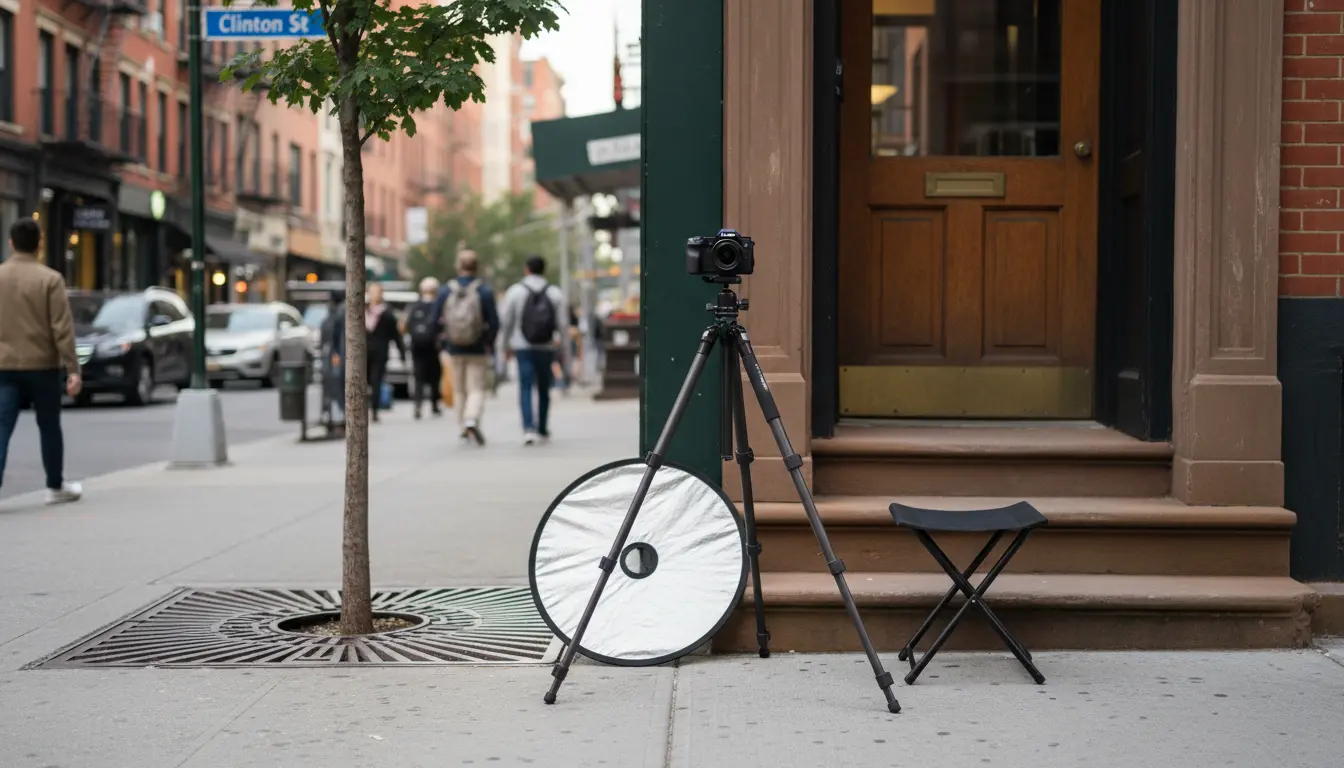
Verifies typical minimal gear footprint that fits narrow sidewalks and recessed stoops in Cobble Hill; demonstrates practical staging without large rigging and how to keep pedestrian paths clear.
The passing stroller path in the frame underlines why photographers here generally keep equipment against building lines and use stoop recesses as micro-weather shelters during brief showers or gusts.
Edge conditions around Atlantic Ave and park-related constraints
Atlantic Ave marks Cobble Hill’s northern and western edge, and it introduces conditions very different from the interior blocks. Traffic is steady, turning movements are frequent, and crosswalk cycles can add a few unplanned minutes every time a group needs to cross. The avenue also behaves like a wind corridor: gusts are more noticeable at intersections, which can be disruptive for veils, loose hair, or umbrellas.
Street repairs are common along Atlantic—temporary lane patches, metal plates, and barricades produce intermittent construction noise. For wedding or rehearsal coverage moving between locations on opposite sides of the avenue, it helps to assume occasional detours around barricades or parked utility vehicles rather than a straight-line path.
Within the neighborhood center, Cobble Hill Park has its own considerations. The space is officially managed as part of the city’s park system, and the guidelines at Cobble Hill Park – NYC Parks outline how the park is intended to be used. Small, lightly equipped photo sessions are common, but anything resembling a large setup, props, or group staging may draw attention from staff or regular users, so it’s important to plan for a low-impact presence and check whether additional permissions are needed for more elaborate plans.
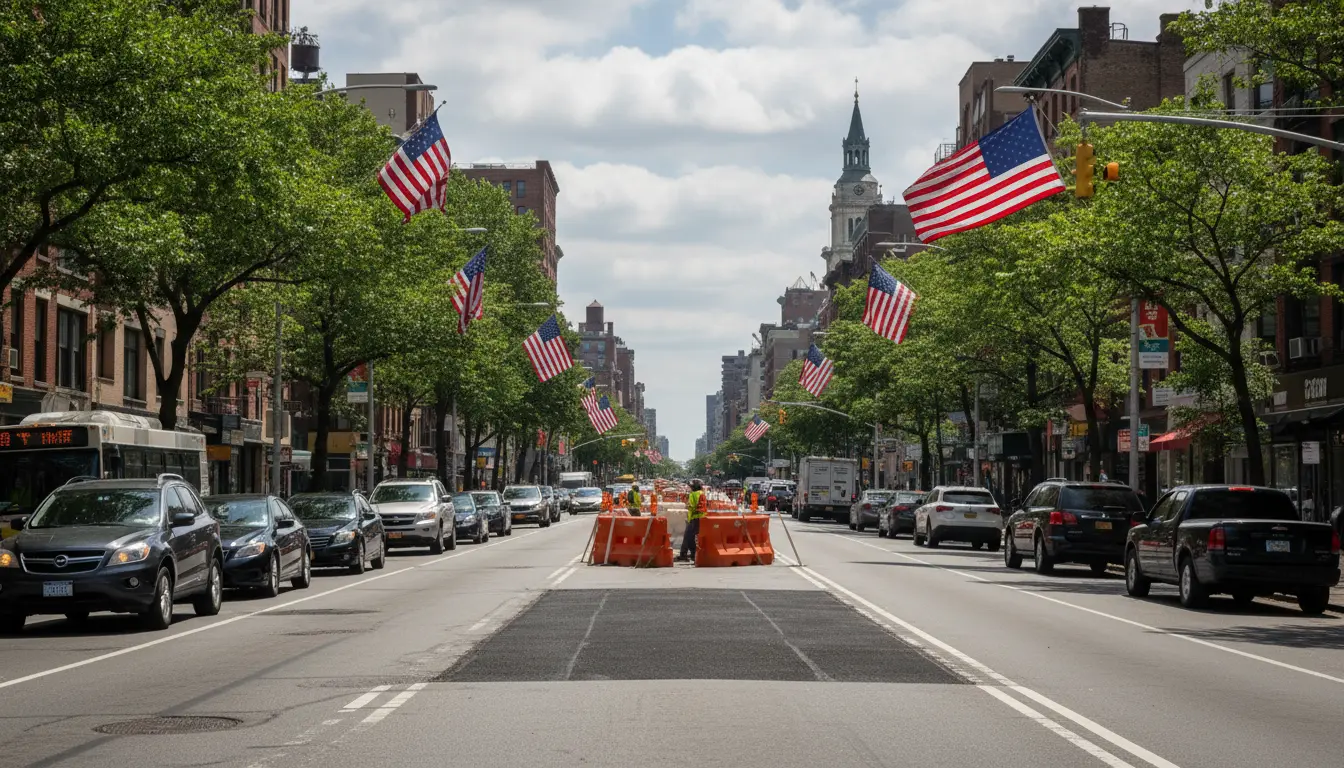
Shows Atlantic Ave’s higher vehicle traffic, typical lane repairs, and potential wind exposure—useful for assessing noise, safety, and scheduling trade-offs for sessions near the neighborhood edge.
The visible barricades and crosswalk wait point to why many photographers keep most wedding portraits on the interior grid and use Atlantic primarily as a transit boundary.
Bench lines, quiet pockets, and other concrete proof points
Cobble Hill Park’s northwest bench line, where the park boundary meets adjacent brownstones, functions as a reliable meeting and resting point. It tends to hold shade longer than the eastern side due to tree placement and building massing, which makes it a better choice for waiting through schedule slips or short breaks between setups.
Around the park ring (Clinton–Verandah–Congress), side streets create small “pressure-release” zones away from Court St. These are often where couples step aside to adjust outfits, fix hair after a gusty Atlantic crossing, or regroup before walking back toward a reception. Henry/Amity, in particular, offers a quieter residential feel while still being only a short walk from more active corners.
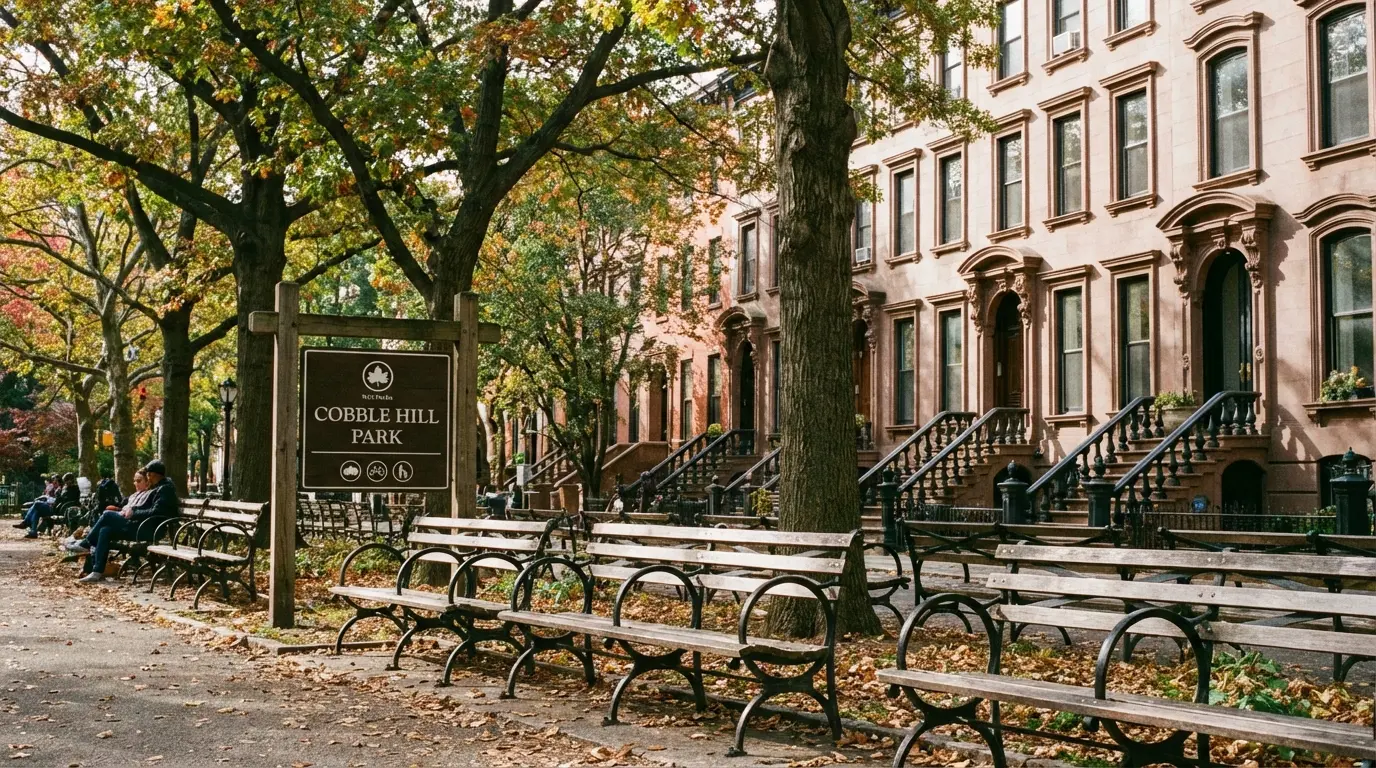
Verifies the exact park anchor, bench location, and relative shade timing on the northwest side—helps buyers pick meeting points with more stable bench shade.
The readable park sign and facing brownstones make this spot easy to describe to guests or vendors, reducing the chance of miscommunication on a tight wedding-day timeline.
What finished images from Cobble Hill typically look like
Final images produced in Cobble Hill reflect its actual density and texture: brownstone facades close to the curb, tree canopies that break up the sky, and occasional background pedestrians or parked cars. On Henry and Clinton, portraits often frame tightly to keep focus on stoop railings, doors, and masonry details; in the park, compositions usually include fence lines, pathways, and nearby trees rather than wide, empty lawns.
Late-afternoon sessions on inner blocks tend to show stronger shadow edges, especially along stair risers and under tree branches. On overcast days, the neighborhood reads more uniformly, but the proximity of buildings still creates deeper pockets of shade near recessed entries and along north-facing walls.
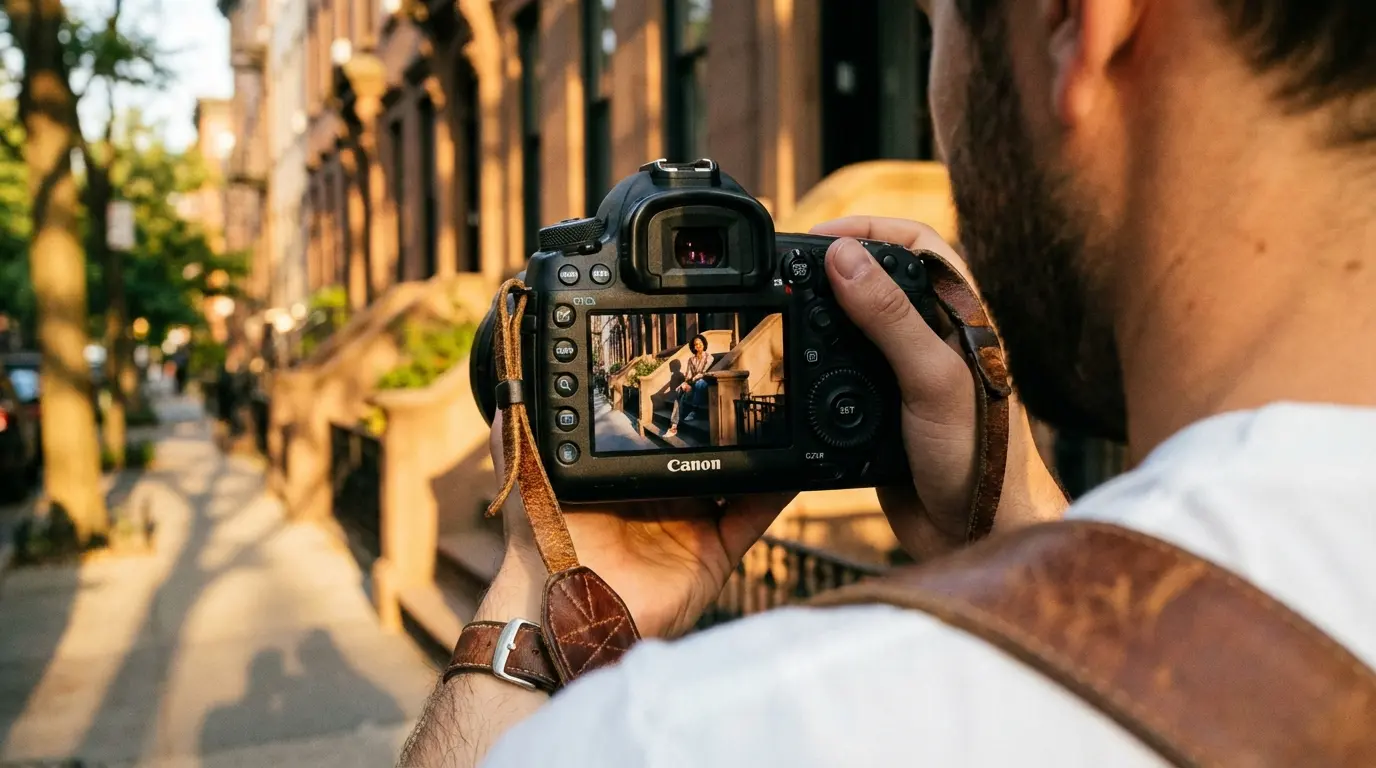
Allows buyers to verify expected framing, background scale, and shadow contrast for portraits taken on Henry St during late afternoon light; a non-idealized example of a typical output in this neighborhood.
The brownstone steps and mid-level contrast here are representative of what most couples receive from real sessions in Cobble Hill, rather than highly staged or empty-street scenarios.
Adjacent Neighborhoods we serve near Cobble Hill
Work in Cobble Hill frequently extends just beyond its borders, following clients between getting-ready locations, ceremonies, and receptions in neighboring areas. Common extensions include crossing Atlantic Ave into Boerum Hill, heading west into Brooklyn Heights, or moving south into Carroll Gardens for additional brownstone and tree-lined backdrops.
FAQ: Using Cobble Hill for wedding and couples photography
Where is a reliable meeting point in Cobble Hill for a wedding or couples session?
The northwest bench line inside Cobble Hill Park, near the main park sign and facing brownstones, is one of the most dependable spots. It’s easy to describe, offers relatively stable shade, and is close to both Clinton and Congress for quick movement onto quieter side streets.
When does light fade fastest in Cobble Hill?
Interior park areas lose light earlier than nearby streets because of tree cover and surrounding building height. After mid-afternoon, Cobble Hill Park darkens sooner than Henry or Clinton, while Atlantic Ave and some wider intersections retain usable light a bit longer due to greater sky exposure.
Which streets are quietest for stoop or bridal portraits?
Henry/Amity and portions of Clinton just off the park ring are typically calmer than Court St or Atlantic. These blocks still have regular resident traffic—strollers, dog walkers, deliveries—but the flow is slower and more predictable, making them better suited for focused stoop or bridal portraits.
How busy does Court St get on weekends or “market days”?
On weekend middays, Court St between roughly Bergen and Pacific sees overlapping grocery runs, deliveries, and local errands. Delivery trucks may idle at the curb, and lines outside certain storefronts can temporarily narrow the sidewalk. It remains workable for in-motion shots but is rarely ideal for stationary group portraits during those peaks.
Are there good weather-shelter options if conditions change suddenly?
Recessed stoops along Clinton and Henry, as well as some Atlantic Ave storefront alcoves, act as practical micro-shelters during short showers or gusty periods. These can be used for brief pauses, quick touch-ups, or switching gear without blocking the main pedestrian path, as long as you stay close to building lines and keep equipment compact.
How do ongoing street repairs affect wedding-day timing?
Street repairs are most noticeable along Atlantic Ave, where lane patches and barricades can lead to short-term noise and minor detours. On interior blocks, work is less frequent but still possible. Adding a small buffer into walking times—especially when crossing Atlantic—helps absorb delays from unexpected utility trucks or construction fencing.
Is it realistic to move a bridal party on foot between Cobble Hill and nearby neighborhoods?
Yes, but route choice matters. Crossing Atlantic Ave into adjacent neighborhoods like Boerum Hill or Brooklyn Heights requires accounting for signal cycles and crowding at corners. Smaller groups move more smoothly through Henry/Clinton corridors and then across at calmer intersections, while larger bridal parties may want to minimize the number of crossings during tightly timed segments.