
Evaluating Commercial Photography Providers on the Brooklyn Map
Commercial Photography in Brooklyn spans a range of sub-services and client types, making provider evaluation more layered than a simple portfolio comparison. When searching Google Maps or the Local Pack for commercial photographers in this borough, buyers encounter a mix of dedicated commercial studios, multi-service photography businesses, and individual freelancers\u2014each presenting different capabilities, neighborhood coverage, and specialization depths. This page is structured to help prospective clients assess Vera Starling as one potential provider within that landscape, using verifiable business data, observable service scope, and the practical logistics that shape commercial photography delivery across Brooklyn.
The core evaluation challenge is distinguishing between providers who position commercial photography as a primary offering and those who include it alongside wedding, family, or event photography. Understanding what to look for in listing data, portfolio evidence, and process documentation\u2014and what to confirm directly\u2014narrows the field before making contact.
What Commercial Photography Services Include
Commercial photography encompasses professional imagery created for business use. The following categories represent common sub-services that fall under this umbrella:
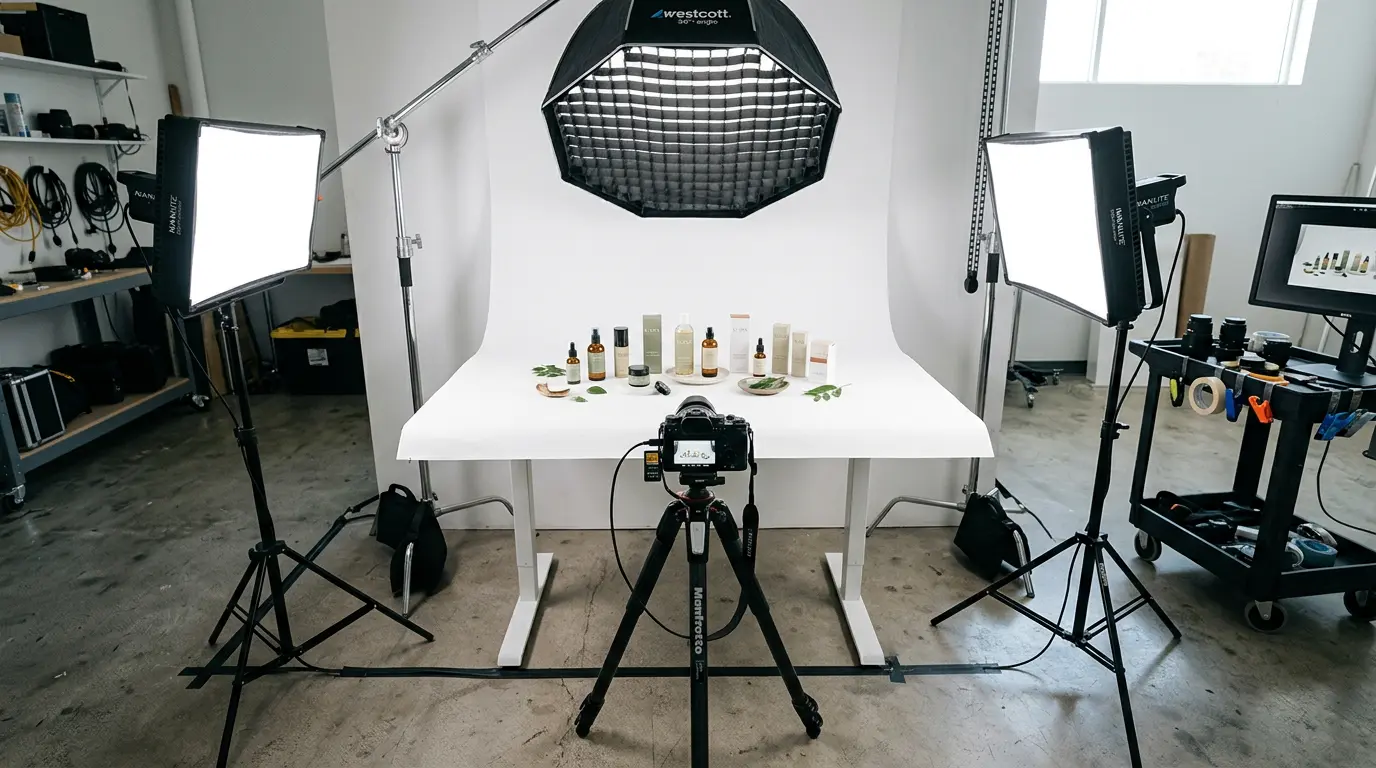
- Product photography \u2014 studio or on-location images of physical products for e-commerce listings, catalogs, packaging, or advertising campaigns
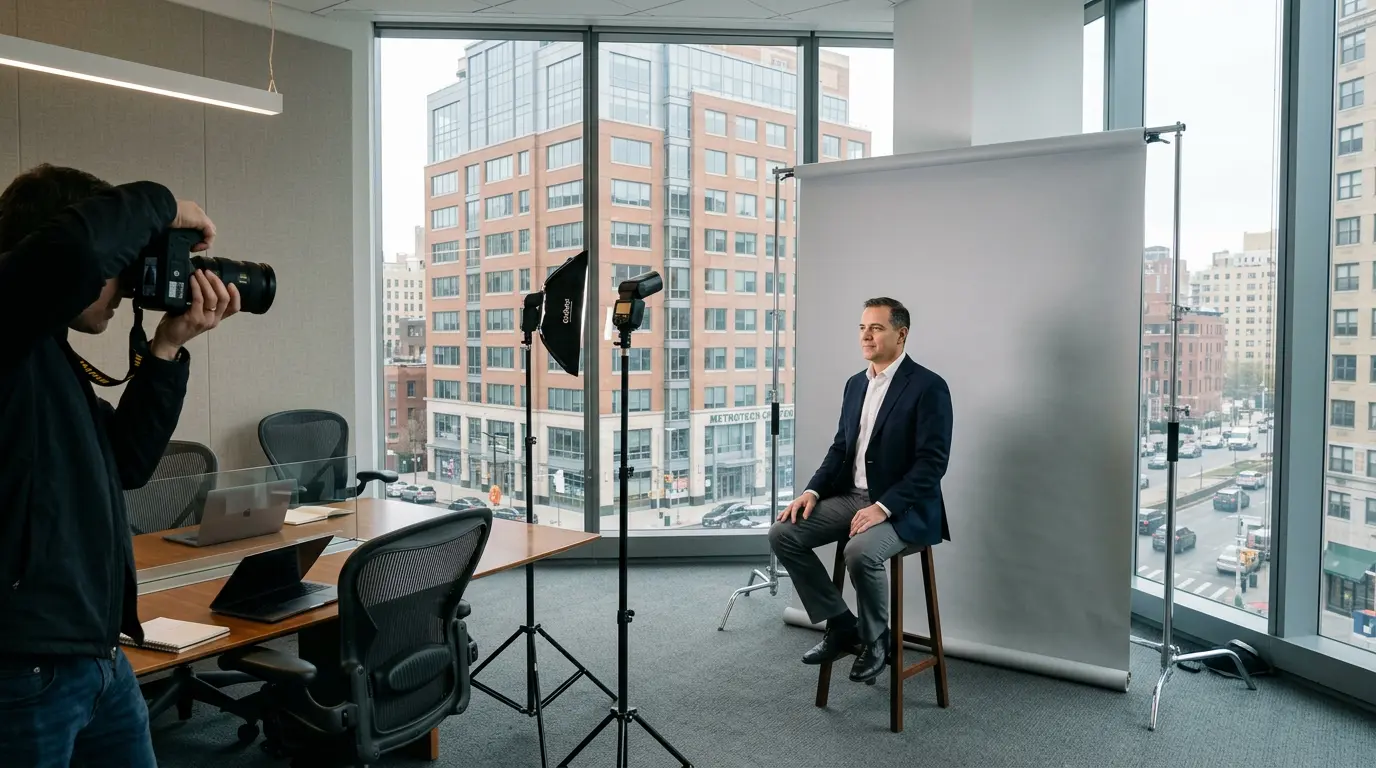
- Corporate headshots and business portraits \u2014 professional portraits for company websites, LinkedIn profiles, team pages, and press materials
- Advertising and campaign photography \u2014 styled imagery for print ads, digital campaigns, billboards, or social media marketing assets
- Real estate and architectural photography \u2014 interior and exterior property images for listings, development marketing, or portfolio documentation
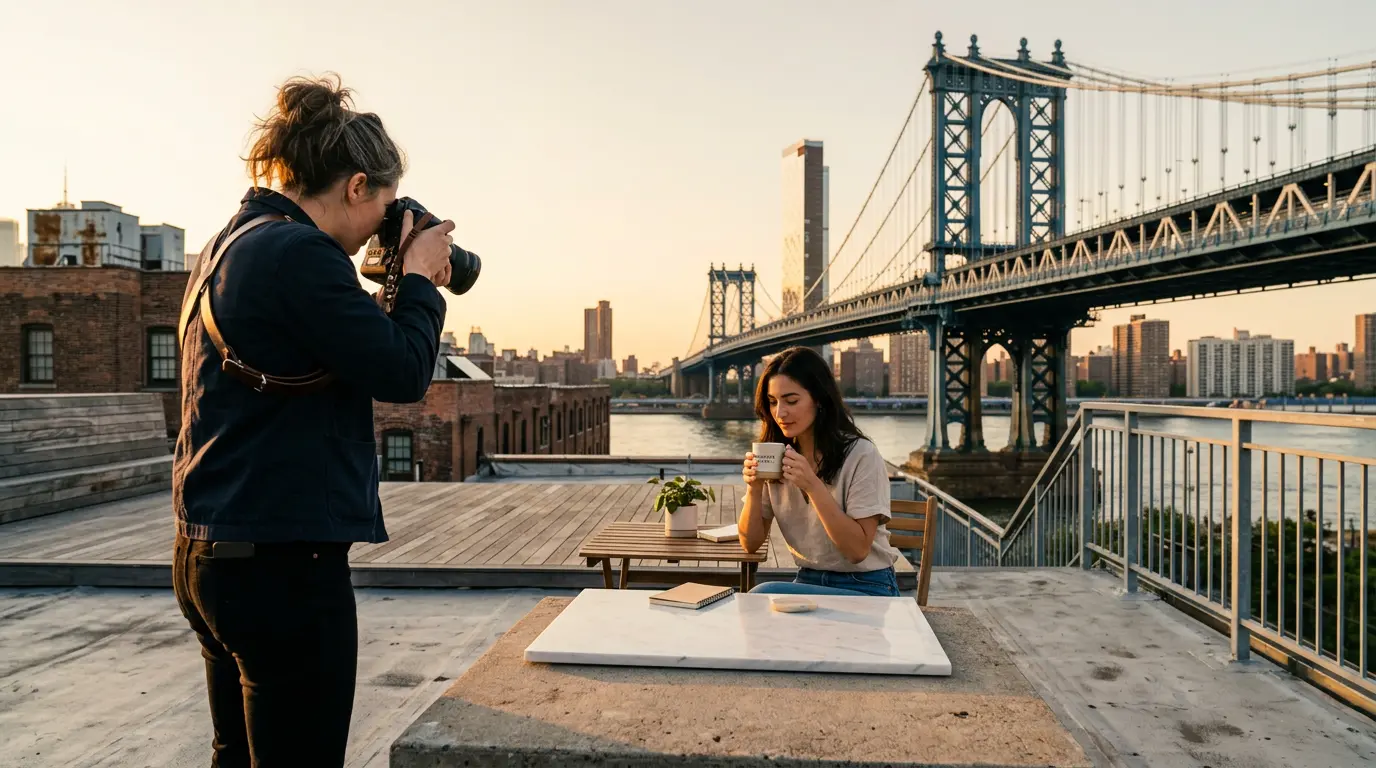
- Lifestyle and brand photography \u2014 on-location imagery that positions products or services within real-world contexts for brand storytelling
- Corporate event photography \u2014 documentation of conferences, product launches, networking events, and office gatherings
Vera Starling is listed as a commercial photographer in Brooklyn, with additional listing categories including photographer, photography service, and video production service. Specific inclusions, deliverables, and pricing for any commercial photography engagement vary by project type and should be confirmed during inquiry.
How to Compare Commercial Photographers in Brooklyn
Selecting a commercial photographer involves assessing several dimensions beyond visual portfolio appeal. Based on how buyers in this market typically evaluate providers, the following criteria are worth examining before making contact:
-
Sub-service alignment \u2014 Does the photographer’s demonstrated portfolio match the specific type of commercial imagery needed? A provider strong in product photography may approach corporate headshots quite differently than one who specializes in environmental portraiture. Look for evidence of work in the specific category relevant to your project.
-
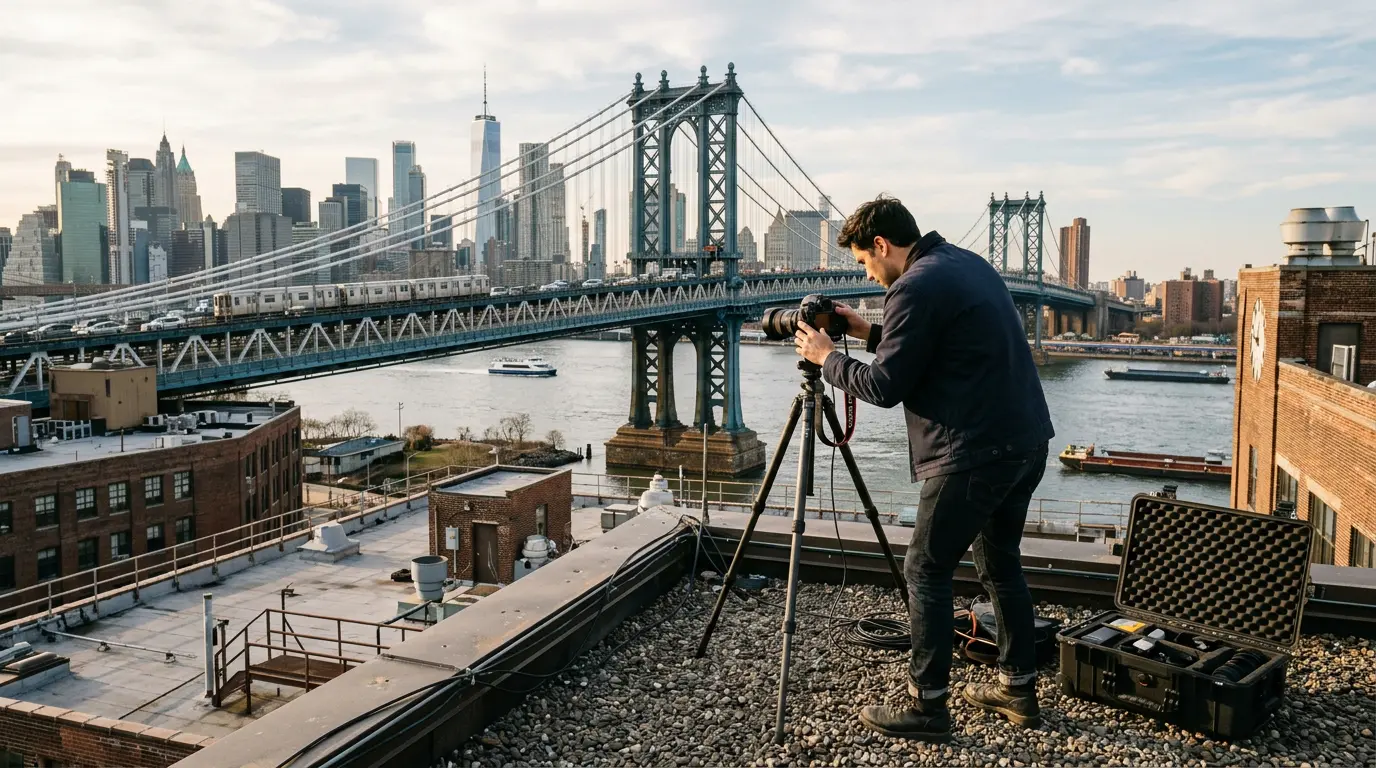
Location capability and access \u2014 Can the photographer work on location at your Brooklyn business, or is the session studio-based? Some projects benefit from rooftop access opportunities that provide skyline backdrops or elevated perspectives, while others require the controlled conditions of a dedicated studio environment. Confirm what setup options are available and whether on-location fees apply.
-
Portfolio segmentation \u2014 Is commercial work clearly separated from other genres such as wedding or family photography? When evaluating a multi-service provider, look for dedicated commercial samples that demonstrate consistent output within the business-use category.
-
Process documentation \u2014 Does the provider outline a structured pre-production, shooting, and post-production workflow? Transparent process descriptions help buyers anticipate what preparation is needed on their end and what communication touchpoints to expect.
-
Deliverable clarity \u2014 How many edited images are included, in what file format, at what resolution, and with what usage rights? These details vary significantly across providers and project types and represent one of the most important areas to confirm before booking.
-
Group session coordination \u2014 For corporate team shoots, managing group dynamics and coordinating schedules across departments or large parties adds operational complexity. Ask how the photographer allocates time per person, handles varying comfort levels in front of the camera, and structures the session to move efficiently through a roster.
-
Creative technique range \u2014 Certain commercial projects require specialized approaches, such as capturing glass and water reflections in product photography or composing environmental portraits that leverage architectural settings. Verify that the photographer’s demonstrated skill set aligns with the creative direction of the project.
-
Post-production scope \u2014 Turnaround timelines and the extent of retouching included differ by provider and project size. Clarify whether basic color correction, advanced retouching, or composite editing is standard or offered at additional cost.
-
Local logistics knowledge \u2014 Brooklyn neighborhoods vary significantly in terms of street parking, commercial loading zones, building access requirements, permit needs, and optimal time windows for natural light. A photographer with practical familiarity in these logistics can reduce friction and delays on shoot day.
How a Commercial Photography Session Is Typically Delivered
The commercial photography process generally follows a multi-phase workflow. While specific steps and timelines vary by provider and project scope, the structure below reflects the stages buyers should expect and can verify during consultation.
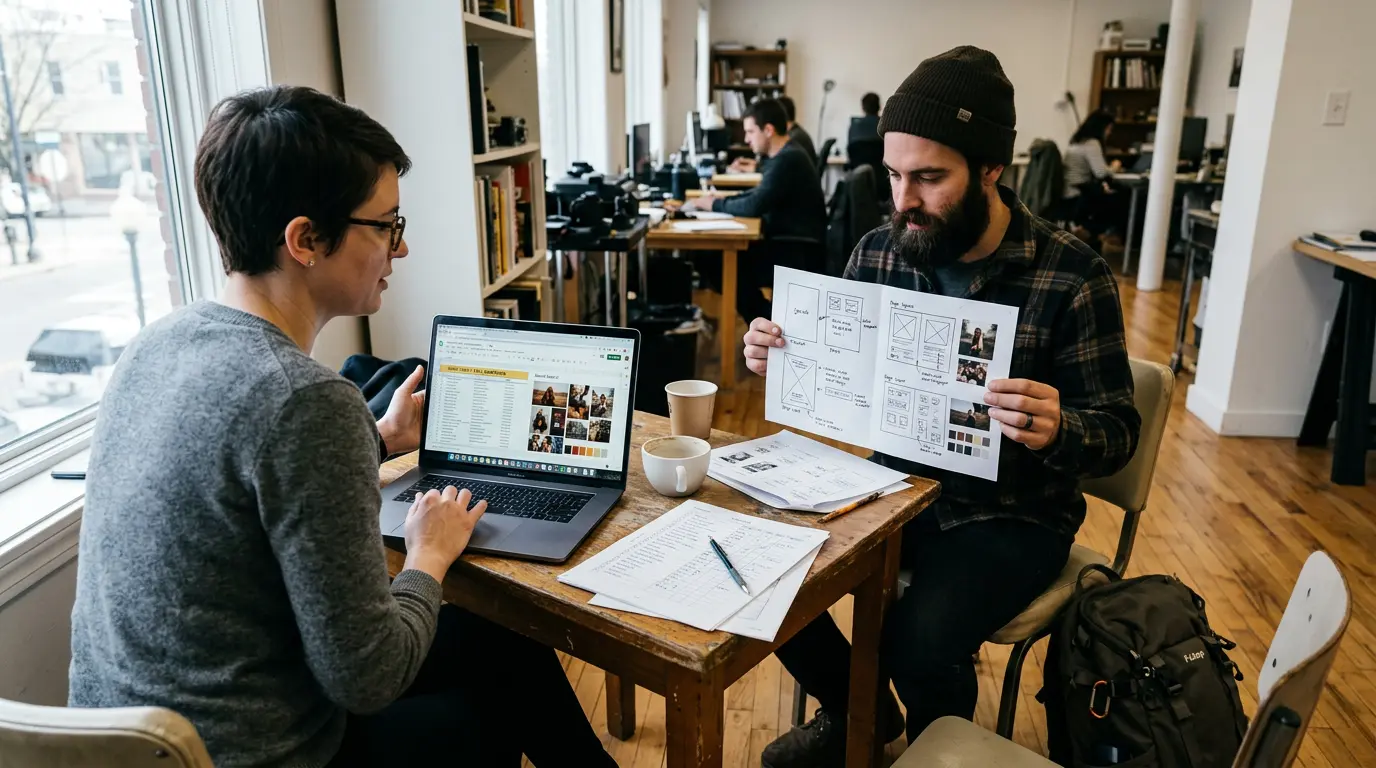
Pre-production planning begins with an initial conversation to define project goals, creative direction, and logistical requirements. This may involve developing or reviewing shot lists, mood boards, and reference imagery. For on-location shoots in Brooklyn, pre-production may also cover access arrangements, equipment loading logistics, and any permit considerations depending on the venue type and neighborhood.
Session-day execution involves the on-site or in-studio shoot itself. Realistic timeline expectations for session day depend heavily on project scope. A corporate headshot session cycling through a team of employees requires strict time-per-person scheduling, while a product photography session may involve methodical setup changes between items. Lifestyle brand shoots at outdoor Brooklyn locations introduce additional variables such as weather conditions, natural light windows, and public foot traffic. Discussing these timing factors during pre-production helps both parties arrive at a practical schedule.
Post-production and delivery encompasses image culling, selection, editing, retouching, and final file transfer. The number of edited images, retouching depth, file formats, resolution tiers, and delivery method\u2014whether online gallery, cloud transfer, or physical media\u2014should all be established during the initial consultation. Turnaround timelines are project-dependent and may differ between standard and expedited delivery options, details that should be confirmed before the session takes place.
What Reduces Risk When Hiring a Commercial Photographer
Verifiable business facts
The following details about Vera Starling are drawn directly from business listing data and can be independently confirmed:
- Business name: Vera Starling
- Address: 2483 E 22nd St, Sheepshead Bay, Brooklyn
- Phone: +1917-386-8509
- Website: https://video-nyc.com/
- Primary listing category: Wedding photographer
- Additional listing categories: Commercial photographer, Photographer, Photography service, Video production service
- Other listed services: Baby Photography, Family and Group, Maternity and Newborn, Newborn Photography, Portrait Photography
Buyers should note that the primary business listing category is Wedding photographer, with Commercial photographer listed as an additional category. This is a verifiable structural detail relevant to understanding how this provider positions commercial photography relative to other service lines.
What buyers should confirm during evaluation
The following items are not confirmed in currently available business data and should be verified directly with the provider before booking:
- Whether a dedicated studio space is available for controlled commercial shoots, or if all sessions are conducted on location at client premises or rented venues
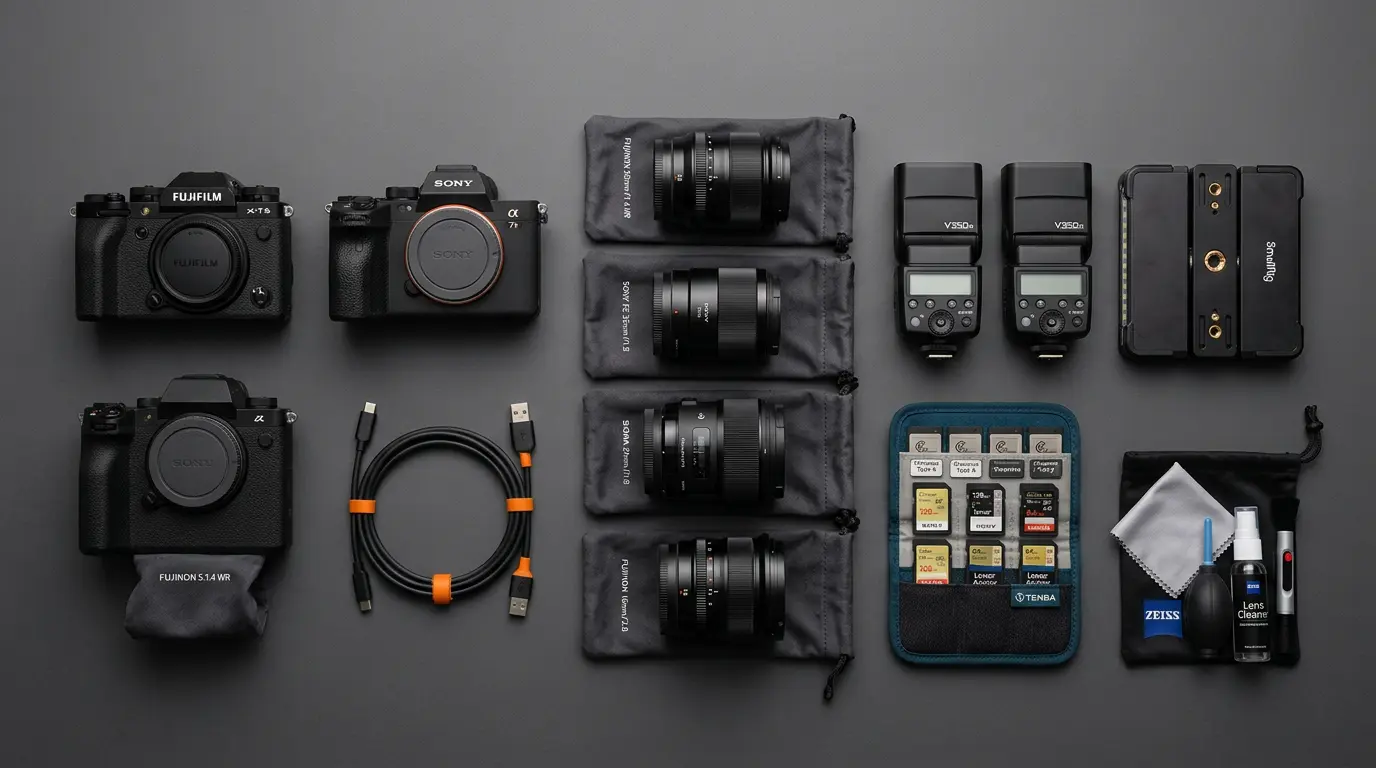
- Equipment inventory and redundancy\u2014backup camera bodies, multiple lens options, and redundant memory storage carried to commercial sessions
- Specific commercial photography portfolio samples segmented by sub-service type (product, corporate, lifestyle, real estate)
- Standard deliverable count, file format, resolution options, and usage licensing terms for commercial projects
- Retouching scope and turnaround timeline by project type and size
- Rescheduling and cancellation policies, including notice windows and any associated fees
- Whether the listed video production capability can be combined with photography within a single commercial session to improve efficiency
- Insurance coverage for on-location shoots at client offices, retail spaces, or other commercial premises
- Experience with permit acquisition for public-space and rooftop commercial shoots in Brooklyn
Where Vera Starling Is Located and Which Neighborhoods Are Served
Vera Starling is based at 2483 E 22nd St in Sheepshead Bay, Brooklyn. The Sheepshead Bay station on the B and Q subway lines provides transit access for clients traveling from across the borough, and the location’s proximity to the Belt Parkway also makes it reachable by car from southern Brooklyn neighborhoods and beyond.
The following neighborhoods fall within the documented commercial photography service area, each presenting a distinct client environment and shoot context:
DUMBO serves as a hub for creative agencies, tech startups, and e-commerce brands whose commercial photography needs range from product catalogs to lifestyle brand campaigns. The neighborhood’s converted warehouse rooftops offer elevated shooting positions with Manhattan skyline backdrops, and its East River waterfront provides opportunities for glass and water reflections in product and brand imagery.
Downtown Brooklyn is the borough’s central business district, where corporate offices, law firms, and professional service providers generate steady demand for business portraits, team photography, and office environment imagery.
On-location commercial headshot sessions in Downtown Brooklyn office spaces typically involve portable backdrop and lighting setups adapted to conference rooms or common areas, requiring a photographer who can work efficiently within compact interior layouts.
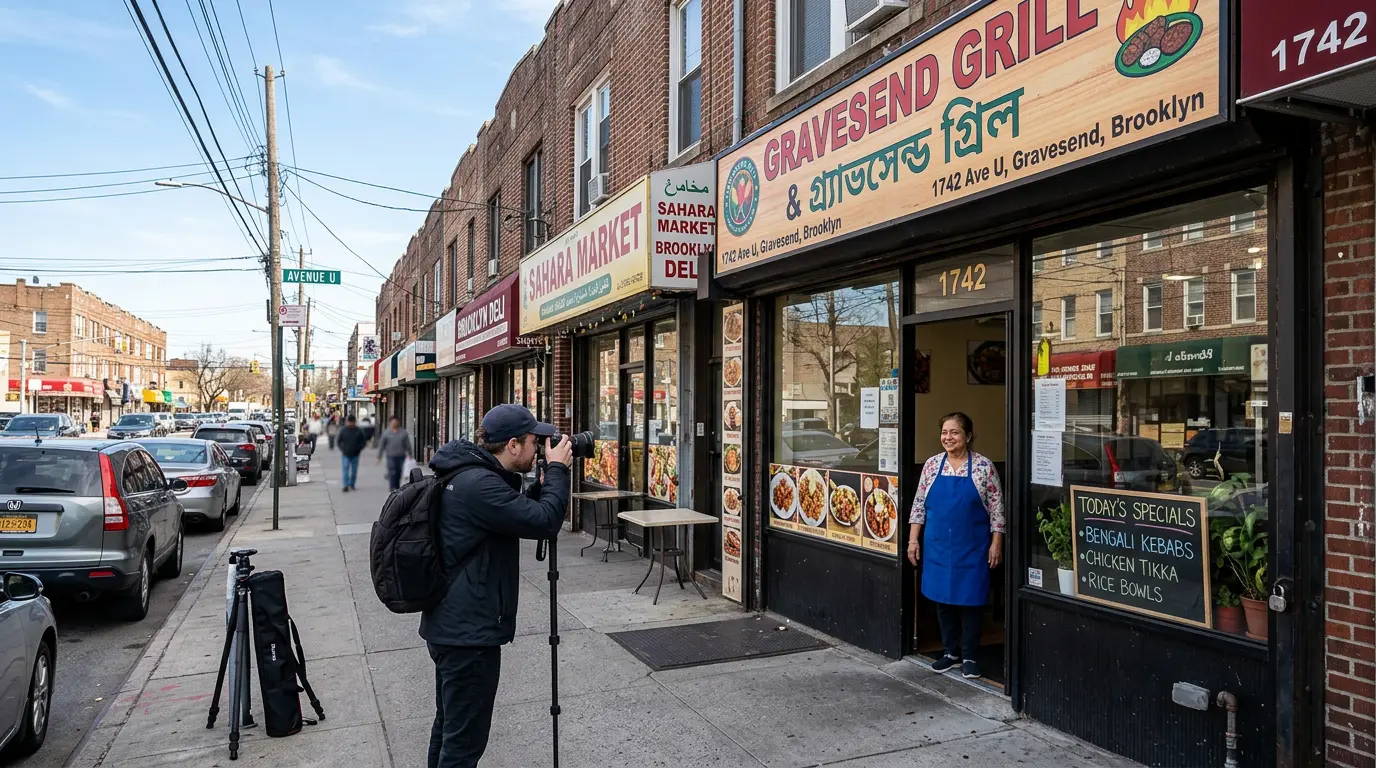
Gravesend represents a neighborhood retail corridor where independent restaurants, shops, medical practices, and service businesses along Avenue U and Kings Highway seek commercial photography for menus, storefront imagery, product catalogs, and business listing visuals\u2014often with tighter scheduling windows that require clear upfront timeline planning.
Vera Starling’s listing as a commercial photographer in Brooklyn positions the business to serve clients across these neighborhoods, though specific travel radius, on-location fees, and scheduling availability should be confirmed during inquiry.
Using Visual Materials to Evaluate a Commercial Photographer
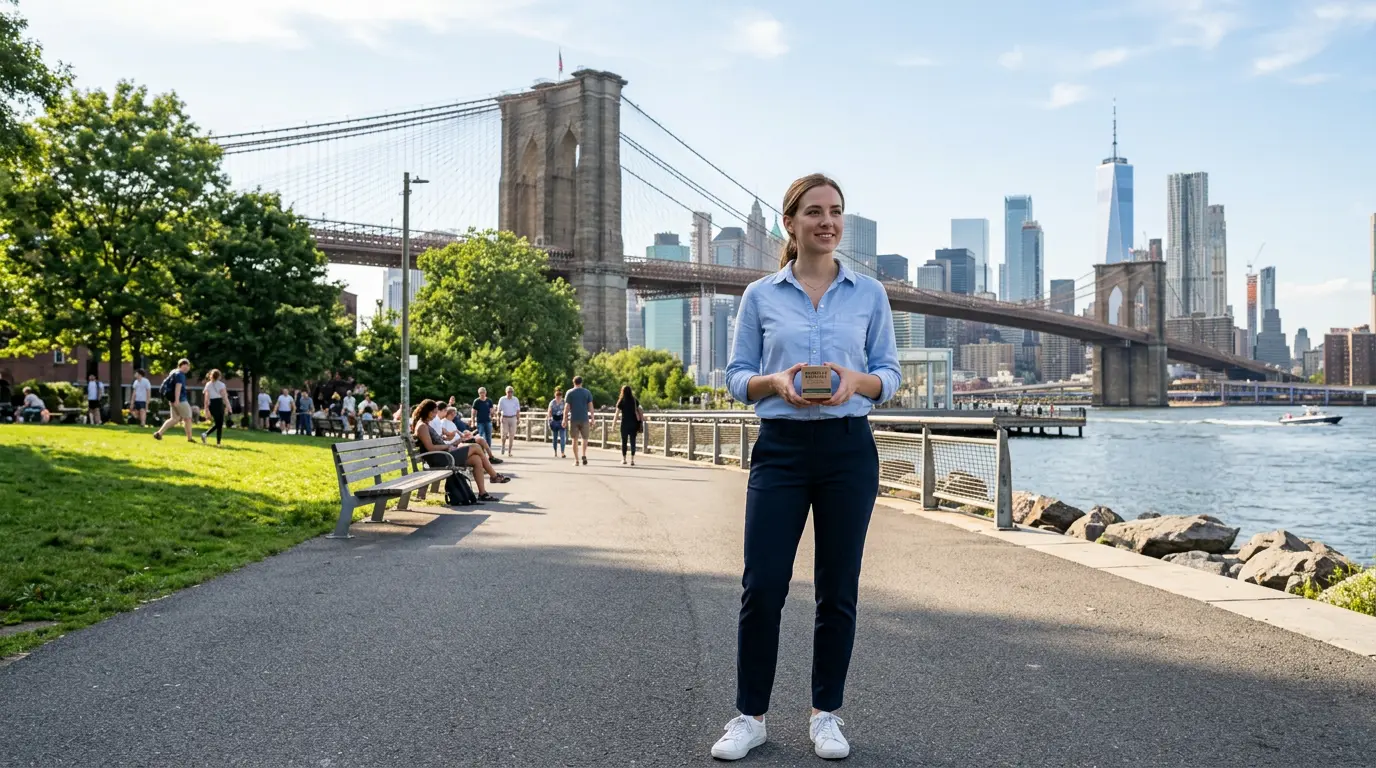
The images presented throughout this page offer reference points for the types of setups, locations, and workflows associated with commercial photography sessions across Brooklyn. Buyers can use these visual materials to assess several practical dimensions: whether the photographer demonstrates on-location adaptability across different environments (rooftops, office interiors, retail storefronts, public parks), whether studio equipment configurations suggest the capacity for controlled product shoots, and whether pre-production documentation indicates a structured planning process.
These reference images depict specific environments, equipment arrangements, and location contexts. They are not substitutes for reviewing a provider’s finished commercial portfolio\u2014which should be requested directly to evaluate final image quality, retouching style, color grading consistency, and creative range across project types.
Lifestyle brand photography conducted at recognizable outdoor Brooklyn locations, for example, can help buyers assess whether the photographer’s approach to subject positioning, natural light usage, and environmental composition aligns with their brand vision.
Common Questions About Commercial Photography in Brooklyn
1) Where do commercial photography sessions happen\u2014in a studio or on location?
This depends on the project type and the provider’s setup. Product photography often benefits from a controlled studio environment with consistent lighting, while corporate headshots, storefront imagery, and lifestyle brand photography are frequently shot on location at the client’s business or a relevant Brooklyn setting. Whether Vera Starling offers studio-based sessions, on-location sessions, or both should be confirmed during inquiry.
2) How can I tell if a photographer’s style fits my commercial project?
Request portfolio samples segmented by the specific type of commercial work you need. A provider whose portfolio emphasizes lifestyle imagery may approach a product catalog shoot differently than one focused on clean, catalog-style compositions. Look for consistency in lighting, color treatment, and composition across similar project types rather than evaluating based on a single sample image.
3) What is typically included in a commercial photography package?
Inclusions vary across providers and project scopes. Common elements include a defined number of edited digital images, specified file formats and resolutions, and stated usage rights. Some providers include pre-production planning and location scouting; others charge for these separately. All inclusions should be confirmed before booking.
4) How long does a commercial photography session take on a typical shoot day?
Session length depends on the project type and number of setups. A focused headshot session for a small team may take one to two hours, while a full product catalog shoot could span a full day. Lifestyle sessions at outdoor Brooklyn locations add variables like weather windows and transit between setups. Discussing realistic timeline expectations during pre-production helps both parties plan effectively.
5) What is a typical turnaround time for edited commercial images?
Turnaround varies by project complexity, the volume of images being edited, and the retouching scope agreed upon. This is an important detail to establish during the initial consultation, along with whether expedited delivery is available if needed for campaign deadlines.
6) How are final images delivered and in what format?
Common delivery methods include online galleries, cloud file transfers, and direct download links. File formats typically include high-resolution versions for print and web-optimized versions for digital use. The specific delivery method, available formats, and resolution options should be confirmed with the provider.
7) What is the rescheduling or cancellation policy?
Rescheduling and cancellation policies differ across providers and may depend on how close to the session date changes are requested. Outdoor commercial sessions in Brooklyn may also need to account for weather-related postponements. Ask about notice windows, rescheduling fees, and any deposit implications before committing.
8) How are group dynamics handled during corporate team photography?
Large corporate sessions require coordinating multiple schedules, managing varying comfort levels in front of the camera, and cycling through individuals or small groups efficiently within a limited time window. Ask how the photographer structures group sessions, what time allocation is planned per person, and whether a coordinator or shot list is used to maintain flow.
9) What equipment and backup resources should a commercial photographer bring?
Equipment redundancy is a practical concern for commercial clients. Ask about the number of camera bodies, lens variety, backup memory storage, and portable lighting carried to each session. An equipment failure during a commercial shoot with a tight time window can result in significant disruption, making backup capacity worth verifying.
10) Can photography and video production be combined in a single session?
Vera Starling’s business listing includes video production service as an additional category. Whether photo and video deliverables can be captured within a coordinated single-day session\u2014and how that affects pricing, crew requirements, and scheduling\u2014is worth discussing during the consultation phase.
11) Are permits required for commercial photography at outdoor Brooklyn locations?
Certain public spaces, parks, and commercial areas in Brooklyn may require permits for professional photography involving equipment, lighting setups, or crew. This is particularly relevant for shoots in parks, on building rooftops, or along busy retail corridors. Confirm whether the photographer handles permit logistics or if this responsibility falls to the client.
12) What preparation is needed before a commercial photography session?
Pre-production preparation typically includes finalizing a shot list, assembling reference imagery or mood boards, preparing products or wardrobe, and confirming location access and logistics. A structured pre-production conversation reduces the likelihood of delays or misalignment on shoot day and ensures both parties share the same expectations for deliverables.
Taking the Next Step with Vera Starling
Commercial photography sessions with Vera Starling are arranged by appointment from the Sheepshead Bay base or on location across Brooklyn neighborhoods. To begin the evaluation process, prospective clients can call +1917-386-8509 or visit https://video-nyc.com/ to discuss project scope, scheduling, and deliverables.
Vera Starling’s primary listing category is Wedding photographer, with commercial photography available as an additional service area under the same business.
Clients who are simultaneously evaluating providers for Wedding Photography may find it relevant that this business operates across both categories, which could be advantageous for those with overlapping personal and commercial photography needs.
Requesting a consultation provides the opportunity to verify the details outlined on this page, review finished commercial portfolio work directly, and confirm pricing structure, timeline commitments, and deliverable specifications before making a booking decision.