
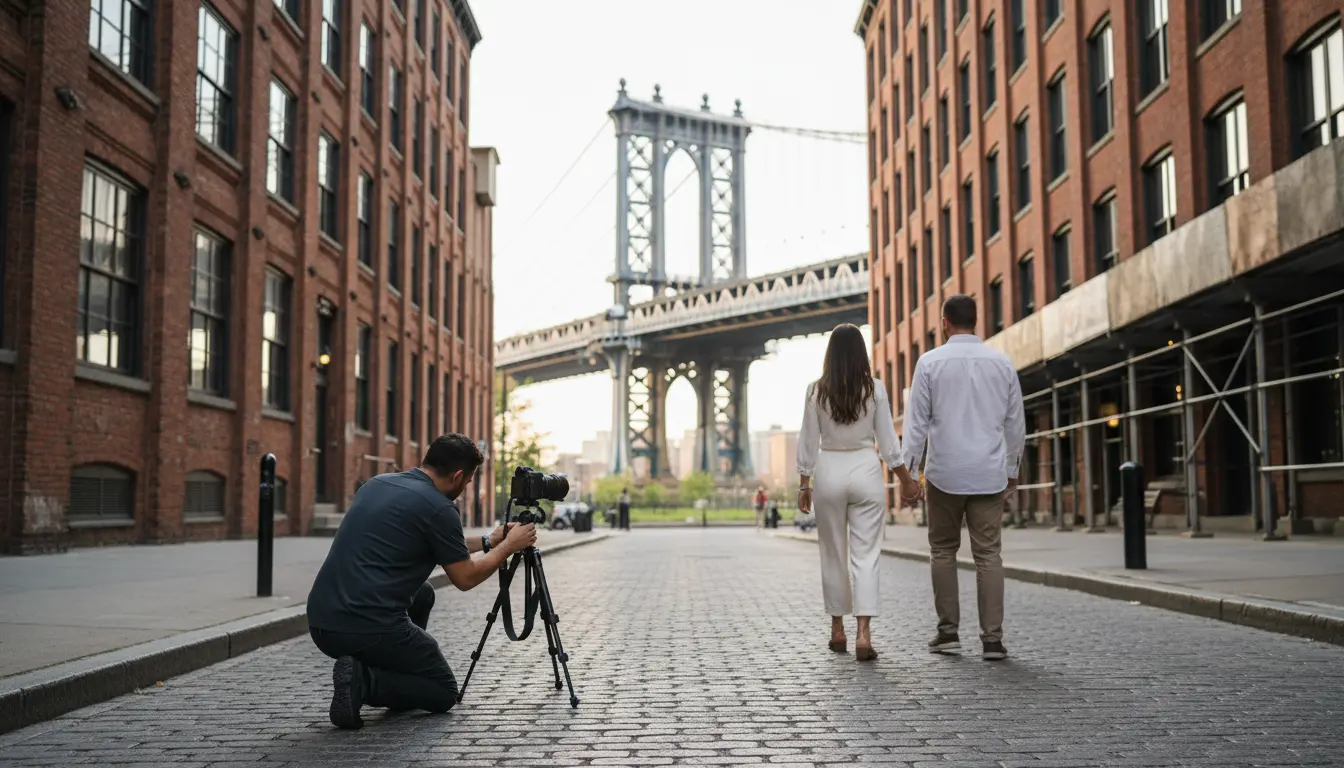
DUMBO in Brooklyn as a realistic setting for wedding photography sessions
How DUMBO actually sits between the bridges
DUMBO occupies the tight waterfront wedge between the Brooklyn Bridge and the Manhattan Bridge, with most activity for couples happening from the river’s edge up through Water St, Front St, and Washington St. Inland, the feel shifts by the time you reach York St and the slower industrial edges toward Vinegar Hill, while the southern boundary softens into the Old Fulton St and Brooklyn Bridge Park approaches toward Brooklyn Heights.
For mapping and naming, most online references to DUMBO line up with this footprint, following the bridge approaches and the waterfront park system; this matches the outline described in DUMBO, Brooklyn – Wikipedia. Within Brooklyn, that makes DUMBO one of the most concentrated bridge-and-waterfront zones, with couples usually staying inside a compact area between Main St Park, Empire Stores, and the Washington–Water corridor to avoid losing time to long walks.
To the south, pedestrian flow merges with the Brooklyn Heights promenade and Old Fulton ferry approaches. To the northeast, the streets quiet quickly past Bridge St and John Street Park, where the mood shifts from riverfront lawns to low-traffic industrial buildings. Eastward, density increases as you approach Jay St and Downtown Brooklyn.
Washington Street corridor as the visual anchor
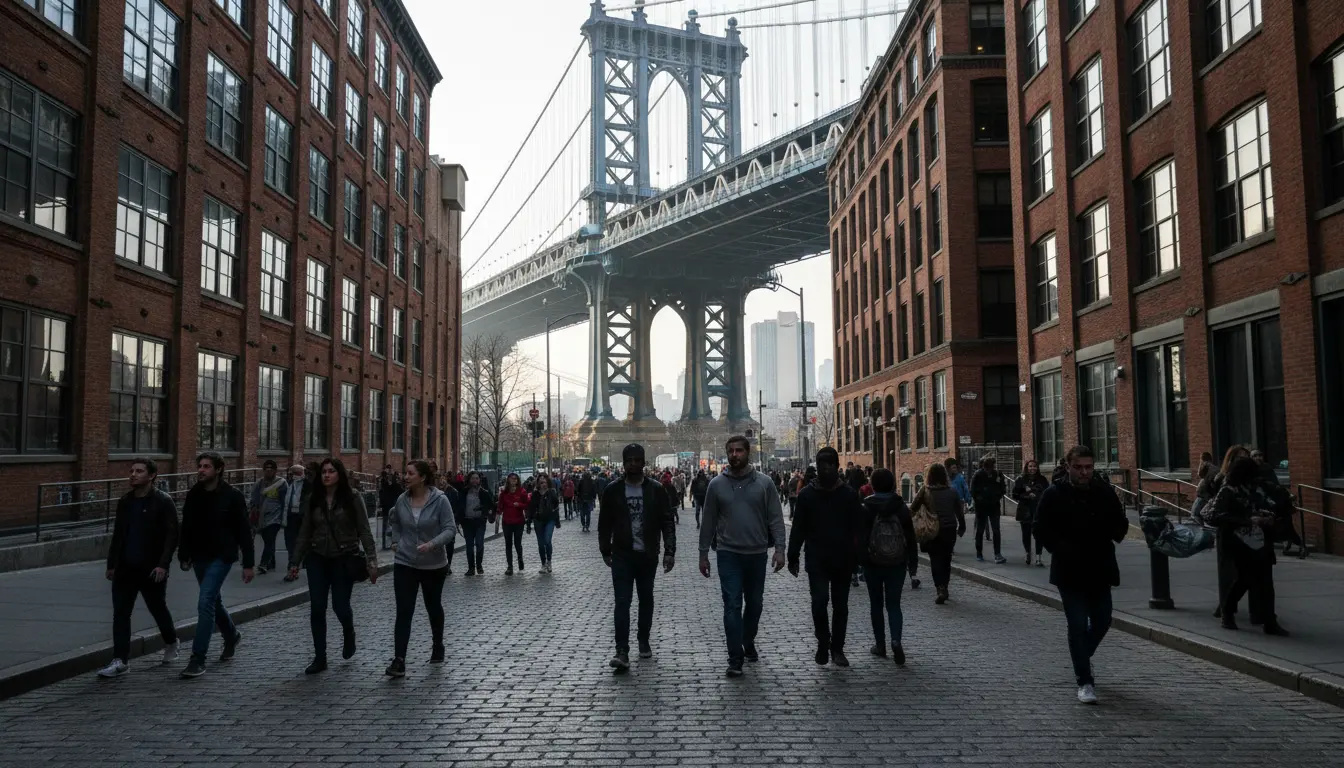
The Washington–Water corridor is the image most people have in mind when they say “DUMBO photos.” The street is narrow, paved in cobblestones, and framed by tall brick warehouses that create a canyon of shade with the Manhattan Bridge arch perfectly centered at the north end. This alignment is where smaller wedding parties frequently pause between park and venue stops because the framing is unmistakable and easy to recognize in stills and video.
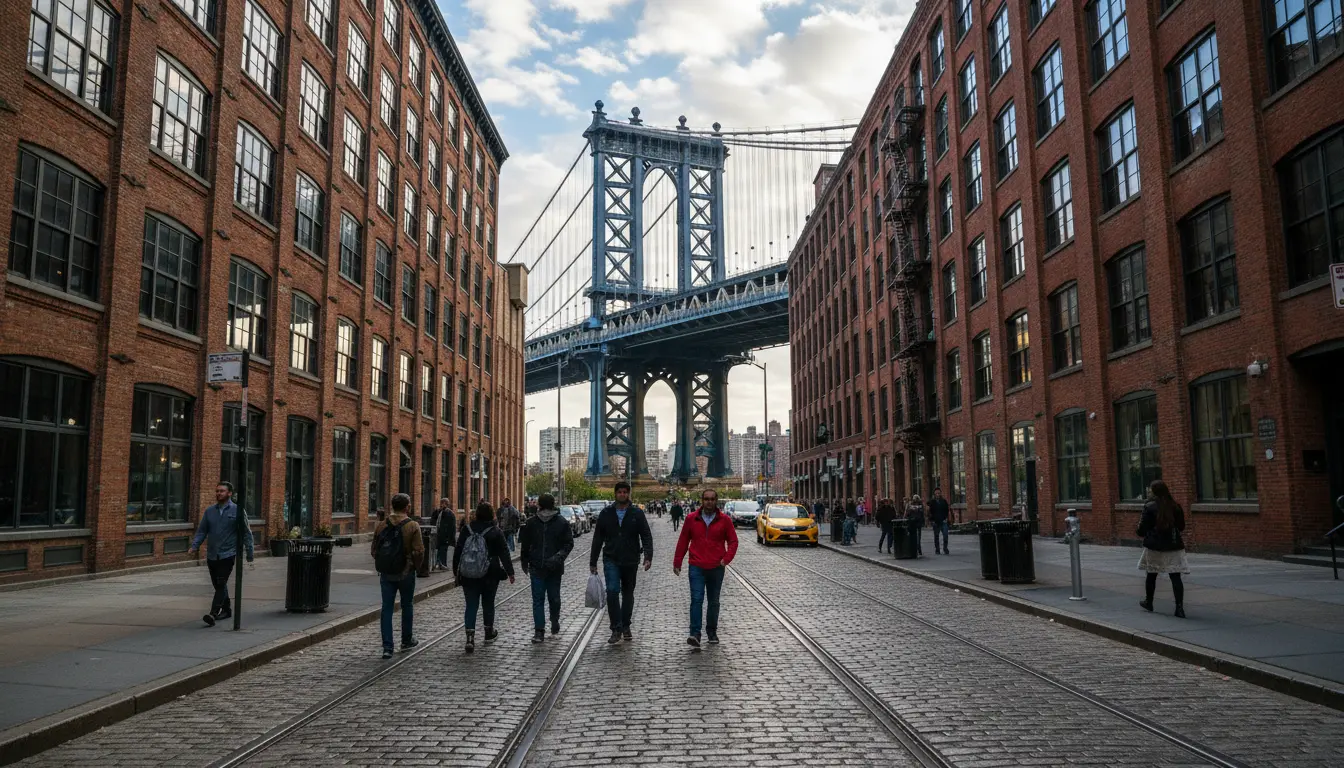
Shows the exact bridge alignment, cobblestone street texture, and narrow canyon scale that couples and photographers actually encounter when planning frames along Washington St.
Confirms the same bridge framing from another moment in time, highlighting everyday pedestrian flow, side-shadow bands, and how little room there is between façades and the cobbled roadway.
Because of these constraints, it’s rare to find this corridor empty. Couples should expect to share the space with tourists, cyclists, and rideshares creeping through, which influences timing and how long you can hold a pose in the center of the street.
Getting in and moving through DUMBO on a wedding day
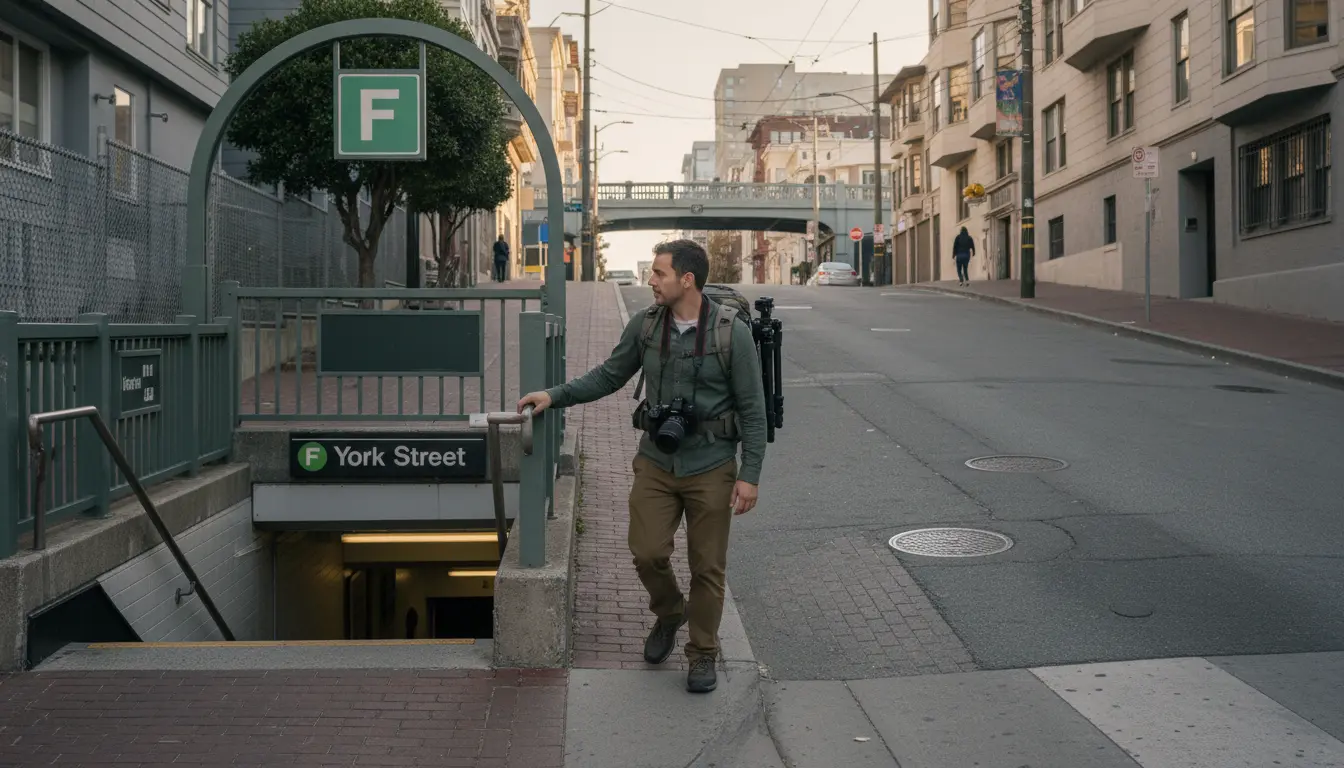
Most guests and small wedding parties arrive via subway or car. The F train at York St exits onto a noticeable incline: from the station you climb a steep slope up toward Jay St or walk downhill toward the waterfront. This grade slows movement, especially in formal clothing or heels, and adds a few minutes to any timing estimate between train and meeting point.
The A/C at High St serves southern access. From there, you cross under the Brooklyn Bridge ramps and follow Old Fulton or the park paths, mixing with heavy pedestrian traffic headed to the waterfront. Cars often slow to a crawl around Main St Park and Old Fulton St because tourist drop-offs, wedding cars, and rideshares all try to use the same limited curb space.
Those curb conditions are one of the persistent “chaos” elements in DUMBO. Signage isn’t always obvious, and parked or idling vehicles can appear to block what looks like a loading zone, so drivers tend to improvise quick stops in front of park entrances. This can force couples to step into the street or navigate around bumpers, which is worth allowing for in schedules and footwear choices.
Within the core blocks (Water, Front, Washington, Main), movement is almost entirely on foot. The cobblestones and frequent cross-traffic discourage rolling heavy equipment; most teams stick to compact gear they can carry between bridge corridors and the riverfront without blocking pedestrians.
Waterfront lawns and park spaces where couples actually gather
Once you step out from between the warehouses, the landscape opens abruptly at Main Street Park, Empire Fulton Ferry lawn, and John Street Park. These areas provide the lawns, benches, and river-edge paths where small parties tend to pause for group shots or quiet moments between events.
All of these waterfront lawns are part of the Brooklyn Bridge Park system, covered by the regulations outlined on Brooklyn Bridge Park – NYC Parks. In practice, that means handheld cameras and small wedding parties blend easily into normal park use, while larger setups and stands draw more attention from staff and may fall into permit territory.
Main Street Park and the adjacent Pebble Beach area sit right at the base of the Manhattan Bridge, with layered views back to the Brooklyn Bridge and Manhattan skyline. The Empire Fulton Ferry lawn, slightly south, gives a wide strip of grass with more open sky and direct river frontage. John Street Park to the north is smaller but usually a bit calmer, edged by industrial buildings that create shade and a sense of separation from the heaviest bridge traffic.
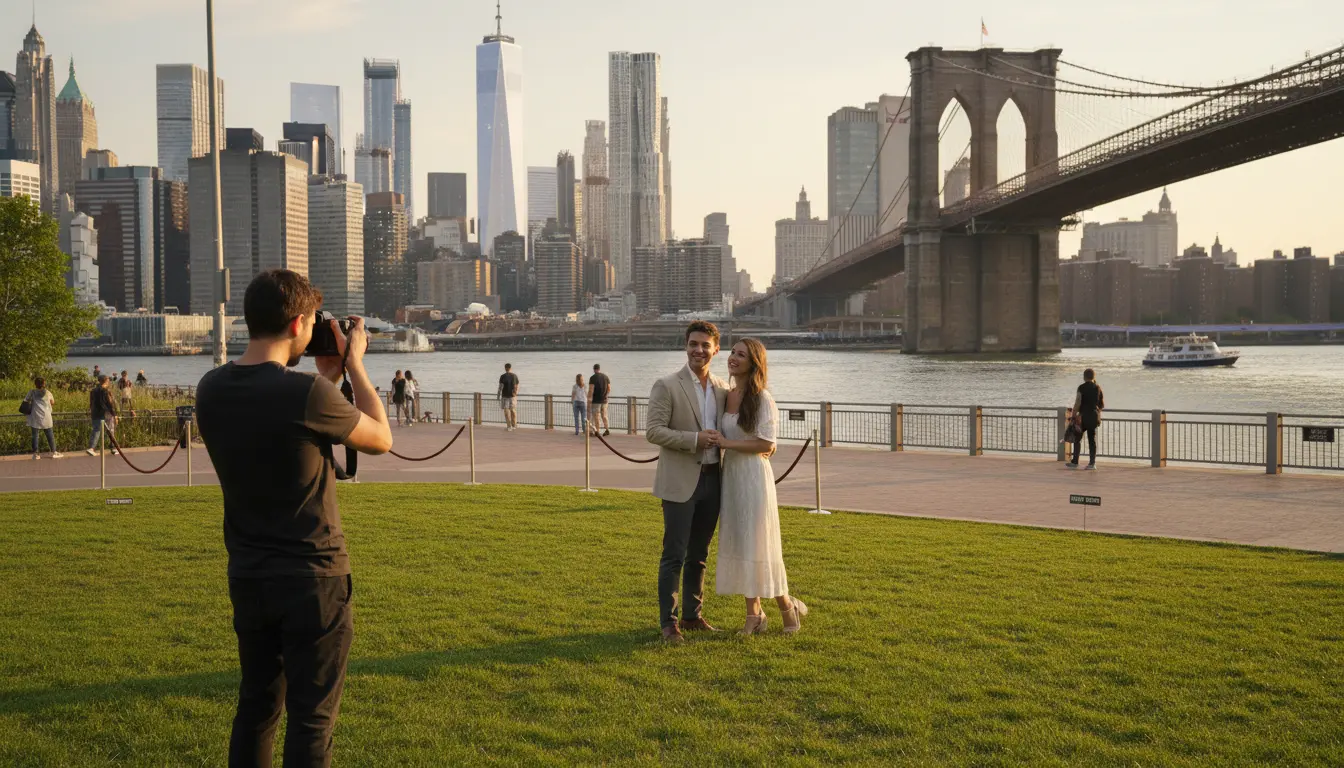
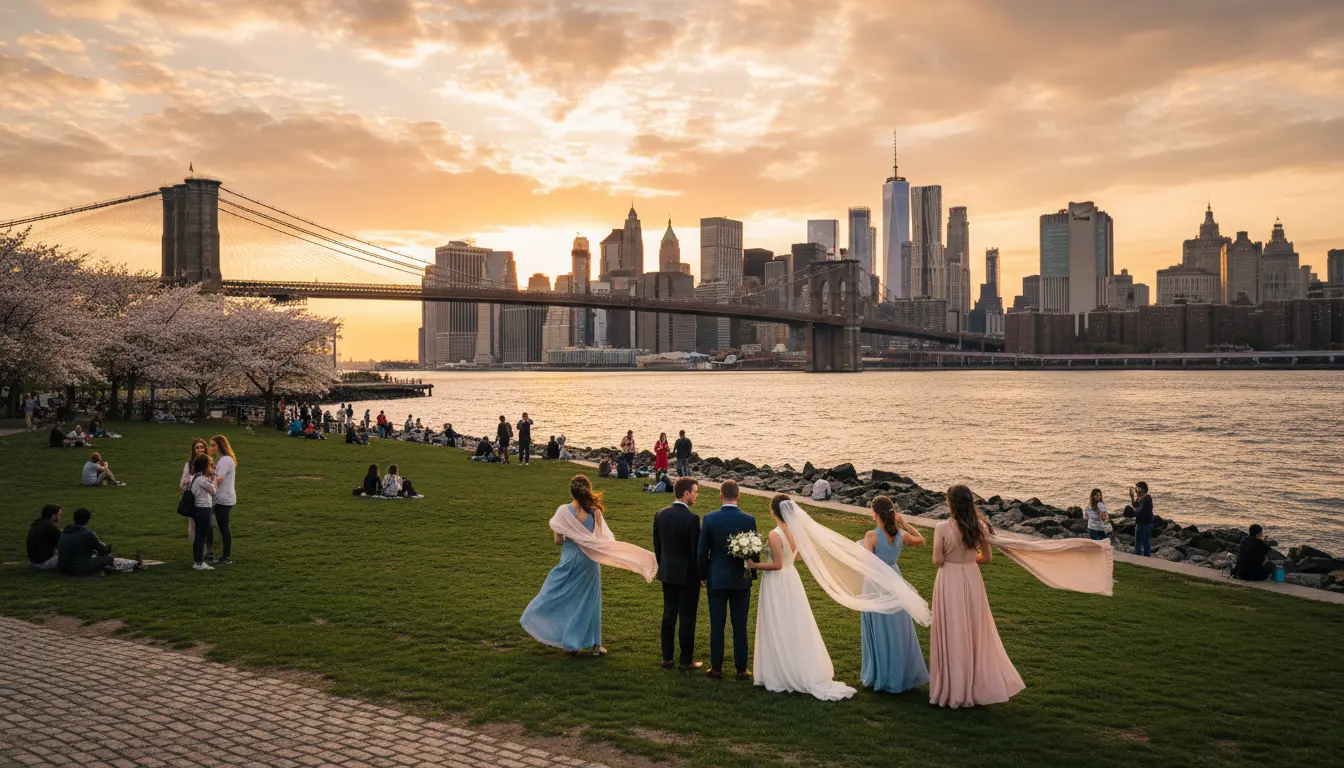
Verifies the scale of the Empire Fulton Ferry lawn, the proximity of benches and walking paths, and how river reflections brighten the frame even when the sky is not fully clear.
Shows how a small wedding party fits into the same lawn, with other visitors, wind exposure, and skyline reflections all present in the background—useful when estimating usable space versus ambient activity.
These waterfront zones are where couples most often transition between quiet portraits and more active walking shots, especially when they want both bridges and the skyline within a short walking radius.
Comparing busy corridors and quieter edges
Washington St and Water St deliver the iconic views, but they also concentrate the most foot traffic, scaffolding, and curb activity. Front St can be similarly crowded, especially near the Empire Stores entrances where visitors cluster around storefronts and restrooms.
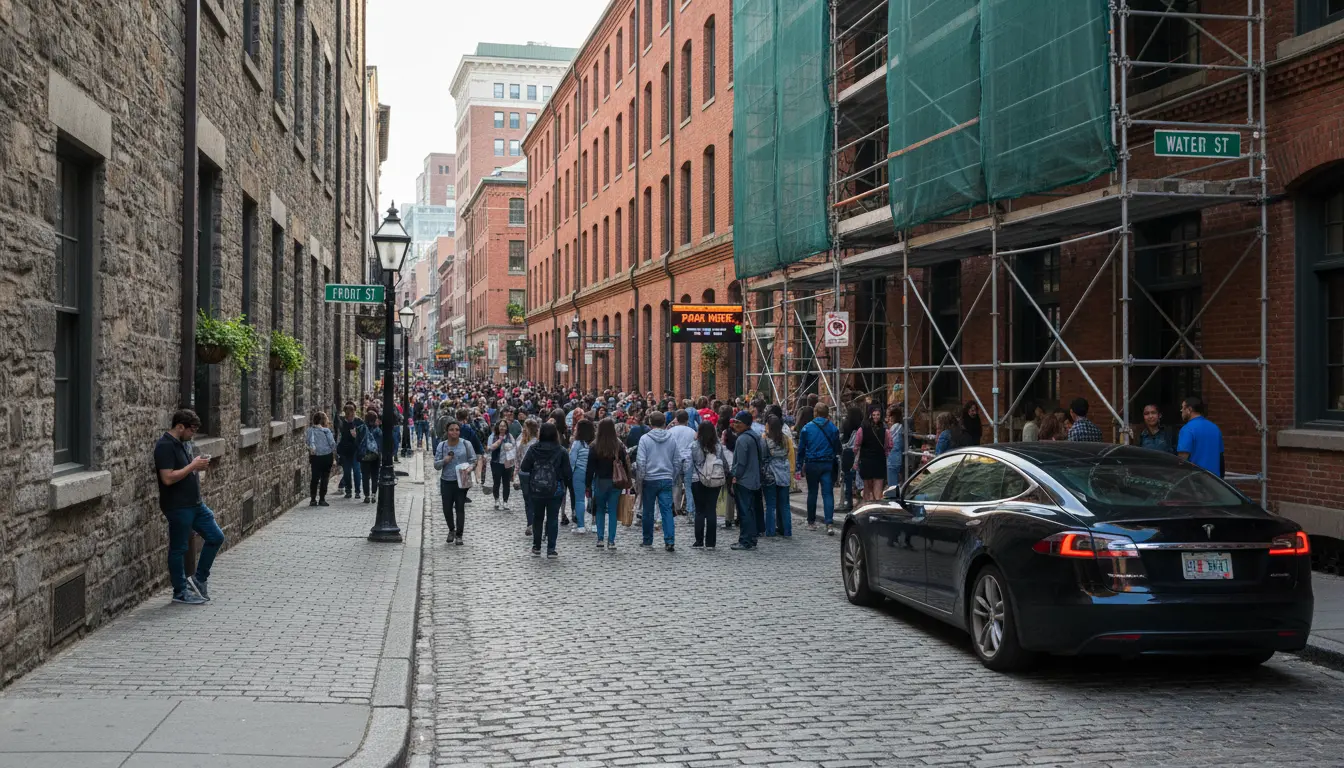
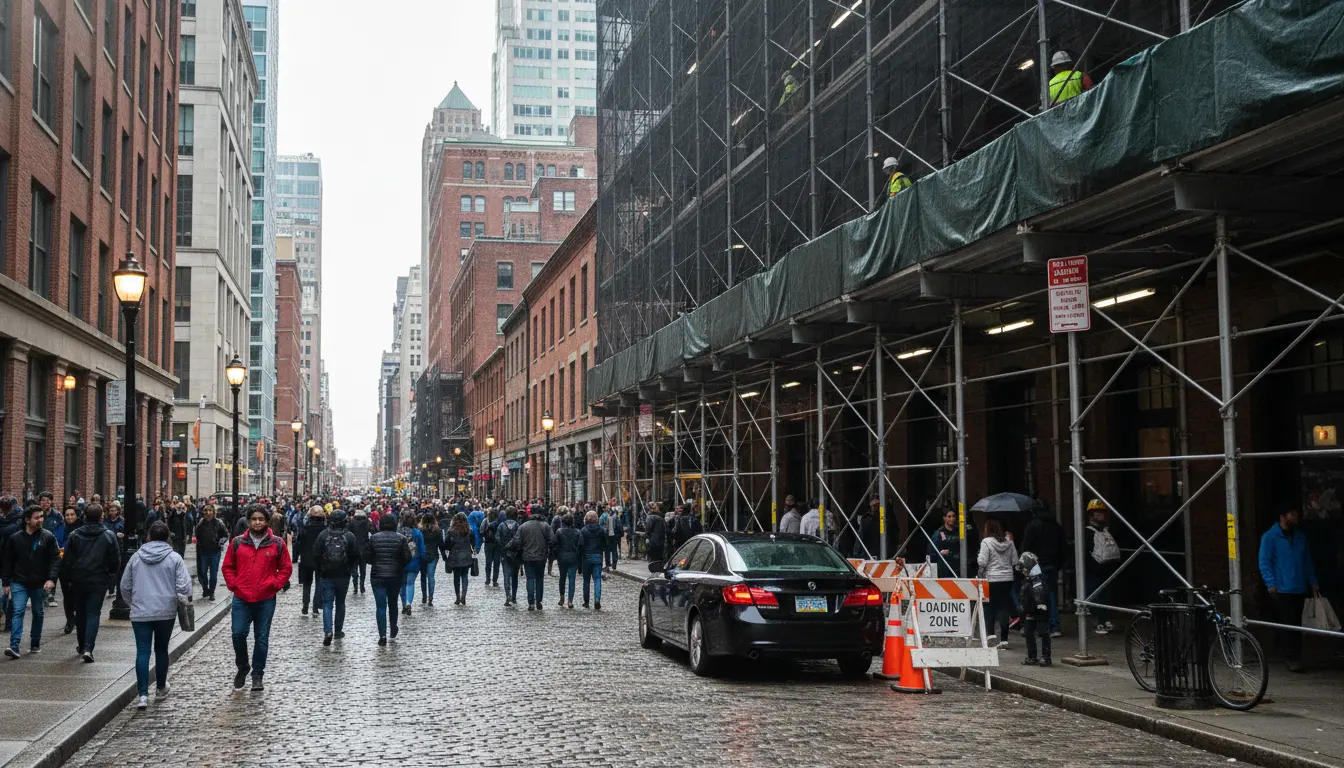
Captures a typical Water St moment: mixed pedestrians, an idling car at the curb, and active scaffolding along one warehouse façade, all of which limit where a couple can safely stand or walk.
Reinforces the same constraints from another vantage point, making it clear that curb-rule ambiguity and construction rhythm are ongoing factors in this corridor, not a one-off occurrence.
North of John Street Park and east of Bridge St, the neighborhood quiets quickly. Industrial loading docks, under-Manhattan-Bridge underpasses, and dead-end side streets give you more control over background clutter but less of the postcard skyline. This is where some couples choose short portrait breaks precisely to escape the tour-group flow.
The trade-off is clear: more iconic backgrounds often mean accepting crowd interruptions and scaffolded facades, while the quieter micro-areas offer fewer landmarks but more privacy and cleaner sound for video.
Wedding Photography Services in DUMBO
The following services are commonly planned around DUMBO’s bridges, cobblestones, and waterfront lawns, depending on schedule, party size, and mobility needs:
These options tend to be combined with simple walking routes that link Washington St, Empire Stores, and the riverfront without requiring long transfers.
How light actually behaves between the river and the bridges
Light in DUMBO is strongly shaped by building height, bridge structure, and the East River.
- Morning: The Manhattan skyline blocks the earliest sun. Along Water St and Front St, usable soft light usually appears only after the sun has risen high enough to clear lower Manhattan. Until then, the warehouse walls keep the streets in cool shade, which can be flattering but dim.
- Midday: Overhead light bounces off pale brick façades, glass storefronts, and the river surface. Hotspots appear near the Empire Stores forecourt and Pebble Beach, where reflected light can brighten faces from below while blowing out patches of water or metal.
- Late afternoon: Long shadows from the bridges and warehouses return to the corridors. Lines of shade cut across Washington St and Main St Park, creating bands of contrast that move quickly as the sun drops.
- Under-bridge zones: Under and near the Manhattan Bridge, the steel structure absorbs and blocks light, casting a cooler tone and reducing overall exposure. These areas are useful when a couple wants a more industrial mood or needs relief from midday glare.
The East River itself adds a moving layer of brightness. Ripples can create flickering highlights across skin and fabric, which is visible in both still frames and motion footage. This is noticeable on clear days and especially strong when the sun reflects from lower angles in the afternoon.
Moving people, outfits, and gear across DUMBO terrain
DUMBO’s terrain looks simple on a map, but the cobblestones, slopes, and narrow sidewalks make logistics more involved once you are on the ground. A local Wedding photographer working here regularly will usually factor in:
- The steep incline from the York St F station, which turns a short line on the map into a slow walk for anyone in formal wear.
- Tight sidewalk edges around construction sites, where scaffolding narrows passage enough that groups must go single-file.
- Cobblestone vibration, which rattles rolling cases and light stands and sometimes telegraphs subtle subway rumble from the F line up through the street surface, especially near York St and under-bridge zones.
Shows the actual grade from the York St subway exit and how limited sidewalk space feels when carrying camera bags, confirming why compact gear and extra travel time are usually planned into a DUMBO schedule.
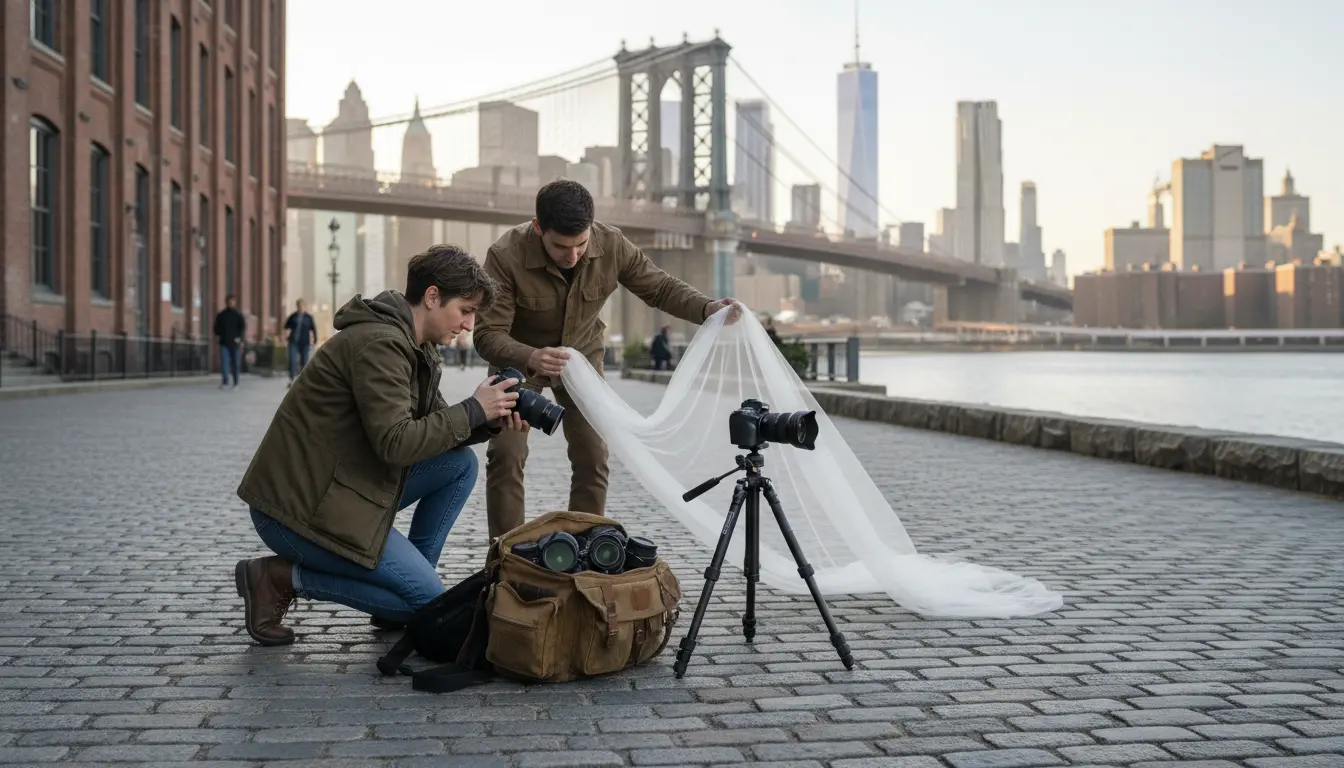
Confirms the kind of small-footprint setup that fits DUMBO’s cobblestone edges near Empire Stores—tripods low to the ground, minimal stands, and gear tucked against walls to preserve pedestrian clearance.
These practicalities influence how long transitions take between Washington St, the parks, and any indoor locations used for getting-ready coverage.
Permits, park notices, and other constraints to factor in
Because much of the riverfront is part of Brooklyn Bridge Park and other spaces are privately managed, couples often encounter a patchwork of posted rules and temporary closures.
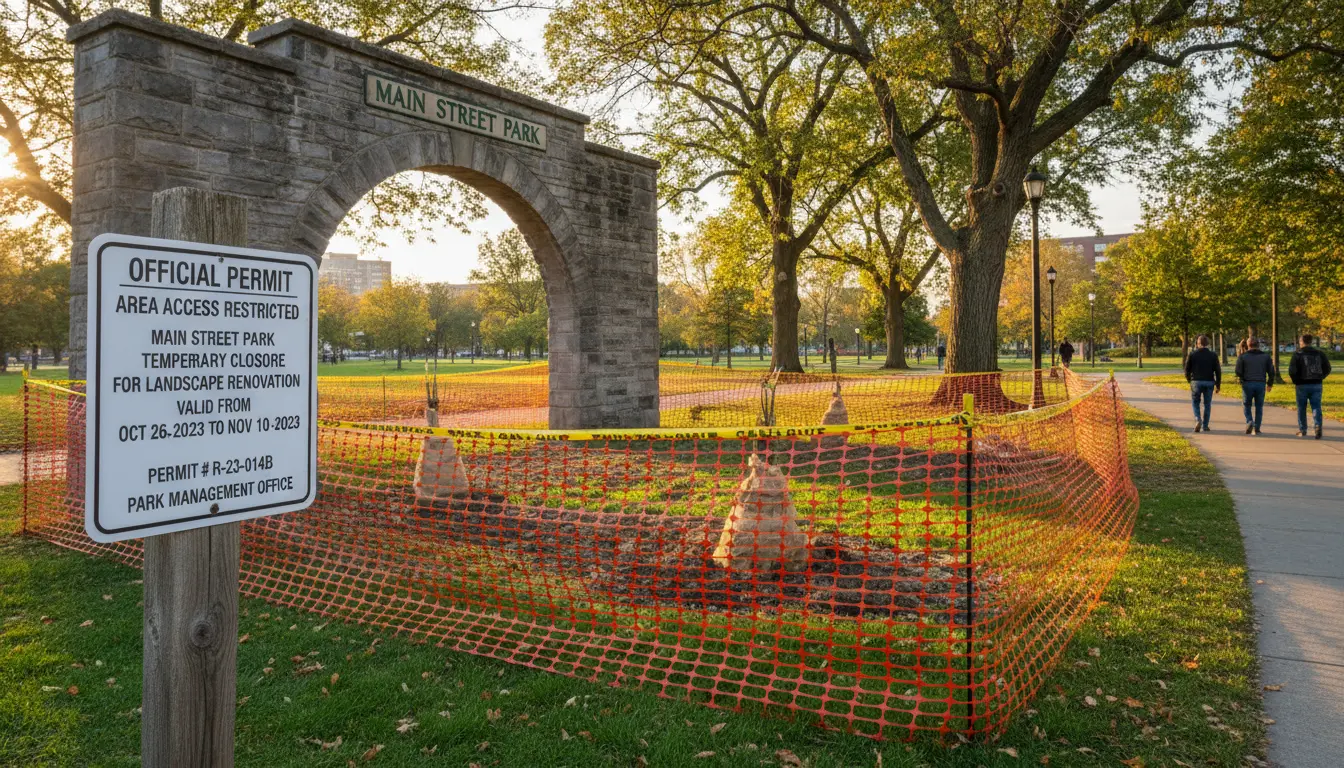
Brooklyn Bridge Park zones such as Main Street Park, John Street Park, and Empire Fulton Ferry may require permits for more structured setups—especially if stands, reflectors, or larger crews are involved. Staff can and do approach groups when equipment feels out of scale with normal park use, or when a setup begins to obstruct shared paths.
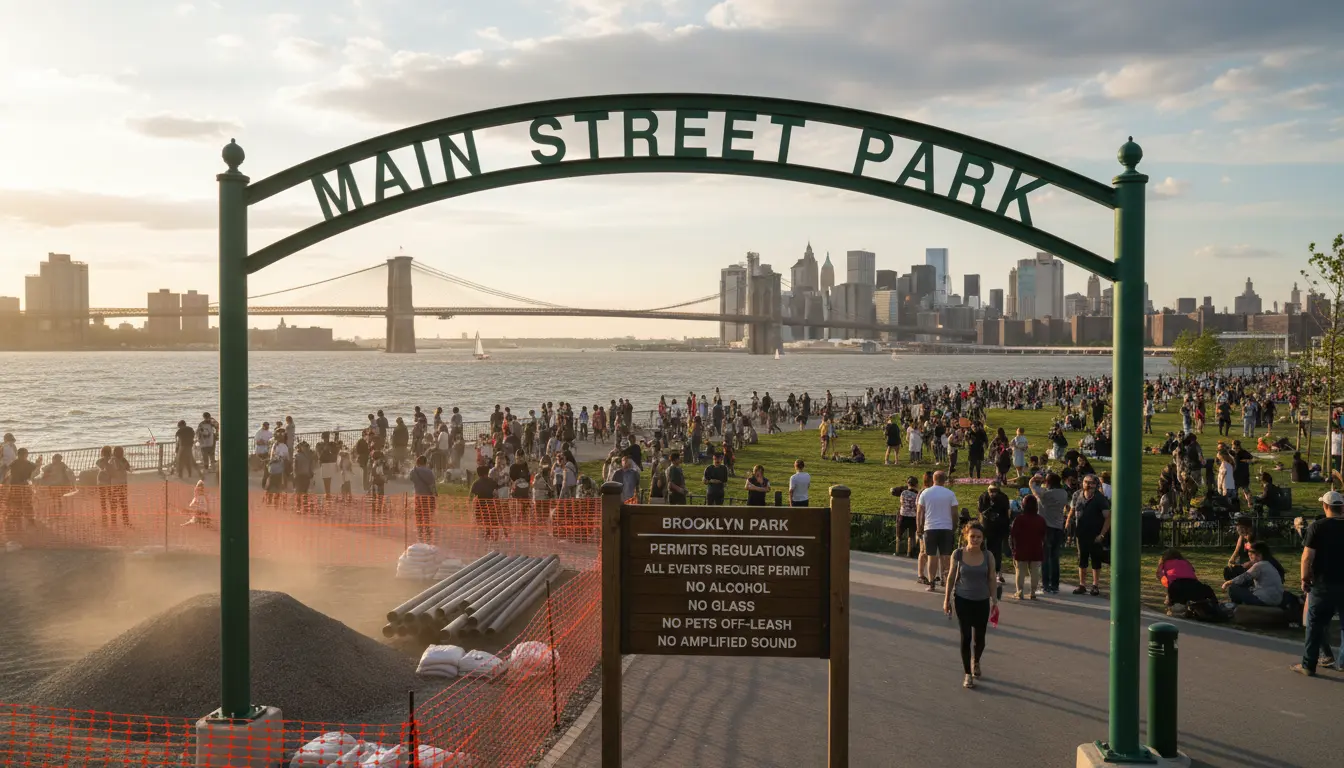
Shows a real permit posting and temporary fenced-off section at Main Street Park, illustrating how lawn access can change and why schedules need backup locations in case a favorite patch is restricted.
Reinforces how regulations, ongoing construction, and normal park use overlap at the Main Street Park entrance, making it clear that conditions can be busy yet controlled rather than empty and open.
Private and semi-private areas—Empire Stores interiors, rooftop spaces, some courtyards—operate under their own rules and typically require explicit permission from management. On busy days, tour groups and events may temporarily occupy areas that look open on a weekday site visit, so having alternative park or street locations identified in advance is practical risk reduction.
Empire Stores edge and the Fulton Ferry transition zone
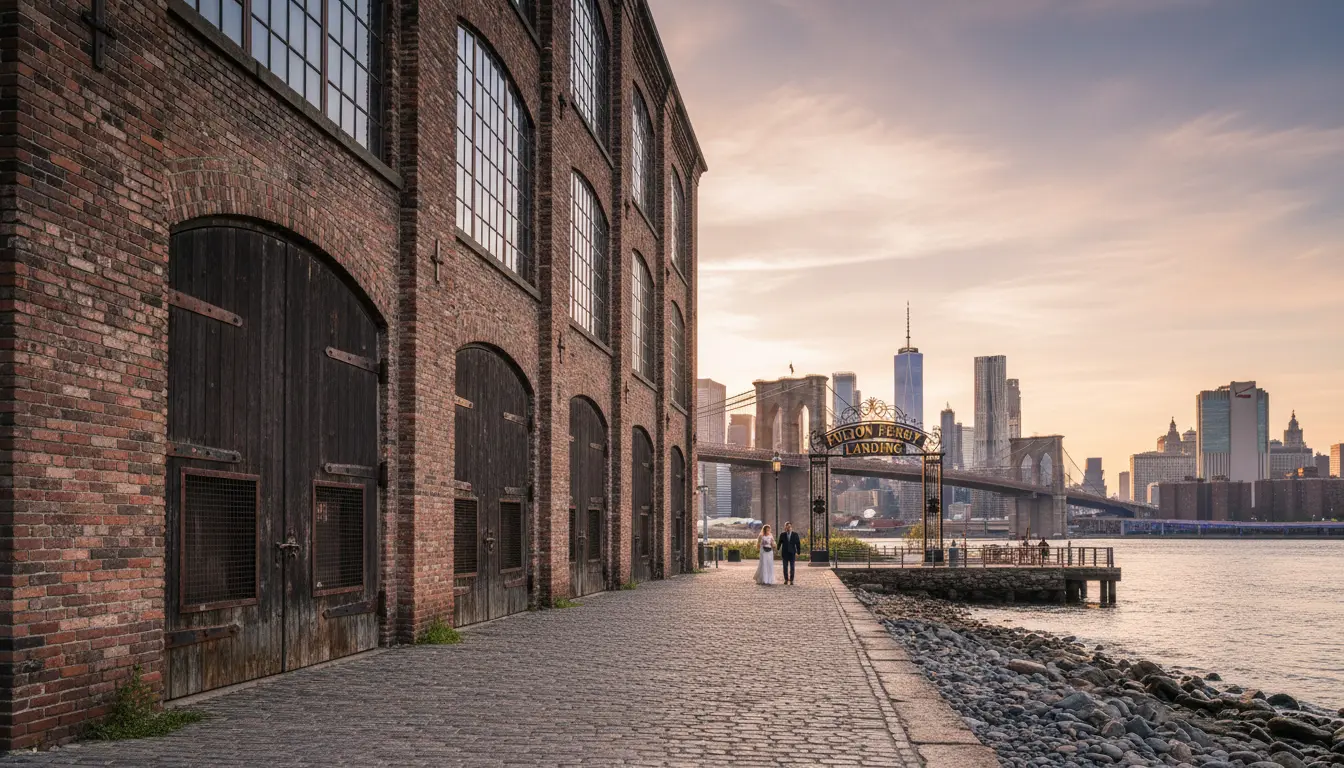
Another key DUMBO micro-area is the edge where the brick mass of Empire Stores meets the open waterfront at Fulton Ferry Landing. Here, a paved plaza and walkways step down from the warehouse façade to lawns and river paths, and signage makes it easy to orient yourself toward the ferry dock and Old Fulton St.
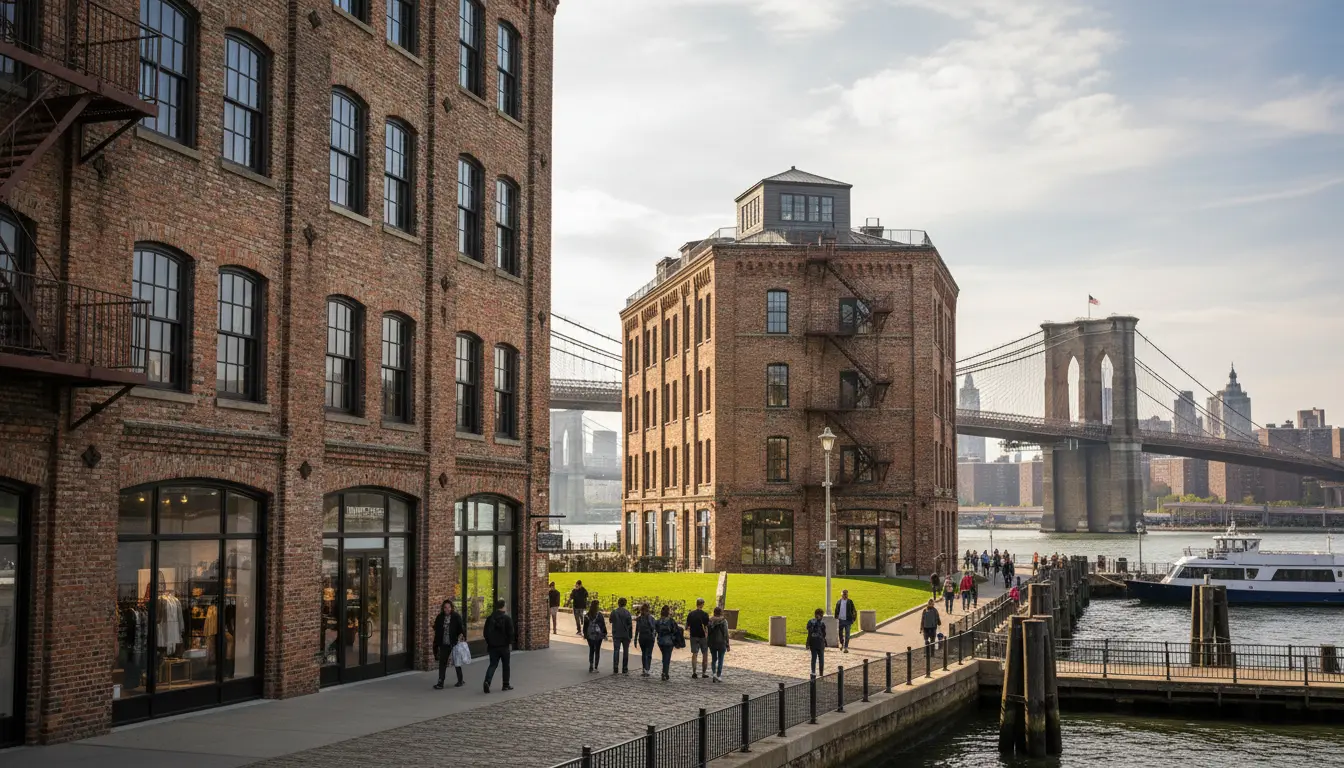
Confirms the distinct brick texture of Empire Stores, the paved transition zone, and the immediate link to waterfront lawns and paths that many couples use for short walking sequences.
Shows the pedestrian route from the Empire Stores loading bays down toward Fulton Ferry Landing, verifying how quickly you can move from industrial brick backdrops to open riverfront in a single short walk.
This is also the point where DUMBO begins to blend into the ferry approaches and the lower edge of Brooklyn Heights; on busy days, ferry queues and café lines add another layer of crowding around Old Fulton St and the park entrances.
What finished DUMBO wedding images realistically look like
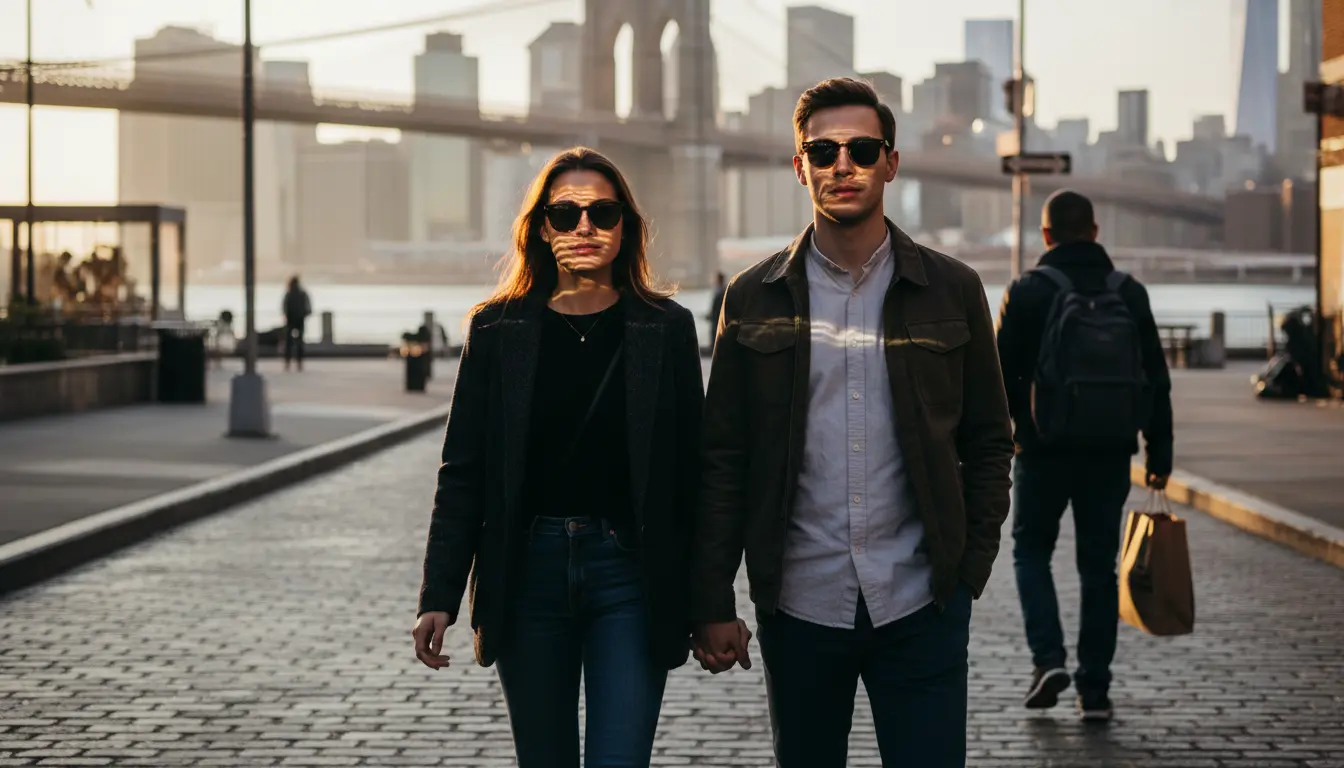
Couples often imagine empty cobblestone streets and pristine skylines, but real DUMBO sessions usually include some combination of passersby, moving traffic, scaffolding, and wind-flattened clothing. For couples considering Wedding Photography in this neighborhood, it helps to see how those elements appear in final deliverables.
Illustrates how river reflections can create bright highlights on one side of the frame, while a pedestrian or cyclist may briefly cross the background—realistic conditions for most DUMBO cobblestone portraits.
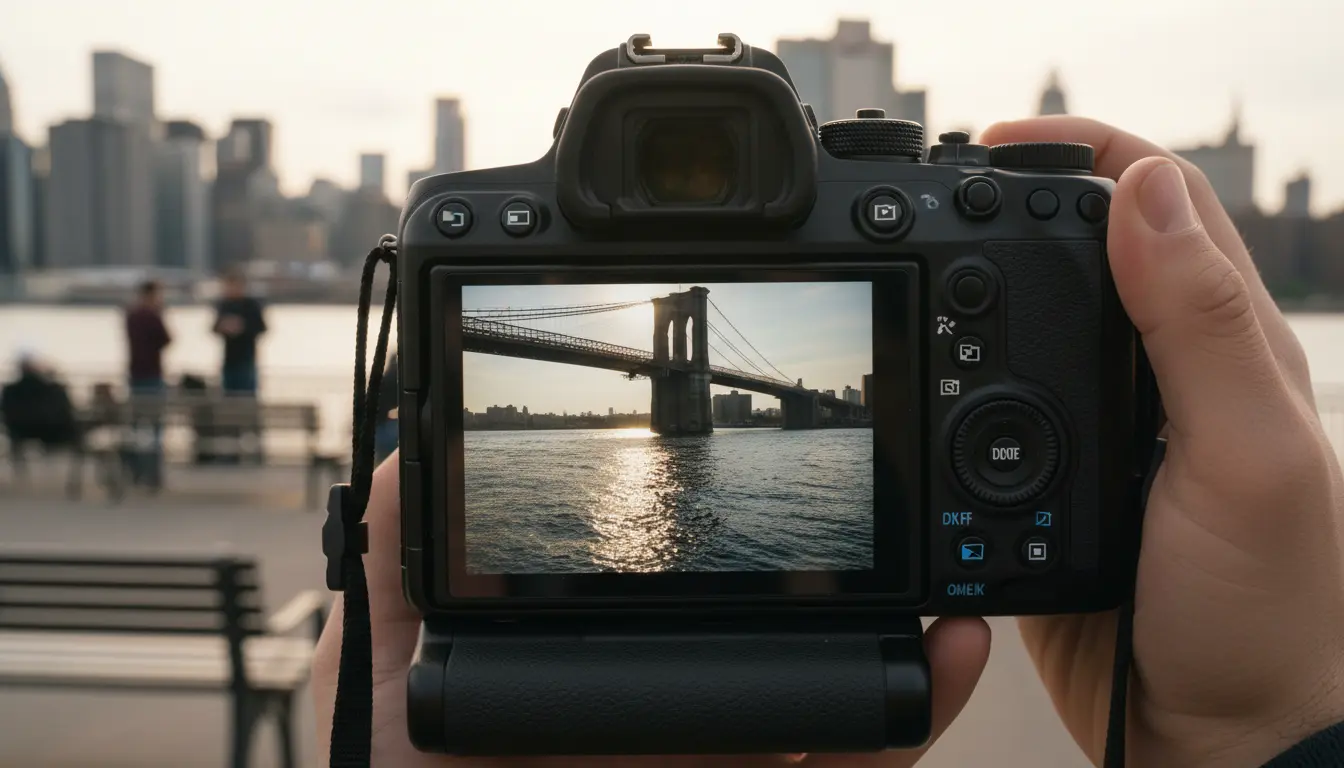
Shows an unedited frame on the camera’s display from Fulton Ferry lawn, including bridge structure, river glare, shadow bands, and background visitors—useful for understanding how much of the environment remains visible even after cropping and adjustments.
These examples reflect the balance between controlled posing and the impossibility of fully clearing a public space in this part of Brooklyn.
Everyday frictions: curb rules, construction, micro-boundaries, and rumble
DUMBO’s appeal for weddings sits alongside several recurring “chaos” patterns that shape planning:
- Curb rules confusion: Around Old Fulton St and the main park entrances, signage and markings do not always match how drivers behave. Rideshares double-park near crosswalks, private cars idle next to hydrants, and tour buses occasionally block what looks like a safe drop-off. Couples often find themselves stepping around bumpers or navigating small traffic jams right at the start or end of a session.
- Construction rhythm: Scaffolding is not a rare surprise here; it cycles through the warehouse façades along Water St, Front St, and near the bridges. A window that was clear at a scouting visit may be wrapped in netting a month later. This affects not just backgrounds but also light behavior, as scaffolds add unexpected shade or visual clutter.
- Micro-boundary shifts: Walking north past John Street Park or inland beyond York St, the energy changes suddenly from tour-heavy waterfront to quieter industrial pockets. Groups who aren’t familiar with this shift can overestimate how quickly they’ll “pop back” to the skyline, not realizing they’ve slipped into lower-traffic blocks with fewer obvious landmarks.
- Subway rumble zones: In parts of DUMBO, especially near York St and under the Manhattan Bridge, subtle vibrations from trains and traffic are felt through the pavement and sometimes picked up on audio when filming close to ground level. This doesn’t usually ruin footage, but it can add a low-frequency layer that’s important to understand for vows or spoken audio outdoors.
Recognizing these patterns in advance helps set realistic expectations about noise, background control, and how many setups can comfortably fit into a single outing.
Neighboring Areas in Brooklyn
Photographers and couples often connect DUMBO with nearby Brooklyn neighborhoods when planning full-day timelines or backup locations:
These areas offer different mixes of streetscapes, parks, and indoor spaces while remaining reachable within typical wedding-day travel windows.
Practical questions about using DUMBO for wedding photography
When are crowds usually lightest in DUMBO for wedding images?
Early mornings on weekdays tend to be the calmest, especially before office and tourist traffic builds between the bridges. Weekend afternoons from roughly 10am to sunset are the most congested around Washington St and Main Street Park.
Which areas are most likely to require permits?
Main Street Park, John Street Park, Pebble Beach, and the Empire Fulton Ferry lawn fall under Brooklyn Bridge Park rules; structured shoots with stands, large crews, or long-duration setups are most likely to trigger permit requirements. Private interiors, rooftops, and some courtyards generally require direct permission from their managers regardless of gear size.
Where does light change fastest in DUMBO?
Light shifts quickly along Washington St and near the bridge approaches, where tall structures cast moving shadow bands in late afternoon. Open lawns near the river change more slowly, but reflections from the water can intensify or fade within minutes as the sun angle shifts.
Which spots are windiest?
The waterfront edges—especially Empire Fulton Ferry lawn and the exposed stretches near Fulton Ferry Landing—experience strong crosswinds, particularly on cooler days or when weather fronts move through. Under-bridge zones can funnel wind as well, tugging at dresses and veils.
How do subway options affect timing?
The F at York St involves a steep hill that slows movement, and groups should allow extra time when walking downhill to the river in formal shoes. The A/C at High St offers a gentler route but adds distance under the bridge ramps before reaching the core cobblestone blocks.
Where does noise become an issue for video?
Under and around the Manhattan Bridge and near York St, train and traffic rumble is more pronounced. On the waterfront, wind and crowd noise dominate instead. Quieter audio is more achievable in the industrial side streets north of John Street Park or slightly inland from the main tourist corridors.
Are there places where equipment is discouraged even without formal rules posted?
Narrow cobblestone corridors like Washington St and parts of Water St are sensitive to large tripods or light stands because they quickly obstruct pedestrians and vehicles. Park paths and Empire Stores entrances are similarly high-traffic; compact, handheld setups are more practical and less likely to attract intervention.
How do DUMBO’s micro-boundaries affect a wedding-day plan?
Staying within the core triangle—Washington St, Empire Stores, and the nearby lawns—keeps walking times short and landmarks close by. Once you drift north past John Street Park or inland beyond York St, you trade iconic bridge views for quieter industrial backdrops, which can be ideal for portraits but require more time to return to the classic skyline scenes.