
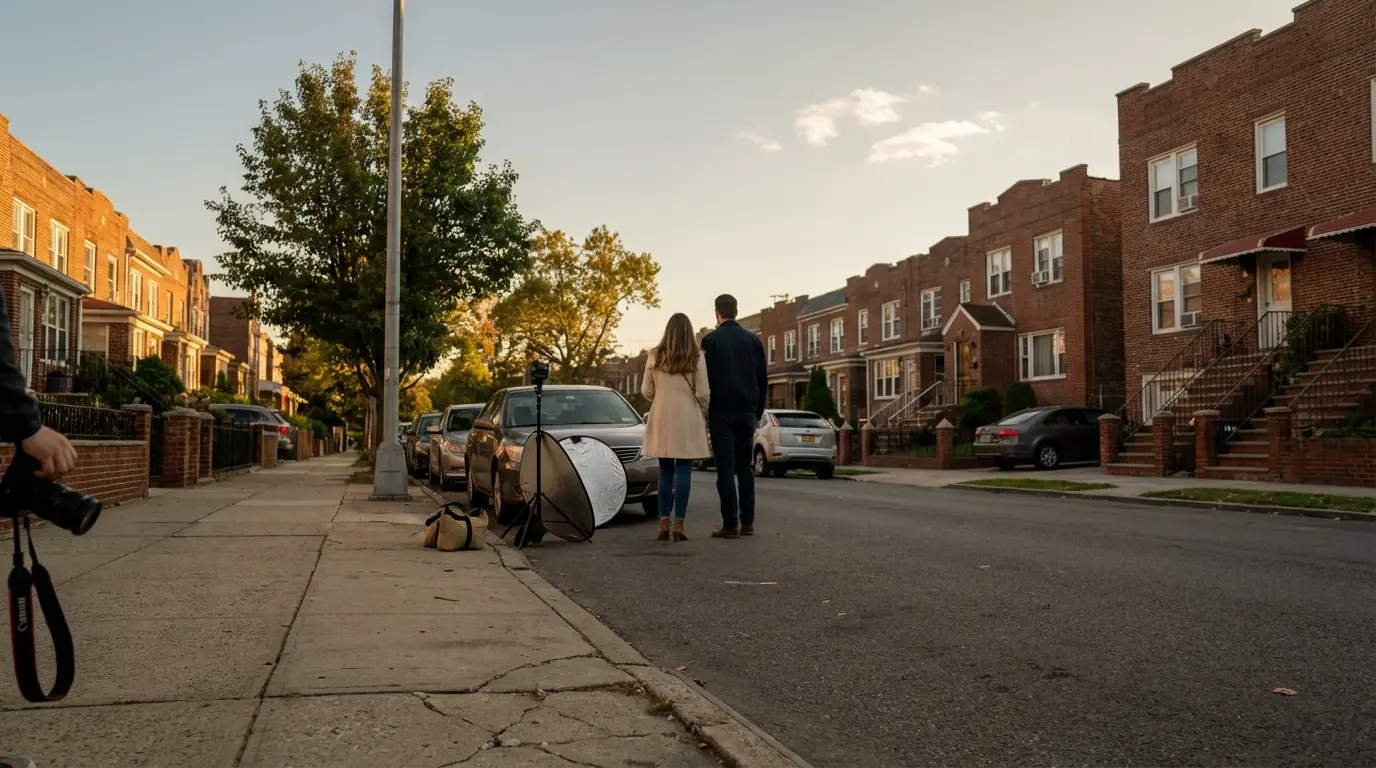
Dyker Heights in Brooklyn for on-location wedding and portrait photography planning
Where Dyker Heights sits within southwest Brooklyn
Dyker Heights is a compact residential neighborhood in southwest Brooklyn, sitting between the more heavily trafficked corridors of 75th Street, 86th Street, and Bay Ridge Parkway. It is bordered by similar low-rise areas such as Bensonhurst to the west/south and Borough Park to the north, with Bay Ridge off to the southwest toward the water. Within broader Brooklyn, it reads as a steady grid of side streets rather than a destination for through-traffic.
On maps, the way residents talk about the neighborhood lines up closely with how Dyker Heights is defined: a primarily residential grid, with a few commercial seams and larger open zones along its southern edge. For photography, this translates into predictable, low-rise backgrounds and limited skyline views, but with several reliable spots for open sky and greenery.
Most sessions that anchor themselves in Dyker Heights use the 10th–13th Avenue band because it keeps you in the core of the neighborhood grid, away from the louder edges. East–west, the blocks between 75th and 79th Streets feel especially typical: brick homes, small yards, and steady but not overwhelming car activity.
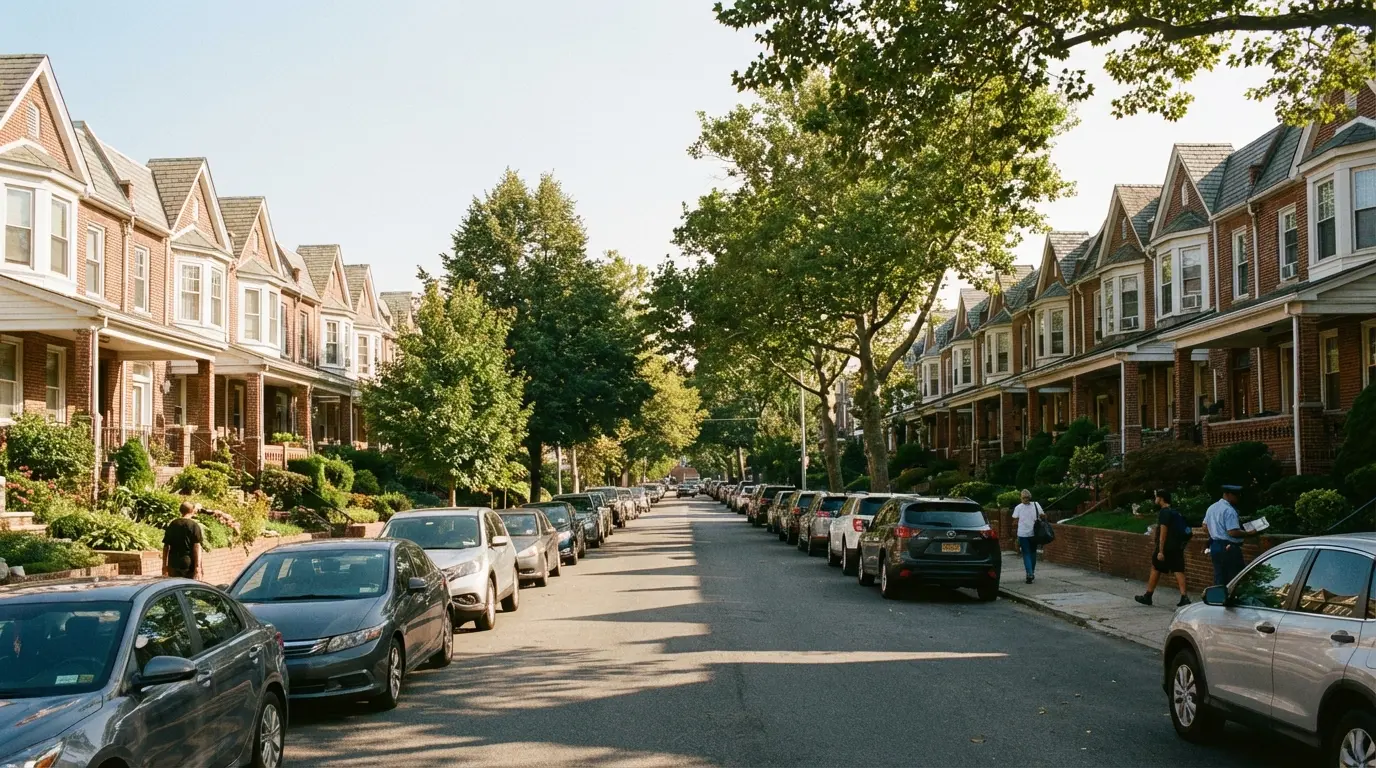
Verifies the neighborhood’s low-rise, brick-façade rhythm and front-yard setbacks where many on-location wedding photos are taken; shows typical street parking and scale buyers should expect.
This 12th Avenue view is typical of Dyker Heights: 2–3 story brick homes with short front yards, consistent curb parking, and a wide stripe of visible sky. For photography, it confirms the scale and spacing you can expect when planning compositions on residential blocks.
Street layout, access, and moving people and gear
East–west travel in Dyker Heights relies on 75th Street, 86th Street, and Bay Ridge Parkway. These carry most of the car traffic, especially during morning and late-afternoon commuting hours, which matters if you are timing arrivals, drop-offs, or quick car repositioning between locations.
North–south, 10th and 11th Avenues function as quieter residential corridors, while 13th Avenue mixes homes with small businesses. For short wedding or family sessions, couples often meet on a side street off 10th–12th Avenue, then walk no more than a block or two to switch backgrounds.
Parking is almost entirely street-based. During weekday afternoons you may find open spaces mid-block, but evenings and weekends can be tight, especially near churches and schools. Gear usually has to be carried a short distance from the car, so compact setups are favored over large stands or carts.
Sidewalks shift in width: around school zones and some corners they feel wider and more forgiving, while stretches near busier 13th Avenue storefronts narrow suddenly because of stoops, planters, and occasional outdoor fixtures. This variability affects where a small group can comfortably pause without blocking foot traffic.
What Dyker Heights streets and buildings actually look like
Dyker Heights is dominated by 2–3 story brick homes, often semi-detached, with modest front-yard setbacks and occasional ornamental fencing. The repetition of façades gives a consistent, residential backdrop that reads clearly in photos without drawing attention away from people.
Because there are almost no tall buildings, sky exposure is high on most blocks. Even narrow streets have a straight view of the sky, which softens the overall feel of images and prevents the canyon-like shadows you see in denser parts of the city. Seasonal decorations, plantings, and fencing can introduce visual clutter along property lines, which photographers either lean into for texture or avoid by using shallower depth of field.
Along 86th Street, the building massing shifts slightly: taller mixed-use structures, signage, and transit-related elements show up, along with more vehicles and pedestrians. That corridor works for clients who want a more “street” feel but usually requires more careful framing to avoid signage, parked delivery trucks, or irregular curb repairs in the background.
Common locations for wedding and family sessions in Dyker Heights
Most on-location work here is straightforward: short walks on residential blocks, use of public sidewalks, and, where arranged, brief stops in front of specific homes or buildings. For on-location Wedding Photography in Dyker Heights, the usable space is typically the public sidewalk and curb line, with any use of private yards or stoops dependent on explicit permission from the homeowner or institution.
Couples often choose side streets near 11th or 12th Avenue for quick portraits, especially if they or family members live nearby. The setback of homes allows you to place people near the curb with façades and trees in the background, keeping traffic mostly out of frame. For small family and group sessions, the same pattern applies: short sessions anchored to a familiar address, using the immediate block as the backdrop.
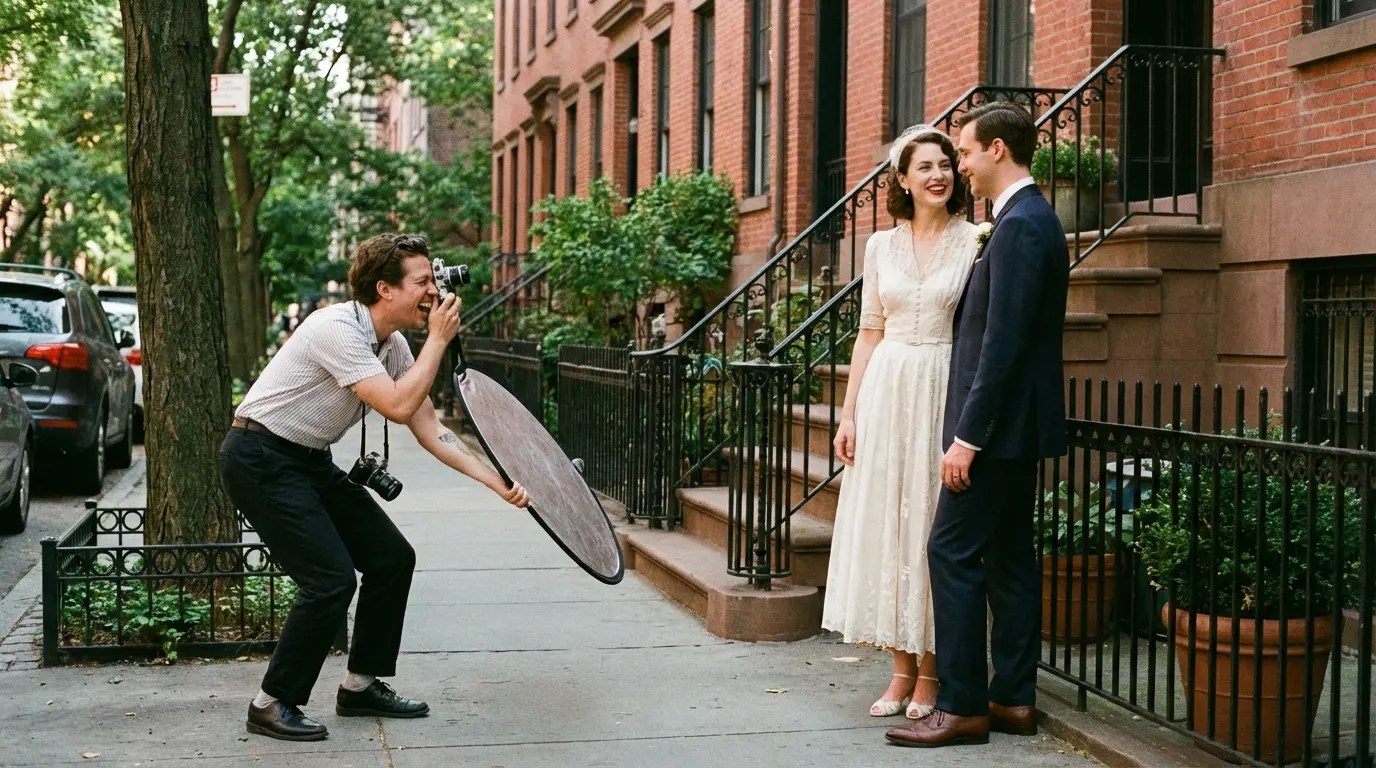
Shows the common, permitted-looking locations for short wedding shoots (front-yard edges and quiet side streets) and the typical proximity to homes; does not imply access beyond public sidewalks or homeowner permission.
The image illustrates a typical Dyker Heights setup: a photographer and couple working within the bounds of the sidewalk, with homes only a few feet away. It confirms how close sessions are to private property lines and why respecting those boundaries is central to planning.
Choosing between quiet streets, 13th Avenue, and 86th Street
Within the grid, different micro-areas offer distinct trade-offs:
- 11th–13th Avenue residential belt: Detached and semi-detached homes with consistent brick façades and short front yards. Traffic is generally local, so pauses in front of driveways or curb cuts are manageable when timed between cars. This is the default choice for couples wanting “home neighborhood” photos.
- 13th Avenue commercial stretches: Here, pharmacies, bakeries, and other small businesses introduce canopies, signage, and regular foot traffic. Sidewalks can pinch due to street furniture, planters, or sandwich boards, which limits space for larger groups or light stands.
- 86th Street corridor: Busier east–west flow, narrower feeling sidewalks in some sections, and more visual noise from storefronts and traffic lights. It works for clients who want a busier Brooklyn street feel but is less forgiving if you need clean backgrounds or room for gear.
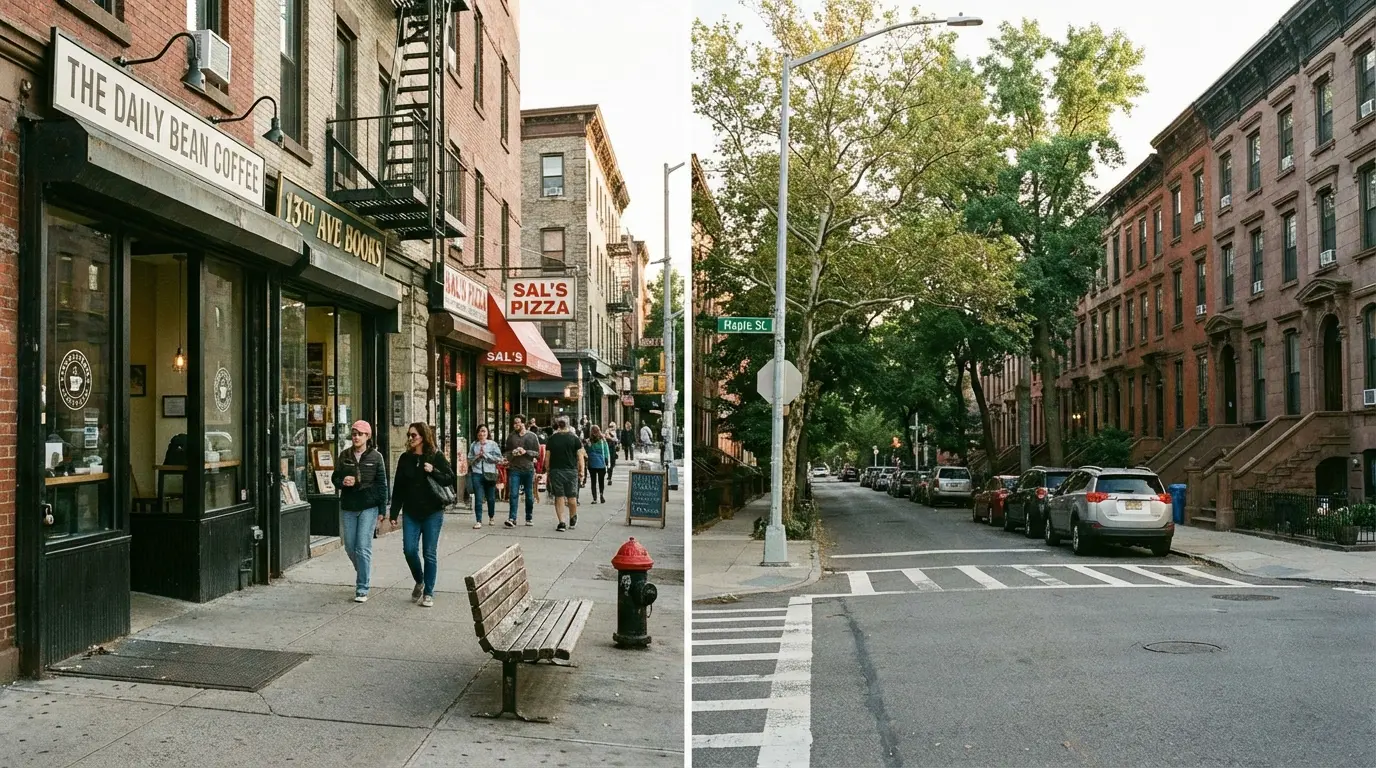
Allows buyers to compare crowding, sidewalk width and street furniture on busier 13th Avenue versus quieter nearby residential blocks when choosing shoot locations or scheduling times.
In this view, you can see how quickly a busy 13th Avenue corner transitions into a calmer side street. For planning, it shows how a session can start in a quieter micro-area and, with a short walk, pick up more urban context—or avoid it—depending on comfort with crowds and clutter.
Professional Photography Options in Dyker Heights
How light moves through Dyker Heights blocks
With almost all buildings topping out at 2–3 stories, light travels cleanly across Dyker Heights from east to west. On 10th–13th Avenue corridors, early mornings send direct light onto house fronts and sidewalks, with minimal obstruction except where corner trees create patterned shade.
As the sun moves west, north–south streets develop longer shadows. This is less about building height and more about block orientation: on some cross streets, one side will be in full sun while the opposite sits in shade by mid-afternoon. Photographers often use this to control contrast simply by crossing the street.
Near the Dyker Beach Park and golf course perimeter, the light field opens up completely. There are no tall structures to the west, so late-afternoon light stays usable longer, falling evenly across lawns and paths. By contrast, midday along 86th Street can be harsh: reflective surfaces from cars and storefront windows, limited tree coverage, and bright pavement combine to create stronger glare and squinting, which is less ideal for formal portraits.
Setting up equipment on local sidewalks
Because most sessions take place in front of homes or along park edges, equipment footprint has to respect sidewalk widths and existing street elements. Light stands, reflectors, and tripods need to be placed so they do not block narrow choke points created by stoops, utility poles, or benches.
On purely residential blocks, there is usually enough width to tuck a small stand closer to the curb while keeping the walking path clear. Along 13th Avenue and near schools, however, sidewalk width tightens and commuter flow increases, so setups are often stripped down to a hand-held reflector and a single camera body.
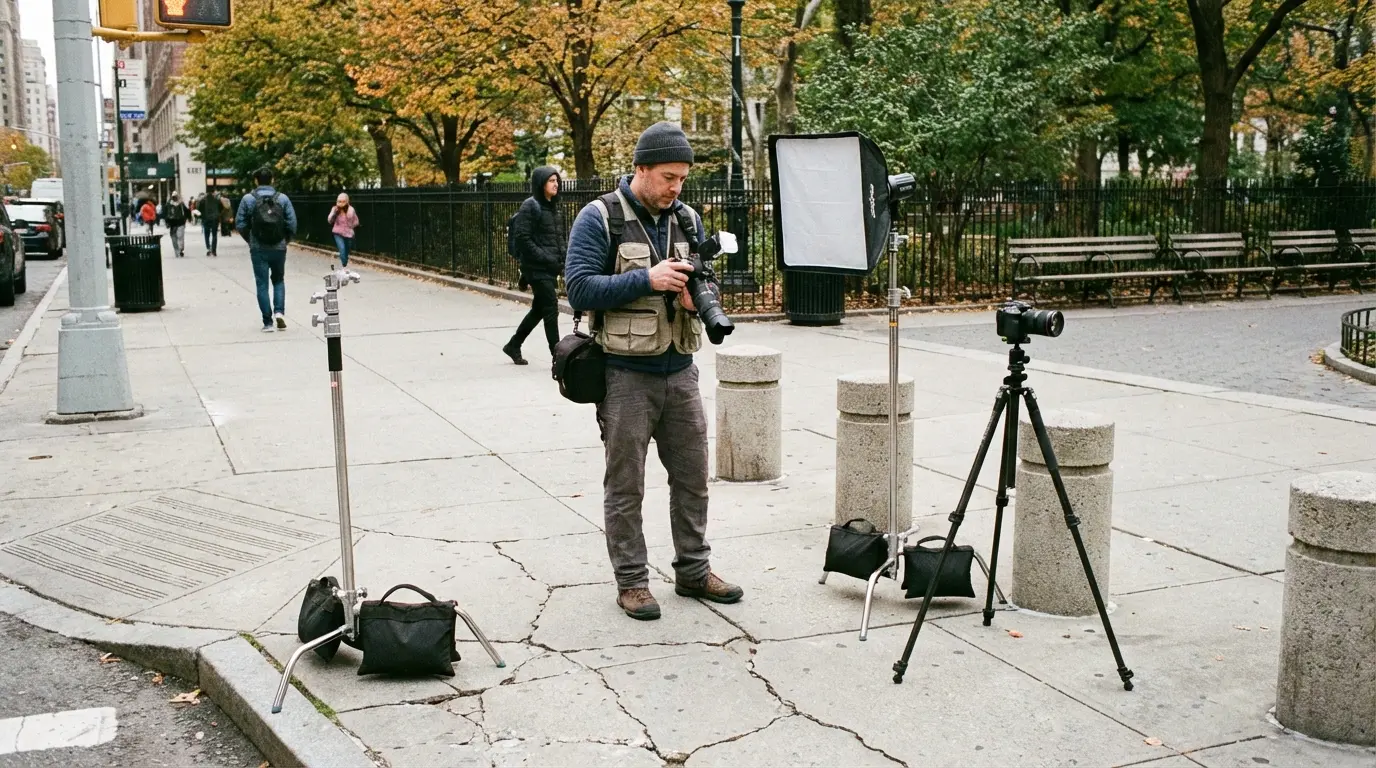
Demonstrates realistic, low-impact setup methods used in Dyker Heights (compact gear, sandbags, attention to bollards/curb cuts) and how setups must account for narrow sidewalks and pedestrian flow.
This setup shows how gear is kept compact and weighted with sandbags, positioned between park fencing and the curb. It verifies how photographers work around bollards, curb cuts, and passing pedestrians while still achieving controlled light.
Wind, parks, and other risk factors to plan around
Open areas at the edge of Dyker Beach Park and the golf course perimeter are notably more exposed to wind than the inner residential grid. Light stands and reflectors must be secured with sandbags or not used at all when gusts pick up, to avoid tipping into walkways or grass areas used by athletes and park visitors.
Within the neighborhood, smaller green spaces like the park documented on the official Dyker Heights Park – NYC Parks page offer additional lawn and tree backdrops. These spaces can work well for small groups, but organized or larger-scale shoots may require permits, and access to open fields is often constrained by scheduled sports, community events, or maintenance.
Street-level disruptions also matter. Utility work and street repairs are common along 75th–79th Streets, producing temporary metal plates, patched asphalt, and barricades that can appear in background frames or block curbside parking. Around 86th Street, patches from past repairs can create uneven walking surfaces, which is relevant for anyone in dress shoes or gowns moving quickly between spots.
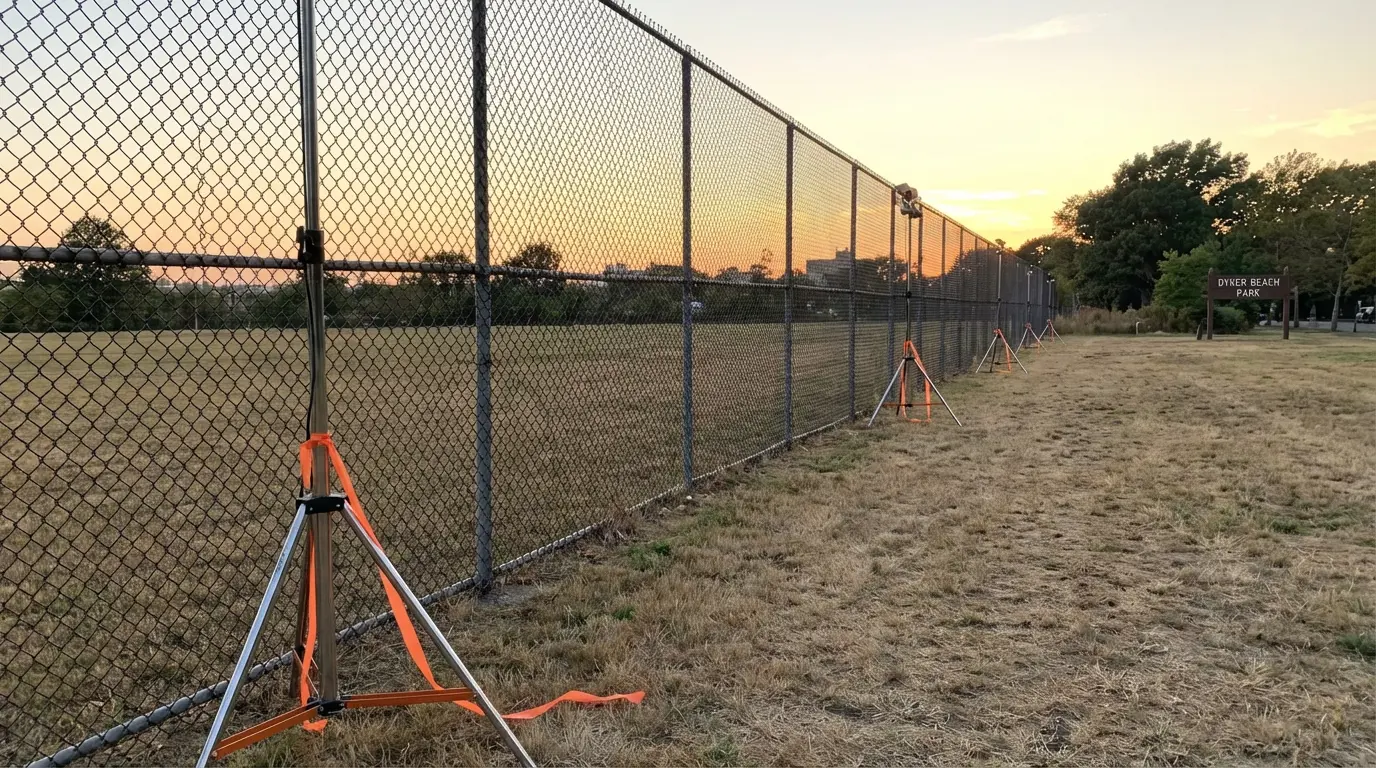
Identifies the park-edge wind exposure and the common mitigation (sandbags/anchors) photographers use; also signals that open park fields are exposed, and permission may be required for organized use.
The image underscores how open and wind-prone the Dyker Beach Park perimeter is, and why anchoring even small pieces of gear is necessary. It also shows the fence line that separates public walkways from restricted golf course grounds, clarifying where access stops.
Permissions are another constraint:
- Dyker Beach Park lawns may require permits for structured sessions.
- Golf course property is fully restricted for photography.
- Church grounds and schoolyards are strictly permission-based and can be unavailable due to services or classes.
- Private stoops and yards are private regardless of how open they appear from the sidewalk.
Dyker Beach Park as a recognizable backdrop
Even when the session itself stays mostly on nearby sidewalks, the Dyker Beach Park entrance and golf course edge serve as a recognizable landmark for meeting points and a small number of frames. The area offers open grass, tall fencing, and distant tree lines, giving variety compared with brick-only backdrops deeper in the grid.
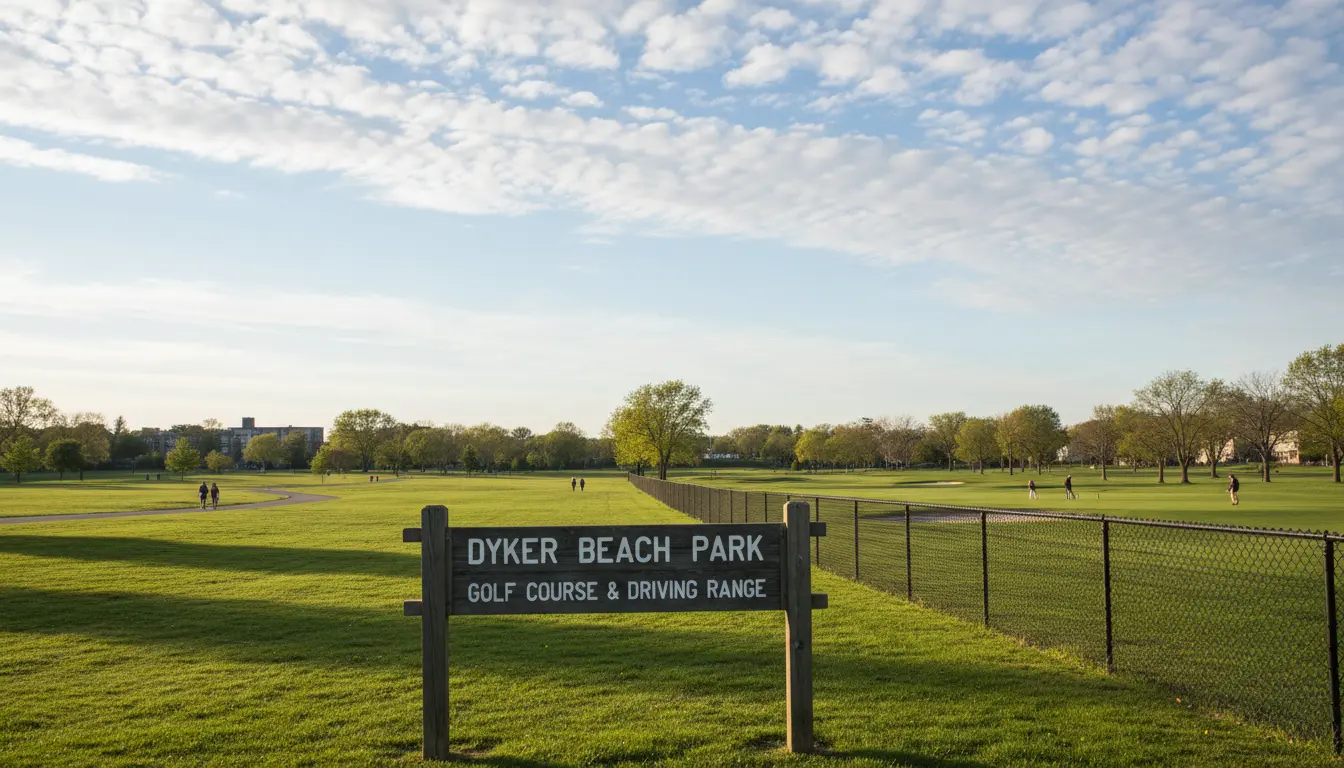
Provides unmistakable neighborhood verification by showing the Dyker Beach Park entrance and golf course edge buyers can reference when selecting park-edge shoot locations; does not imply unrestricted access to the course.
This entrance view acts as geo-proof: clients can confirm they are in the correct area, and photographers can describe meeting “by the park sign and fence line” without ambiguity. The late-afternoon light visible here is typical of the extended usable light window near the park’s western edge.
What finished Dyker Heights photos typically show
Finished galleries from Dyker Heights tend to mix three main background types:
- Front-yard and façade frames: Couples or families framed a few steps from the curb, with brick homes, stoops, and plantings forming a consistent backdrop. These work well for neighborhood-rooted wedding, family, or even real estate imagery.
- Side-street depth shots: Longer views down 11th–13th Avenue side streets, using parked cars and repeating façades as soft, out-of-focus layers.
- Park-edge and open-sky images: Shots near Dyker Beach Park or smaller local parks, using grass, trees, and fences to break up the brick texture and introduce more green.
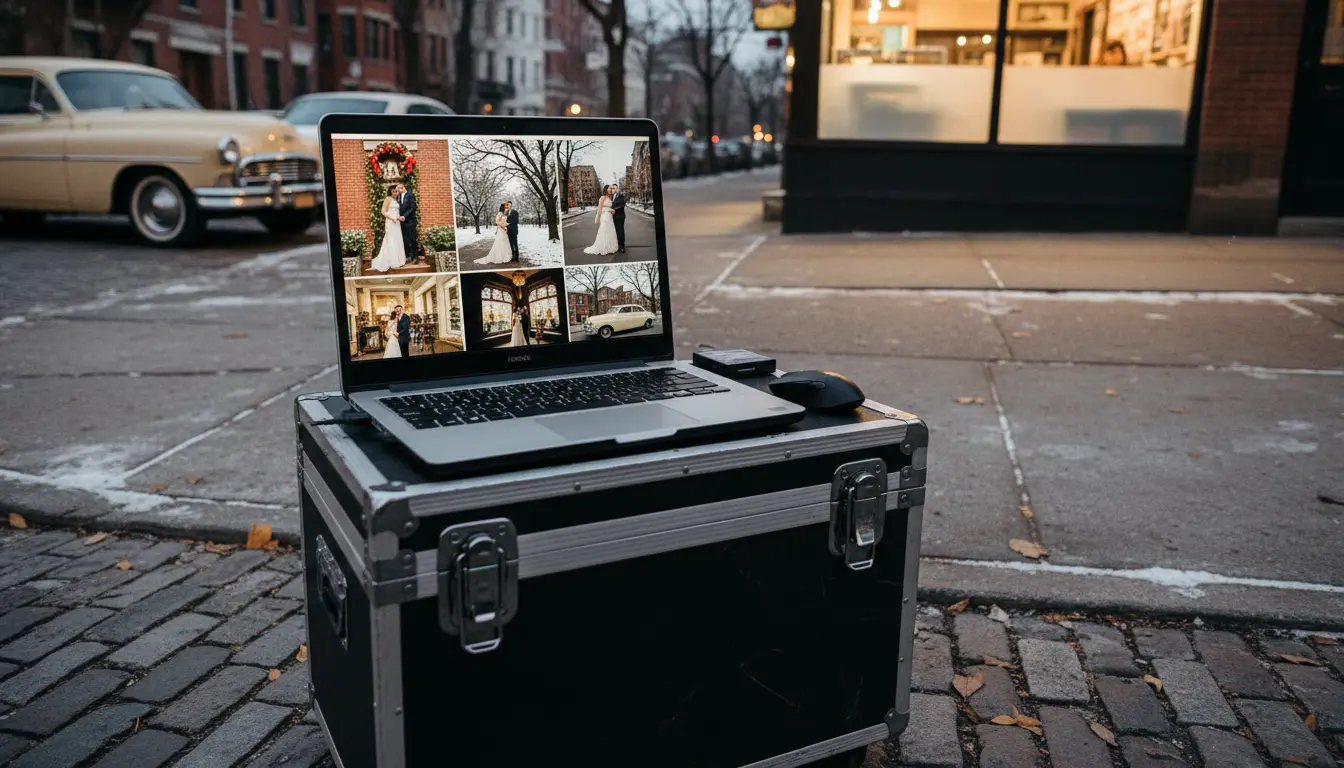
Visually ties expected deliverables to local contexts (front-yard façades, park-edge images, side-street portraits) so buyers can verify the realistic variety and backgrounds they will receive.
The proofing scene links final images back to specific Dyker Heights locations visible behind the laptop. It confirms that most deliverables come from realistic, easily accessible spots: curbside, sidewalk, and park edges rather than staged studio environments.
Street-level variables that can unexpectedly affect a shoot
Several “small” neighborhood factors can meaningfully change how a Dyker Heights session runs:
- Street repairs and utility work: Temporary cones, metal plates, and construction vehicles can appear without much notice, especially along the 75th–79th Street band. These may block previously scouted parking or introduce visual clutter that requires a quick pivot to the next block.
- Sidewalk width patterns: On one block, the sidewalk may be wide enough for a family group and a small light stand; on the next, a combination of stoops, hydrants, and planters sharply reduces usable width. This matters for gown trains, strollers, or older relatives who need steady footing and more space.
- Commuter flow near schools and busier avenues: Around dismissal times, streets leading to 13th Avenue and 86th Street can suddenly fill with students, parents, and buses. Even with short sessions, planning to avoid these windows prevents constant stops to let groups pass.
- Street furniture and fixtures: Benches near churches, bollards by park perimeters, trash cans at corners, and consistently spaced hydrants all shape how and where people can stand. Sometimes these elements are useful for posing or framing; in other cases they limit the ability to line up a wider group.
Building these variables into timing and route choices helps keep wedding, family, or creative sessions moving smoothly, without needing to renegotiate locations mid-shoot.
How Dyker Heights coverage connects to nearby Brooklyn neighborhoods
Dyker Heights rarely exists in isolation for clients. Residents may live here but attend church a few blocks into Bensonhurst, or commute through Borough Park on the way to work. Bay Ridge and other nearby areas provide alternative open-view corridors toward the water when couples want a second setting beyond strictly residential streets.
This means a single wedding or family photography day might start on a Dyker Heights side street, move briefly toward a park edge, and then continue into an adjacent neighborhood for additional backdrops. Understanding how the Dyker Heights grid feeds into these nearby areas—often via 75th Street, 86th Street, or Bay Ridge Parkway—makes it easier to build realistic timelines that account for traffic, parking, and walking distances.
Other Brooklyn Communities in our coverage
Dyker Heights wedding and portrait FAQ
How busy are Dyker Heights streets during typical wedding portrait times?
Midday on weekdays is relatively calm on residential blocks, with most movement centered on 13th Avenue and 86th Street. Late afternoons near schools and busier avenues are much more congested, so portraits on side streets are often scheduled slightly before or after dismissal periods.
Is street parking realistic for photo sessions here?
Yes, but with caveats. On many blocks you can find a space within a short walk of your chosen spot, especially mid-morning or early afternoon. Evenings and weekends near churches, schools, and 13th Avenue can be tight, so allow extra time to circle and park.
Can we use Dyker Beach Park or other parks for wedding photos without permits?
Small, brief shoots using only hand-held gear along public paths are often tolerated, but this is not guaranteed and can change based on park conditions or events. Organized sessions, larger groups, or setups that occupy lawns or fields may require permits; golf course areas are off-limits.
Are sidewalks wide enough for larger family groups?
Some are, some are not. Blocks near schools or on wider residential streets often have enough width for a group to line up comfortably, while commercial stretches on 13th Avenue or segments of 86th Street narrow due to storefront fixtures and street furniture. Scouting or recent street-level images help identify suitable corners.
What kind of backgrounds should we expect if we stay entirely within Dyker Heights?
Expect low-rise brick homes, small front yards with plantings and fences, parked cars along curbs, and occasional tree lines. Park edges add grass and open sky, but there are no dramatic skyline views; the look is distinctly residential and neighborhood-focused.
How do ongoing street repairs affect sessions?
Temporary barriers, plates, and equipment can appear unexpectedly, especially along 75th–79th Streets. When this happens, the solution is usually simple: move half a block or turn onto the next street to restore cleaner lines and safer walking conditions.
Is it possible to walk between multiple Dyker Heights locations during a short session?
Yes. The grid is compact, and many clients comfortably move between two or three nearby corners within a 60–90 minute window. Planning a route that avoids the busiest corridors and accounts for any mobility needs keeps transitions practical.
Can we include both residential and more urban-feeling shots without leaving the neighborhood?
Often, yes. A session can begin on a quiet side street near 11th or 12th Avenue and then shift toward 13th Avenue or 86th Street for a busier backdrop. The change in feel happens within a few minutes’ walk, as long as commuter flow and sidewalk width are considered in the schedule.