
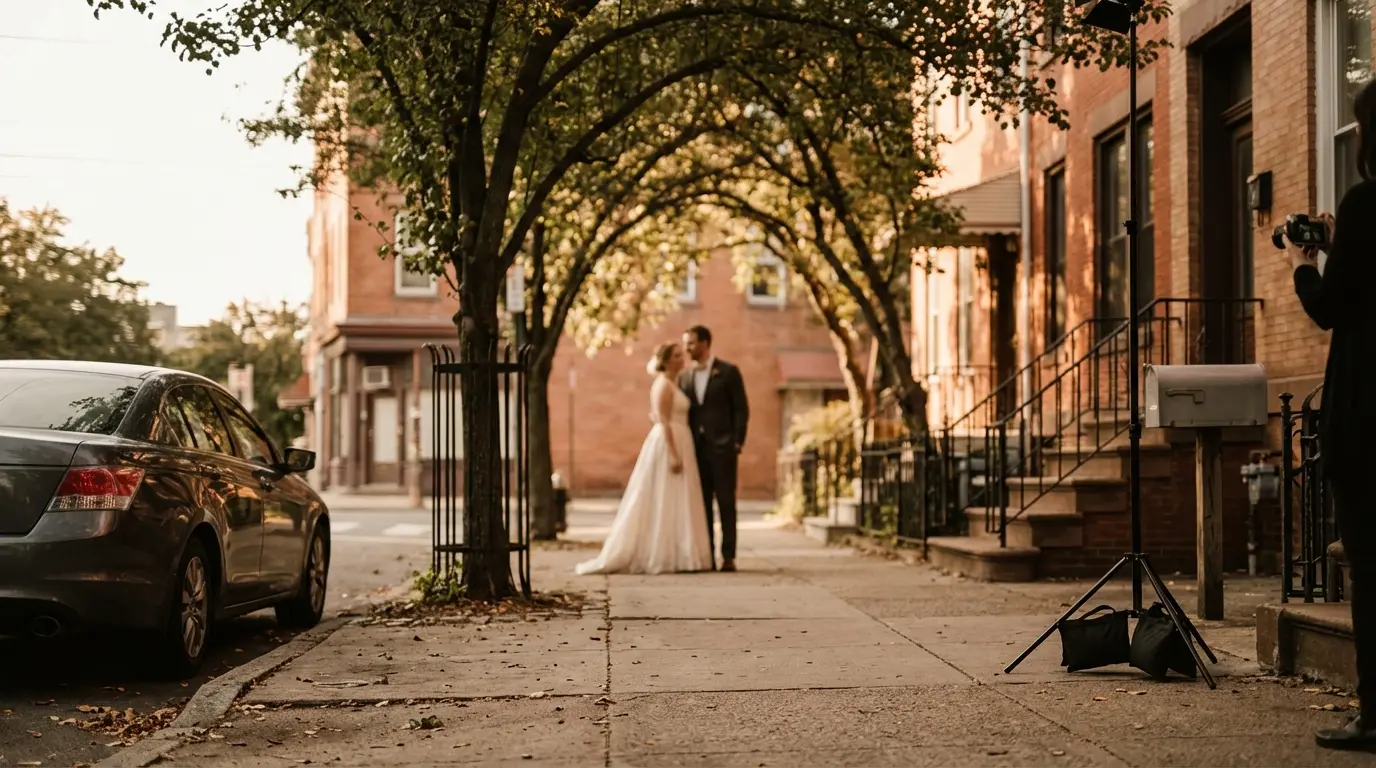
East Flatbush in Brooklyn as a setting for wedding photography
How East Flatbush fits within central Brooklyn
East Flatbush sits in the middle of Brooklyn’s inland grid, with clear shifts at its edges that matter when planning any kind of wedding-related photography. To the north, the feel changes around Empire Boulevard as you move into denser, mixed-use blocks associated with Crown Heights. To the southwest, Flatbush Avenue and its side streets pull activity toward Flatbush proper. Further east, traffic speeds pick up and building types shift as you approach the more commercial and light-industrial edges toward Brownsville.
Inside those edges, East Flatbush is mostly residential: long, straight blocks of attached and semi-detached row houses, low-rise apartment buildings and small front yards. The scale is human and walkable, but distances between key corners can be longer than they look on a map, especially if you are moving a dressed couple or a small family group between locations.
Within Brooklyn, East Flatbush functions as a quieter interior neighborhood. Couples often live here even if their ceremony or reception is happening along busier corridors in neighboring areas, so photo planning frequently involves moving between these residential blocks and venues just across the boundary lines.
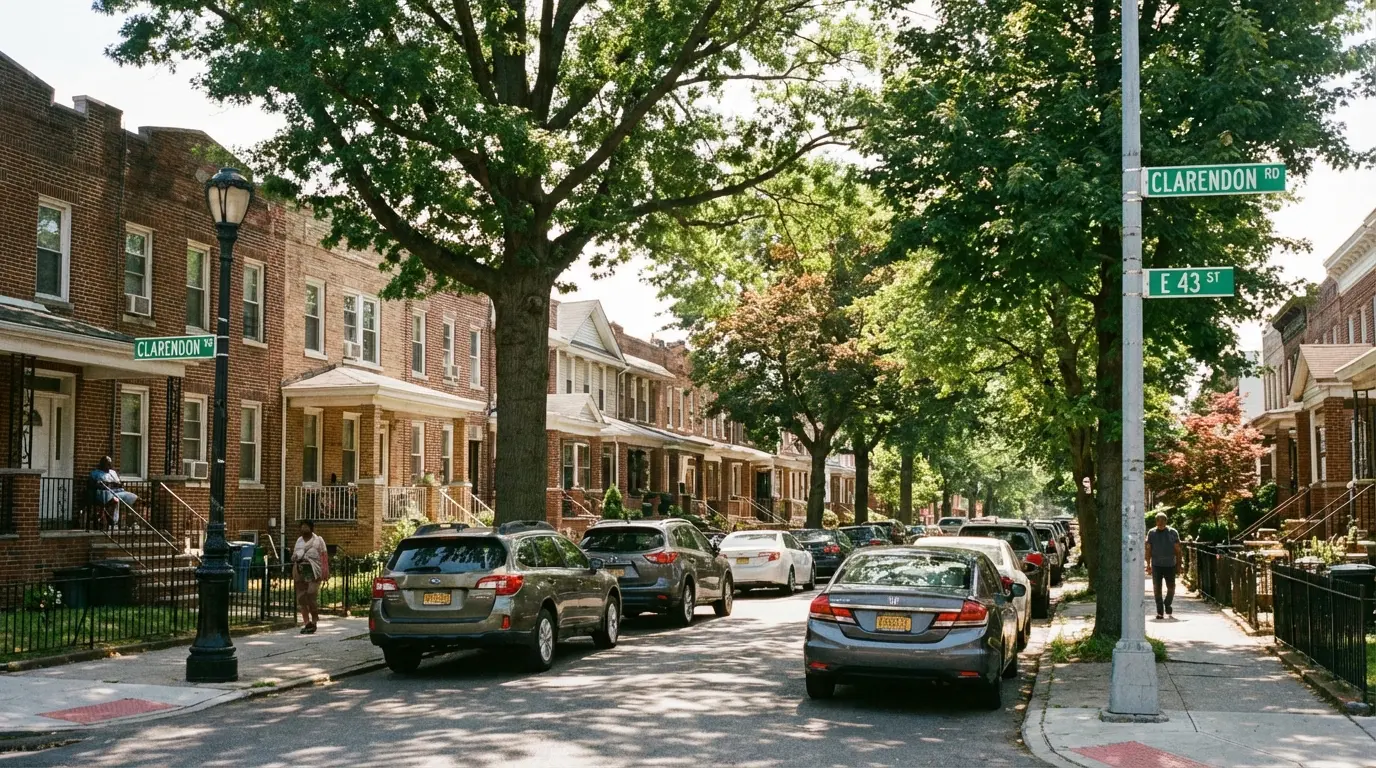
Caption: Shows typical East Flatbush residential block scale, tree canopy patterns and sidewalk parking so buyers can verify walking routes, shade timing and block character.
This view is representative of mid-block conditions south of Church Avenue: two- and three-story houses, continuous tree canopy and a full line of parked cars. It confirms the actual sidewalk width and the amount of usable curb space when planning where a wedding party or family group can realistically stand and move.
Mobility: streets, buses and realistic travel windows
East Flatbush is bus-dominant. Church Avenue, Linden Boulevard and Clarkson Avenue are the main east–west routes, while Utica Avenue and Kings Highway structure north–south movement. Most couples and families arrive on foot, by bus (especially along Utica and Church), or by car for short hops between home, church and park.
Several practical points for timing:
- Church Avenue and Utica Avenue have frequent buses and heavy errand traffic, which can slow down crossings and make it harder to hold a group together.
- Blocks between the main corridors are longer than in some older Brooklyn grids; walking from one residential pocket to another often takes 8–10 minutes even when they look adjacent on a map.
- Parking pressure on side streets is constant. It is common to circle for several minutes to find a legal spot close enough to carry clothing, flowers or small photo gear without rushing.
For wedding-related sessions, that means factoring in extra time for people who are arriving separately by bus, and avoiding tight back-to-back schedules when a ceremony, portrait session and reception are strung between different parts of the neighborhood.
Residential blocks, parks and where sessions actually happen
Most wedding and engagement imagery tied to East Flatbush is made in three types of spaces:
- Tree-lined residential blocks just off the main avenues
- Small parks and playground-adjacent lawns
- Church properties and event spaces (where permission is in place)
Row-house streets offer privacy and a consistent visual backdrop—brick façades, stoops, modest front gardens and that overhead canopy that softens the light. These blocks are especially useful for pre-ceremony portraits when a couple is getting ready in a nearby home and wants images “on their block” before heading to the venue.
For couples looking for a Wedding photographer who already understands this layout, the pattern is usually: start on a quiet mid-block near the home, then move by car or a short walk to a park edge or church steps for small group photos. Lincoln Terrace Park plays a particular role here because it sits near the northern edge of East Flatbush but remains reachable from much of the neighborhood without long travel.
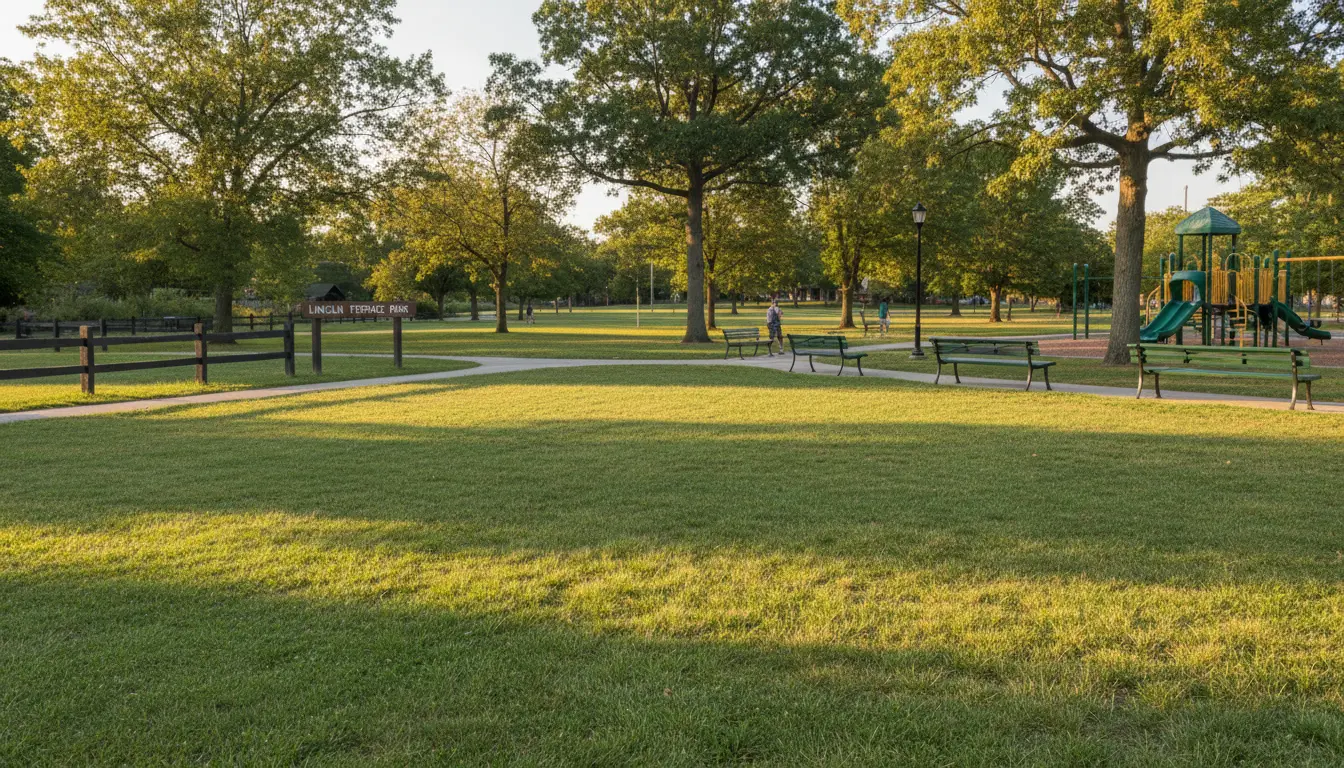
Caption: Makes it possible to verify where small engagement or family sessions can be staged within Lincoln Terrace Park, and to judge background, crowd potential and shade availability.
This image shows a typical working area inside Lincoln Terrace Park: an open patch of lawn near a path and playground, with a mix of sun and tree shade. You can see how families and passersby distribute themselves, which gives a realistic sense of how much space there is for a wedding party or engagement session without blocking regular park use.
How we serve East Flatbush through Wedding photographer
- Family and group — Reflects the reality that many households in East Flatbush prefer to keep portraits close to home, often on their own block or in a nearby park.
- Wedding Ceremony — Connects naturally to the many churches and small event halls here, where documentation has to adapt to interior light and quick street transitions outside.
- Engagement Sessions — Often scheduled for quieter times on residential streets or in small park pockets, taking advantage of canopy-filtered light.
- Wedding photo packages — Useful when coverage spans multiple days or locations, such as home preparations in East Flatbush and ceremonies or receptions in nearby neighborhoods.
Choosing between quiet side streets and busy corridors
One of the main decisions for East Flatbush sessions is whether to stay inside the quieter grid or incorporate the energy of commercial spines like Utica Avenue and Church Avenue.
Side streets:
- Less through-traffic and generally fewer pedestrians
- More predictable shade from the tree canopy mid-block
- Easier to position a couple or family without constant interruptions
Commercial corridors:
- Visual density from signage, street vendors and buses
- Stronger sense of neighborhood activity, which some couples want in the background
- More “chaos moments” as people run errand chains—grocery, pharmacy, food pickup—leading to sudden surges at intersections
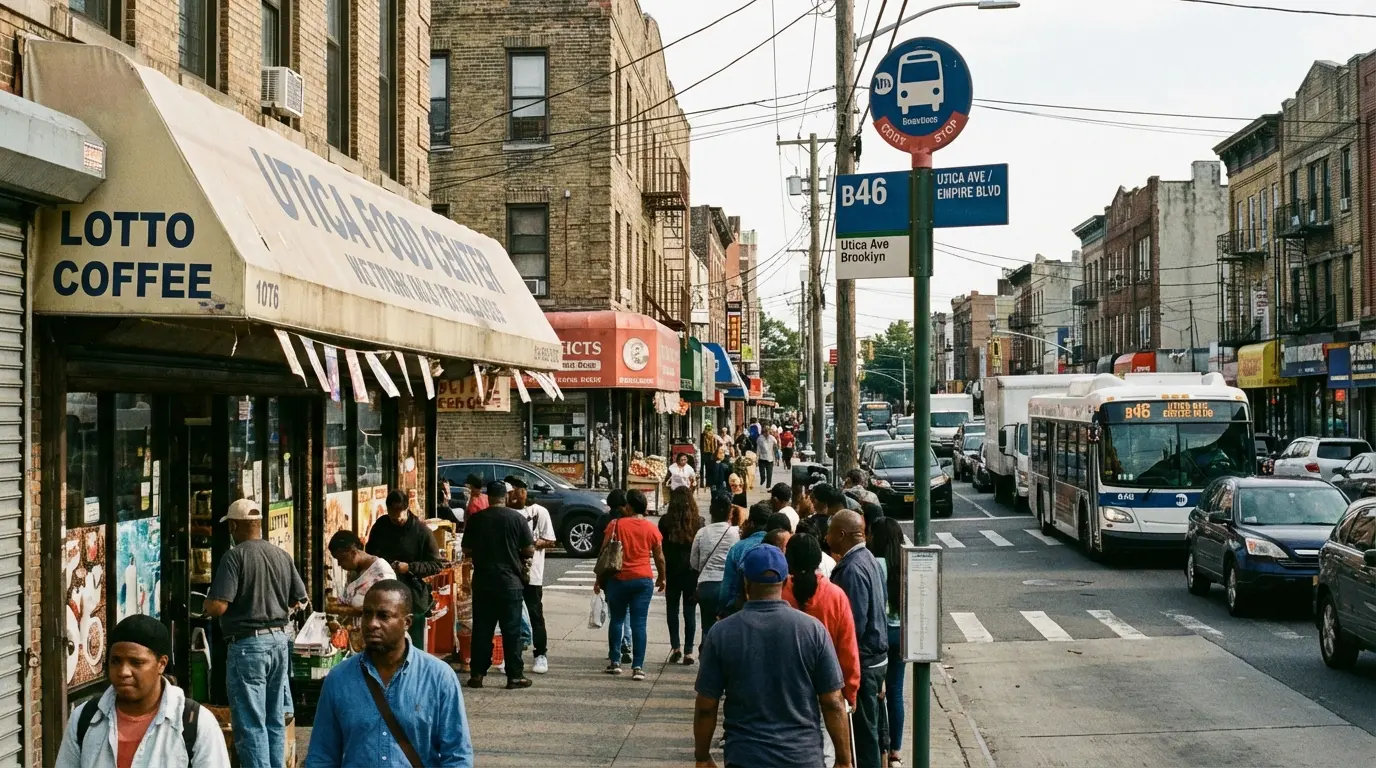
Caption: Helps buyers compare commercial corridor conditions (foot traffic, delivery activity and curbside congestion) against quieter residential blocks when choosing meeting points or shoot locations.
This Utica Avenue intersection view verifies how dense the corridor can become: double-parked vehicles, bus stops, delivery vans and layers of storefront signage. It is realistic for candid, in-the-neighborhood shots, but it illustrates why posed group portraits are usually scheduled on nearby side streets instead.
Logistics of meeting, loading in and moving gear
On the ground, East Flatbush’s long blocks and parking situation shape how people and equipment arrive at a session:
- Meeting points usually work best at corners where a wide cross street meets a quieter one, allowing ride-shares to pull over briefly without blocking traffic.
- Sidewalks are wide enough for a small group, but stoops and short front yards mean there is little extra staging room outside homes.
- For wedding days, it is common to have separate arrival patterns: the couple coming from a home, family from another part of the grid, and officiants or vendors navigating from adjacent neighborhoods.
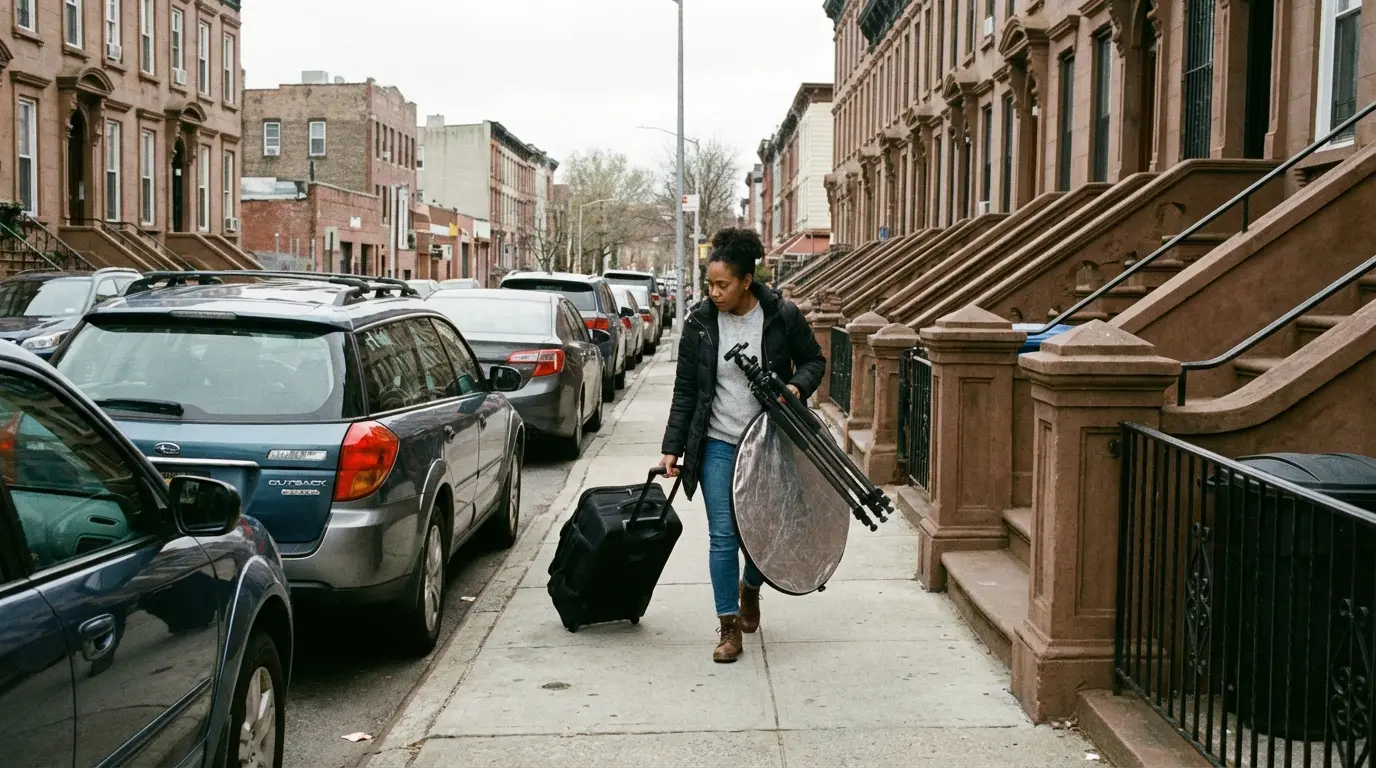
Caption: Shows realistic loading and setup constraints on East Flatbush side streets (parking pressure, narrow sidewalks and stoops) so buyers can assess access and timing needs.
The image of gear being unloaded on a typical side street confirms how limited curb space and parked cars restrict where equipment can be placed. It underlines why compact setups and clear communication about meeting spots matter in this neighborhood.
Light and shade behavior on East Flatbush streets
Because East Flatbush is almost entirely low-rise, the sun has a clear path down the long east–west streets:
- Morning: Light comes in lower from the east, but tree canopy on mid-block sections softens it into dappled shade. This is useful for close portraits where harsh shadows would be distracting.
- Midday: Open boulevards like Linden Boulevard and Church Avenue get direct, overhead light with few tall buildings to cut glare. On these streets, usable shade often comes from awnings, corner stores or bus shelters rather than trees.
- Late afternoon: East–west streets carry long, directional light that can create clean backlight or side light, especially on blocks with fewer trees or where the canopy is set back from the curb.
The shadetreecanopy pattern is not uniform. Some residential stretches have a dense arch of leaves that can make mid-afternoon feel almost like open shade, while adjacent blocks—often closer to busier corridors—have gaps where light breaks through and creates high-contrast patches. This inconsistency is predictable when you know the specific streets, but it can surprise people who expect every block to behave the same.
Managing wind, permits and other practical constraints
The neighborhood’s edges behave differently from its interior. Linden Boulevard in particular marks a clear neighborhood_edge both in traffic behavior and wind exposure:
- Traffic runs faster and consistently, with wide open lanes.
- Canopy is much sparser, leaving open sky and more direct sun.
- Wind channels along the roadway, which can tug at veils, dresses and any light stands.
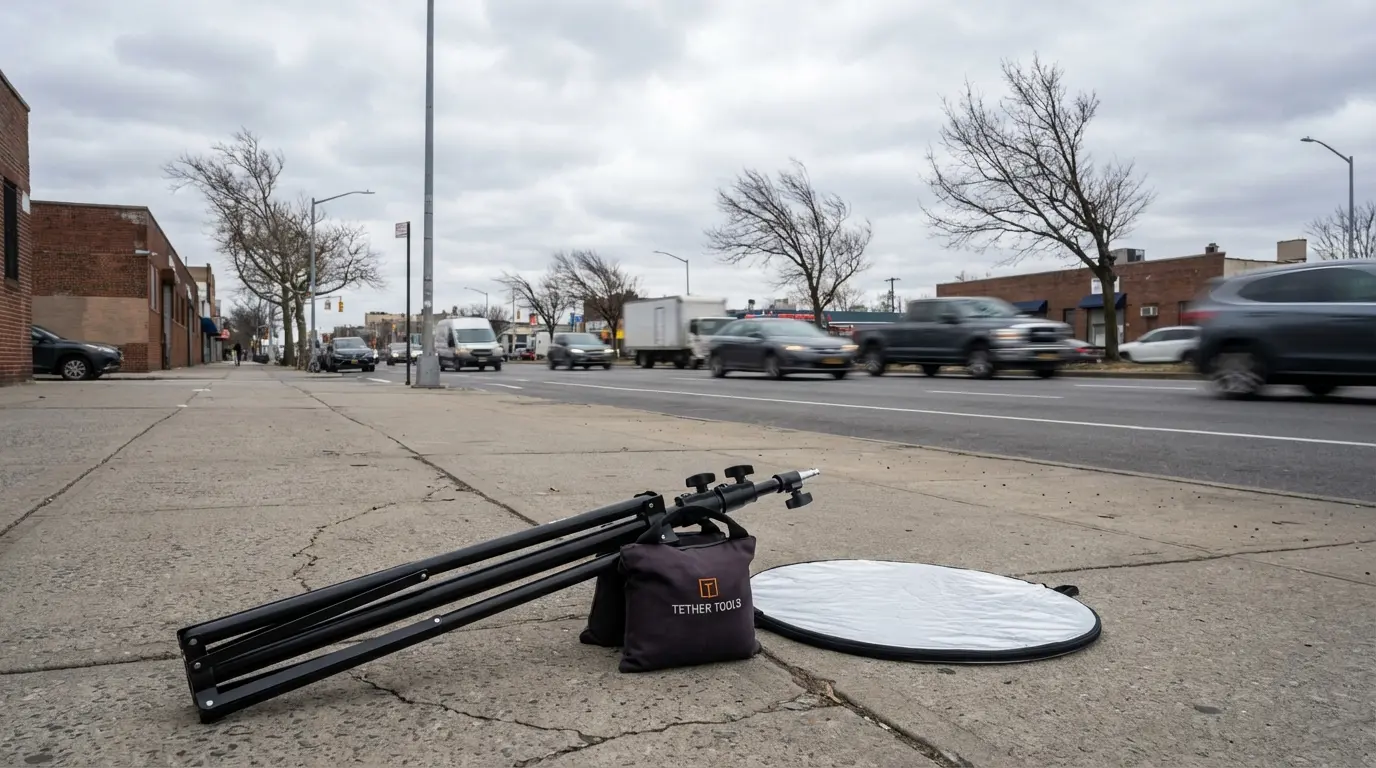
Caption: Visually verifies that wider boulevards like Linden Blvd have more wind and less canopy, and that compact, weighted gear is preferable to reduce risk and avoid large permits.
This scene on Linden Boulevard highlights why small, sandbag-weighted equipment is used instead of large, sail-like modifiers. On windier days, it reduces the risk of gear tipping into pedestrian space or traffic and stays within the footprint that typically feels acceptable for casual street photography.
On the permissions side:
- Lincoln Terrace Park is usually workable for small wedding or engagement sessions that rely on natural light and minimal equipment. Larger setups—multiple stands, light modifiers, tripods—draw more attention and may prompt staff to ask about permits.
- Playgrounds and ball fields have their own activity cycles, especially in the afternoons and on weekends, which affects where you can stand without interrupting games or families.
- Church properties, school yards and private event halls are almost always permission-only, even if locals are used to seeing people take pictures on steps or in side yards. Written or explicit confirmation from the venue remains the safest approach.
- Rooftops are predominantly private and resident-controlled; they are not a reliable option unless arranged directly with a building owner or tenant.
Local anchors: medical corridor, churches and everyday routes
The Winthrop and Clarkson corridor around SUNY Downstate and Kings County Hospital is its own micro-area. It has more institutional buildings, shift-change patterns and street-level services catering to hospital staff—laundromats, quick cafes, pharmacies—than the quieter residential blocks a few streets away. Short sessions here often have to align with staff breaks or shift transitions, especially for hospital employees scheduling engagement or family photos close to work.
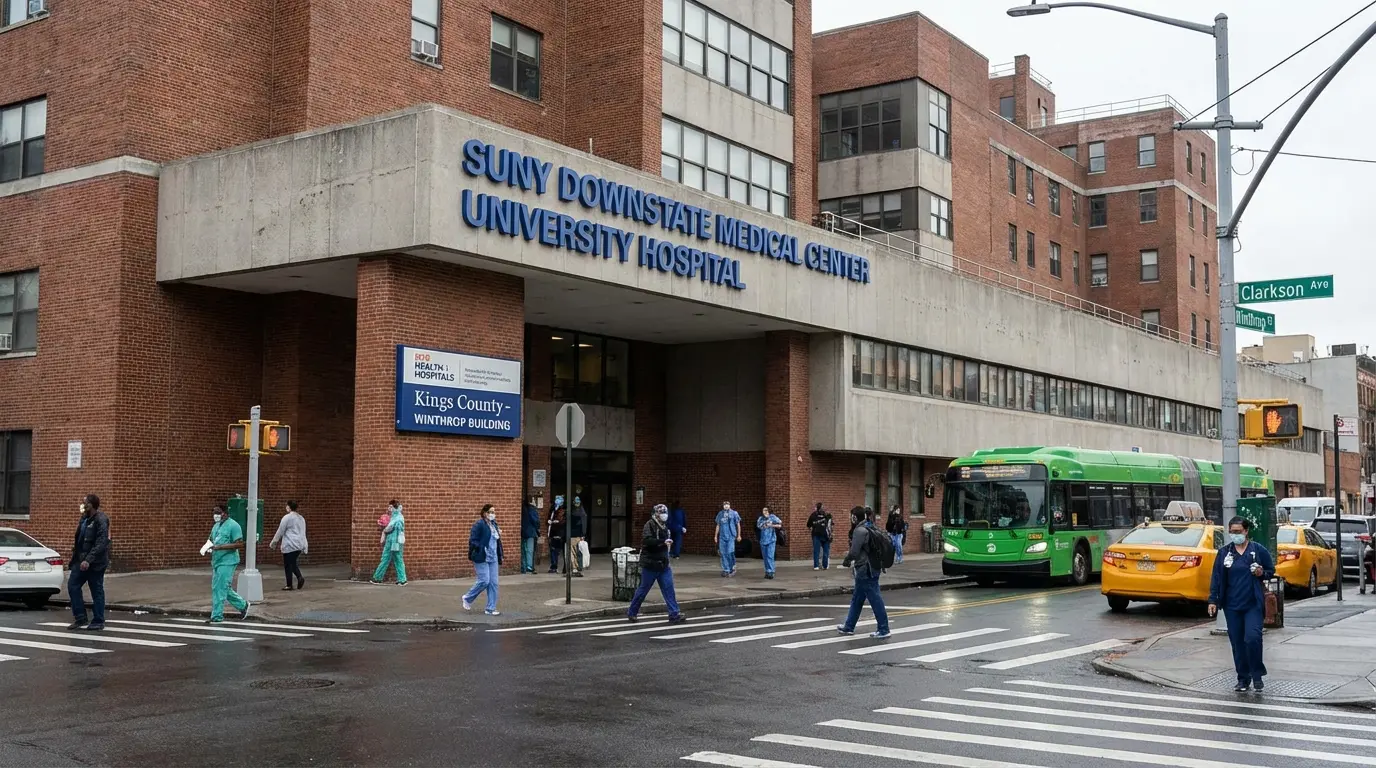
Caption: Confirms proximity to the medical cluster and typical street-level context around institutional anchors, useful for clients meeting staff or scheduling short-session times.
This image confirms what the hospital-adjacent streets actually look like—bus stops, institutional façades and light commercial storefronts. It reflects the kind of backdrop available when someone steps out for a quick session near work, rather than traveling deeper into the residential grid.
Across the neighborhood, churches and small event halls are distributed along and between the main avenues. Many wedding days in East Flatbush involve moving between a home on a residential block, a ceremony at a church on a busier street, and then either a local hall or a venue just beyond the neighborhood’s borders. Understanding how those pieces fit together in real walking and driving time is more important here than having a single standout “photo spot.”
Everyday patterns, edges and small frictions that affect sessions
Several subtle, everyday behaviors in East Flatbush can shape wedding or family photography, even if they seem unrelated at first glance:
- Errand chains on commercial corners: Around Church Avenue and Utica Avenue, people often link errands—groceries, pharmacy runs, takeout—into one outing. This creates small surges of foot traffic at certain times of day, especially early evening, which can make those corners feel suddenly crowded just as you are lining up a shot.
- Shadetreecanopy differences by block: Some residential stretches between Church and Linden have a near-continuous canopy, making them ideal for mid-afternoon portraits. Others are patchier, with recent tree plantings or gaps from removals, resulting in brighter, more contrast-heavy light. Two adjacent streets can behave completely differently at the same time of day.
- Petroutesmicro on quieter streets: Dog walkers tend to loop around the same calm side streets with minimal through-traffic. On those loops, you will see a predictable rhythm of pets and owners passing every few minutes. It is not disruptive, but it does influence where you can set up without constant, small interruptions.
- Neighborhood_edges along wider roads: At the edges near Linden Boulevard or closer to the Brownsville transition, wider roads and fewer trees mean more wind, more noise and a stronger sense of exposure. Couples who want an intimate, residential feel usually prefer to stay a few blocks inward from these edges.
These patterns are not obstacles so much as conditions to be anticipated. They explain why a particular corner might be recommended over another for family formals, or why a mid-block section is chosen over a busier but more recognizable intersection.
What finished images typically look like in East Flatbush settings
Final images made in East Flatbush tend to include some portion of the real neighborhood environment—houses, parked cars, trees, and the geometry of the sidewalks—rather than erasing it completely. Couples and families often want their actual block or usual walking route to be visible, even if gently softened by depth of field and light.
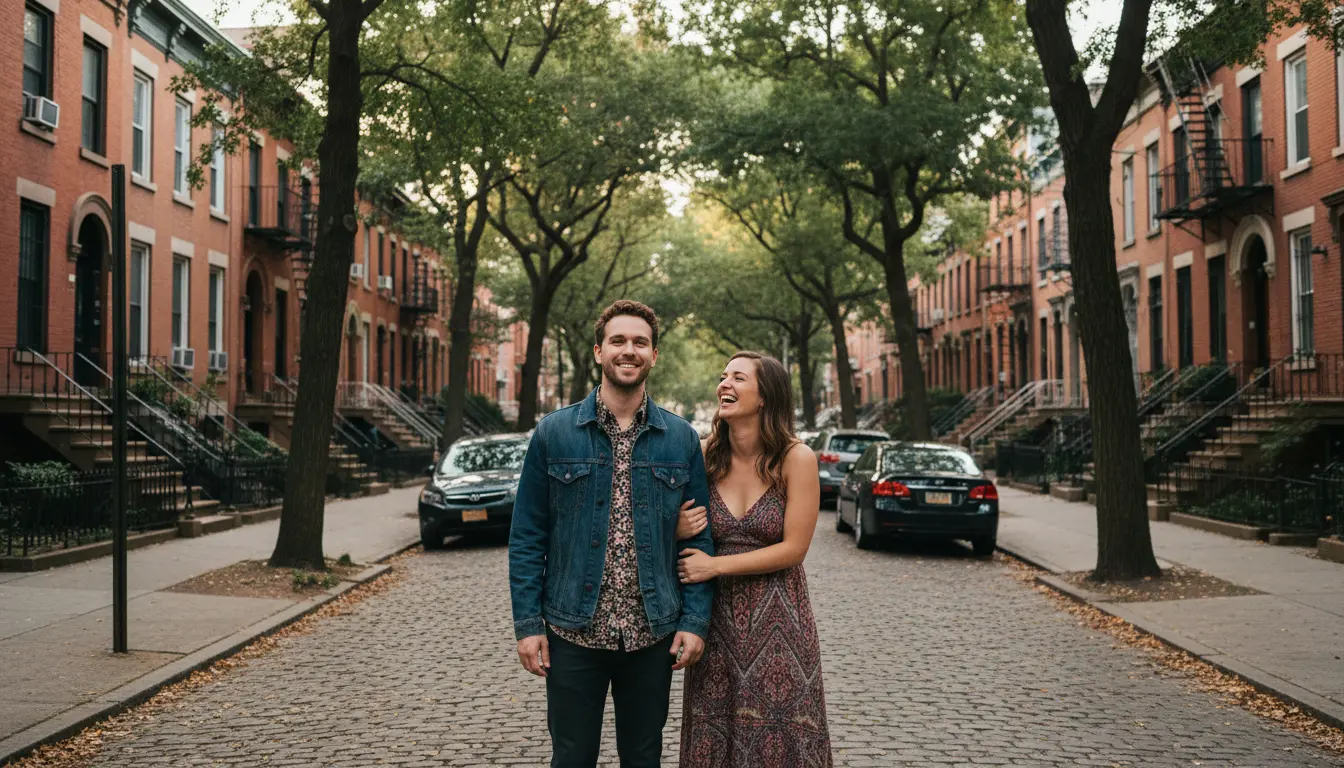
Caption: Demonstrates a typical delivered image in East Flatbush context: natural-light framing with neighborhood elements (houses, canopy and street) visible so buyers can set realistic expectations.
This portrait under mid-block canopy light shows how houses, stoops and parked vehicles sit gently out of focus behind the couple. It is an accurate representation of what many East Flatbush sessions produce: natural light, real streets, and a balance between people and place rather than a studio-like environment.
Adjacent Neighborhoods we serve near East Flatbush
- Flatbush — Often used for venues or photo locations along or near Flatbush Avenue when couples live in East Flatbush but celebrate just across the boundary.
- Crown Heights — A common destination for ceremonies or receptions north of Empire Boulevard, with couples or families traveling back to East Flatbush homes before or after events.
Common questions about wedding photography in East Flatbush
When is the best time of day for photos on tree-lined streets?
Late afternoon tends to offer the most reliable combination of soft light and manageable activity on residential blocks, especially between Church Avenue and Linden Boulevard. Morning can work well too, but the exact quality of light depends on how dense the canopy is on that specific street.
Do I need a permit to take wedding or engagement photos in Lincoln Terrace Park?
Small sessions that rely on natural light and hand-held equipment usually proceed without issue, but larger setups or commercial-scale shoots may draw attention from park staff. It is wise to review current NYC Parks guidelines and, if your equipment footprint is substantial, plan for the possibility that formal permission could be required.
How can we avoid Utica Avenue congestion affecting our photos?
If you want Utica Avenue in the background, aim for off-peak hours—earlier in the day on weekdays or mid-mornings on weekends—when bus stops and errand traffic are less intense. For posed group images, consider using a calmer side street within a block or two of Utica and then stepping onto the avenue briefly for a few candid frames.
Where is a practical meeting point for a wedding party coming from different directions?
Corners where a major avenue meets a quieter side street (for example, near but not directly on Church Avenue or Linden Boulevard) usually work best. They allow ride-share vehicles to stop briefly without blocking a bus lane and offer a clear landmark that is still close to the residential blocks where photos may be taken.
Is parking available for out-of-neighborhood guests?
Street parking is available but competitive, especially in the evenings and weekends. Guests should allow extra time to circle for a spot and may need to park a few blocks away from the ceremony or photo location, particularly near popular churches or along the busier corridors.
How does weather, especially wind, affect outdoor sessions here?
On wider roads like Linden Boulevard or near the eastern neighborhood edges, wind can be strong enough to move dresses, veils and lightweight gear. Residential mid-blocks with robust tree canopy are more sheltered, so they’re often preferred on windy days.
Can we use our own residential block for family or couple photos?
Yes, many East Flatbush sessions happen on clients’ own streets. The key considerations are staying on public sidewalks, keeping stoops and driveways clear for neighbors, and being ready to pause briefly for people using the block, including regular pet walking routes.
How does coordination work with church ceremonies in the neighborhood?
Most churches and event halls expect some photography on their steps or near their entrances, but internal rules vary. It is important that couples confirm with their church or venue contact what is allowed inside and immediately outside, including any restrictions during or after the ceremony.
Is it reasonable to schedule evening or twilight sessions in East Flatbush?
Evening sessions are feasible, particularly in warmer months when people are still outside and lighting conditions can be attractive. Planning is needed for visibility and safety—as light levels drop, it becomes more important to stay near active, well-lit streets or park entrances and to keep equipment footprints small and manageable.
What about quick sessions near the medical center area?
Around Winthrop and Clarkson, timing is crucial because street activity rises and falls with hospital shift changes. Short engagement or family sessions there usually work best when coordinated around staff schedules, avoiding the busiest arrival and departure windows while still staying close enough for people stepping out from work.