
East New York in Brooklyn as a practical setting for wedding photography
How East New York fits into the wider Brooklyn grid
East New York sits on the eastern edge of the borough, where the Brooklyn street grid runs long and straight before giving way to Queens and the shoreline complexes. The neighborhood stretches between the elevated terrain near Highland Park on the north side and the flatter, more exposed areas closer to Shirley Chisholm State Park toward the southeast. Many of the commonly used boundaries here match what’s described for East New York, Brooklyn, with the practical edges defined as much by corridor usage as by official maps. To the west, Rockaway Avenue and Linden Boulevard mark a gradual handoff toward Brownsville; to the north, the elevation shift and tree line signal a transition into Cypress Hills. South and southeast, the tower complexes around Starrett City change the feel of the streets and the way traffic flows, which matters when timing arrivals for a session.
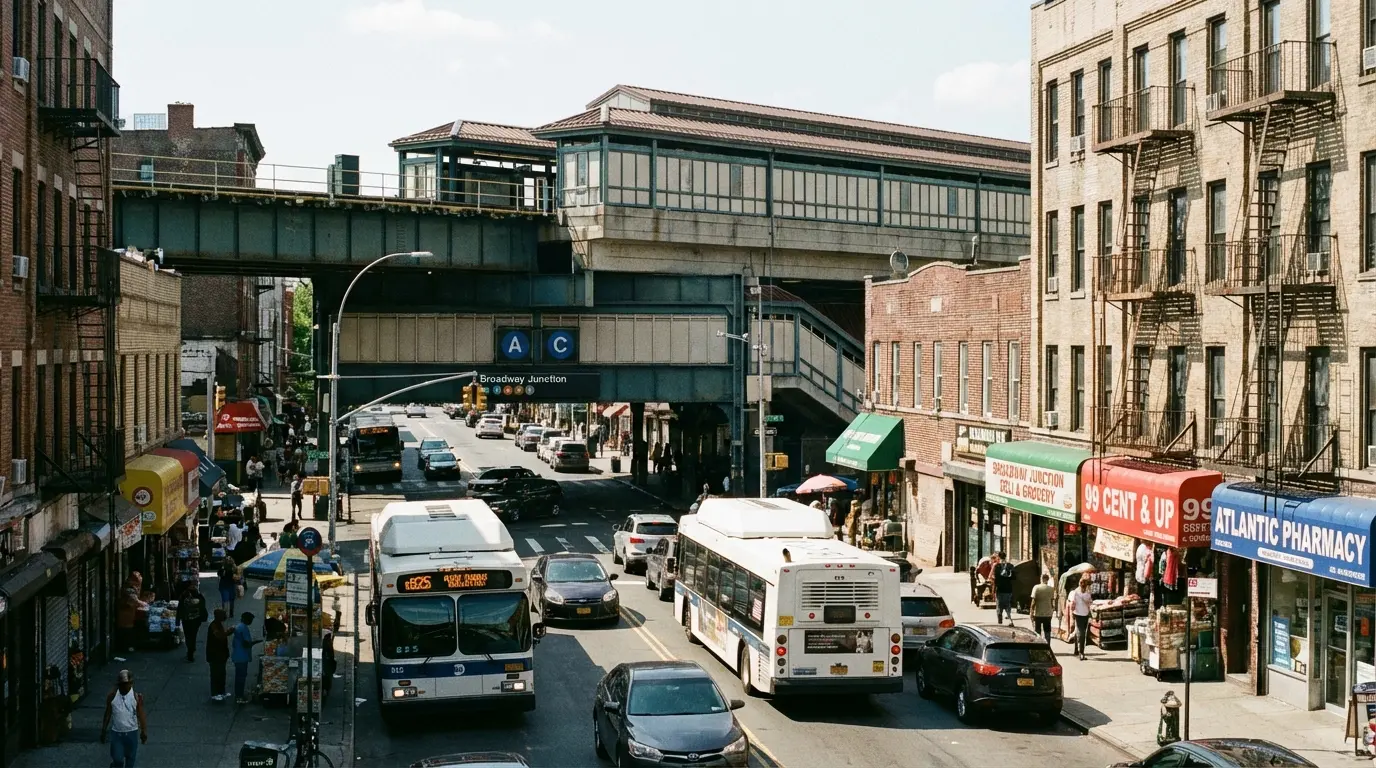
This Atlantic Avenue view confirms the scale of the main east–west spine, the mix of buses, cars, and pedestrians, and how corner stores naturally create small gathering points that can interrupt or animate a shoot.
Corridors, transit nodes, and access to elevated space
Atlantic Avenue is the neighborhood’s east–west backbone, carrying steady vehicle traffic and feeding movements in and out of Broadway Junction. Pennsylvania Avenue runs north–south and acts as the vertical anchor; in practice, most couples and families move along this axis when coming from Brownsville or the tower clusters near Starrett City. Broadway Junction itself is a major but visually utilitarian interchange, where the A and C lines intersect with the elevated J/Z and L; it’s reliable for access but not usually a session backdrop. The L at East 105th Street pulls in people from deeper residential pockets, particularly for early-morning or late-day sessions when traffic is lighter. On the north edge, the slope up toward Highland Park introduces both elevation and open sky; couples often treat that ridge as the “escape valve” from the busier flat grid below.
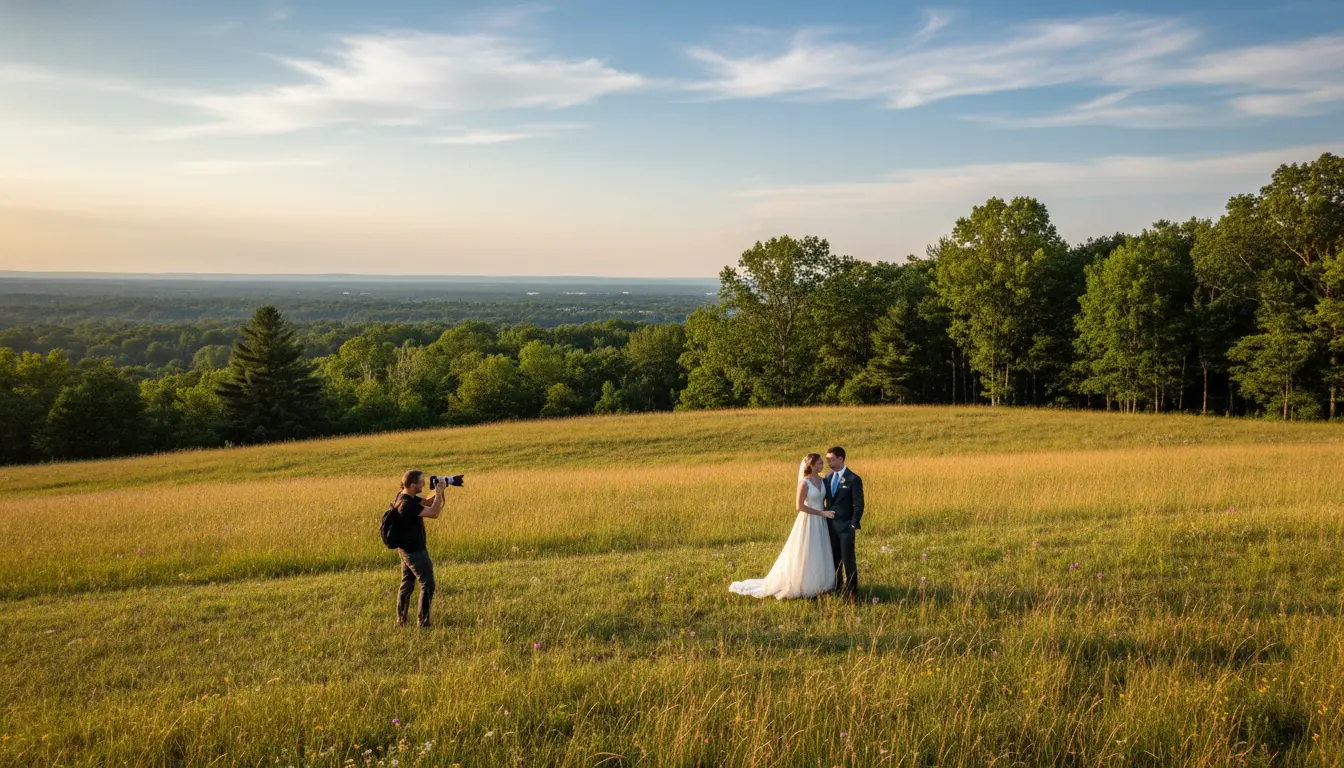
This Highland Park edge shows how elevation, long sightlines, and separation from main paths create workable space for portraits without constant foot-traffic interference.
Micro-areas and how different blocks behave during a shoot
Within East New York, the New Lots corridor, the City Line fringe, and the Fountain Avenue edge each behave differently for photography. New Lots has low-rise commercial strips with wide setbacks and a predictable rhythm of corner stores every few blocks; this “cornerstoreecology” creates regular pauses in pedestrian flow where people cluster at delis and discount shops. Toward City Line, building stock tightens up and color becomes more erratic—bright awnings, ad-hoc murals, and metal gates create unexpectedcolorpockets that can either energize a frame or distract from a wedding gown, depending on how they’re used. Around New Lots in particular, a subtle change from rowhouses to multi-family walkups signals micro_boundaries; residents treat these shifts as different “zones,” and the feel of being observed can change within a single block. The industrial Fountain Avenue pocket has very long sightlines and minimal foot traffic, but almost no shade; it suits couples comfortable with a more minimal, utilitarian backdrop.
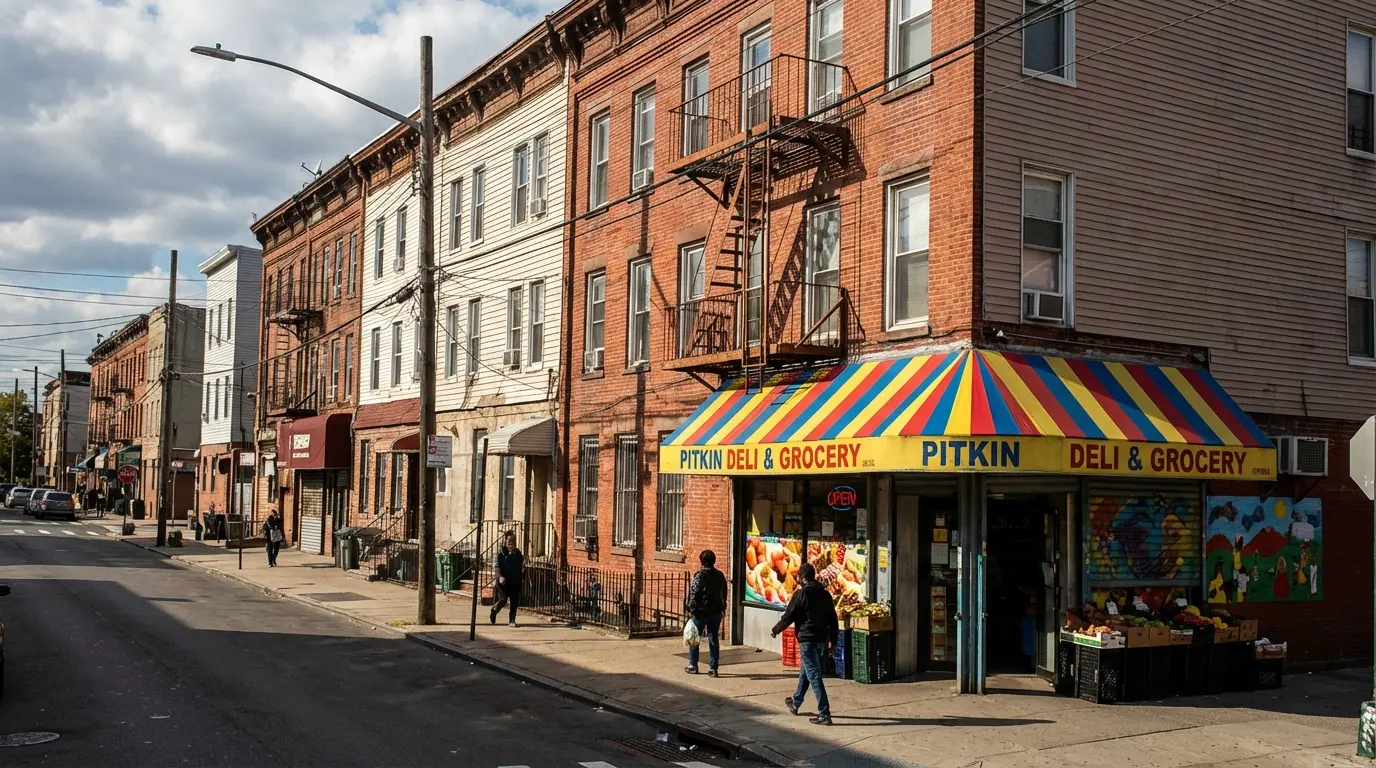
This Pitkin Avenue block clarifies how narrow setbacks, parked cars, and a deli on the corner compress space and throw patchy shadows across the street, which directly affects privacy and timing for portraits.
Built environment, housing stock, and parenting infrastructure
Most of East New York is made up of 2–6 story residential buildings, with a mix of brick rowhouses, small apartment buildings, and vinyl-sided homes. NYCHA clusters like the Penn-Wortman Houses introduce taller towers with large interior courtyards, dense playgrounds, and multi-sport areas; this is where parenting_infrastructure is most visible in strollers, scooters, and after-school crowds. Small parks such as City Line Park function as repeat backdrops for families who want a familiar, stroller-friendly loop rather than a destination park. Many of the playground-heavy zones double as informal gathering places for neighborhood parents, which changes crowd levels sharply between 2 and 6 p.m. For wedding-focused work, this means the same courtyard or park that looks empty mid-morning can be completely filled with kids and caregivers just a few hours later.
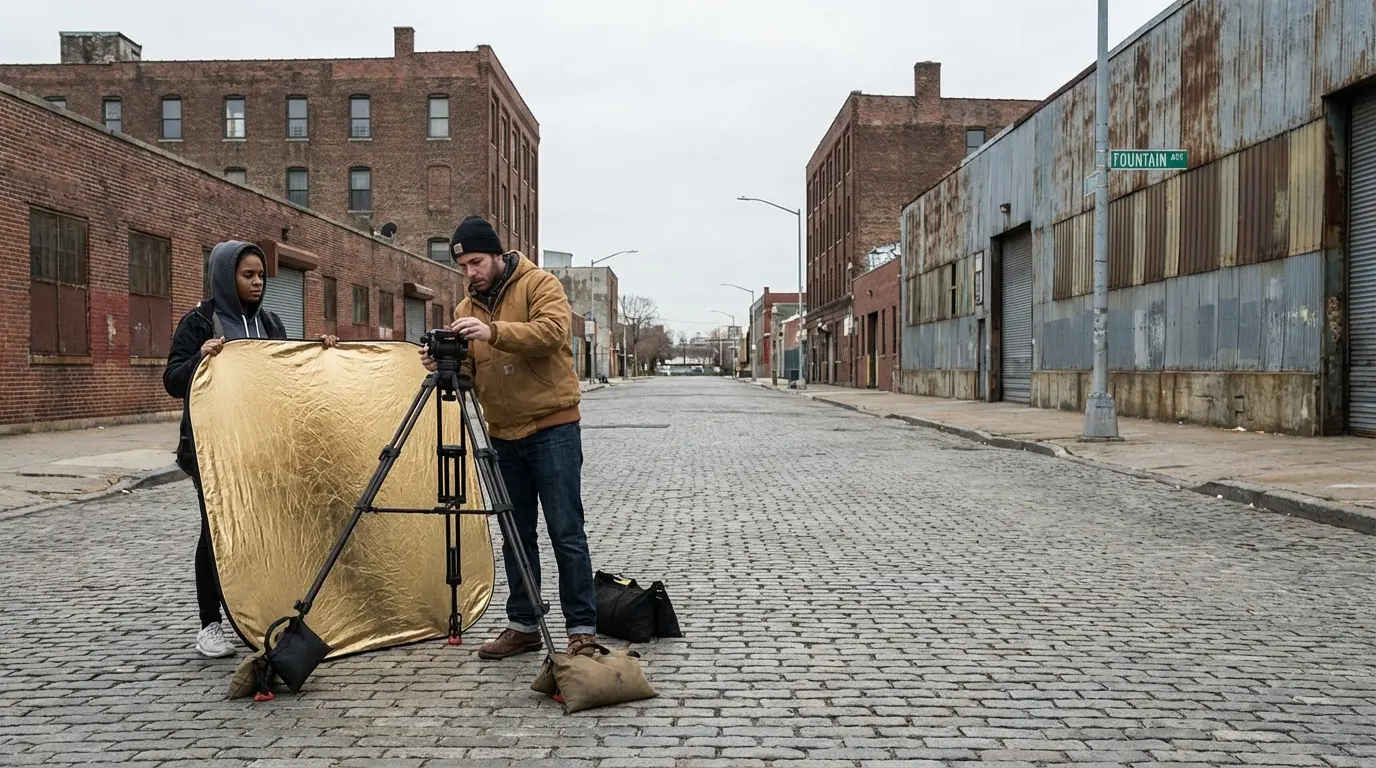
This Fountain Avenue industrial scene verifies how much sidewalk and roadway space is available for tripods, reflectors, and assistants, and also shows the lateral sun exposure that has to be managed for both stills and video.
Environmental risks, wind, and permission-sensitive areas
Crowd levels spike around schools, playgrounds, and community centers between late afternoon and early evening, making those areas unreliable for quiet vows, proposals, or audio-sensitive video. Along Atlantic and Pennsylvania Avenues, constant vehicle noise and bus traffic can overpower spoken vows or toasts, so full-voice audio capture is rarely ideal directly on these corridors. Wind is a recurring constraint in the open meadows of Shirley Chisholm State Park and on the Fountain Avenue berms; unsecured reflectors, light stands, and microphones are easily pushed off balance. Residential courtyards and NYCHA grounds, including the large Penn-Wortman courtyards, function as semi-private spaces where staff or security may question extended setups, especially with large stands or drones. In practice, sessions that rely on bigger gear tend to shift into quieter residential streets or the edges of public parks where rules are clearer and enforcement is more predictable.
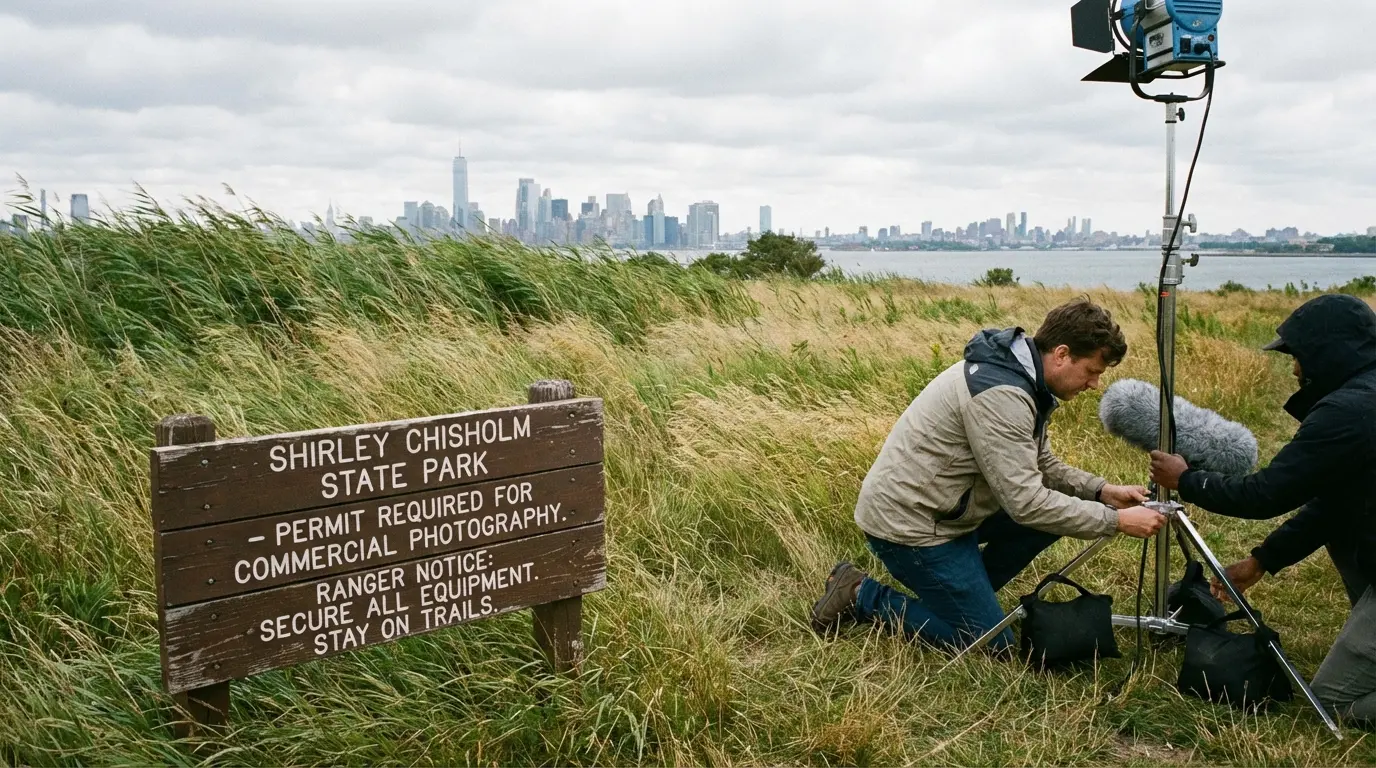
This Shirley Chisholm State Park image confirms the presence of permit-related signage, open-meadow wind exposure, and the need for sandbags and windscreens when working with audio or lightweight stands.
Light patterns from Highland Park to the residential grid
Northern blocks near the ridgeline of Highland Park receive early direct light and hold usable golden-hour light longer, because there are fewer tall buildings casting long shadows. In contrast, the denser residential grids around New Lots and Pitkin experience quick shifts in light as 3–6 story buildings throw narrow but fast-moving bands of shadow across the street. Morning light reaches the eastern and southeastern housing clusters relatively cleanly, which works well for softer, low-traffic sessions with families and kids. By evening, buildings to the west clip the sun sooner, and corridors like Pitkin and New Lots can drop into shade earlier than couples expect. On Fountain Avenue and the more industrial edges, the absence of tall buildings means wide open light fields and strong lateral sun, which can be helpful for backlit silhouettes but harsh for evenly lit group portraits.
Where wedding-focused sessions tend to land in East New York
Most wedding-related sessions in East New York cluster around a few practical settings: the elevated lawns and paths on the edges of Highland Park, quieter residential streets with wider setbacks off New Lots, and the minimalist industrial stretches near Fountain Avenue. Couples looking for greenery often choose the fringes of the park, just off the main walking paths, to avoid through-traffic while still having tree lines and open sky behind them. More urban-feeling sessions sometimes use narrow residential side streets where rowhouses, stoops, and incidental storefronts frame the couple in an honest neighborhood context. Any Wedding photographer working regularly in East New York has to balance these options against real-world constraints such as stroller flow, corner-store clusters, and sudden shifts in light. Industrial pockets serve niche needs—minimalist engagement or pre-ceremony portraits with few passersby—but require active planning around wind and late-afternoon sun angles.
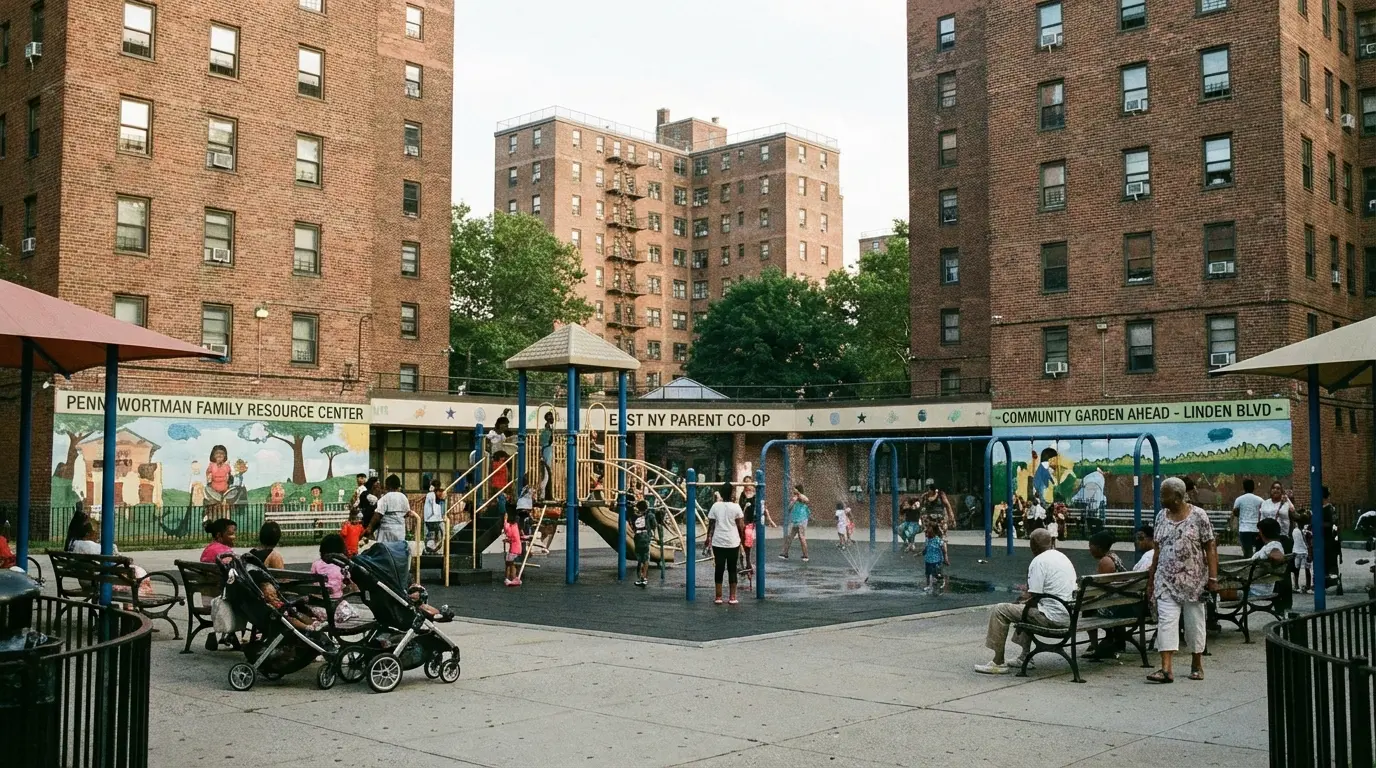
This Penn-Wortman Houses courtyard confirms the scale of NYCHA open spaces, the density of playgrounds, and mural and awning color pockets that can dominate a frame or complicate crowd control around family-heavy areas.
How we serve East New York through Wedding photographer
- Photography And Videography
- Marriage proposal photography
- Wedding Video Production
- Pre Wedding Photoshoot
What finished images from East New York typically look like
Final galleries from East New York usually show a mix of functional streetscapes, park edges, and small pockets of color rather than polished skyline views. Backgrounds often include real neighborhood elements—corner delis, bus shelters, metal roll-down gates, playground fencing, and parked cars—framed deliberately so they feel contextual rather than accidental. In park-based images, the focus is on open sky, grass, and tree lines rather than manicured gardens, with wind and wide horizons especially visible in Shirley Chisholm and the Highland Park ridge. For couples, this means the visual story leans into authenticity: stoops, storefronts, and familiar paths that match their daily routes, rather than abstract city icons. Proposal or pre-wedding images shot in industrial pockets will show clean lines, long roads, and big skies, with fewer people but more obvious warehouse and infrastructure details.
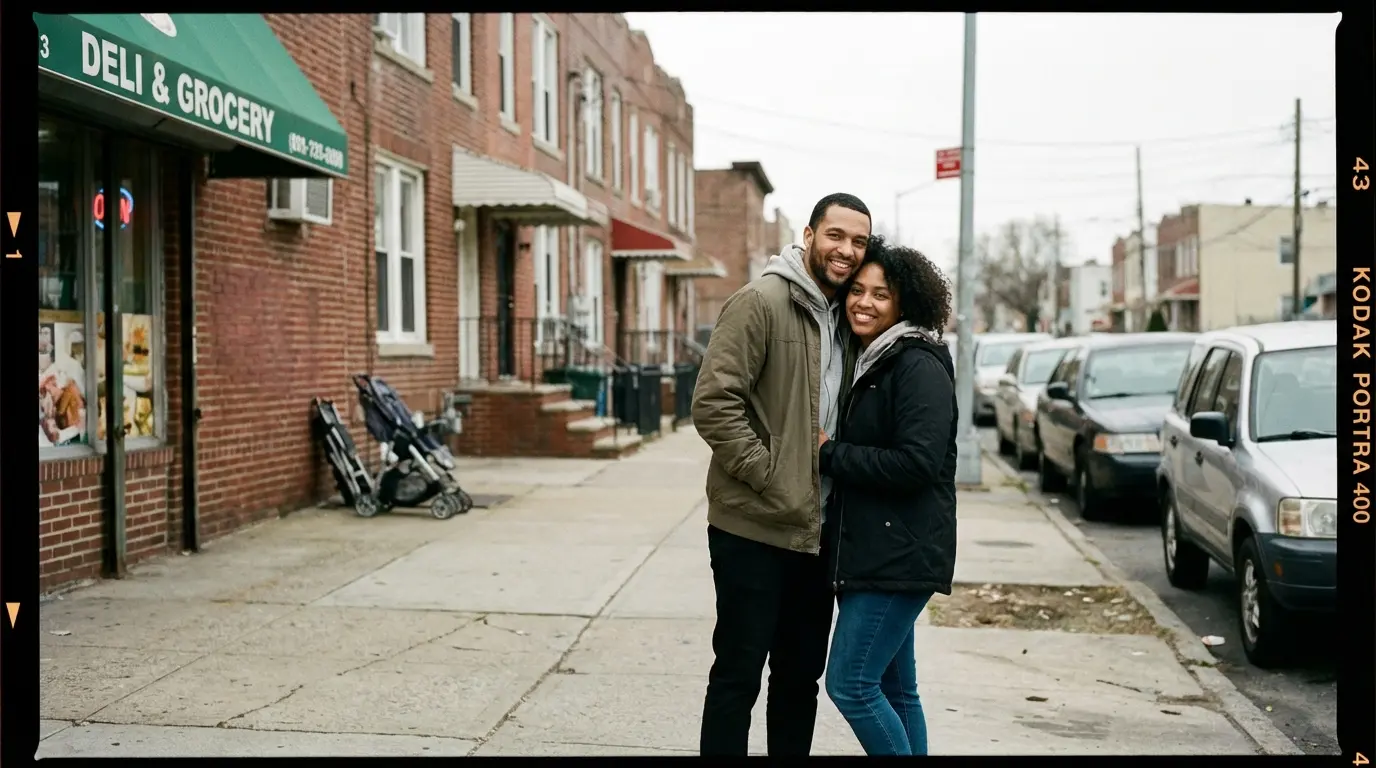
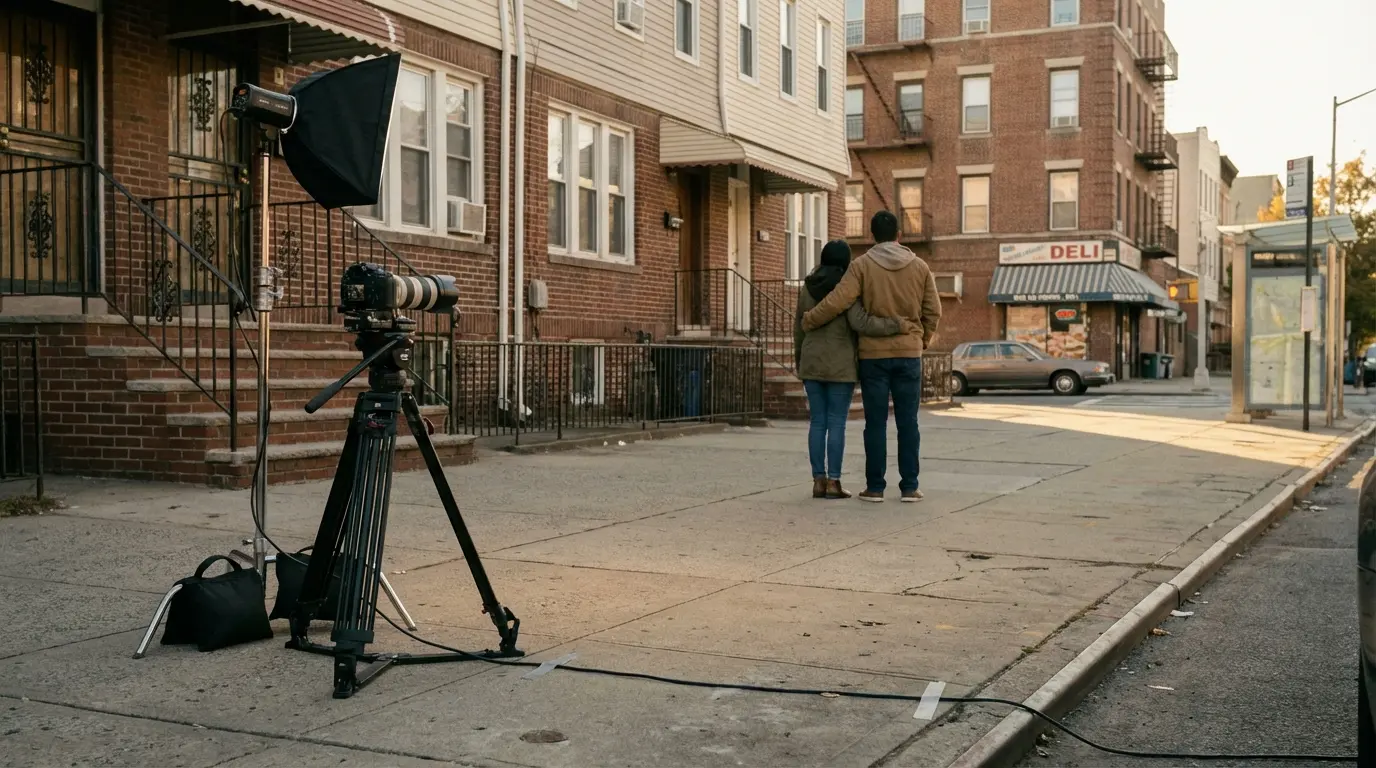
This on-location frame shows how rowhouses, a corner store awning, passing pedestrians, and natural light typically appear in East New York deliverables, setting expectations for authentic, lived-in backdrops rather than studio isolation.
Small-scale chaos: color, corner stores, kids’ spaces, and shifting lines
On Pitkin, New Lots, and smaller cross streets, cornerstoreecology plays a big role in whether a location feels calm or chaotic at any given moment; one deli’s lunchtime rush can suddenly fill a previously quiet corner with conversations, deliveries, and double-parked cars. unexpectedcolorpockets—bright awnings, hand-painted wall ads, or a fresh mural panel—stand out sharply against the otherwise muted brick and vinyl siding, which can be used as intentional accents or avoided if they compete with wedding colors. parentinginfrastructure is everywhere: clustered playgrounds, daycare centers, and school yards mean stroller and scooter traffic swells in predictable waves around school start and end times. microboundaries appear where building styles change block to block, especially near New Lots and City Line; couples often feel this intuitively when a block suddenly feels more residential or more commercial, even without a formal border. For planning, this means that a route that looks straightforward on a map can feel very different on foot, and session timing needs to respect those local rhythms.
Connecting East New York sessions with the rest of Brooklyn
East New York often serves as a midpoint for couples and families coming from other parts of Brooklyn or western Queens, especially when one person is based closer to Brownsville or Canarsie and the other near the eastern border. The long corridors and multiple train lines make it practical for people to meet at Broadway Junction and then move together into quieter side streets or up toward Highland Park. Some clients living closer to East Flatbush or central Brooklyn choose East New York specifically for the mix of open-sky park edges and realistic residential backdrops that differ from brownstone-heavy neighborhoods. Because the area is more functional than scenic, it tends to attract people who want their images to reflect everyday routes—stoops, local storefronts, and community parks—instead of destination backdrops. This cross-neighborhood flow influences where sessions start and finish, and helps explain why certain corridors see repeated use for wedding days, proposals, and pre-wedding shoots.
Adjacent Neighborhoods we serve near East New York
FAQ for wedding and couples sessions in East New York
When are the parks here least crowded for photos?
Highland Park is usually quietest in the early morning and in the last hour of daylight on weekdays, outside of organized sports times. Smaller spaces like City Line Park and playground-adjacent lawns fill up quickly after school, so mid-morning or late evening tends to be more workable for focused portrait time.
How hard is it to reach the elevated areas from the trains?
From Broadway Junction, it’s a short but uphill walk toward the Highland Park ridge; the elevation change is noticeable for people carrying outfits or light gear but manageable in regular shoes. Many couples budget extra time to move slowly from the station to the park edge so they don’t arrive already winded or rushed.
Are there stroller-friendly paths for family or pre-wedding shoots?
Yes, most of the main paths in Highland Park, City Line Park, and around the NYCHA courtyards are paved and stroller-friendly. The challenge is more about crowd timing—parenting_infrastructure is so dense that stroller traffic is heaviest right after school and into early evening, which can limit clear background options.
Are the industrial pockets like Fountain Avenue actually usable for portraits or video?
The Fountain Avenue industrial area is one of the few places in East New York where you can set up tripods or multiple cameras without constant pedestrian interruption. The trade-offs are strong lateral sun, wind, and a stark backdrop of warehouses and fencing, so it suits couples comfortable with a more stripped-down, minimal aesthetic.
What timing works best for light in this neighborhood?
Morning light tends to be more forgiving, especially in eastern and southeastern housing clusters that catch the sun early before traffic ramps up. For golden hour, the elevated park edges hold light the longest, while narrower streets around Pitkin and New Lots slip into shadow earlier due to 3–6 story buildings.
What should we expect in terms of background textures?
Expect real neighborhood elements: brick and vinyl facades, corner stores, school fencing, playground equipment, and small mural or ad panels. It’s rarely a blank backdrop; instead, the streets and parks contribute specific details that can be minimized or emphasized depending on framing and distance from the background.
Are there special permission issues in the state park zones?
Shirley Chisholm State Park has more active oversight than city parks, and rangers may question tripod or light-stand setups, especially for anything that looks commercial. Casual, handheld work is usually simpler, but any sizable gear footprint should be planned with the expectation that staff might ask questions or set limits.
How much does noise affect wedding video capture in East New York?
On Atlantic and Pennsylvania Avenues, bus and truck noise makes clean ceremony audio difficult, so video work there often relies more on cutaways and ambient sound. In parks and residential side streets, noise levels are manageable, but children playing, nearby music, and wind on open ridges or meadows still need to be considered when placing microphones.