
Fort Greene in Brooklyn as a real setting for wedding photography decisions
How Fort Greene fits within the Brooklyn grid
Fort Greene sits on the plateau east of Flatbush Avenue, between the dense core of Downtown Brooklyn and quieter brownstone areas like Clinton Hill and Prospect Heights. For couples, that means you move quickly from heavy traffic and tall buildings along Flatbush into a walkable grid of tree-lined side streets and park frontage within just a few blocks.
Formally, descriptions like Fort Greene, Brooklyn – Wikipedia place the neighborhood between Downtown Brooklyn to the west/southwest, Clinton Hill to the east, and Prospect Heights to the south. On the ground this is easy to feel: Flatbush Avenue is the hard western edge, Dekalb and Lafayette carry you east into Clinton Hill almost without a break, and Vanderbilt marks a gradual shift toward Prospect Heights.
Because subways and buses concentrate around Flatbush and the BAM area, many couples and crews arrive through that busier western edge and then walk inward toward Fort Greene Park or the brownstone blocks. Within the broader Brooklyn context, Fort Greene functions as a compact zone where you can get park, residential, and arts-district looks without long travel times.
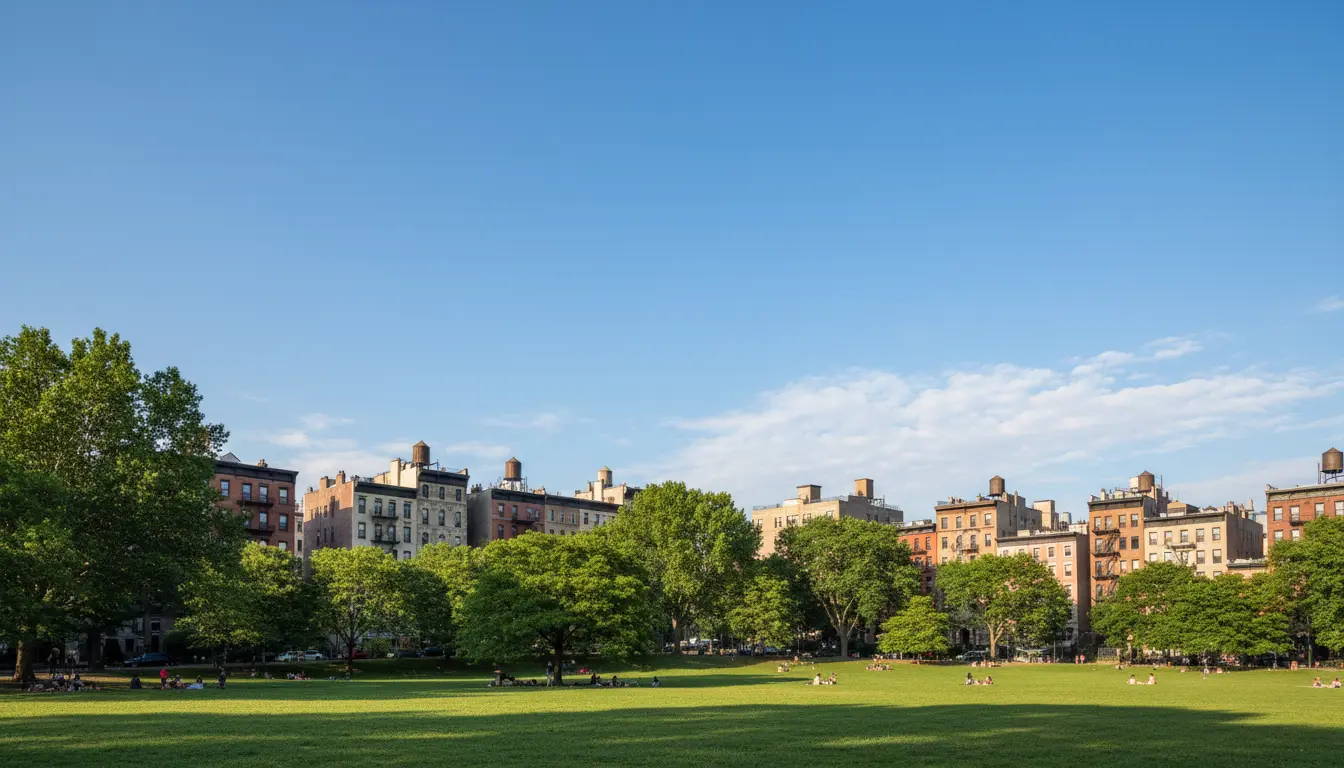
View from the north ridge of Fort Greene Park, showing the raised lawn, scattered trees, and the ring of brownstones and mid-rises around the park edge. This verifies how much sky is actually open and how close nearby buildings sit to park sessions.
Streets, park, and cultural anchors that orient most sessions
Most wedding-related activity in Fort Greene orbits a few repeatable anchors:
- Fort Greene Park in the center, with its sloped lawns and open ridges.
- BAM Cultural District along Lafayette and around Flatbush, with BAM Harvey Theater and adjacent arts buildings.
- Dekalb Avenue and Myrtle Avenue, the main mixed-use corridors with cafes, shops, and steady deliveries.
- Brownstone side streets like South Portland and South Oxford, forming terraces just off the park.
- Commodore Barry Park and the northeast edges where Fort Greene starts to blend toward the Navy Yard.
From a couple’s perspective, those elements define where you can realistically move a small group, find a backdrop, and still keep to a timeline. Park-adjacent terraces give you residential stoops within one block of open grass; BAM gives you harder architectural lines and visible theater signage; Dekalb and Myrtle fill in the “everyday Brooklyn” layer if you want a more lived-in or commercial look between formal shots.
Light behavior across Fort Greene Park and brownstone corridors
Light in Fort Greene is less uniform than a simple “tree-lined neighborhood” description suggests. The park’s elevation creates early and late light “gaps” that you don’t see on flatter Brooklyn blocks:
- Morning: On the park-facing streets, direct light reaches facades relatively early because the open center of the park doesn’t block the sun. Brownstones on the east and south sides of the park can light up while interior streets remain in softer shade.
- Midday: The central lawns are bright, but the ring of mature trees casts moving patches of shade. On narrow brownstone streets, trees on both sidewalks combine with three- or four-story facades to produce long, narrow shafts of direct sun that shift quickly across stoops and parked cars.
- Late afternoon: Near Flatbush and BAM, mid-rise and newer glassier buildings start to cut into the usable sun window; reflective surfaces can throw small highlights back into the street. Within the interior grid closer to the park, the canopy thickens, and you move into more even, subdued light earlier in the day during summer.
For couples planning outdoor portraits, this means that a “golden hour” in Fort Greene can feel very different depending on whether you stand on the park ridge, a side-street stoop, or under heavier trees on a north–south side street.
How wedding coverage actually uses Fort Greene spaces
In practice, Fort Greene works less as a single backdrop and more as a sequence of short walks punctuated by small locations:
- Park edges for open-sky couple portraits and group photos.
- Brownstone terraces near South Portland / South Oxford for stoop and front-door moments.
- The BAM/Flatbush area for architectural, marquee, or theater-district images.
- Dekalb and Myrtle segments for “between events” images—crosswalks, storefronts, or short coffee stops.
Couples considering Wedding Photography in Fort Greene often use the neighborhood as a connector: getting ready in a nearby brownstone rental, crossing through the park for portraits, then heading toward a Downtown Brooklyn or Boerum Hill venue. Wedding preparation coverage frequently happens in walk-up apartments or townhouses within a few blocks of the park, using bay windows or stoop entries before everyone moves toward a ceremony site elsewhere.
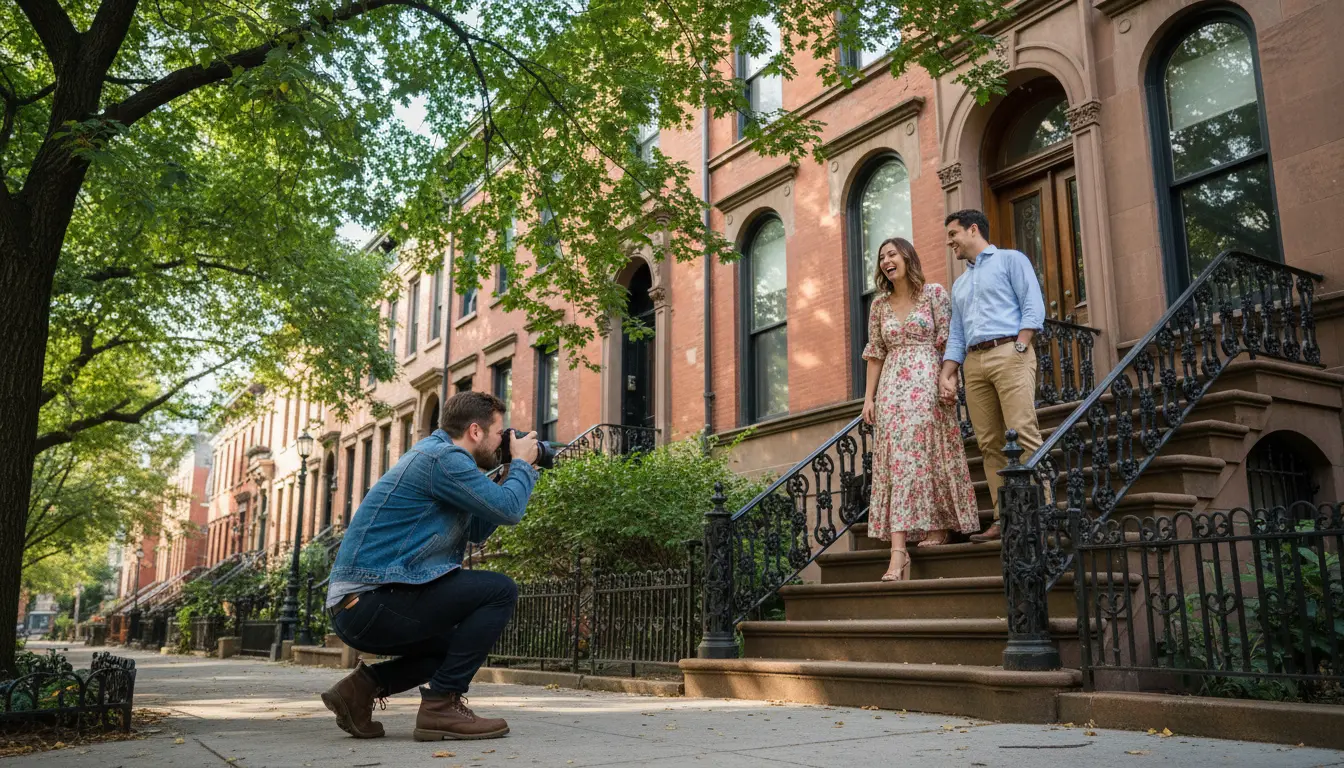
Typical park-adjacent stoop conditions: a narrow sidewalk, iron rails, trees filtering light, and space for only a small crew. This shows how close passersby, bikes, and parked cars usually are during preparations or portraits.
Because many of these blocks are strictly residential, work tends to be compact and respectful—short setups on stoops, then moving quickly back toward wider sidewalks or the park.
Choosing between quiet terraces, busy corridors, and arts district backdrops
Within Fort Greene you can shift the feel of a session just by crossing a single avenue:
- Park-adjacent brownstones (South Portland / South Oxford): Quieter, slower vehicle flow, and a predictable pattern of dog walkers and residents. Good for small groups and staged shots but with limited room for larger entourages.
- Dekalb and Myrtle corridors: Sidewalks get tight during dining hours, and delivery trucks frequently double-park, especially at lunch and early evening. This delivery_traffic pattern matters if you plan any street-crossing or storefront shots—curbs are often partially blocked, and parked vans can enter or leave frame quickly.
- BAM / Flatbush district: On non-event days, these corners feel spacious with wider sidewalks and plazas. On performance nights, the evening_rhythm shifts sharply: pre-show crowds compress sidewalks around Lafayette, and post-show foot traffic can fill crosswalks for 20–30 minutes at a time.
- Northeast toward Commodore Barry Park: Slightly more open intersections, sometimes used for quick portraits on the way to or from Navy Yard-area venues.
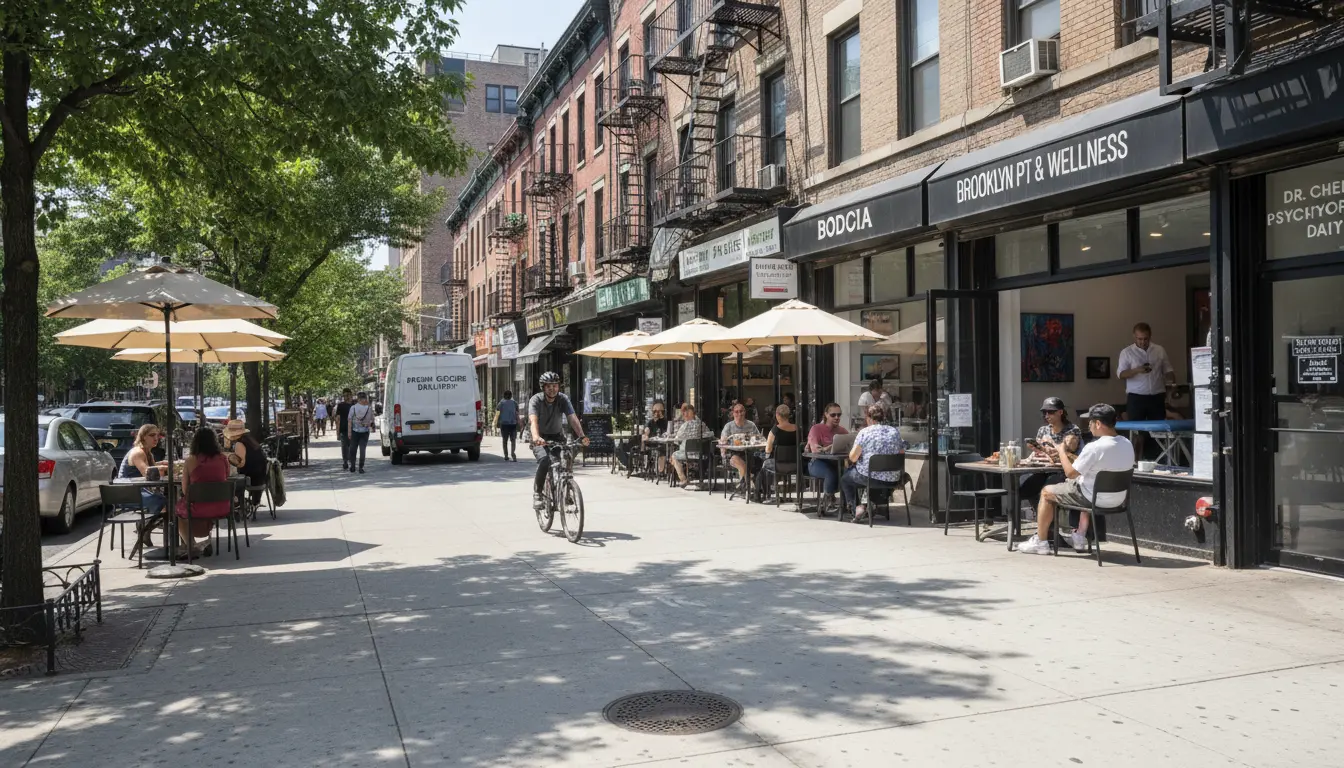
Dekalb/Myrtle conditions—busy sidewalks, curbside deliveries, and outdoor seating—illustrate why couples who want privacy often favor side streets or park edges instead of main corridors.
Couples tend to choose park and side-street sequences when privacy and clean backgrounds matter, then add a short walk through Dekalb, Myrtle, or the BAM area only if they want visible street life as part of the story.
How we serve Fort Greene through Wedding Photography
Moving people and gear through the neighborhood
Mobility in Fort Greene is shaped by narrow residential streets feeding into a few heavier corridors:
- Arrivals: Many people exit subways near Flatbush (around the Barclays Center and BAM nodes) and walk 5–10 minutes east into the neighborhood. This is efficient but exposes groups to sportsgamespikes; Barclays events push surges of people along Flatbush and Lafayette, which can slow crossings and disturb timing before everyone reaches the calmer park blocks.
- Within the grid: South Portland, South Oxford, and similar streets are one-way and quite narrow, with parking on both sides. Cars move slowly, but there is rarely space to stage vehicles for long; drop-offs usually need to be quick.
- Commercial corridors: Fulton, Dekalb, and Myrtle carry heavier bus and truck traffic. For photographers with rolling cases or light stands, these streets are useful main spines, but curb cuts and bus stops limit where you can pause for more than a few moments.
For wedding parties, this translates into planning footwear and travel time around short but busy walks—especially if you’re moving between a hotel closer to Downtown Brooklyn and a preparation space or portrait location on a side street near the park.
On-the-day workflow in Fort Greene’s public spaces
A typical Fort Greene session day often follows a pattern:
- Meet near a residence, hotel, or rental—frequently a walk-up apartment within a few blocks of the park.
- Move as a small group toward the park edge or a preselected stoop, using the most shaded side of the street in summer.
- Rotate through a handful of short setups (stoop, corner, park entrance) instead of building a single large staging area.
- Transition toward BAM, Downtown Brooklyn, or another neighborhood for ceremony and reception.
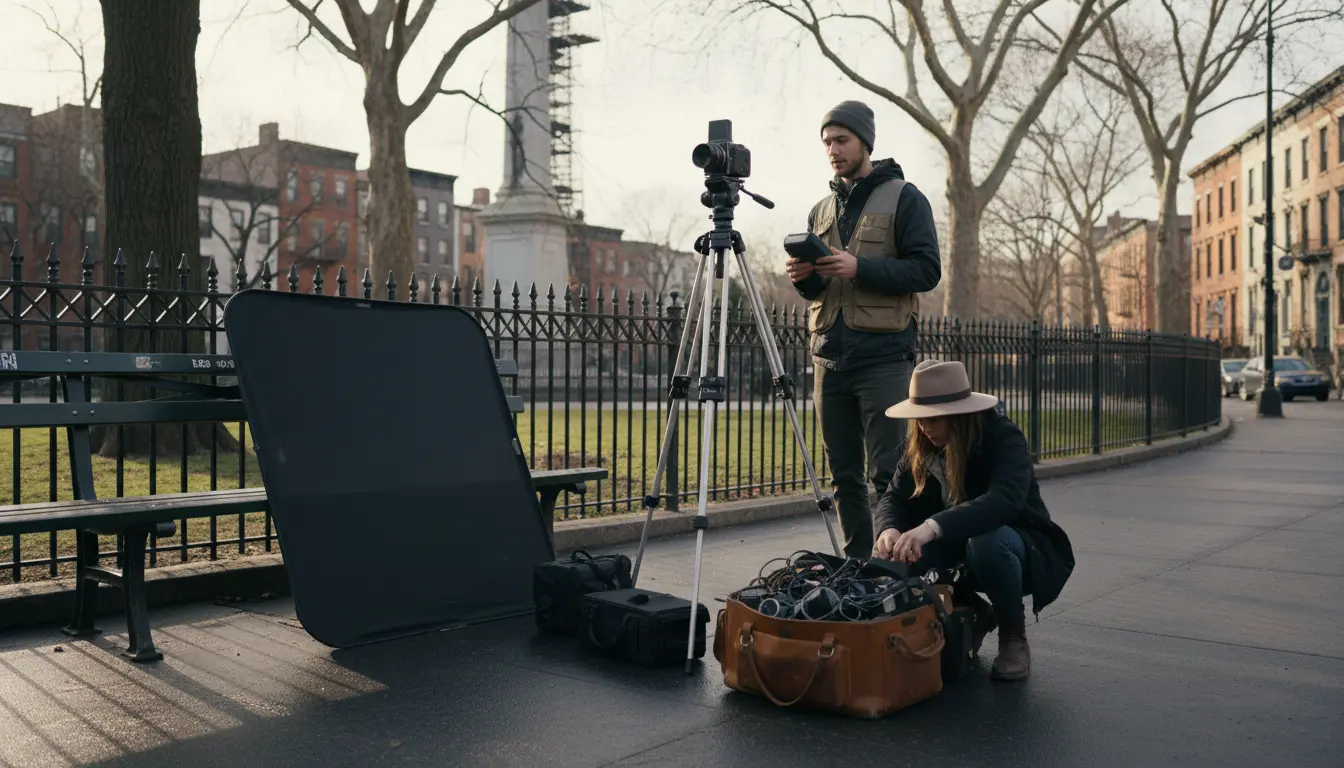
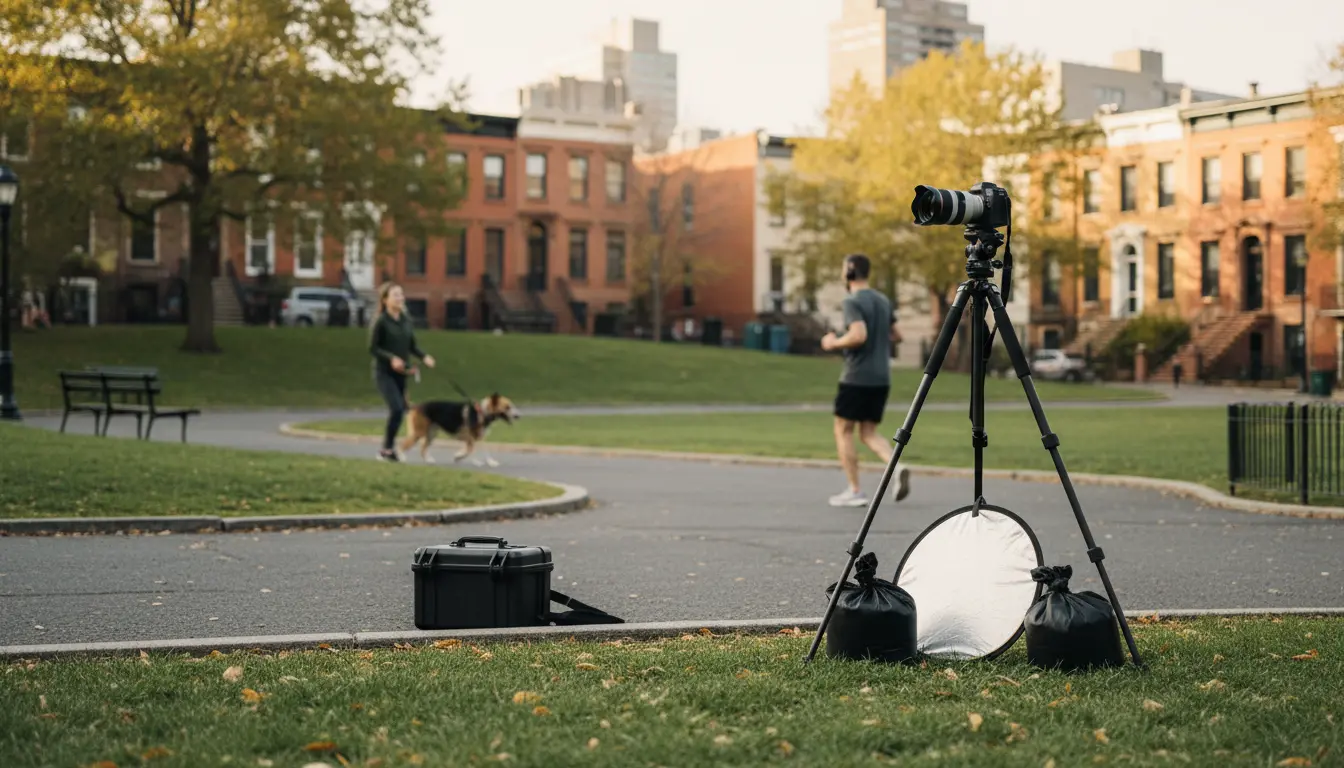
This setup at the park perimeter shows a realistic footprint for gear—tripod and small kit on the public sidewalk, with joggers and pedestrians flowing past. It illustrates how sessions usually rely on compact setups that don’t block circulation.
Because sidewalks around the park are heavily used by joggers, dog walkers, and families, most work stays nimble: no large carts, minimal light stands, and frequent micro-moves to avoid blocking gates, benches, or signage.
Managing permits, crowds, wind, and construction rhythm
Fort Greene is workable without complex logistics, but there are a few consistent constraints:
- Parks and permissions: Small, low-profile shoots in Fort Greene Park generally proceed without friction, but larger crews, stands, or visible lighting can draw attention from staff. The official Fort Greene Park – NYC Parks page outlines the park’s formal status and amenities; for anything beyond handheld gear, it’s wise to be aware you may be asked about permits.
- Stoops and building fronts: Residential stoops are private property. Even if an entrance looks perfect for wedding preparations photography, using it comfortably usually means having direct access via a rental, a resident, or explicit permission. Sidewalk space is public, but lingering directly in front of a doorway can feel intrusive on narrow blocks.
- Rooftops and terraces: Nearly all roof spaces and rear terraces are controlled by building management. Rooftop shots with skylines typically require prior coordination, not day-of improvisation.
- Cultural venues: Around BAM and similar venues, exterior photography is often tolerated, but construction_rhythm and event load-ins can change that quickly—trucks, barricades, or temporary fencing may appear along curbs or in courtyards.
Wind is another factor, especially on the elevated ridges inside the park and at exposed corners near Flatbush. Elevated lawns catch more breeze than surrounding streets; lightweight fabrics and veils can behave unpredictably.
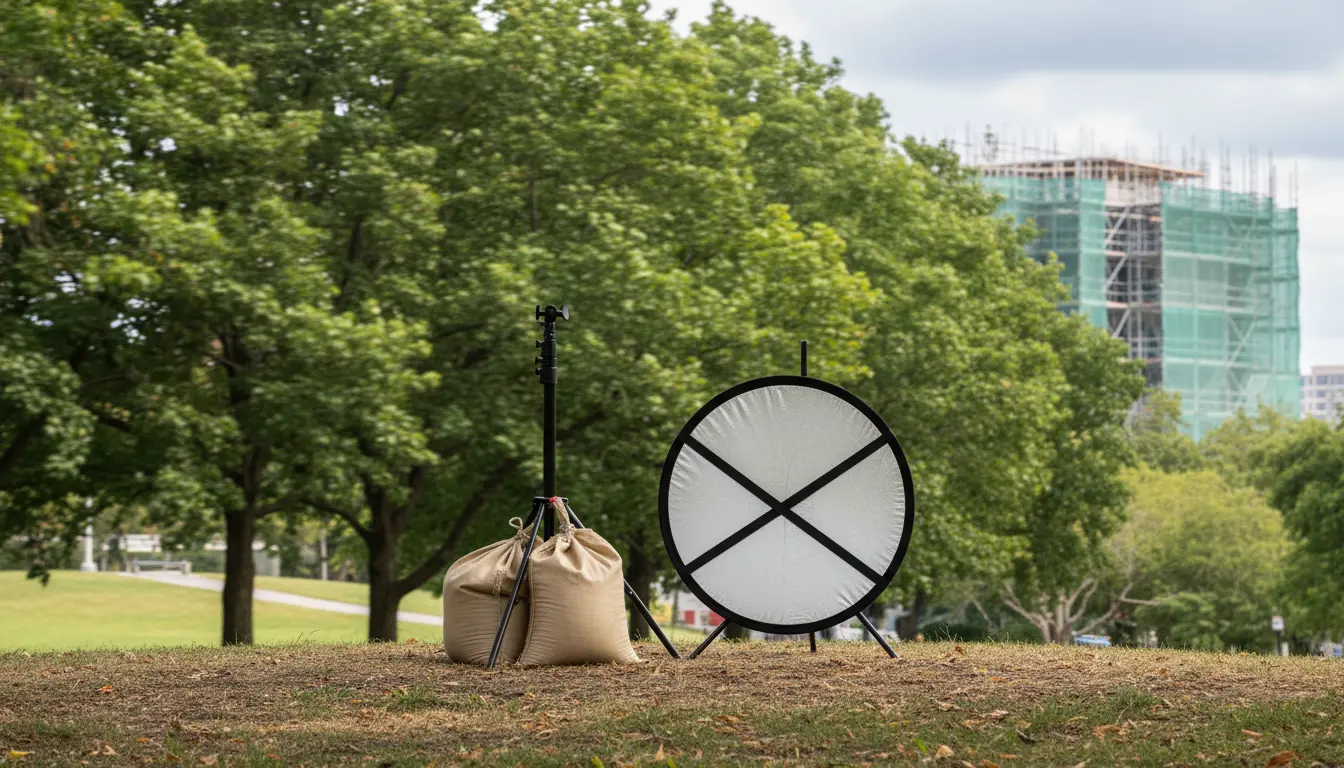
Here, a light stand is sandbagged on a park ridge and a reflector is tied down, with scaffolded buildings visible in the distance. This shows how crews typically handle wind and intermittent construction while staying within a small, stable footprint.
Noise and visual background shift during the day: weekday daylight may include drills or lifts from renovation projects near Flatbush, while evenings trade that for softer ambient sound but more headlights and window glare.
BAM district and cultural edges as part of the picture
The BAM Cultural District along Lafayette and around Flatbush acts as Fort Greene’s urban counterweight to the park. Brick and stone theater facades, banners, and small plazas give couples a legible “arts district” feel that reads differently from residential shots, even though it’s only a few blocks away.
On performance nights, the evening_rhythm here is distinct: before shows, groups cluster in front of theaters and on corners; after shows, sidewalks and crosswalks briefly flood with pedestrians heading to subways, buses, or nearby bars. Between events, the same courtyards can feel almost empty, offering more room for quick portraits or architectural frames.
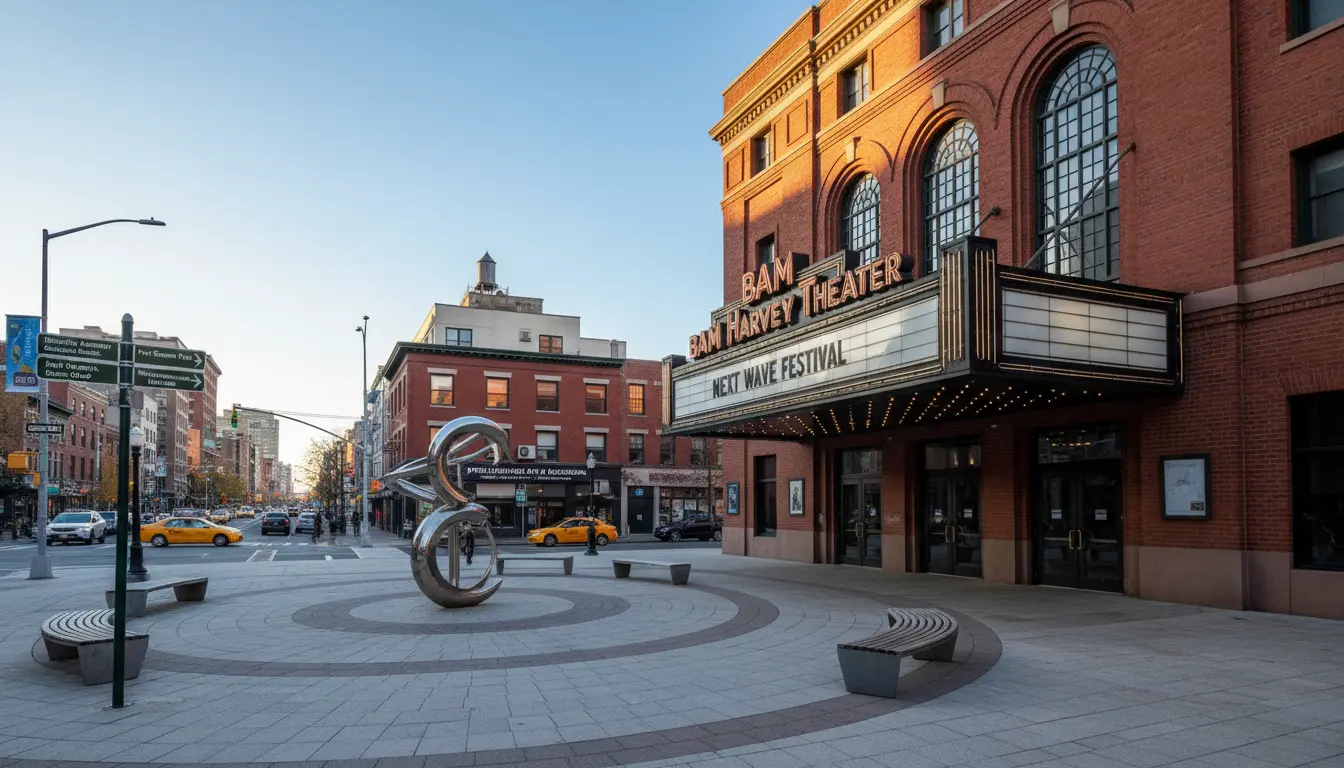
The BAM Harvey Theater exterior and courtyard confirm how close Fort Greene’s arts district sits to residential blocks and transit. This is the kind of mid-rise cultural backdrop couples often add after park or stoop portraits.
For couples pairing a Fort Greene shoot with a Downtown Brooklyn or Barclays-area event, familiarity with these micro-areas—where you can stop for a few frames without blocking doors or loading docks—helps keep movements efficient.
Working with a Wedding photographer who knows how BAM event schedules, theater load-ins, and Barclays game nights affect the sidewalks around Flatbush and Lafayette can reduce surprises in both timing and background.
What final images from Fort Greene usually look like
Deliverables from Fort Greene rarely look like isolated studio sets. They tend to include:
- Brownstone facades, iron railings, and stoops with visible neighboring buildings.
- Tree-filtered light creating dappled patterns on clothing and pavement.
- Background pedestrians on sidewalks near the park or BAM, often softened by motion blur.
- Park elements—lawns, paths, benches, and monuments—visible at the frame edges.
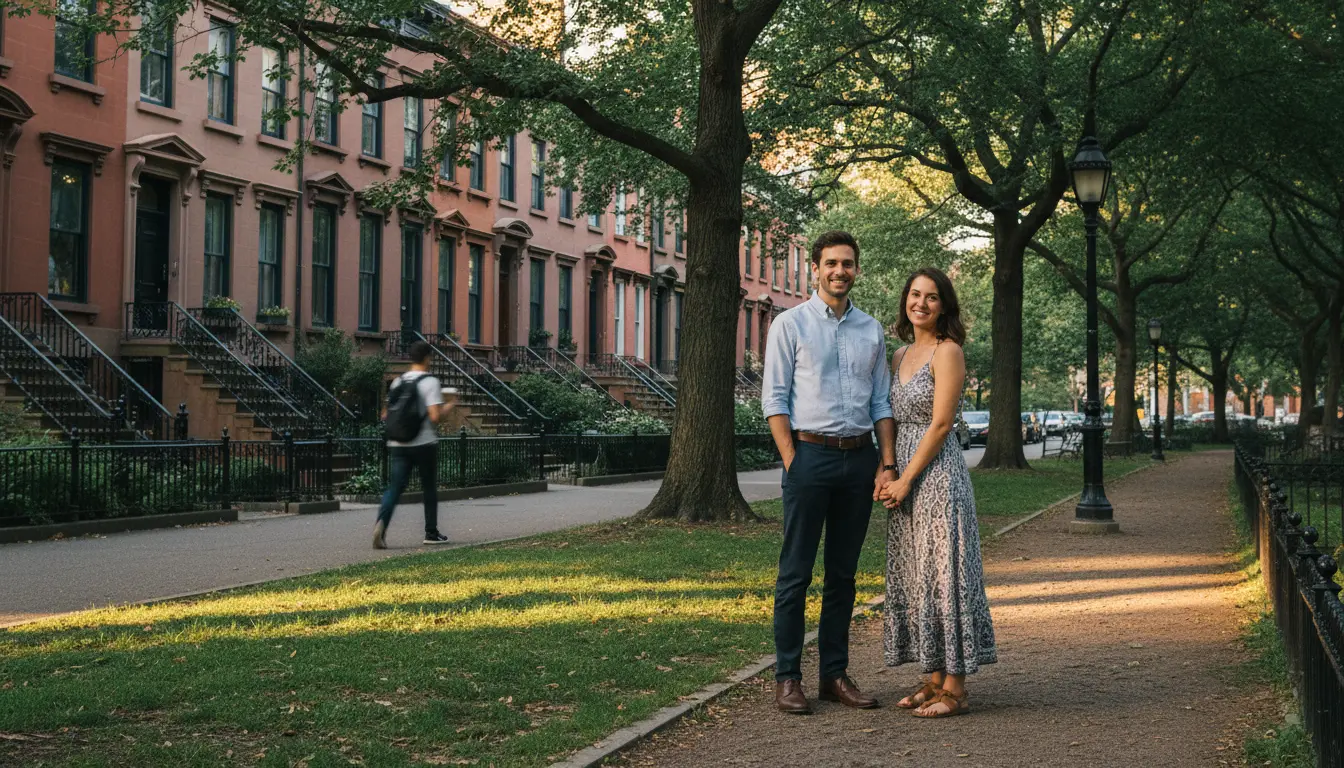
This candid portrait near the park boundary shows a realistic blend of couple focus, brownstone context, incidental pedestrians, and tree shadows. It reflects what most couples can expect from Fort Greene sessions: layered, public-space images rather than isolated sets.
Rather than removing all signs of neighborhood life, images usually acknowledge Fort Greene’s character—residential, park, and arts elements together—while keeping attention on the couple.
How Fort Greene connects to broader Brooklyn wedding routes
Fort Greene rarely exists in isolation on a wedding day. It often acts as:
- A getting-ready zone in brownstones or small hotels, followed by travel to venues elsewhere in Brooklyn.
- A portrait stop between Downtown Brooklyn hotels and receptions in neighborhoods like Boerum Hill or along the waterfront.
- A green counterpoint to harder-edged urban images captured in nearby commercial districts.
Because of its position between high-density Downtown Brooklyn and other brownstone areas, it works well for couples wanting one session base that can pivot quickly to multiple ceremony or reception locations without long transfers.
Adjacent Neighborhoods we serve near Fort Greene
Fort Greene wedding photography FAQ
When is Fort Greene Park least crowded for portraits?
Weekday mornings outside commute hours are usually the calmest, especially away from main entrances and dog runs. Early evenings on weekdays can be workable too, but expect jogger and dog-walker activity along the perimeter paths.
Are the brownstone blocks comfortable for moving a wedding party?
They’re comfortable for small groups, but sidewalks are narrow and often partially occupied by stoops, trees, and bikes. It’s realistic for two to six people to move and pose; larger parties typically feel cramped and may spill into the street if not carefully managed.
How does natural light behave in the park versus the streets?
The park’s open center brings in more direct light earlier and later in the day, while side streets with heavy canopy and mid-rise facades fall into softer shade sooner. The BAM/Flatbush area loses clean light earlier than the park interior because of building height and orientation.
Can we get rooftop views in Fort Greene easily?
Generally no. Most roofs and terraces are secured and require prior building or management approval. If roof shots are important, those arrangements usually happen separately and cannot be assumed day-of.
Do BAM events affect photo sessions nearby?
Yes. Before and after shows, sidewalks outside BAM venues and along Lafayette and Ashland fill quickly. It’s still possible to shoot, but you’ll have significantly more background pedestrians and less control over space.
How does ongoing construction affect the neighborhood?
Renovations and new work near Flatbush and parts of Myrtle appear as intermittent scaffolding, sidewalk sheds, and occasional noise. It rarely blocks Fort Greene Park itself but can affect specific corners or building fronts you may have hoped to use.
Is parking realistic for wedding parties in Fort Greene?
Street parking exists but is competitive, especially near the park and commercial corridors. For time-sensitive arrivals, drop-offs and car services are more reliable than counting on finding spots at specific addresses.
What if the park canopy makes things too dark?
On heavily treed paths, light can become flat or dim, particularly on overcast days. In those cases, shifting to the park’s more open lawns, the elevated ridges, or nearby intersections with less overhang usually restores usable natural light.
Are there open areas beyond the main lawn for group photos?
Yes. In addition to the central lawn, the sloped areas along the ridges and some of the wider perimeter paths offer enough open space for moderate-sized groups without feeling crowded, assuming you avoid peak weekend times.
Where does Fort Greene “stop” before it feels like another neighborhood?
To the west, crossing Flatbush into high-rise blocks feels distinctly like Downtown Brooklyn. Heading east past the continuous run of brownstones along Dekalb and Lafayette, you gradually transition into Clinton Hill. South of Atlantic and Vanderbelt, the feel shifts toward Prospect Heights with different park and venue options.