
Gowanus in Brooklyn as a working backdrop for wedding photography
Physical layout of Gowanus and its edges
Gowanus sits in a low-lying canal corridor between more residential parts of Brooklyn and denser commercial strips. It is broadly centered on the Gowanus Canal, with 3rd Avenue forming a noisy industrial spine to the east and 4th Avenue acting as a clearer edge toward Park Slope. Northward, the feel transitions into Boerum Hill around Douglass Street and across 3rd Avenue, while the southern blocks lean toward Carroll Gardens near Union Street.
The canal itself, and the surrounding industrial blocks documented in Gowanus, Brooklyn – Wikipedia, provide the basic orientation frame for any photography work here. Most usable streets for sessions run east–west (Union Street, Carroll Street) or hug the canal (Bond Street, Nevins Street), with the rest of the grid shaped around warehouse parcels and long loading docks rather than small residential lots.
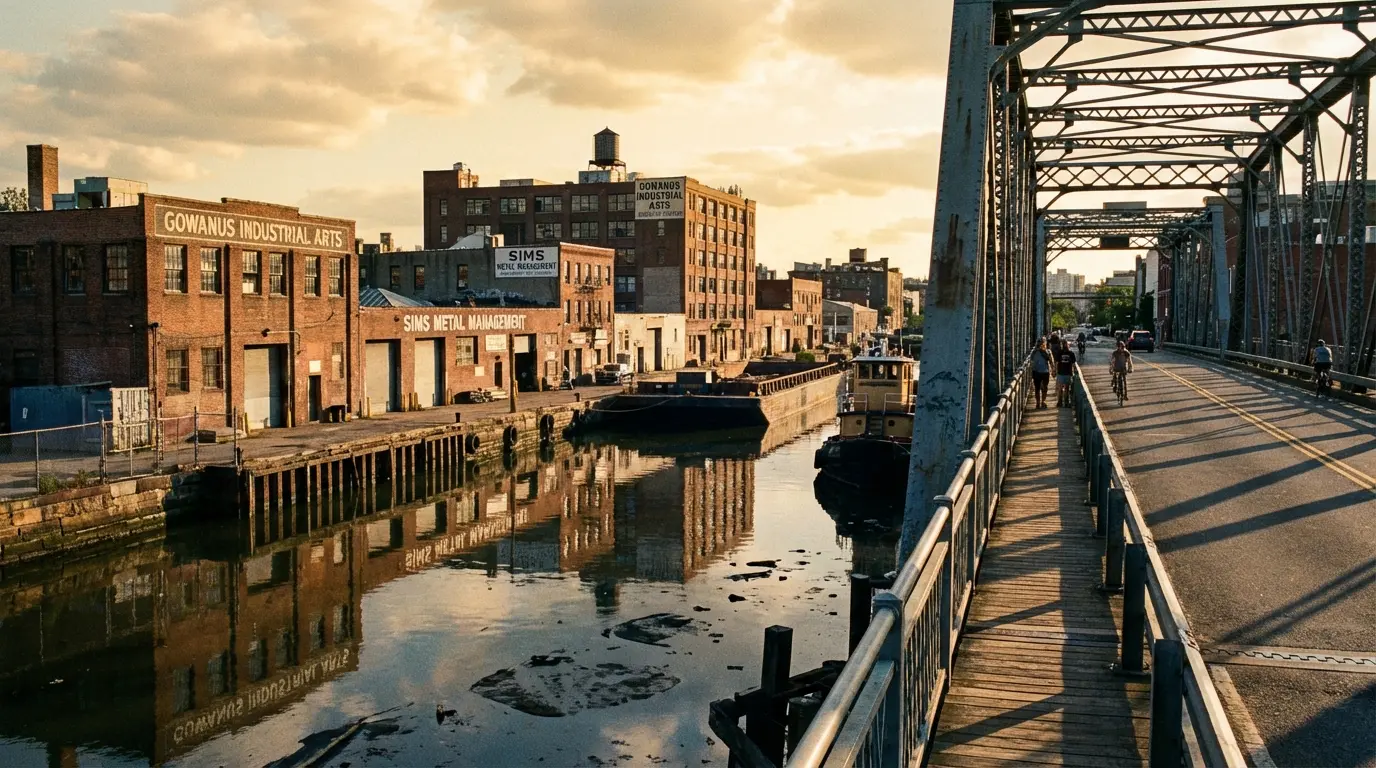
View from Carroll Street Bridge showing the canal as the central geographic anchor and how late-afternoon light runs horizontally along the water and industrial façades.
This image confirms how the canal cuts through the neighborhood, the mix of brick and metal buildings on both banks, and the wide sky exposure that affects light quality during late-day sessions.
Typical wedding photography zones along the canal
Most wedding-related work in Gowanus stays close to the canal and its immediate side streets, where industrial backdrops and lower foot traffic align with expectations for Wedding Photography. Bond Street and Nevins Street between Union and Carroll are common choices because the buildings sit directly against the sidewalk, producing strong textures and clean walls within a few steps of the roadway.
Small edge zones at Thomas Greene Playground can offer a strip of greenery or a softer background, but the main play areas are usually too active after school hours for uninterrupted couple portraits. Under and near the Union Street and Carroll Street bridges, structural steel, railings, and canal views give a clear sense of place, but the working footprint is narrow, so positioning needs to respect passing pedestrians and occasional maintenance vehicles.
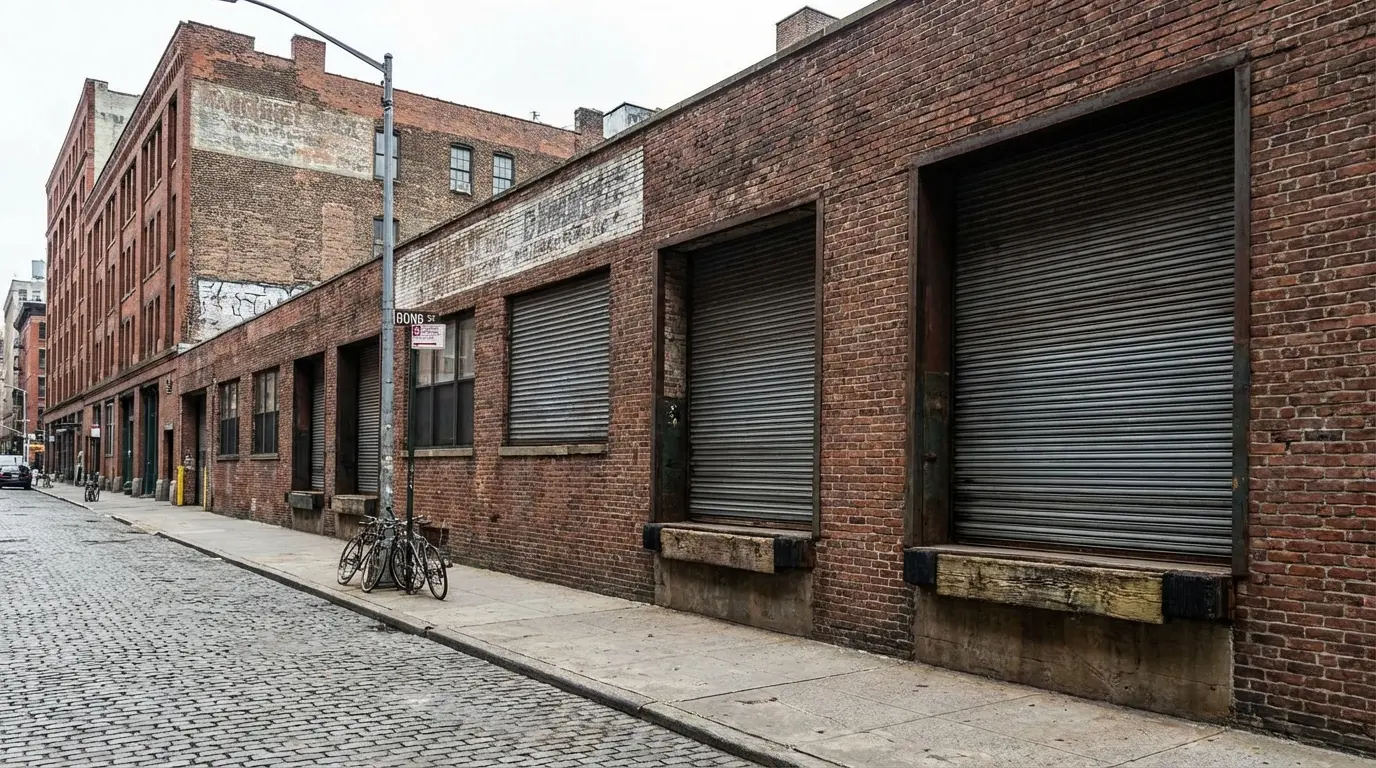
Bond Street shows the continuous warehouse façades, narrow sidewalks, and loading bays that shape how couples can stand and move in frame.
This view makes clear how limited sidewalk depth and recessed loading docks influence posing distances, background selection, and how much street texture will appear in a final image.
Movement patterns and choosing specific blocks
Getting to these zones usually means arriving from the subway edges or the 4th Avenue corridor. The R train at Union Street and the F/G stations at Carroll Street and Smith–9th Street sit just outside the core of Gowanus, so couples often walk in along Union or Carroll. These east–west streets shift quickly from bright to shaded as they cross the canal, because industrial buildings interrupt the sun at different heights and distances on each block.
3rd Avenue’s intersections feel physically wide but can be unpredictable: trucks swing across lanes to reach loading docks, and crossing signals may leave pedestrians waiting longer than expected. By contrast, side-street intersections on Bond Street or Nevins Street are tight, with sightlines partially blocked by parked vans and roll-up gates; this makes them calmer for photos but requires more attention when stepping into the street for a wider composition.
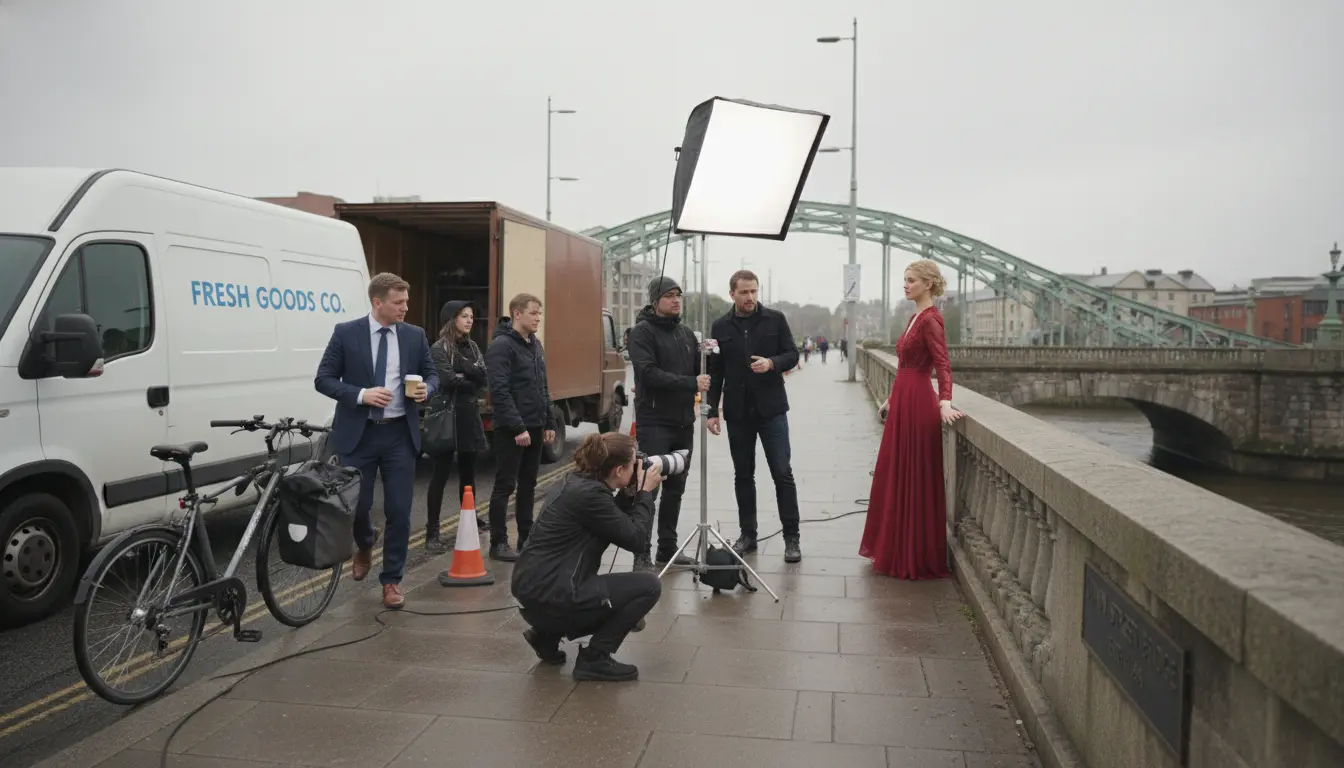
Union Street Bridge approaches demonstrate how narrow crossings, delivery vehicles, and regular pedestrians create brief interruptions during a shoot.
Here the working space for the photographer is limited to a strip of sidewalk and a small apron near the bridge rail, showing how sessions adapt to real-time pedestrian flow and parked vans without fully blocking circulation.
Professional Photography Options in Gowanus
How a session usually flows in Gowanus
A typical session in this neighborhood often starts indoors or at a quiet meeting corner before moving onto canal-side blocks. Ground-floor studios or small creative spaces near 3rd Avenue provide compact preparation zones for outfits, makeup checks, and equipment setup, especially useful when the weather is variable or couples are arriving from Park Slope or Carroll Gardens and need a moment to regroup.
From there, it is common to walk west toward Bond Street or Nevins Street, stopping at specific walls, gates, or alley openings that offer a balance of privacy and identifiable industrial texture. Sessions may loop over one of the bridges for canal views, then return to the studio or a nearby side street for any final portraits once the light has shifted and traffic noise patterns change.
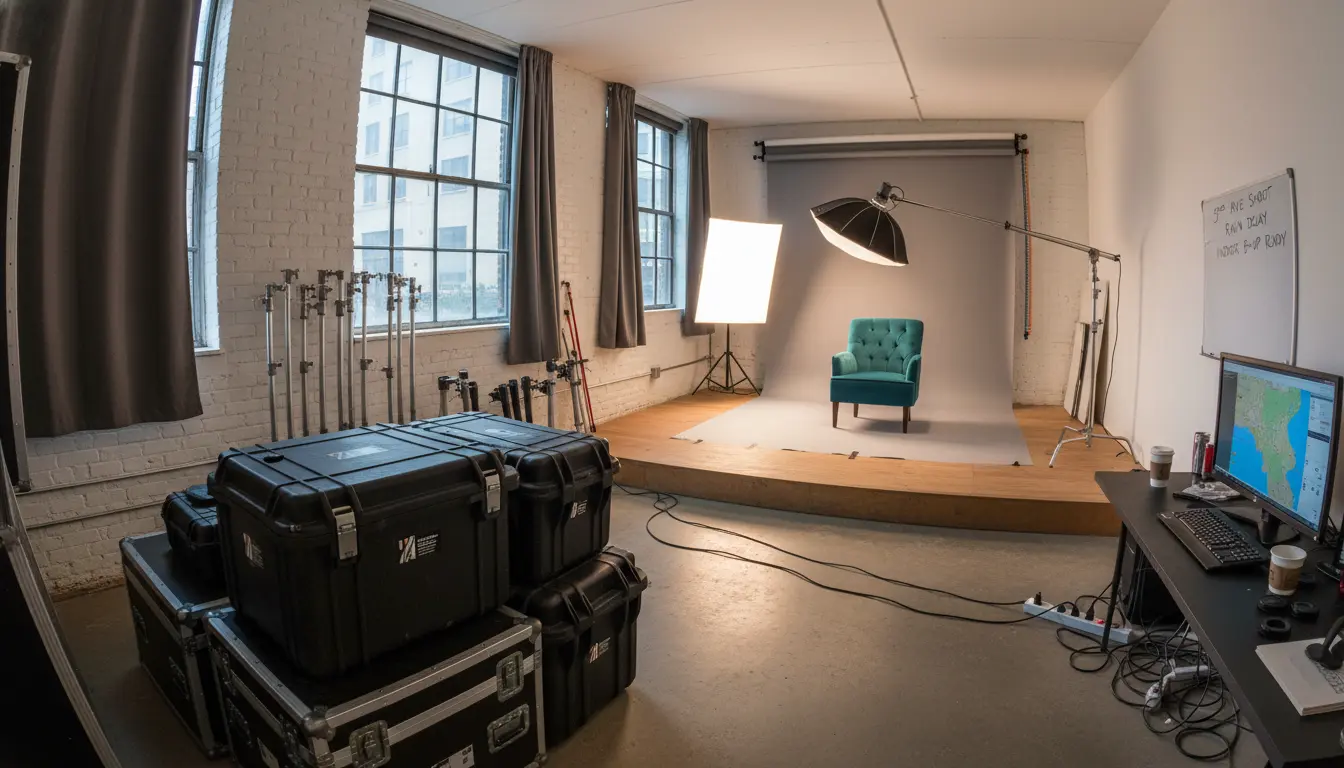
This studio view near 3rd Avenue shows a realistic preparation footprint, with gear staged in a compact space and a narrow street-facing window indicating the dense built environment outside.
The image confirms that indoor options in Gowanus are typically modest in size but adequate for outfit changes and equipment checks before or after canal-side work.
Building heights, materials, and how they shape light
Gowanus is largely low- to mid-rise, but the mood on the street can change abruptly as building heights step up around certain corners. Along the canal, many structures are only a few stories tall, creating wide sky exposure and softer morning light that reaches façades on both sides earlier than in deeper residential grids. As you move closer to the Park Slope edge, taller mixed-use buildings to the east can throw long shadows across Union Street and Carroll Street in the afternoon, dropping blocks into shade faster than couples might expect.
Industrial facades—brick, metal siding, and painted concrete—produce hard-edged shadows when the sun is high, while newer glass-and-metal constructions along the water can flare strongly around sunset. The canal surface itself acts like a horizontal mirror, kicking additional light onto Bond and Nevins fronts late in the day. This interaction of low-rise roofs, taller edge buildings, and reflective water explains why some corners feel bright and open, while adjacent alleys look comparatively dark or enclosed only a few steps away.
Constraints, permissions, and on-site risk reduction
Working in Gowanus involves a few predictable constraints that shape how and when sessions run. The Union Street Bridge often experiences short bursts of congestion tied to truck deliveries and ride-share pickups; crossing the bridge with gear can be smooth one minute and crowded the next. The Carroll Street Bridge is typically quieter but narrow, so any stop for photos has to respect the limited width available for both pedestrians and vehicles.
Public edge spaces associated with the canal, documented through Gowanus Canal – NYC Parks, may have rules or staff discretion that affect tripod use, extended setups, or access to certain platforms. Rooftop areas and private decks, particularly near Nevins Street and Bond Street, are controlled by building owners or specific venues; access generally depends on prior coordination rather than same-day requests.
Wind is another consistent factor. The canal corridor can act as a wind tunnel, with gusts pushing dust and light debris along 3rd Avenue and into adjoining alleys, especially in dry weather. This affects not only comfort but also the stability of light stands, softboxes, and reflectors.
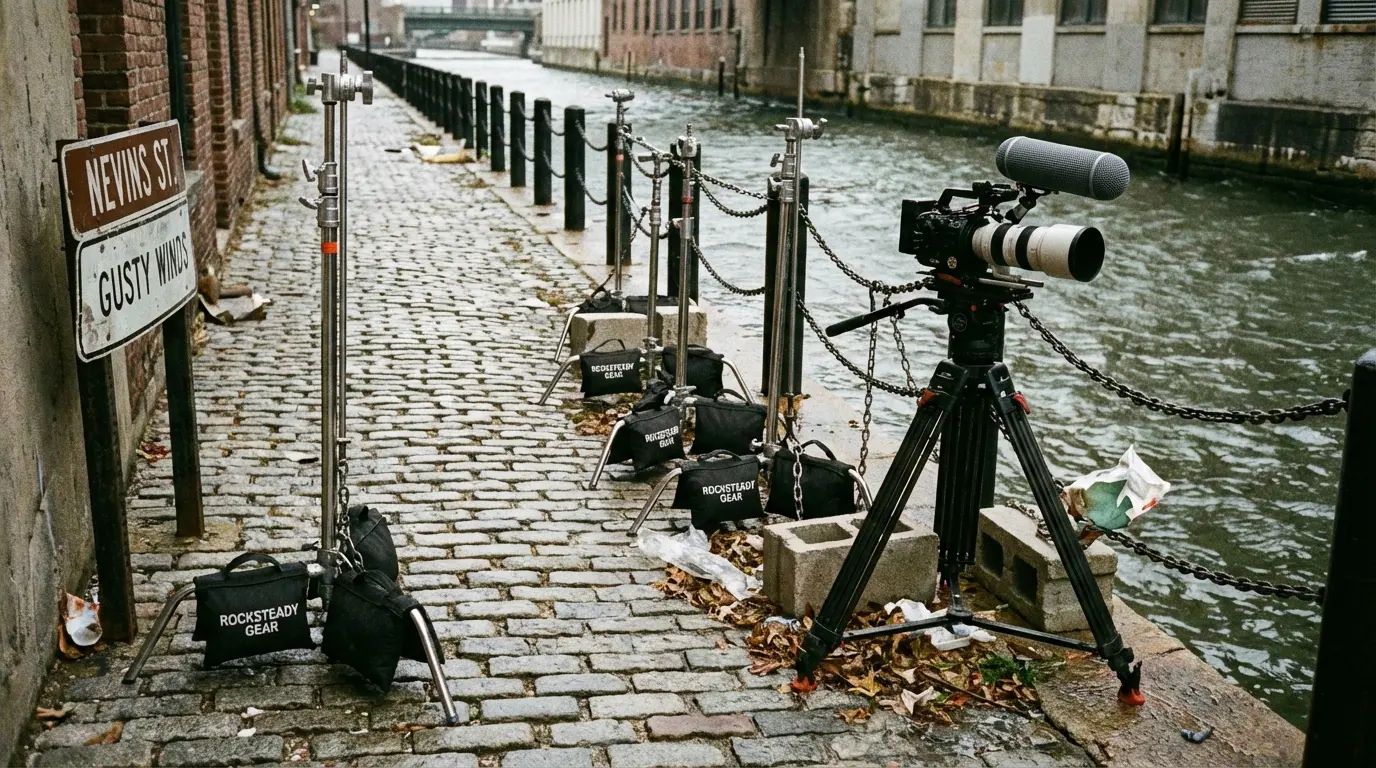
Weighted stands and straps in this canal-side alley show how wind and uneven pavement are managed to keep gear stable and safe.
The brick walls, narrow opening to the water, and visible debris highlight the real surface conditions that crews account for when planning equipment setups and safe walking paths for couples.
Landmarks and subtle neighborhood signals clients notice
Beyond the canal itself, Whole Foods Gowanus on 3rd Street is a practical landmark many couples use as a reference or meeting point. The store’s rooftop parking deck is visually prominent but privately controlled, so it functions more as a wayfinding anchor than a guaranteed photo surface. Around it, 3rd Avenue’s constant automotive noise and the rumble of trucks act as time signals during the day, with the sound of early deliveries marking morning and quieter intervals usually appearing between heavy rush-hour windows.
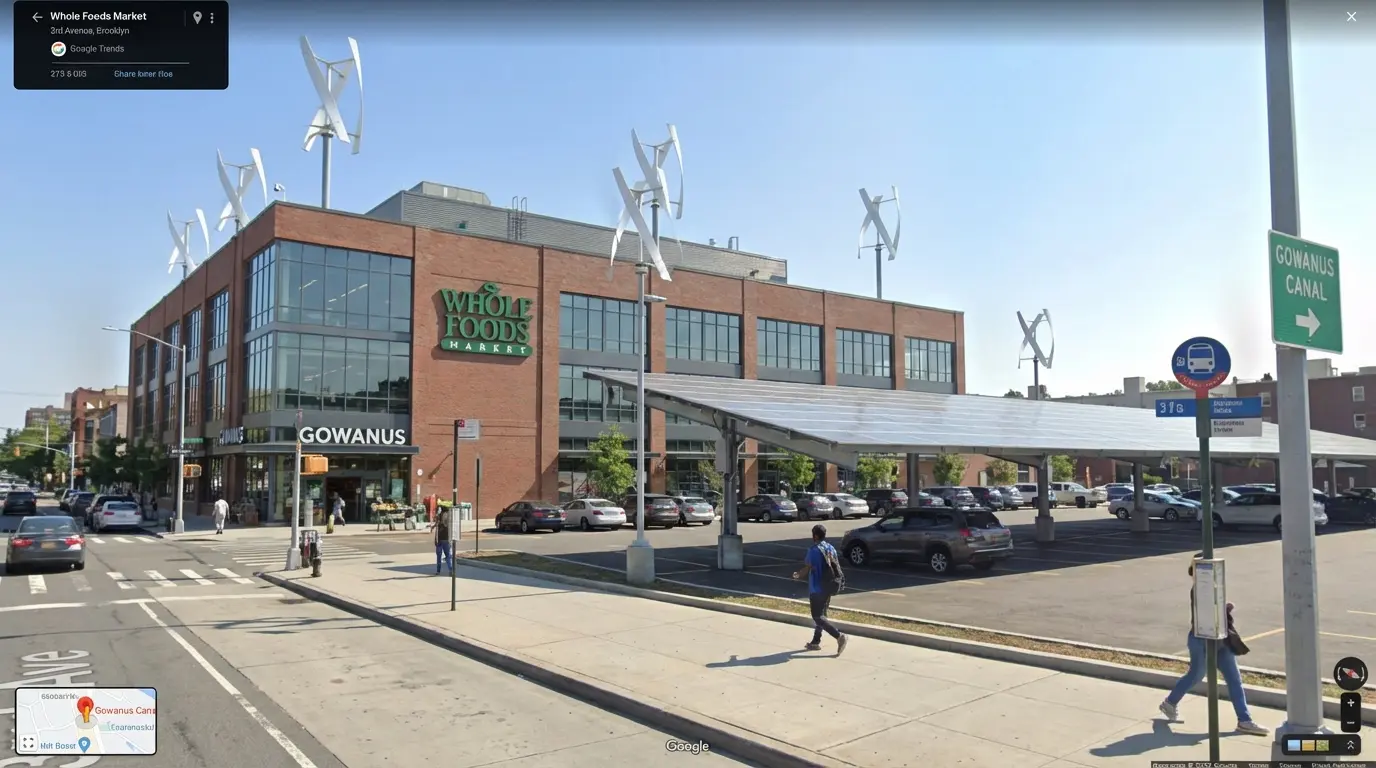
The Whole Foods frontage and roof deck offer a clear, mappable anchor while illustrating how controlled-access elevated spots sit beside public sidewalks and bike racks.
This scene shows typical pedestrian routing along 3rd Avenue and underscores that some of the most visually attractive elevated angles are not casual walk-up options but subject to property rules.
On smaller streets, building-height mood shifts from open sky over low warehouses to darker, enclosed pockets where taller structures sit close together. Windows often retain their warehouse character—metal frames, frosted glass, minimal displays—so backgrounds stay visually simple even in front of active businesses. Evening brings distinct neighborhood signals: warm reflections on the canal, lights switching on in breweries and studios, and a gradual drop in through-traffic that can make the same corner feel much calmer than it did in early afternoon.
What finished Gowanus images typically look like
Couples choosing Gowanus usually expect the industrial character of the neighborhood to be visible in their photos: brick textures, roll-up gates, bridge railings, and the canal itself. Because of the way light and building massing work here, many frames show a mix of illuminated faces with deeper shadows in the background, rather than evenly lit, park-like scenes. Vehicles, loading docks, and street fixtures are part of the environment and often sit at the edge of the frame even when compositions focus tightly on the couple.
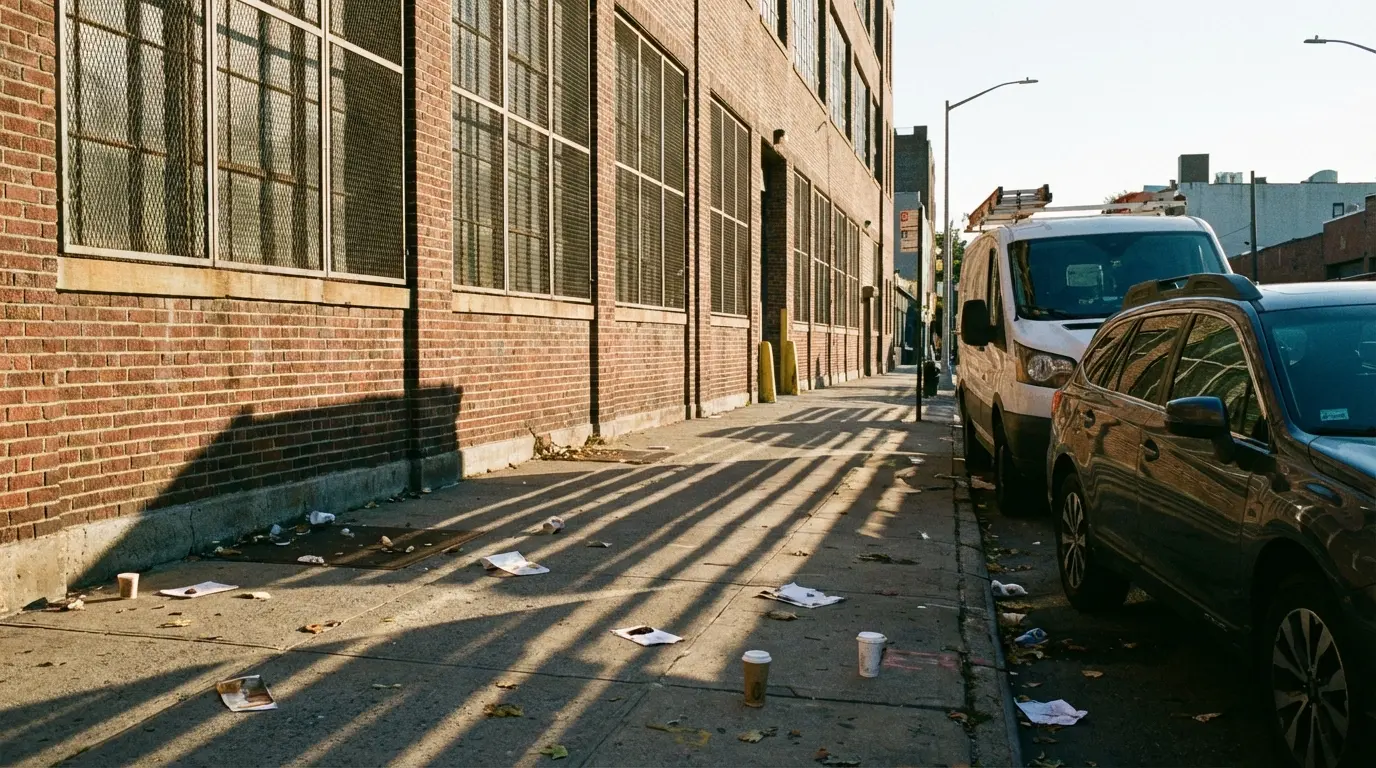
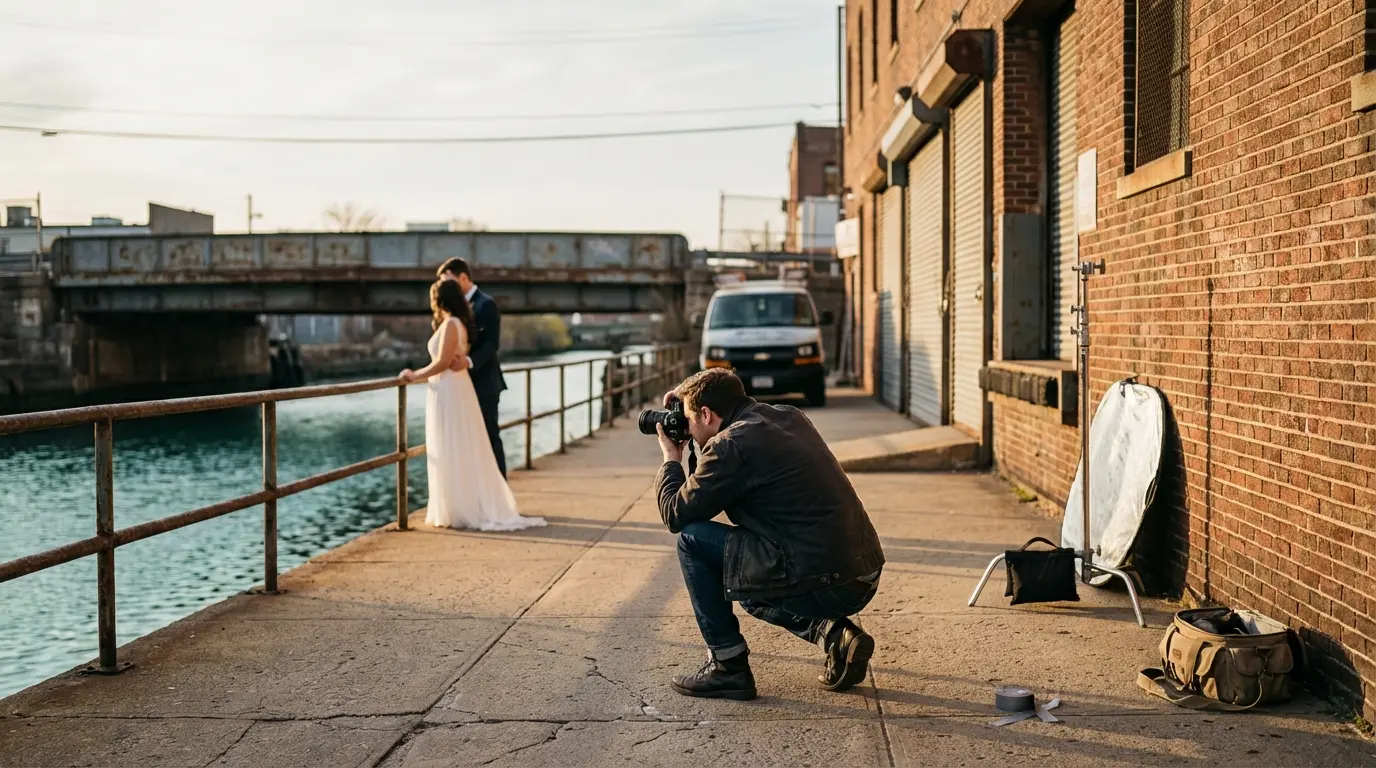
This unretouched frame on a Bond/Nevins block shows real late-afternoon light, long shadows, and ordinary street elements like service vans and gates.
The image aligns expectations around how much “grit” appears in a typical Gowanus session, how reflections and shadows fall on faces, and how much background cleanup is realistic in post-production.
Other Brooklyn Communities in our coverage
Frequently asked questions about sessions in Gowanus
When is the light most workable near the canal?
Morning tends to be softer, with even coverage on both sides of the water because buildings are relatively low. Late afternoon can be very effective but requires awareness of glare off the canal and sharp contrasts between sunlit walls and shaded sidewalks.
Are the Union Street and Carroll Street bridges comfortably walkable for couples in formal attire?
Yes, but they are narrow and shared with vehicles. Crossing in wedding clothes is common; lingering for photos simply has to be timed between passing cars and pedestrians to avoid blocking movement.
How noisy is it during a typical session?
3rd Avenue is consistently loud with engines and truck braking, while Bond Street and Nevins Street drop to a more manageable hum between deliveries. Under-bridge areas add occasional echoes from vehicles crossing overhead.
Do rooftops or elevated decks require permits?
Most elevated locations, including rooftop parking decks and private terraces, are controlled by property owners or venues and aren’t accessible without prior arrangement. Public spaces may also limit tripods or large setups, so it is safer to assume advance permission is required for any non-sidewalk elevated spot.
Are there quieter alternatives if a block feels too busy?
Stepping one block off 3rd Avenue toward the canal usually reduces foot traffic and noise. Certain corners near the edges of Thomas Greene Playground and dead-end segments along the canal can offer more privacy, depending on time of day and event schedules.
Is it safe to shoot at dusk?
Most canal-side blocks remain active enough at dusk to feel comfortable, with brewery and studio lights providing additional ambient illumination. As with any industrial area, it helps to stay on streets with some ongoing activity rather than in long, empty alleys.
What indoor options exist nearby for weather backups or outfit changes?
Indoor studio spaces and small creative workrooms near 3rd Avenue are the most common backup. They are typically compact but adequate for garment racks, light stands, and a small prep table.
Where do couples typically meet their photographer in Gowanus?
Common meeting points include corners near Union Street or 3rd Avenue, the vicinity of Whole Foods Gowanus, or directly outside a pre-arranged studio. These spots are easy to describe in directions and close to multiple shooting locations.
How easy is it to combine Gowanus with nearby neighborhoods in one day?
Moving between Gowanus and neighboring areas like Park Slope, Carroll Gardens, or Boerum Hill is straightforward on foot or by a short car ride. Couples often start with industrial backdrops near the canal and then transition to tree-lined residential streets nearby if they want a second, contrasting setting.