
Greenpoint in Brooklyn: Practical Wedding Photo Location Guide for Wedding Days
Reading Greenpoint’s Layout for Wedding Days
Greenpoint sits at the northern tip of Brooklyn, with the East River forming its western edge and a low- to mid-rise street grid that tightens as you move toward the water. Official descriptions such as Greenpoint, Brooklyn – Wikipedia track closely with what couples, guests, and vendors encounter on the ground: a waterfront edge, a central commercial spine, and residential blocks radiating outward.
To the south, the transition into Williamsburg is most obvious as you cross near McCarren Park; eastward, blocks gradually give way to the more industrial stretches of East Williamsburg. Across the river, Long Island City provides the skyline that often ends up in the background of waterfront portraits. For couples comparing different parts of Brooklyn, Greenpoint tends to be the option that mixes skyline-facing piers with quieter, lived‑in side streets.
The neighborhood’s photography-relevant landmarks cluster along the western edge: Transmitter Park, the WNYC Transmitter Building, the India St ferry area, and short segments of waterfront paths. Inland, McCarren Park’s southern fields and the smaller residential parks act as green buffers between denser commercial corridors.
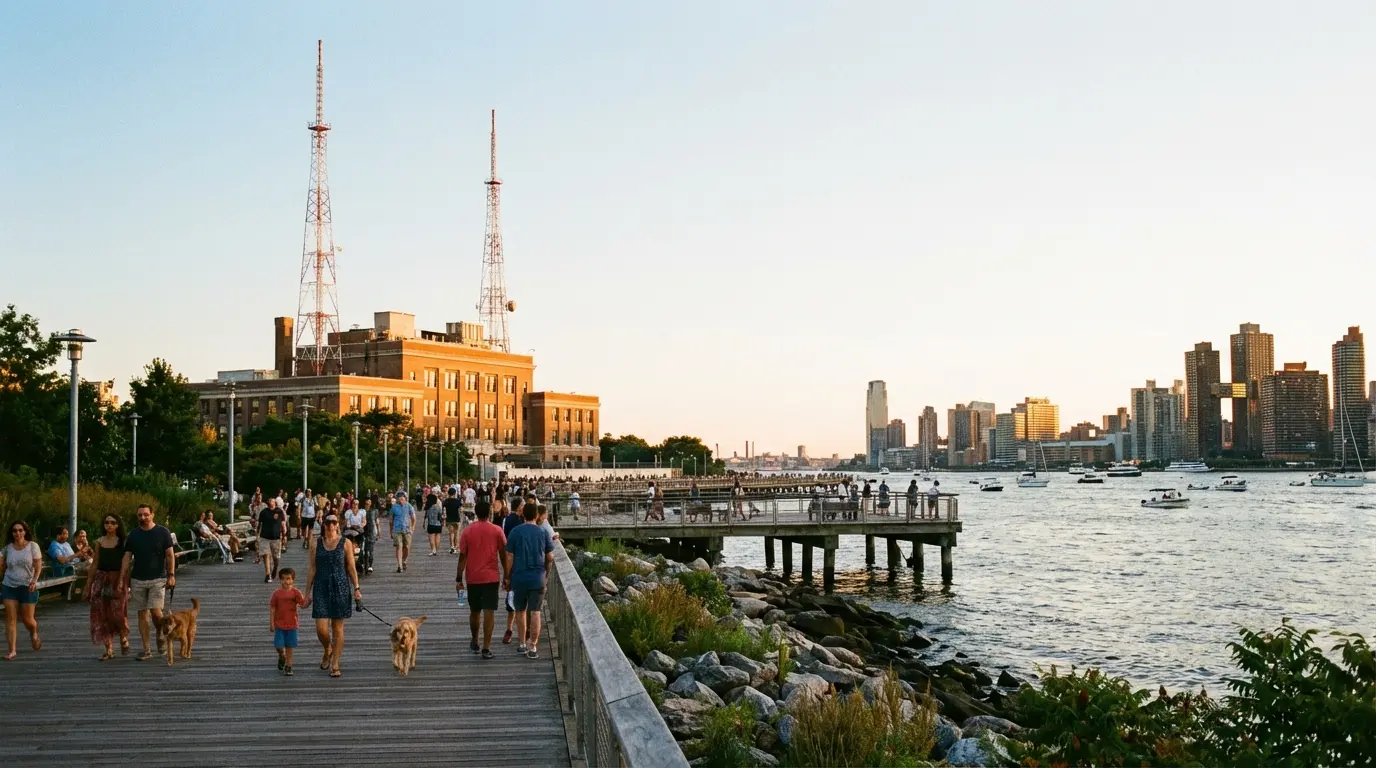
Shows the park shoreline, pier access, and late-day light reflections so buyers can verify skyline sightlines, path width, and typical sunset crowding.
This view confirms how narrow the pier approaches are and how close the skyline actually sits in frame, which matters for planning group sizes and angles at peak sunset.
Getting Around: Streets, Subway, and Foot Traffic
Most guests and small wedding parties experience Greenpoint through a few key corridors:
- Manhattan Ave is the main north–south pedestrian spine. Storefronts are tight, and morning bakery lines can briefly collapse the usable sidewalk to a single-file flow, especially on weekends. That “bakery squeeze” can complicate any plan to use corners near popular shops for quiet portraits before noon.
- Franklin St runs roughly parallel but closer to the waterfront. Its cafes and small bars keep a steady hum of people throughout the afternoon and evening, which is useful for energy but limits the chances of an empty-street look.
- Greenpoint Ave (with the G train station) and Nassau Ave serve as east–west cross streets. The Greenpoint Ave station ramps often see a high stroller density at school drop-off and pickup times, a detail that matters if you’re trying to move a dressed wedding party through that pinch point quickly.
- McGuinness Blvd introduces real crossing friction; it’s wide, vehicle-heavy, and not convenient for moving older family members or guests in formalwear across multiple times.
Water access comes via the India St ferry terminal, which brings waves of passengers in short bursts. Each arrival can turn otherwise quiet blocks into a brief crowd surge. Dog walkers also use the waterfront paths and parallel side streets heavily at first light and again around sunset, so leashes, dog groups, and stop-and-chat clusters are part of the ambient environment near the water.
For session logistics, these movement patterns translate into practical questions: what time to schedule sidewalk shots on Manhattan Ave to avoid bakery queues, whether to keep older family portraits east of McGuinness for easier car drop-offs, and how tightly to schedule transitions around the ferry arrival pulses.
How Light Behaves Between Waterfront and Side Streets
Greenpoint’s western orientation gives it a distinct light profile compared with more inland Brooklyn neighborhoods.
- Along the East River edge (Transmitter Park, India St waterfront), late-day sun stays unobstructed for longer, creating strong sidelight and warm reflection off the water. That extended “golden” window is why so many waterfront portraits are scheduled closer to sunset here.
- On east–west cross streets like India, Greenpoint, and Noble, mixed building heights create alternating bands of light and shadow. A half-block can shift from fully lit to deep shade within a few steps, which is helpful if you need quick options for both softer and more contrasty images without moving far.
- The industrial massing along West St throws earlier shadows in the afternoon, particularly in cooler months when the sun sits lower. Couples expecting open-sky light in these blocks may encounter a more moody, shaded look instead.
- Tree canopy in residential pockets east of Manhattan Ave filters light differently; in summer, those blocks can read much softer and greener than the stark light at the waterfront.
For videography and stills, the practical implication is that “sunset time” on a weather app doesn’t equal “usable light” everywhere in Greenpoint; waterfront piers hold good exposure later, while inland alleys and industrial corridors darken earlier.
Where Wedding Photography Actually Happens in Greenpoint
Most real-world wedding and engagement imagery in Greenpoint clusters around a few repeatable micro-areas:
- The edges of Transmitter Park and the WNYC Transmitter pier for wide skyline backdrops and long leading lines.
- The India St waterfront cluster, where narrow approaches open suddenly to the water’s edge.
- Quieter side streets off Franklin St, which mix brick, vinyl siding, and occasional murals for textured but local-feeling backdrops.
- Short segments of the waterfront path and small pocket lookouts that frame the river without committing to crowded park interiors.
Residents often choose these locations for engagement sessions first, then return to the same corners on their wedding day for continuity. For couples doing a neighborhood-based celebration, it’s common to pair interior loft or studio spaces with a short walk to one of these exterior spots before or after the ceremony.
A neighborhood-focused Wedding photographer working here regularly learns how to time moves between these areas around foot-traffic spikes and wind changes. When couples plan dedicated Wedding Photography coverage in Greenpoint, those same patterns—ferry arrivals, bakery lines, dog-walking rush hours—tend to dictate which micro-areas are practical at which times.
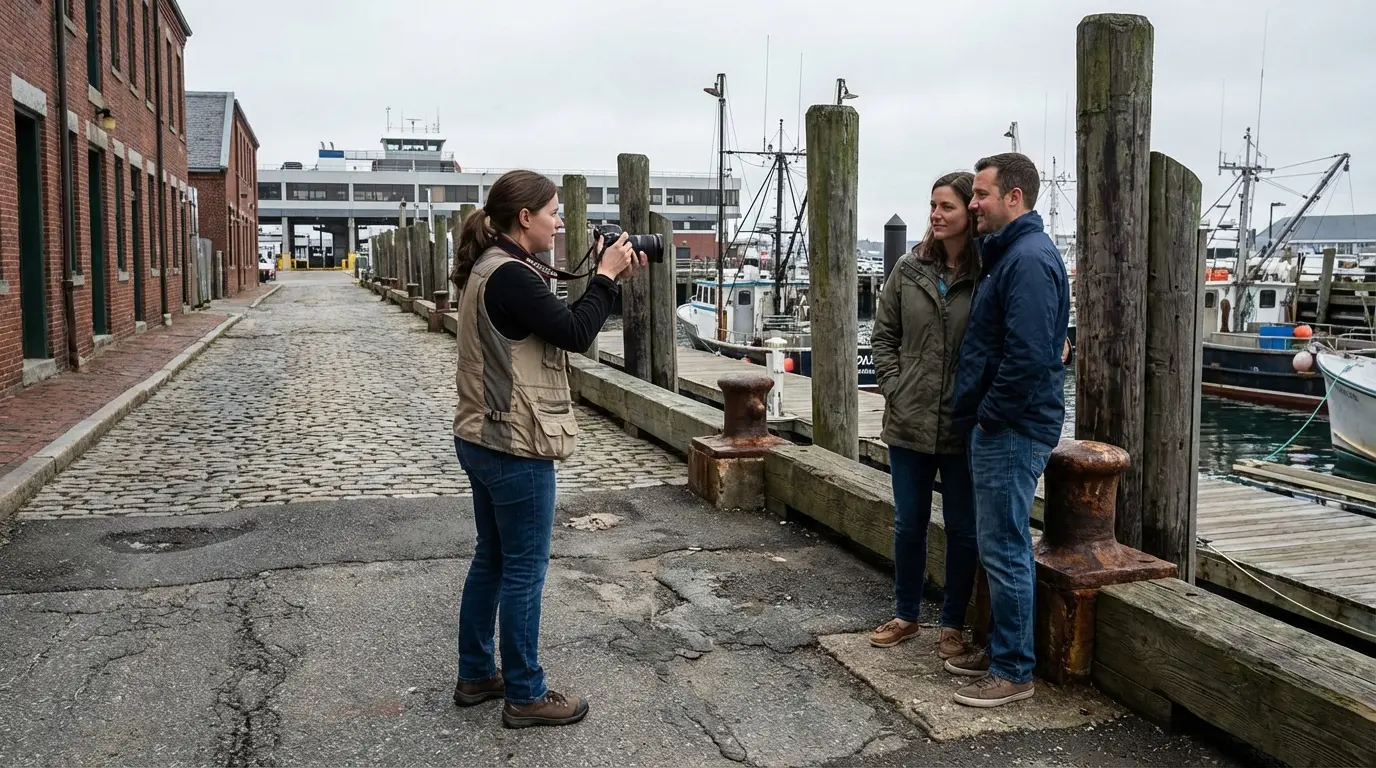
Visual evidence of a practical exterior session location: narrow street approach, waterfront backdrop and proximity to ferry access, allowing buyers to assess approach and backdrop suitability.
This image confirms how tight the India St approach feels, how close the ferry hardware sits to the frame, and the degree of exposure to wind at the open edge.
Comparing Greenpoint’s Micro-Areas When Choosing Locations
Even within a compact footprint, Greenpoint’s blocks behave differently once you’re actually staging portraits or group shots:
- Franklin St side streets (Noble, Kent, Java): Short, relatively quiet segments with parked cars, alternating brick and vinyl facades, and pockets of ivy or painted fencing. Great when couples want “real neighborhood” texture without being on a main thoroughfare.
- Manhattan Ave corners: More visual energy—signage, awnings, and frequent bakery or cafe queues. Morning shoots will have more lineups and delivery handoffs; afternoons mellow slightly but rarely feel empty. Privacy is lower, but movement in the background can make sense for documentary-style frames.
- West St and the industrial edge: Converted lofts, corrugated metal, and wide loading bays. These blocks can feel empty in off-hours but may suddenly become busy with trucks or freight activity on weekdays, so they’re better for short, targeted stops rather than extended sessions.
- Residential pockets near McGolrick and the eastern blocks: Tree-lined streets with more consistent brick rowhouses and less commercial noise. Parenting infrastructure—the playgrounds, school entrances, and stroller-heavy sidewalks—creates specific rush periods before and after school, but outside those times, these streets offer calmer backdrops.
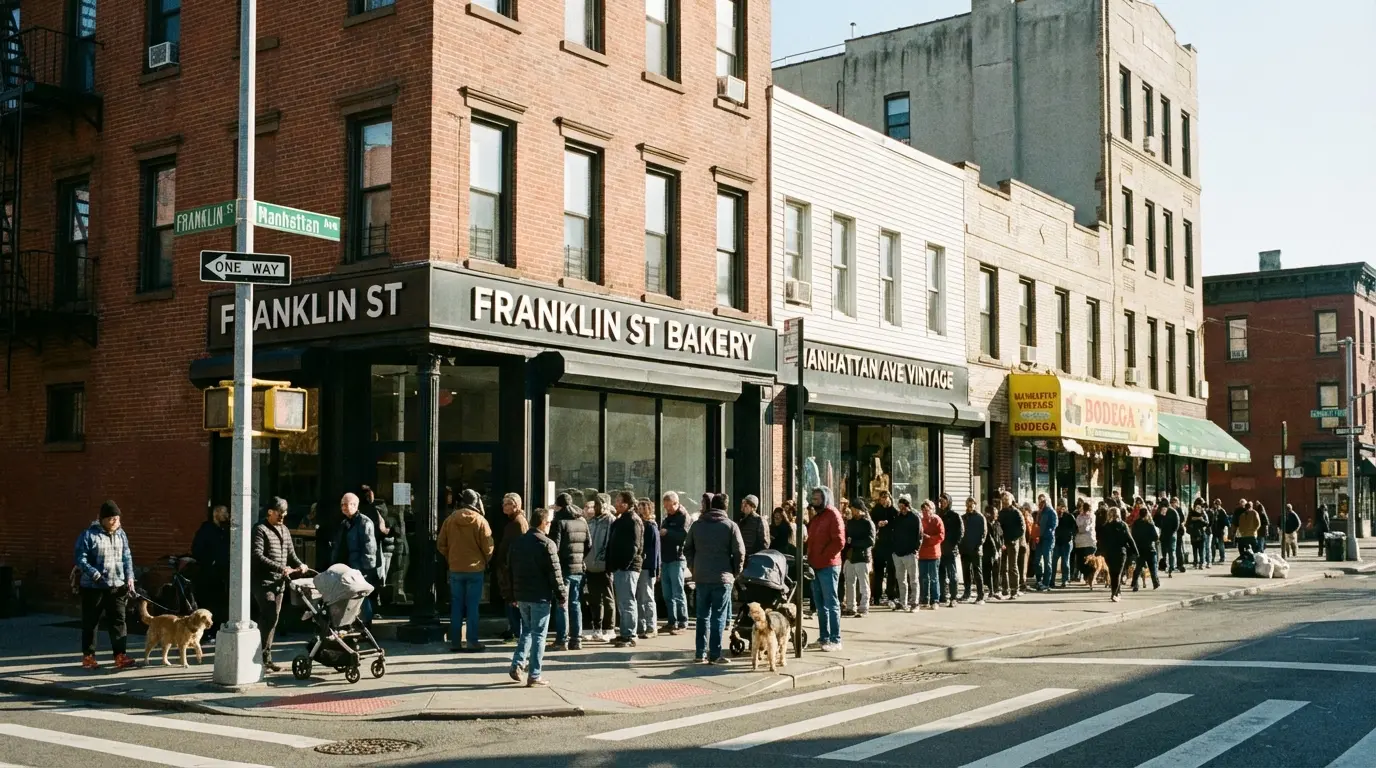
Shows sidewalk width, typical morning bakery queues and storefront scale to help evaluate privacy, crowding and easy staging spots on these micro-areas.
This corner shot makes it clear how quickly a bakery line can narrow the usable sidewalk and how storefront signage, awnings, and pedestrians would appear in the background of street-level portraits.
Building Types, Rooftops, and Loft Access Logistics
Greenpoint’s built environment matters as much as its skyline views:
- Low-rise brick and older rowhouses dominate many central and eastern blocks, offering consistent, neutral backdrops and manageable stoop heights for small group arrangements.
- Converted industrial lofts near West St bring freight elevators, loading docks, and service corridors into play. These spaces often host indoor ceremonies or receptions, with brief windows to slip out for exterior portraits between schedule beats.
- Newer glass mid-rises along the waterfront introduce reflective surfaces and tighter lobbies; access can involve doorman protocols, guest lists, or sign-in procedures.
- Roll-up metal facades and murals appear sporadically on side streets, providing bold, graphic walls when shutters are down and more conventional storefronts when they’re open.
Logistically, many loft venues use freight elevators for any significant gear or décor. That affects how long it takes to move video and photo equipment between street level and upper floors, especially if vendors share elevators with caterers or event production teams.
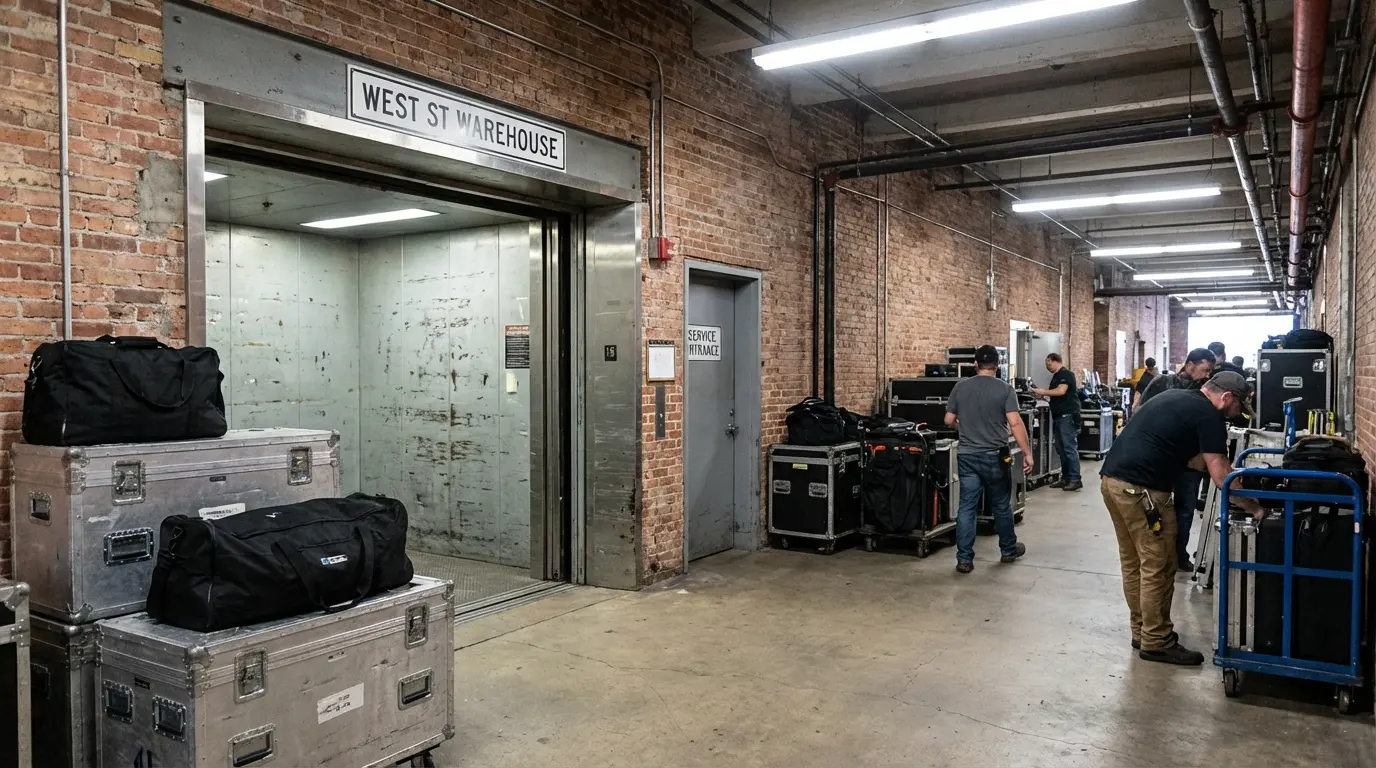
Depicts typical equipment staging and building access constraints (freight elevator size, corridor clearance, doorman/coordination points) that affect setup flow for sessions.
Seeing the elevator scale and corridor depth helps set realistic expectations about how many people and how much gear can move at once between loft interiors and the street.
Weather, Wind, and Quiet Pockets for Backup Plans
Waterfront exposure is one of Greenpoint’s assets—and one of its main variables:
- Transmitter Park piers and lookouts can be significantly windier than inland streets, especially in late afternoon when temperature differentials build over the river. Veils, loose décor, and light stands all respond quickly to gusts there.
- Open piers near the WNYC Transmitter Building have few physical wind breaks. Sandbagging equipment and avoiding loose props is standard practice.
- McCarren Park’s southern edge can feel hectic during peak sports and playground times; this can add noise and background motion that doesn’t always match a formal portrait mood.
For softer, more sheltered options, the tree canopy and interior paths of McGolrick Park often provide a quieter alternative to the river edge. The official description on McGolrick Park – NYC Parks reflects what couples notice on location: mature trees, a stronger residential context, and fewer abrupt gusts than the open water-facing sites.
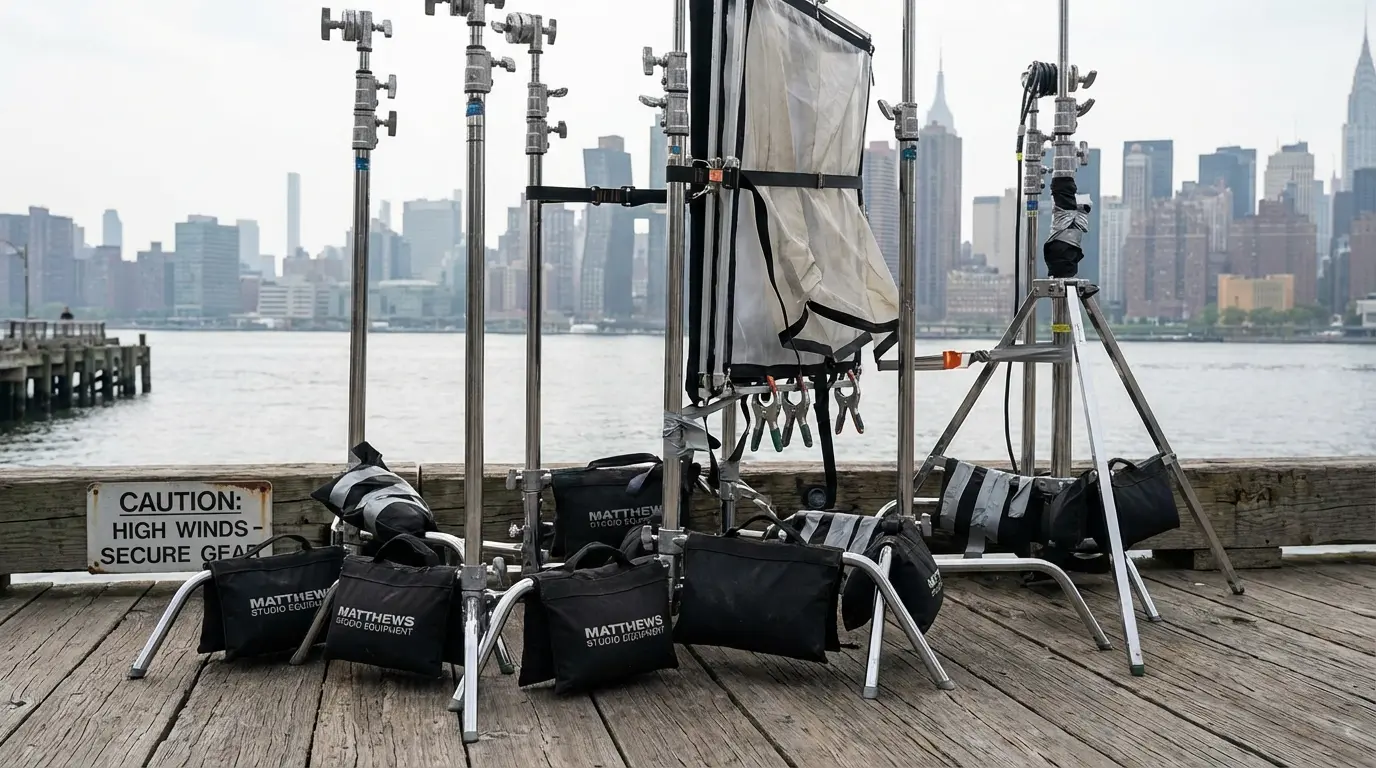
Shows how equipment is secured on exposed waterfront piers and highlights wind exposure so buyers can anticipate mitigation needs and loose-object risk.
The sandbags and clamps in this frame are typical for Greenpoint piers, where sudden gusts can shift stands or unsecured décor in a few seconds.
Wedding Photography Services in Greenpoint
Couples using Greenpoint as their wedding or engagement setting often layer different kinds of coverage together—still images along the waterfront, video during the reception, and sometimes a separate engagement session on quieter streets. The services below are commonly paired with local ceremonies, loft receptions, or neighborhood-based elopements:
Planned together with neighborhood realities—ferry timing, bakery and playground rushes, dog-walking flows—these services can be slotted into realistic movement paths between ceremony, portraits, and reception locations.
Local Landmarks That Confirm You’re in Greenpoint
Certain details leave no doubt that a set of images or a film sequence was made in Greenpoint:
- The WNYC Transmitter Building with its distinctive facade, sitting directly at the edge of Transmitter Park.
- The compact pier signage and railings that frame the river, with Manhattan and Long Island City filling the horizon.
- The mix of brick industrial shells and newer residential stacks peeking over the waterfront edge.
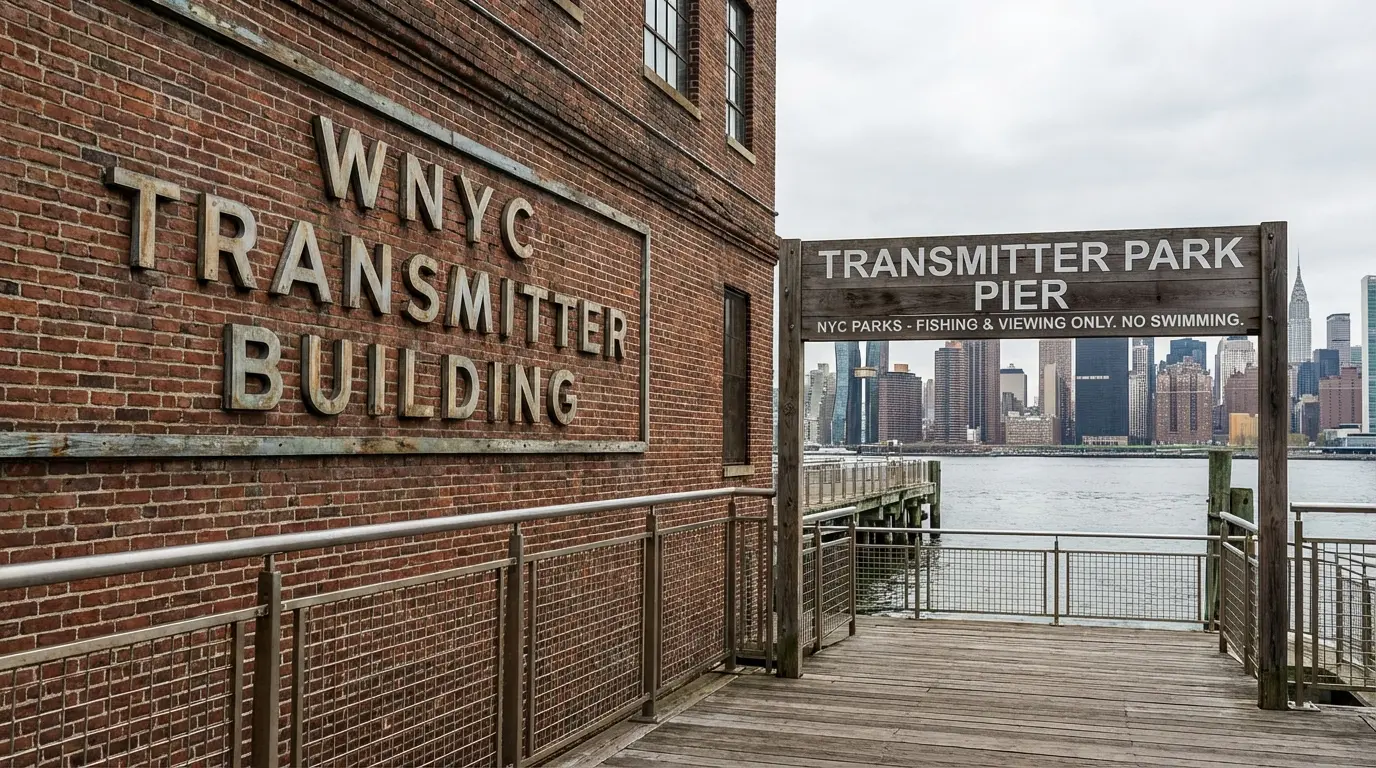
Allows buyers to verify a specific neighborhood landmark and the immediate surroundings (pier edge, signage, adjacent walkway) for local proof.
This close-up shows how little space exists between the building, the pier rail, and the walkway—a reminder that even iconic backdrops here come with real spatial limits for cameras, lighting, and groups.
How Greenpoint Connects to Nearby Neighborhoods
Greenpoint doesn’t operate in isolation on a wedding day. Many event timelines cross neighborhood lines:
- Reception venues or after-parties may sit just south in Williamsburg, while portrait sessions happen at Greenpoint’s piers.
- Industrial corridors stretch east toward the edges of East Williamsburg, so a “warehouse look” shoot can easily cross back and forth without guests noticing the boundary.
- Guests arriving from Queens often come via the Pulaski Bridge or ferry, then move on foot through Greenpoint to reach local venues.
From a planning standpoint, this means timing buffers should account for the real friction of McGuinness Blvd crossings, G train frequency, and bridge or ferry approaches—not just the straight-line distance on a map.
Neighboring Areas in Brooklyn
FAQ About Wedding Days in Greenpoint
When is the best time of day for waterfront photos in Greenpoint?
Late afternoon into sunset typically works best at Transmitter Park and the India St waterfront, because the western exposure keeps sun on the water longer. Industrial blocks along West St fall into shade earlier, so they’re better earlier in the day if you want more even light.
How crowded does Transmitter Park get around sunset?
On clear evenings, expect a mix of locals, dog walkers, and visitors concentrated near the pier and main lookout. Pathways are narrow, so you can’t count on full privacy for group shots; instead, plan for short, efficient sequences and be prepared to adjust angles around other park users.
Are there quieter streets for portraits away from the main crowds?
Yes. Short cross streets off Franklin and Manhattan, especially between Greenpoint and Nassau, often thin out quickly once you step half a block from the main avenues. Residential blocks near McGolrick and deeper east also tend to be calmer outside school start/end times.
How does weather affect sessions along the Greenpoint waterfront?
Wind and temperature shifts are the main variables. Piers and open lookouts feel colder and gustier than inland streets, even on mild days. Backup options often include tree-covered parks or stoops on more sheltered side streets, which hold heat and block wind more effectively.
Is it realistic to move a full wedding party on foot between venues and photo locations?
For small to medium parties, walking between a Greenpoint venue and nearby exteriors is common, especially if you stay west of McGuinness Blvd. Once older relatives, strollers, or larger groups are involved, crossing major arterials or covering longer distances becomes slower than maps suggest, so a car or rideshare buffer is usually built into timelines.
Does dog-walking traffic or parenting infrastructure significantly impact shoots?
It can. Along the waterfront and around playground-heavy areas, early-morning and early-evening windows see concentrated dog walkers and families, with leashes, scooters, and strollers taking up more of the sidewalk. When planning portraits near those routes, it’s worth choosing angles or time slots that reduce sudden crowding or background distractions.