
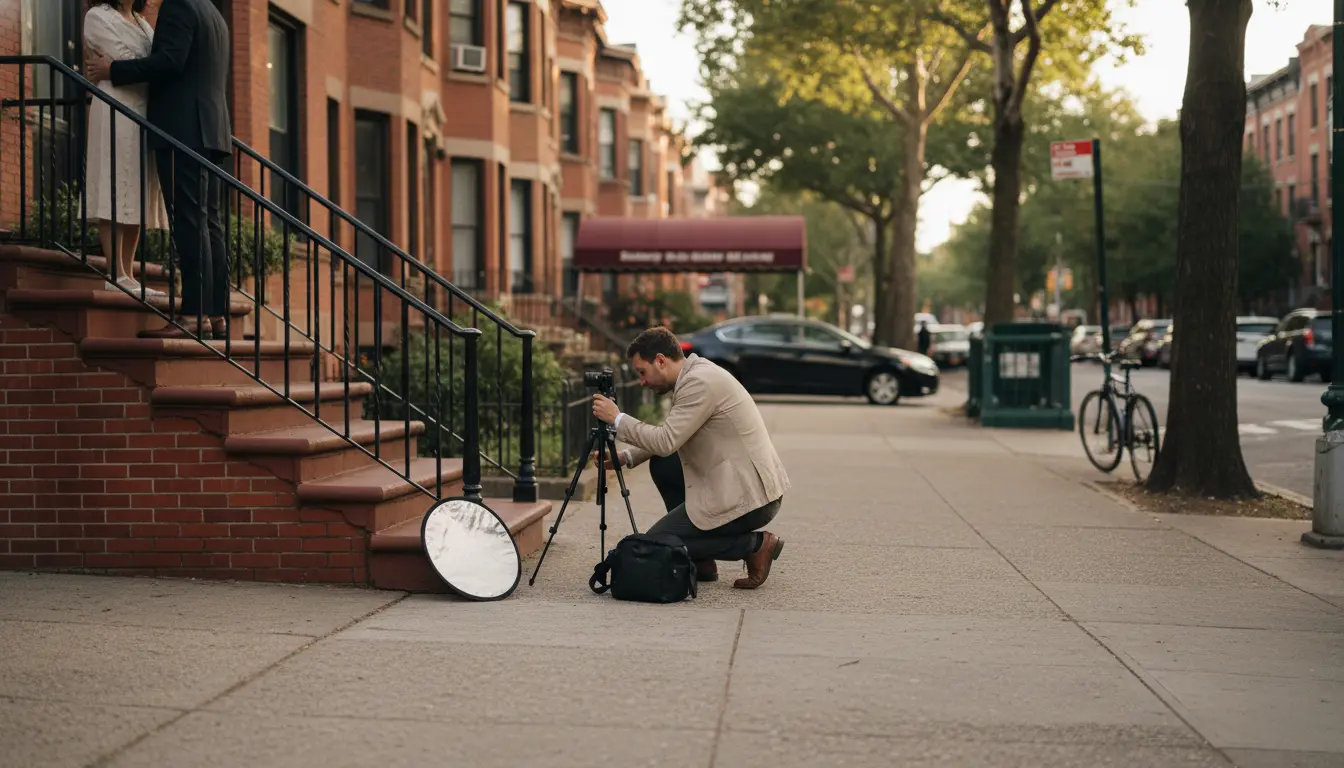
Kensington Brooklyn wedding photography environment overview
Evaluating Kensington as a setting within Brooklyn
Kensington sits in central-south Brooklyn, framed by Church Ave running east–west and Coney Island Ave running north–south, with Ocean Pkwy and McDonald Ave acting as additional reference lines. It’s predominantly residential, with strips of small businesses and schools that create predictable surges of people and traffic.
Formally, Kensington, Brooklyn is recognized as its own neighborhood, but on the ground it blurs into nearby Ditmas Park, Borough Park, and Windsor Terrace as building styles and traffic intensity shift block by block. Within Brooklyn, Kensington functions as a mid-density pocket where couples often live in walk-ups or small apartment buildings and look to use familiar streets rather than destination venues as their photographic backdrop.
Most orientation starts along Church Ave’s commercial band, where buses, grocery stores, bakeries, and delis define the street edge, and along Ocean Pkwy’s wide medians, which open up sightlines in a way that is rare for interior Brooklyn. East–west side streets step down quickly to narrower, tree-lined blocks with a mix of 3–6 story brick apartment buildings and occasional detached houses as you approach the Ditmas Park edge.
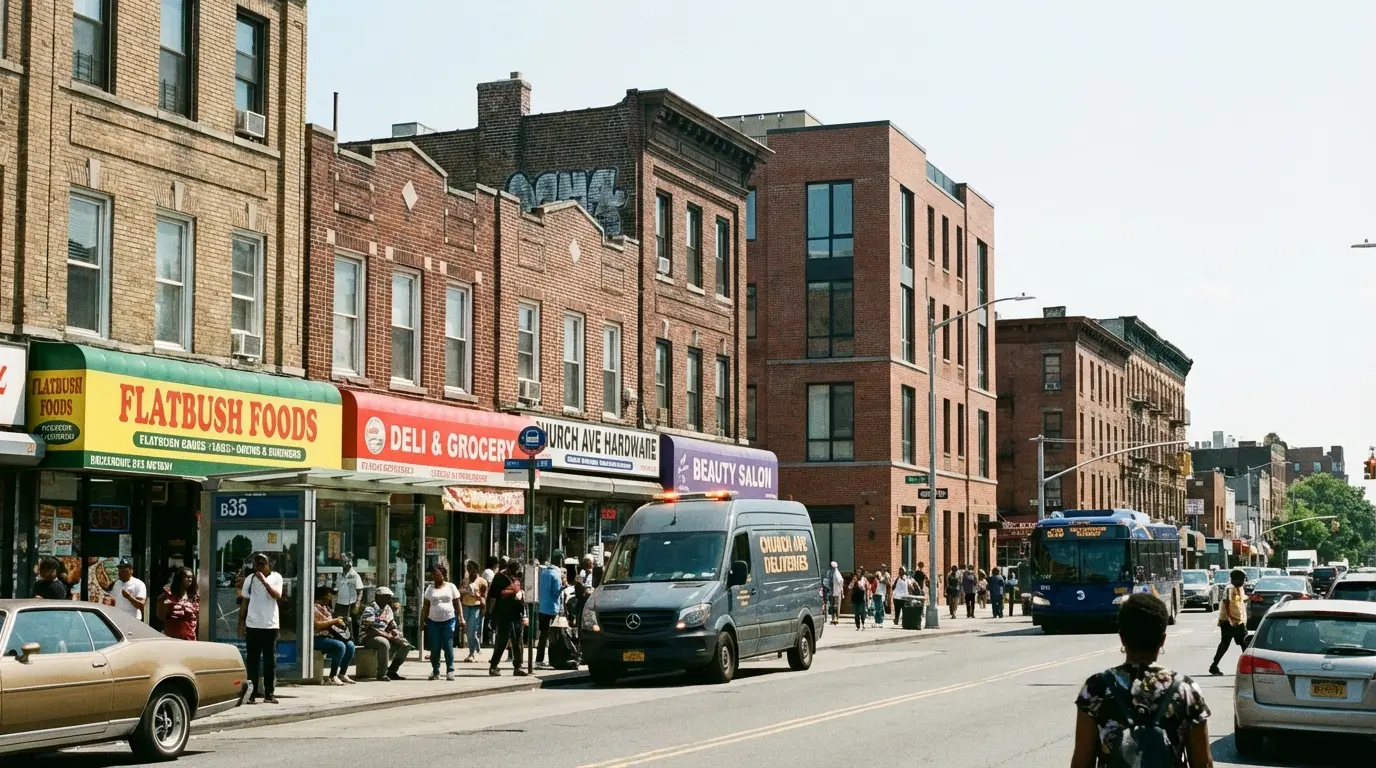
Shows typical Church Ave conditions buyers can verify: storefront density, midday shadow bands, bus activity, and parking_pressure from delivery vehicles.
This view of Church Ave captures the real working conditions for any camera work here: buses arriving, storefront awnings casting uneven shade, and delivery vans double-parked in front of grocery or bakery doors. For wedding-related sessions, that mix of density and obstruction is a central factor when deciding whether a commercial corner or a quieter side street is appropriate.
Everyday landmarks that anchor Kensington sessions
When couples say they want photos “around Kensington,” they usually mean within walking distance of a few recurring anchors: Church Ave’s F train station entries, Ocean Pkwy’s malls, the perimeters of PS 130 and PS 230, and small local parks.
The Church Ave F line stop near McDonald Ave is one of the clearest reference points. Stairs emerge directly into a cluster of corner shops and bus stops, with consistent background activity from commuters, students, and delivery workers. A few blocks east and west, PS 130 and PS 230 create predictable school-time surges—streets that are quiet mid-morning can be car-lined and noisy at drop-off and pick-up.
Kensington also has compact green spaces such as Kensington Park | NYC Parks, along with the Ocean Pkwy medians. These aren’t destination wedding locations, but they function as practical pockets of breathing room for portraits or small group shots when a fully urban background isn’t desired.
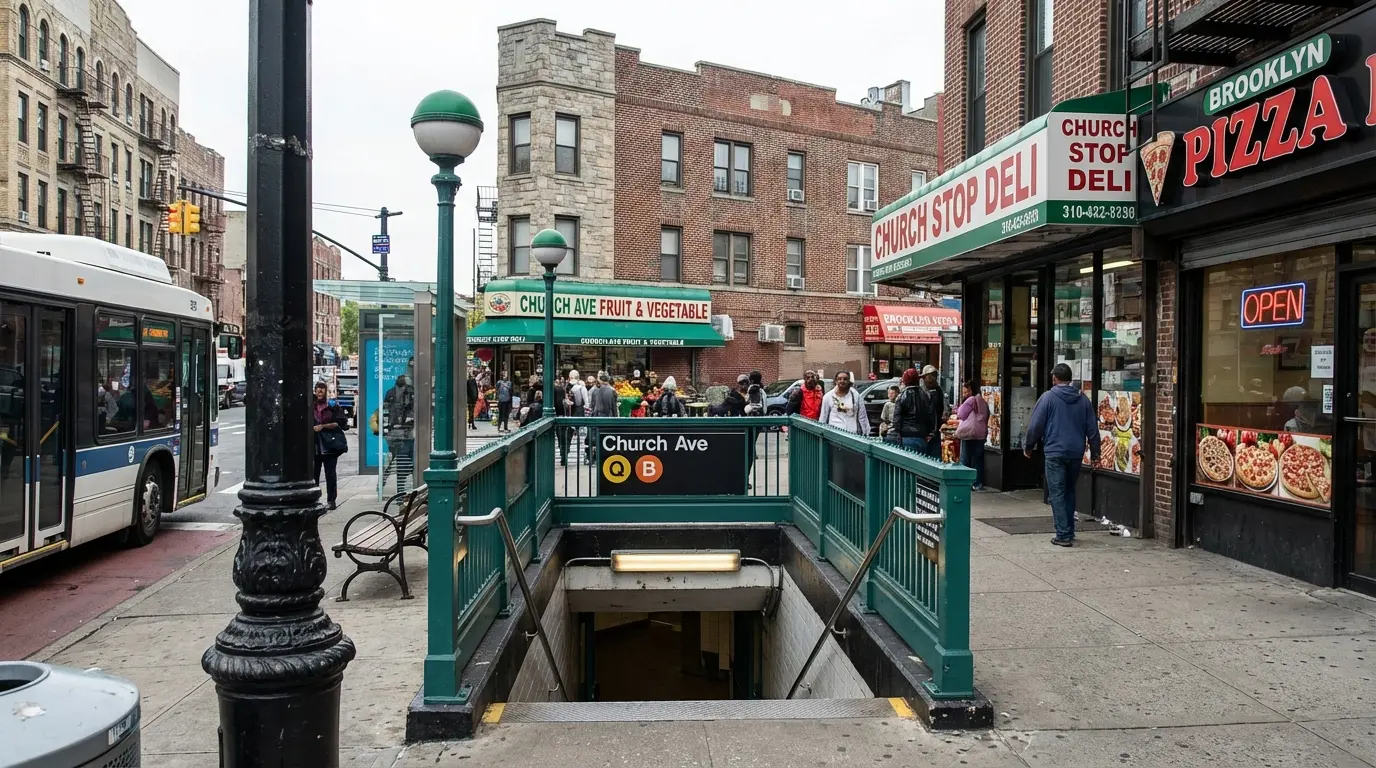
Provides an unmistakable local anchor buyers can use to confirm proximity to subway access, transit noise, and common corner activity levels.
The Church Ave station entrance image verifies how close transit, store signage, and street clutter sit together. Any wedding or engagement session planned here has to accommodate passing commuters, bus announcements, and tight sidewalk corners.
How people and traffic move through Kensington’s main corridors
Mobility in Kensington follows a few strong lines:
- Church Ave handles cross-town movement, with frequent buses and consistent daytime congestion. Double-parking near groceries and discount stores is standard, creating rolling bottlenecks and limiting curb space for car drop-offs.
- Coney Island Ave acts as a commercial and through-traffic spine. Mixed retail, frequent deliveries, and bakery queues mean sidewalks can narrow unexpectedly—especially near South Asian and Middle Eastern bakeries where morning and evening lines are common.
- Ocean Pkwy is a wide, fast-moving corridor with separated service roads and landscaped malls. It’s easier for pedestrians and bikes to move along the malls than to cross the full width, which adds time when transitioning between east and west blocks during a session.
- McDonald Ave carries the F line overhead for part of its length, adding intermittent train noise and vibration, particularly noticeable in audio-sensitive work but also relevant if couples want a calmer atmosphere.
- Subway access via the F line at Church Ave and 18th Ave shapes where people are willing to meet; many residents pick corners within 5–10 minutes of those stations for convenience.
For photography that depends on quick repositioning—like moving from a residential stoop to a corner store backdrop—knowing where traffic tends to back up, and where pedestrian crossings are slow, helps avoid losing light to street delays.
Where different wedding-related sessions actually fit
Different types of wedding-related sessions tend to settle into different Kensington micro-areas because of the built environment:
- Full wedding-day coverage often involves brief outdoor segments on the couple’s own block or a nearby intersection. Here, mid-rise brick façades, stoops, and parked cars become part of the frame.
- Bridal or couple portraits usually work better on quieter east–west residential streets between Church Ave and Avenue C, particularly closer to the Ditmas Park border where detached houses appear at block ends and traffic drops.
- Engagement-style walks can use Ocean Pkwy’s medians or long residential stretches, trading storefront texture for cleaner, open backgrounds.
- Family-heavy celebrations near schools or religious institutions may have practical constraints: heavy stroller traffic, restricted access to private courtyards, or limited staging areas on narrow sidewalks.
The housing stock—3–6 story pre-war brick apartments, interspersed with smaller homes—creates consistent visual texture. Street trees add shade and depth, but also reduce direct light during parts of the day, which matters for timing sessions using only available light.
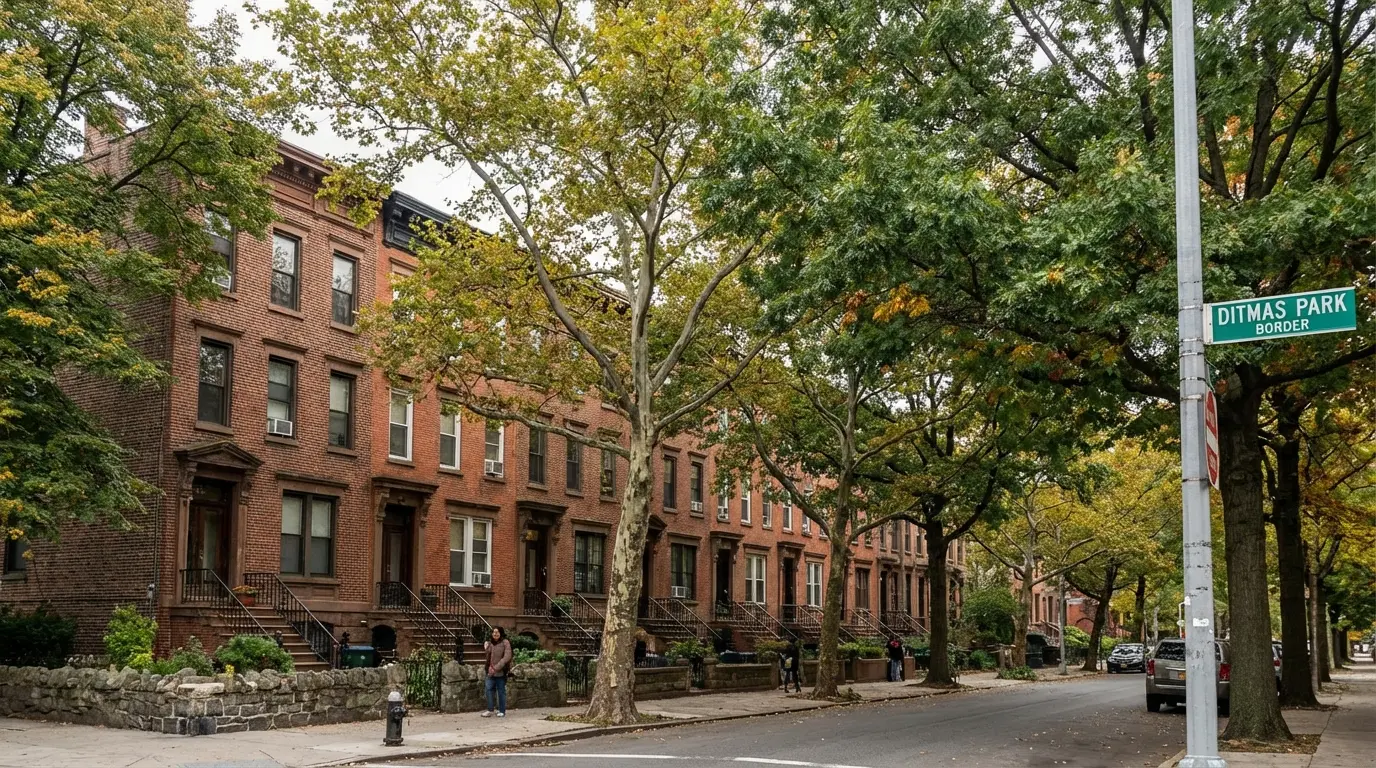
Demonstrates façade textures, street width, and likely privacy/foot-traffic levels buyers can verify for portrait-style sessions.
This residential side street shows a typical setup for focused bridal or engagement portraits: moderate street width, stoops that allow layering in the frame, dense tree canopy, and relatively low through-traffic—even while parked cars remain part of the environment.
Choosing between commercial corners and quieter side streets
Couples deciding where in Kensington to schedule photos often weigh the character of commercial corridors against the calm of residential blocks:
-
Commercial corners (Church Ave, Coney Island Ave)
-
Pros: Recognizable neighborhood context, visible bilingual signage, bakeries and shops that place the couple clearly “at home” in Kensington.
-
Constraints: Parkingpressure from double-parked vans, narrow remaining travel lanes, and bakerypatterns where lines extend across sidewalks, especially mornings and early evenings.
-
Residential side streets (east of McDonald, near Ditmas border)
-
Pros: More predictable pedestrian flow, consistent brick backgrounds, easier to hold a pose without constant interruptions.
-
Constraints: Limited curb spaces, one-way traffic that can suddenly stack with school pickups, and tree canopy that flips light quality within a few meters.
-
Ocean Pkwy corridor
-
Pros: Longer sightlines, wider separation from buildings, more control over background clutter.
-
Constraints: Wind exposure, noise from fast-moving traffic, and medians that can be busy with joggers and families.
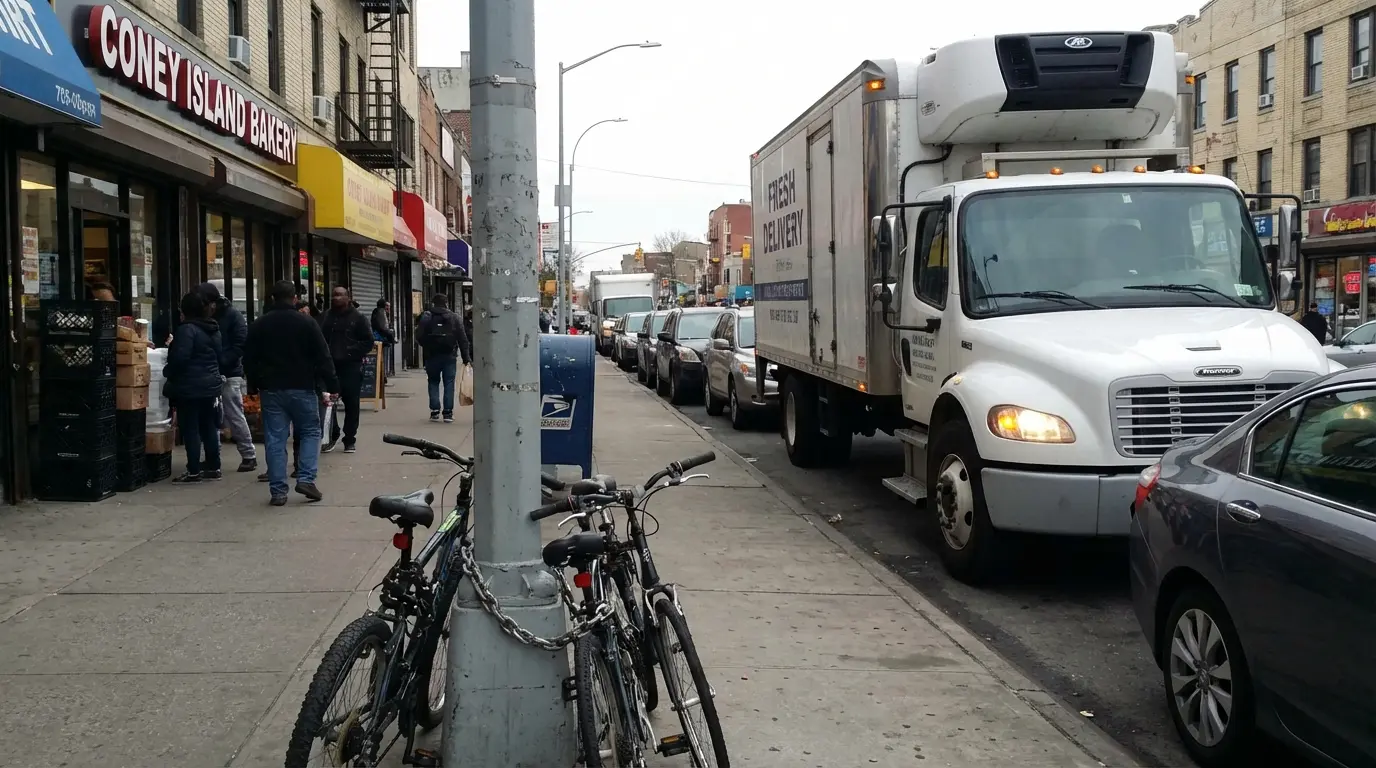
Shows practical constraints buyers and vendors can verify: sidewalk clearance for gear, common double-parking, and bike_parking locations that affect load-in choices.
This Coney Island Ave scene highlights real-world obstructions: a delivery truck occupying a lane, bakery lines pushing pedestrians into the street, and bikes locked to poles where you might otherwise place light stands. These patterns are routine, not exceptions, and they shape how a Wedding photographer can position couples and equipment.
On-the-day setup and movement on Kensington blocks
For most wedding-related work in Kensington, equipment footprints stay small to match the neighborhood’s physical constraints:
- Streets are narrow, especially on one-way residential blocks. There is rarely room for full-size stands, large modifiers, or rolling cases without obstructing pedestrians or parked-car doors.
- Tree canopy and cars limit where a tripod can stand; even a compact setup must consider roots lifting sidewalk slabs and tight gaps between bumpers.
- Bike_parking is ad hoc on some corridors. Official racks on Ocean Pkwy and Church Ave are often full, with additional bikes locked to scaffolding or fences, removing potential staging spots.
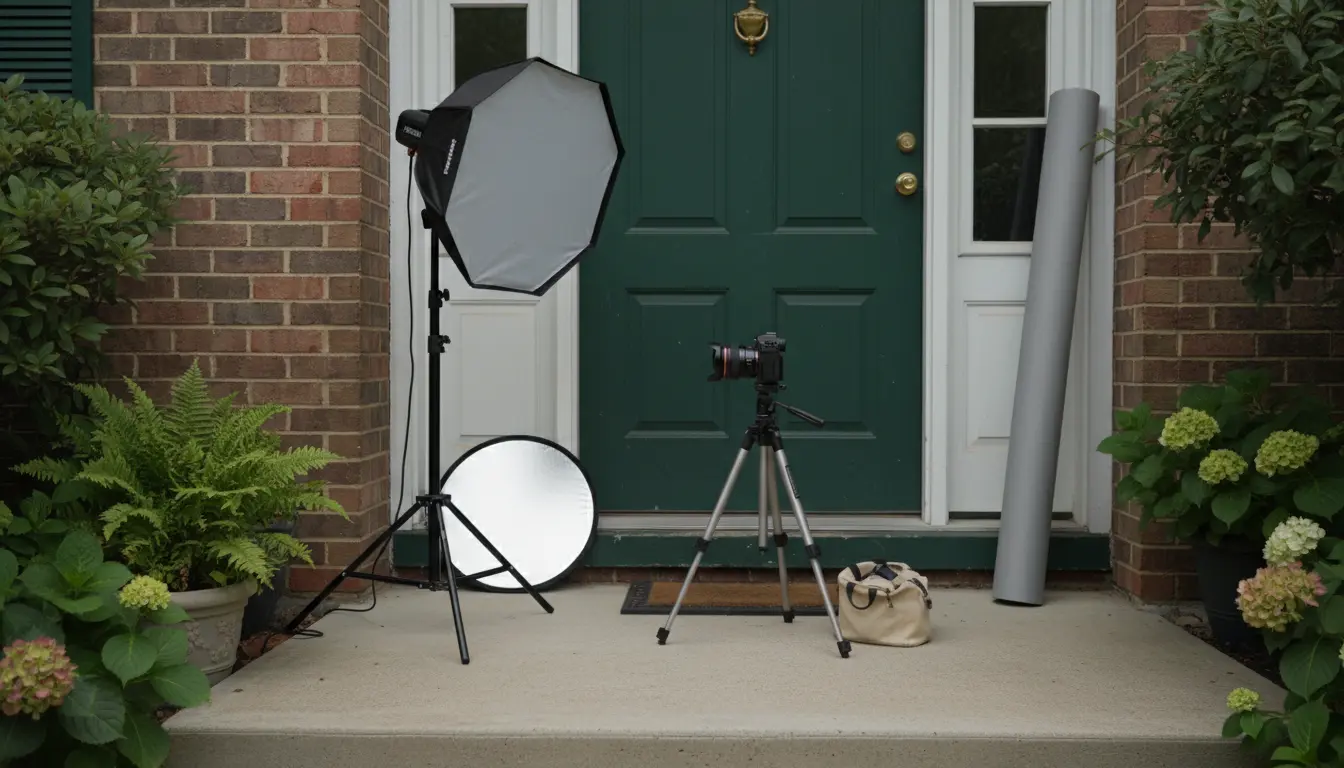
Illustrates the modest equipment footprint buyers can expect for low-disruption sessions and how narrow streets and tree shade affect setup.
This image verifies what “minimal impact” actually looks like here: a single tripod, a small case, and a reflector bag tucked against a stoop edge. On many Kensington blocks, this is the scale that fits without blocking pedestrian movement or drawing complaints from neighbors.
Professional Photography Options in Kensington
Alongside full wedding-day coverage, couples based in Kensington often pair neighborhood sessions with related services when the environment calls for it. Adjusting for mixed storefront and tree shade leads some to add Color Correction, while quiet stoop or side-street portraits may focus on dedicated Bridal Portraits. Relaxed walks through nearby blocks can support informal Engagement Sessions, and couples planning travel events sometimes document their home neighborhood before leaving for Destination Weddings.
Managing constraints, noise, and permit considerations
Kensington doesn’t have many formal “event venues,” so most photography uses public streets, sidewalks, medians, and small parks. Each comes with specific constraints:
-
Crowd windows
-
Church Ave is busiest during school start/end and early-evening errands.
-
Side streets near PS 130 and PS 230 can shift from quiet to fully parked, with double-parking during pickup times.
-
Ocean Pkwy medians see steady jogger, stroller, and dog-walker traffic rather than large crowds, but crossings take time.
-
Noisefrominfrastructure
-
The Prospect Expressway edge creates a constant low-frequency hum, noticeable even a block or two away.
-
McDonald Ave’s elevated F line adds periodic train noise and vibration. For still photography this is manageable, but it does influence couples who want a calmer ambiance.
-
Permissions and gray areas
-
Small parks and playground-adjacent spaces are generally accessible for low-footprint photography, but proximity to schools can invite questions from staff or parents.
-
Ocean Pkwy medians are public, but if equipment narrows walking paths, NYPD or Parks staff may check that tripods or stands aren’t creating hazards.
-
Rooftops are almost always locked and privately managed; access depends entirely on building management or owners.
-
Synagogues, mosques, and churches in the area often have clearly defined property lines; front steps or courtyards are rarely public space, so assuming access can lead to conflicts.
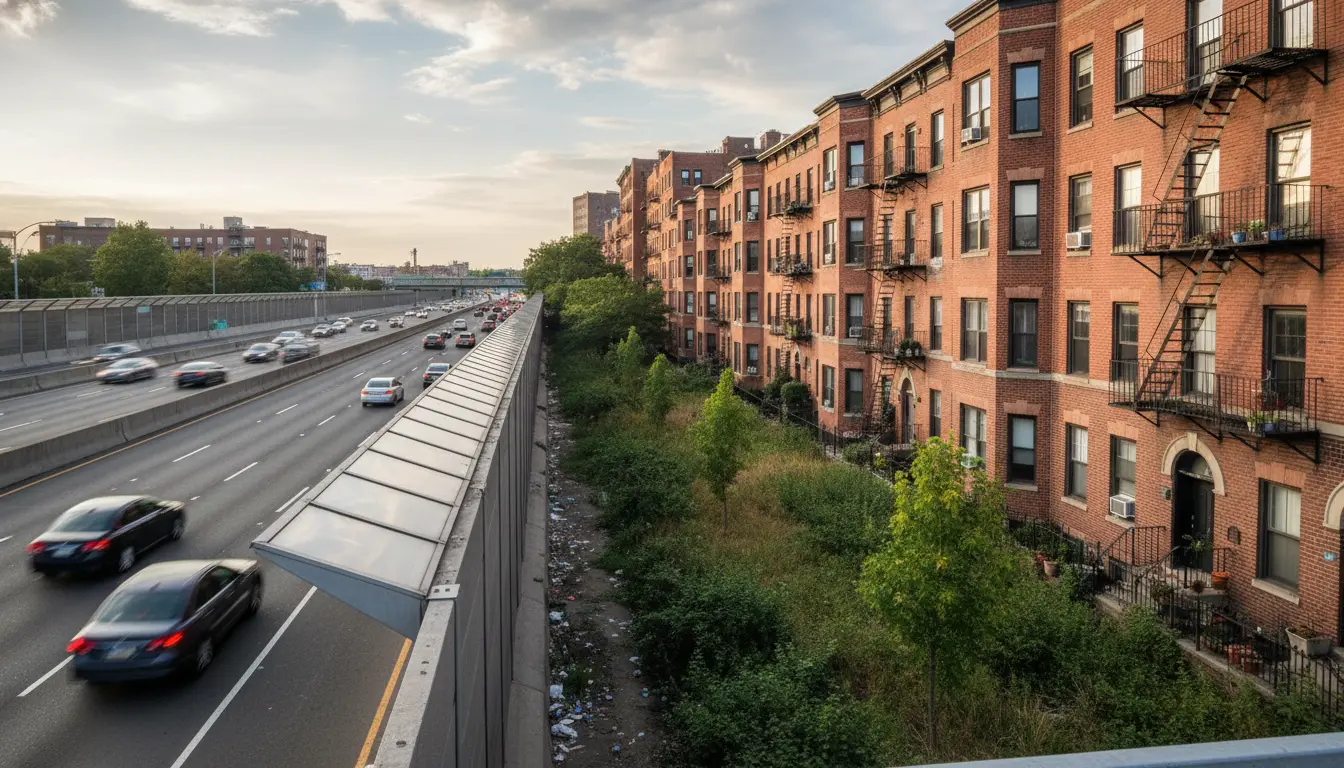
Documents the expressway noisefrominfrastructure and limited buffer between the highway and nearby residences that buyers can verify for session planning.
The Prospect Expressway photo shows how close residential buildings sit to the highway. Wind-blown debris, higher wind speeds in the open corridor, and the continuous noise floor all factor into whether this edge is suitable for any outdoor segment of wedding-day coverage.
Light patterns specific to Kensington streets
Light in Kensington changes quickly across short distances because of the interaction between low–mid-rise buildings, street trees, and open corridors:
-
Ocean Pkwy corridor
-
With few tall buildings directly on the edge, it receives usable light earlier in the morning and later into the evening.
-
Shadows are long but predictable, and there’s limited reflection from glass, making it relatively straightforward for natural-light work.
-
Church Ave and Coney Island Ave
-
Mixed-height buildings, signs, and awnings create patchy midday light.
-
The sun can be blocked on one side of the street while the opposite sidewalk remains bright, so walking just half a block can shift conditions from harsh sun to deep awning shadow.
-
Reflective shopfront glass adds secondary highlights, which can affect how white fabrics and metallic details render.
-
Residential side streets
-
Mature tree canopy reduces direct light, especially mid- to late afternoon.
-
Even on clear days, leaves filter light into softer, green-tinted shade that works well for faces but can introduce color shifts in dresses and suits.
-
During golden hour, these streets may feel darker earlier than open avenues, which means using them slightly earlier in the day than an open location like Ocean Pkwy.
For wedding-day and portrait sessions, this means planning not just by time of day but by the specific block, especially when moving between commercial and residential backdrops in a single outing.
What finished Kensington wedding images typically include
Because Kensington is a lived-in residential neighborhood, final images from sessions here rarely present isolated, empty streets. Instead, they show a realistic blend of brick façades, parked cars, trees, signage, and small-business fronts.
Couples can expect:
- Brick stoops and entryways as common framing elements.
- Bakery awnings, deli signs, or grocery displays appearing at the edge of the frame.
- Bicycles, stroller traffic, and occasionally bus shelters or newsstands in the background.
- Mixed light—shadow bands across sidewalks, brighter patches near intersections, and occasional reflections from glass.
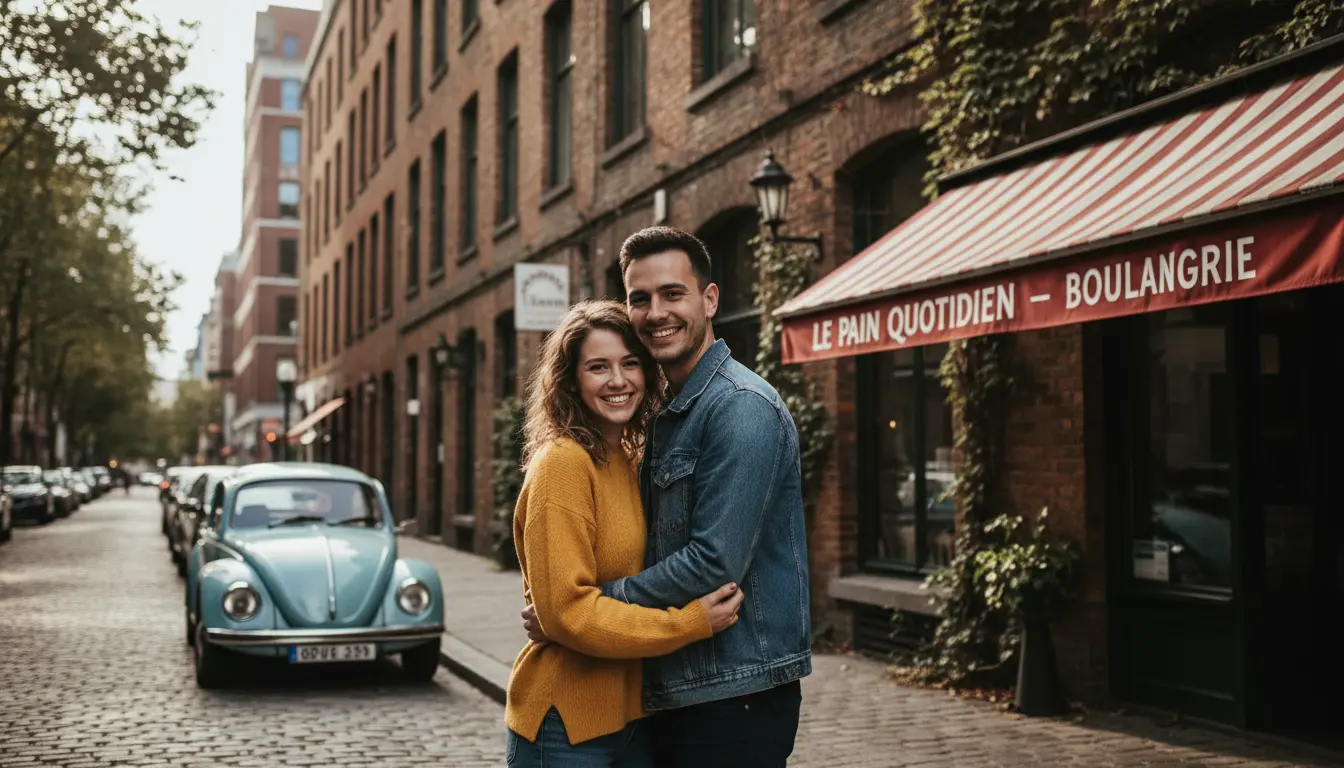
Demonstrates a realistic delivered image buyers can verify: urban background elements, mixed light conditions, and context-appropriate framing rather than isolated studio backgrounds.
The bridal portrait shown here matches what is typical for Kensington: a couple framed against a brick façade, with a parked car and bakery signage still visible. Light is not perfectly even, but it reflects the actual conditions of a neighborhood street rather than a controlled studio.
Everyday frictions: parking, bakeries, bikes, and background noise
A significant part of planning wedding-related photography in Kensington is accounting for everyday frictions that aren’t obvious from a map:
-
Parking_pressure
-
Church Ave and Coney Island Ave regularly have double-parked cars and trucks in front of groceries, discount stores, and bakeries.
-
Around PS 130 and PS 230, curb space fills quickly at school times; visiting cars may circle several blocks before finding a temporary spot.
-
On narrow one-way residential streets, a single moving truck or rideshare can bring traffic to a stop, which matters when coordinating arrival times.
-
Bakery_patterns
-
Popular bakeries on Coney Island Ave and Church Ave create tight clusters of people on the sidewalk during mornings and just before dinner.
-
Lines sometime extend directly across storefronts that might otherwise be used as backdrops, reducing flexibility for storefront-based couple shots.
-
Bike_parking
-
Official racks on Ocean Pkwy and Church Ave draw consistent use; overspill bikes are commonly locked to fences, poles, and scaffolding.
-
These bikes can block optimal shooting angles at corners or in front of visually clean façades, requiring small position adjustments.
-
Noisefrominfrastructure
-
Closer to the Prospect Expressway, traffic hum is continuous, with occasional sirens using the corridor.
-
Along McDonald Ave, train passages layer over car traffic and bus routes.
-
While still photography can work through this, couples sensitive to noise may prefer interior blocks east of McDonald or nearer the Ditmas Park transition.
These frictions don’t prevent effective sessions, but they shape realistic expectations around timing, location choices, and how much control is possible over the background.
How Kensington connects with nearby Brooklyn neighborhoods
Kensington doesn’t exist in isolation; couples often live, work, or worship across neighborhood lines and move between them on a typical day.
To the west, Ditmas Park’s detached Victorian homes become visible as you approach the end of some residential blocks, even when the shoot itself stays within Kensington’s apartment-lined streets. North and northwest, Borough Park’s denser commercial stretches introduce heavier traffic volumes that can affect travel time to and from events. Northeast, Windsor Terrace provides a transition toward Prospect Park’s edge, which some couples use for additional green-space portraits even if their home base is Kensington.
Further southeast, Flatbush and Midwood connect via Coney Island Ave, with many residents commuting through Kensington’s corridors. For photography, this means that couples whose events span multiple neighborhoods may still choose Kensington side streets or Ocean Pkwy medians as a practical, familiar midpoint for portraits or engagement images.
Neighboring Areas in Brooklyn
Kensington wedding photography FAQ
When is the best time of day for outdoor wedding or engagement photos in Kensington?
Morning works well on east–west residential streets, which get cleaner, softer light before commercial corridors fully activate. Late afternoon and early evening are better along Ocean Pkwy, where open sky extends golden-hour conditions. Midday on Church Ave or Coney Island Ave is workable but tends to produce strong shadows and requires careful positioning.
How difficult is street parking around Church Ave for wedding-day logistics?
Parking_pressure is significant. Expect double-parking in front of groceries and bakeries, especially around midday and early evening. For time-sensitive arrivals, it’s safer to plan for drop-off on side streets just off Church Ave, where a short walk may be more reliable than searching for a legal curb space directly on the avenue.
Does Ocean Pkwy’s wind really matter for portraits?
Yes. Ocean Pkwy acts as a wind corridor, particularly in colder months. Even on mild days, gusts can be strong enough to disturb veils, loose hair, or lightweight fabrics. Medians still work for portraits, but planning for brief shooting windows and simple setups is more realistic than lengthy, staged sequences.
What should couples expect in terms of foot traffic near Coney Island Ave?
Sidewalks near bakeries, grocery stores, and bus stops can feel crowded, especially mornings and early evenings. Lines may temporarily block certain storefronts, and pedestrians may regularly pass between the couple and the camera. Residential blocks just off Coney Island Ave generally offer calmer conditions while remaining close enough to include recognizable signage in a few frames if desired.
Are permits required for small shoots in Kensington’s parks or on Ocean Pkwy medians?
For low-footprint photography with minimal equipment, small parks and medians usually don’t require formal permits, but policies can vary, especially near school-adjacent play areas. Ocean Pkwy medians are public, yet if setups block walking paths, city staff or police may ask for adjustments. For larger crews or complex setups, checking NYC Parks and city film/photography guidelines in advance is prudent.
Is rooftop access a realistic option for local couples?
Generally no, unless a couple already has permission through their own building. Most rooftops in Kensington are locked and managed by building owners or boards. Access without clear permission is not typical, so planning sessions around streets, stoops, medians, and small parks is more realistic than relying on skyline rooftop views.
How much of the neighborhood’s everyday clutter shows up in finished images?
Elements like parked cars, bike racks, bakery awnings, and street signage almost always appear somewhere in the frame. While careful framing can reduce visual noise, Kensington is not a blank, open plaza environment. Final images reflect the neighborhood’s active residential character rather than a fully controlled, empty-street look.