
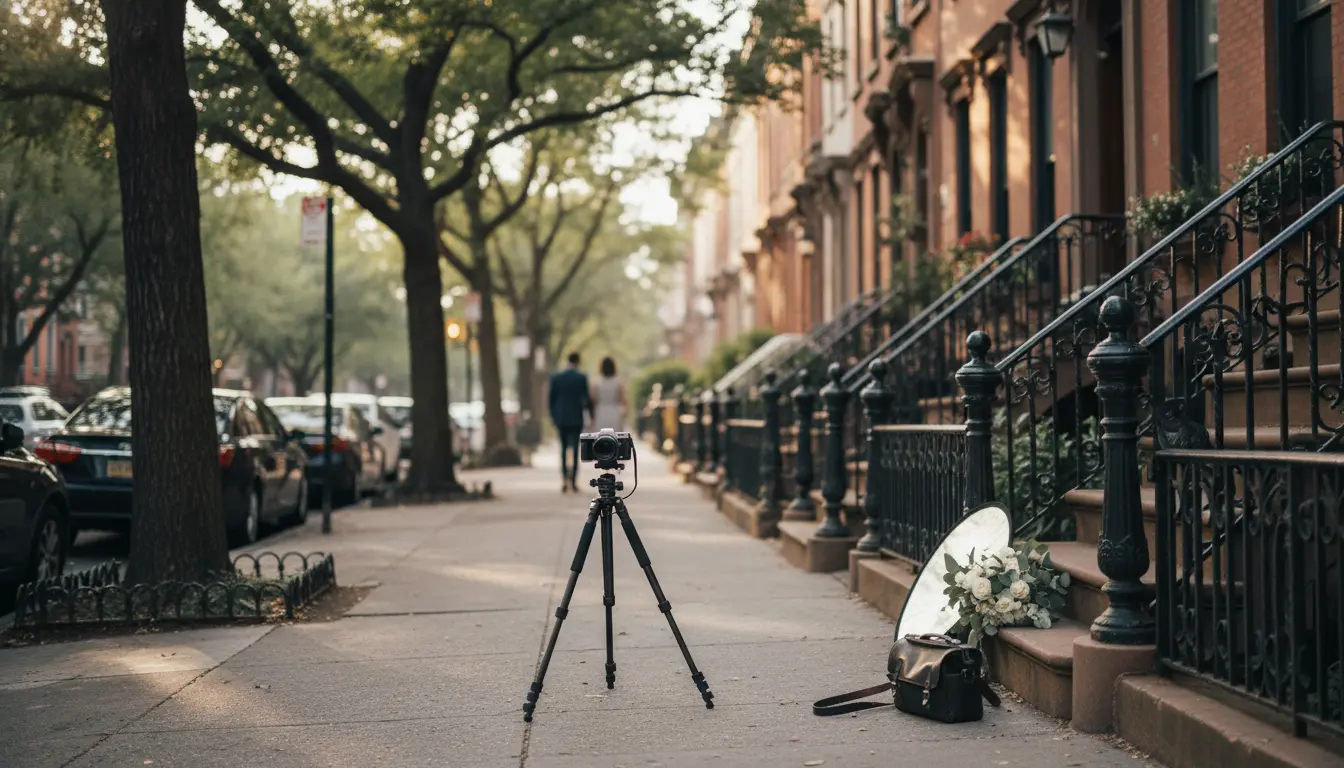
Park Slope Brooklyn as a practical setting for wedding photography
Understanding Where Park Slope Begins and Ends
Park Slope sits along the western edge of Prospect Park, with its tree-lined brownstone blocks stepping down toward Gowanus and northward into Prospect Heights. For photography planning, it’s helpful to treat the park itself as the firm eastern boundary and the gradual change to lower, industrial buildings west of 4th Avenue as the practical edge of the neighborhood.
The commonly accepted footprint described in Park Slope – Wikipedia matches what you feel on the ground: park frontage along Prospect Park West, a dense residential core in the middle blocks, and a softer transition into Prospect Heights above Union Street. South of roughly 9th Street there’s a mood shift—fewer destination shops, more open light, and a quieter “South Slope” feel—even though addresses may still read Park Slope.
A useful way to think about micro-boundaries is by how the street changes underfoot: around Union Street and again near 9th Street, foot-traffic density, storefront frequency, and background noise all step down. Those subtle transitions matter when deciding whether you want animated street energy in the background or a more controlled residential setting.
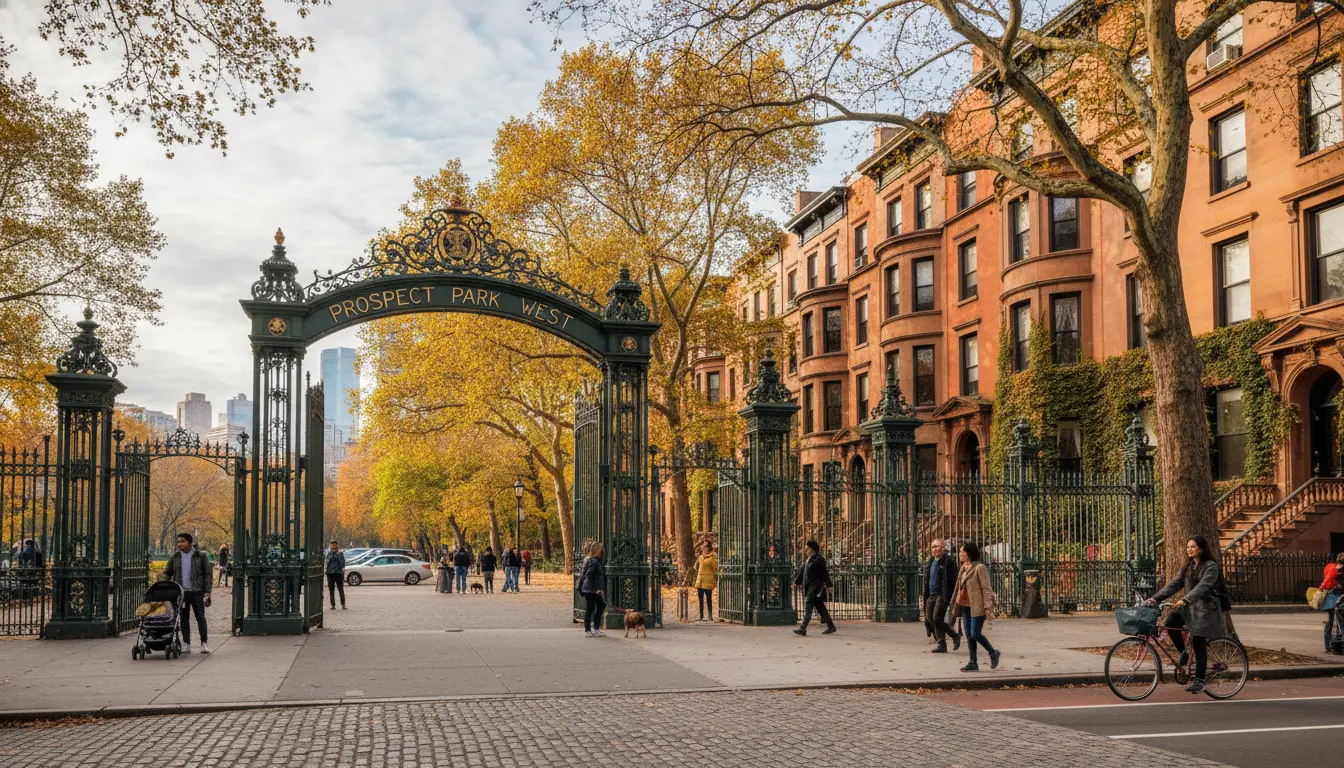
Verifies proximity to Prospect Park and the typical brownstone street scale; buyers can check park access points, sidewalk width, and tree cover affecting light.
This view of Prospect Park West shows how close the park entrances sit to the brownstone blocks and how much of the sidewalk is taken by stoops, trees, and parked cars—details that directly affect where a photographer can safely stand.
Typical Locations for Wedding Photography Sessions in Park Slope
Most wedding-oriented shoots cluster in three types of spaces: the Prospect Park edge, the interior lawns and paths, and the brownstone side streets a block or two back from the park. Many couples using Park Slope for Wedding Photography lean on this mix—green space at the park perimeter, then a short walk to stoops or quieter intersections.
Along Prospect Park West, the Long Meadow side paths, 3rd Street and 9th Street entrances are common starting points because they offer quick transitions between open grass, paved paths, and the residential grid. From there, walking just a block inland gives access to classic stoop backgrounds without losing the feeling of being next to the park.
For families and school communities, the same blocks often double as reliable spots for simple portraits: a wide-enough sidewalk in front of a brownstone, a gap between parked cars, and a patch of filtered light under the tree canopy.
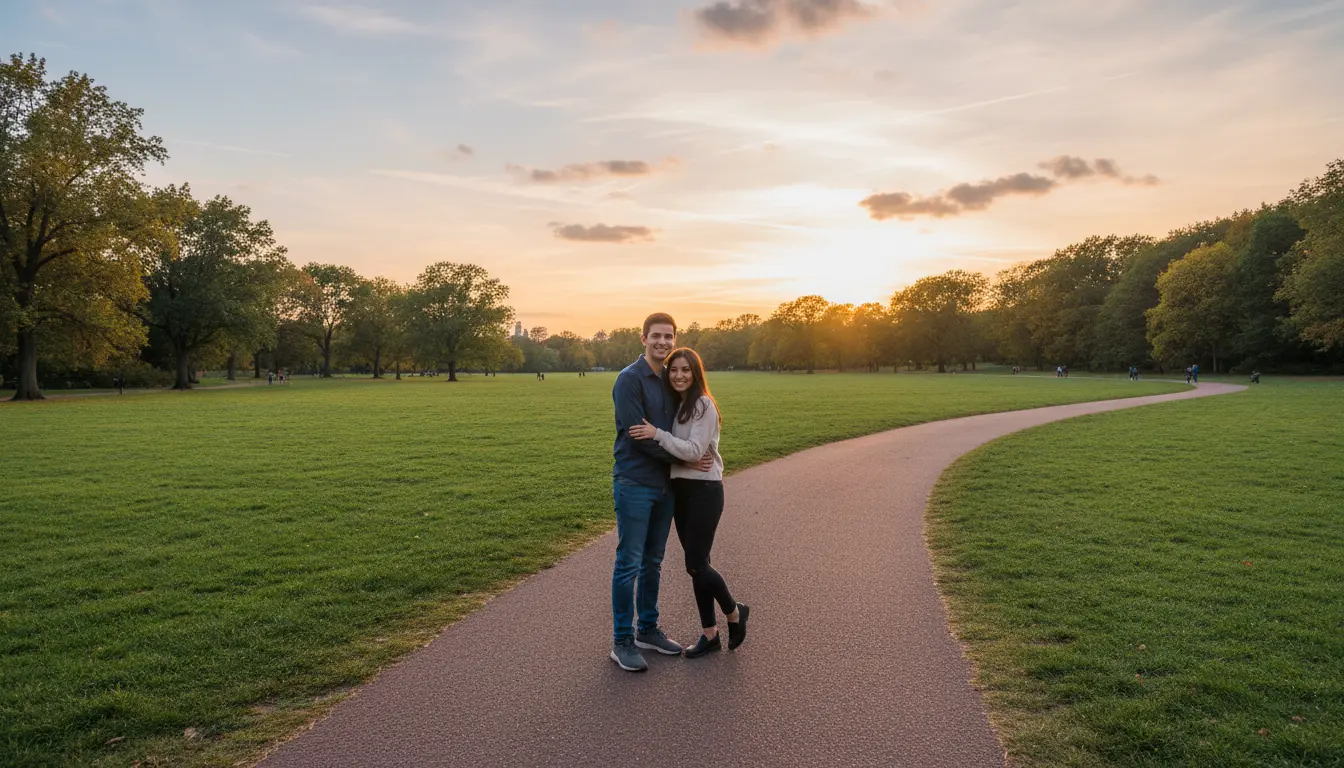
Shows a typical outdoor session location at the park edge; buyers can verify usable open light, background activity levels, and how park paths sit relative to shooting positions.
This image illustrates how couples actually occupy the space near the Long Meadow entrance: subjects stand near the grass, while the photographer usually works from the paved path, managing passersby and using the open tree line to keep backgrounds relatively clean.
Comparing Busy Avenues and Quieter Side Streets
7th Avenue functions as Park Slope’s main commercial spine: markets, cafés, awnings, and steady stroller traffic. Photographs captured directly on 7th tend to include more visual noise—storefront colors, signs, and people crossing through the background. Just around the corner, side streets immediately drop in volume, trading shopfronts for repeated stoops and parked cars.
5th Avenue is another active corridor, but it feels narrower and more mixed-use, with deliveries and double-parked vehicles a regular factor. Because Park Slope lacks real through-alleys, service trucks and vans use these main avenues and even some side streets, so a “quiet” block can temporarily become crowded with a single loading operation.
The micro-boundary at Union Street is noticeable: above it, the streets tilt more toward Prospect Heights’ activity patterns; below it, especially toward 9th Street, blocks become more residential and the light feels more open as building intensity eases. These shifts change whether you’re dodging crowds or just waiting for a single parked car to move out of the frame.
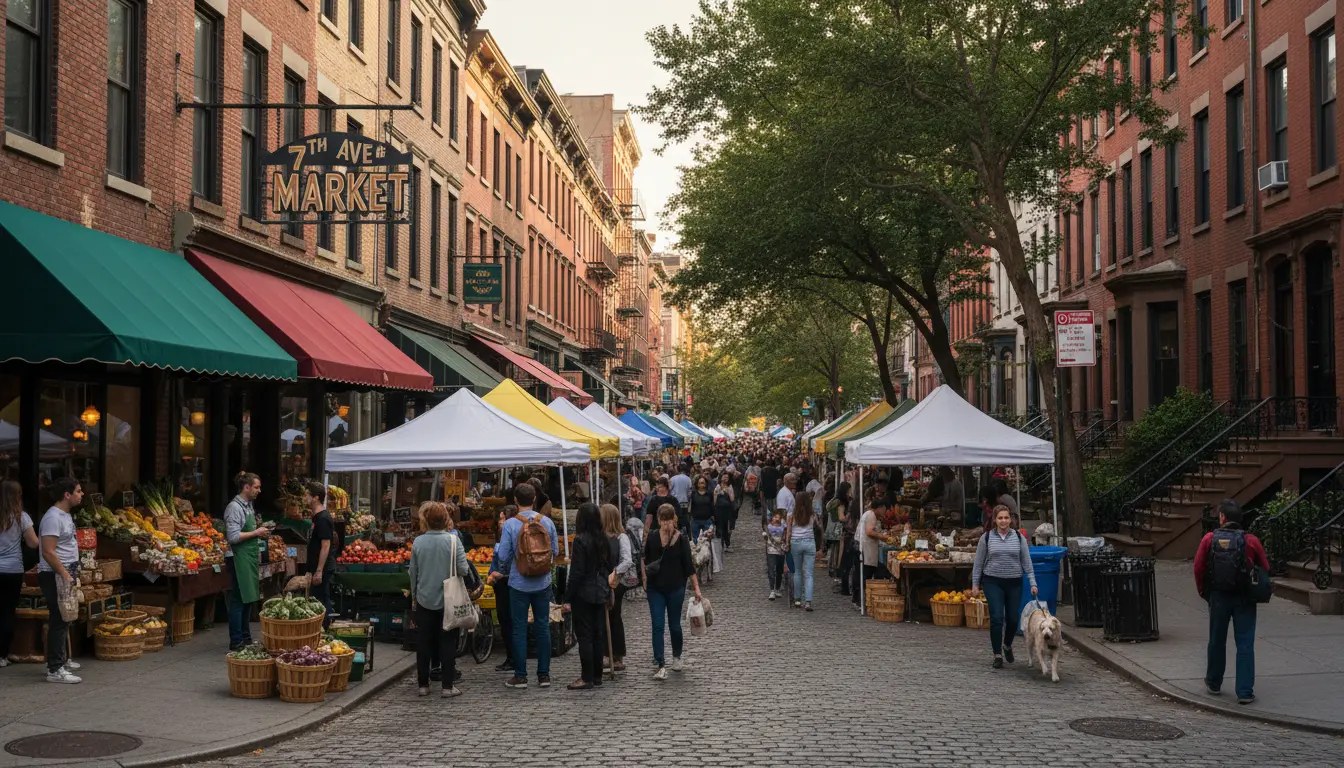
Allows buyers to compare a busy commercial spine (crowds, noise, obstructions) with nearby quieter residential blocks for privacy and access decisions.
Here you can see the contrast in a single frame: dense sidewalk activity and market clutter on 7th Avenue, with a calmer, tree-lined brownstone side street opening just steps away—useful when choosing between an urban-background look and a more controlled residential setting.
Wedding Photography Services in Park Slope
Moving Between Park Entrances, Venues, and Brownstone Blocks
Movement through Park Slope is mostly flat east–west, making it practical to walk in formal clothing between the park and nearby venues or townhouses. North–south routes tighten near 7th Avenue, where sidewalks are busy and crossing delays are common, so schedules that rely on quick moves across the avenue need a bit more buffer.
Most park-based plans use Prospect Park West with 3rd Street, 9th Street, or Grand Army Plaza as anchor entrances, then step back into the interior grid for stoops or reception spaces. Taxis and car services often drop at park gates or avenue corners, with a short walk required for more tucked-away brownstone locations. A local Wedding photographer will factor in these pinch points when estimating how long it really takes to relocate between shots.
Because Park Slope lacks functional alleys, equipment setups, tripods, and rolling cases all share space with pedestrians on standard sidewalks. Gear is usually staged against railings or near stoops, staying clear of doorways and hydrants rather than disappearing into back lanes.
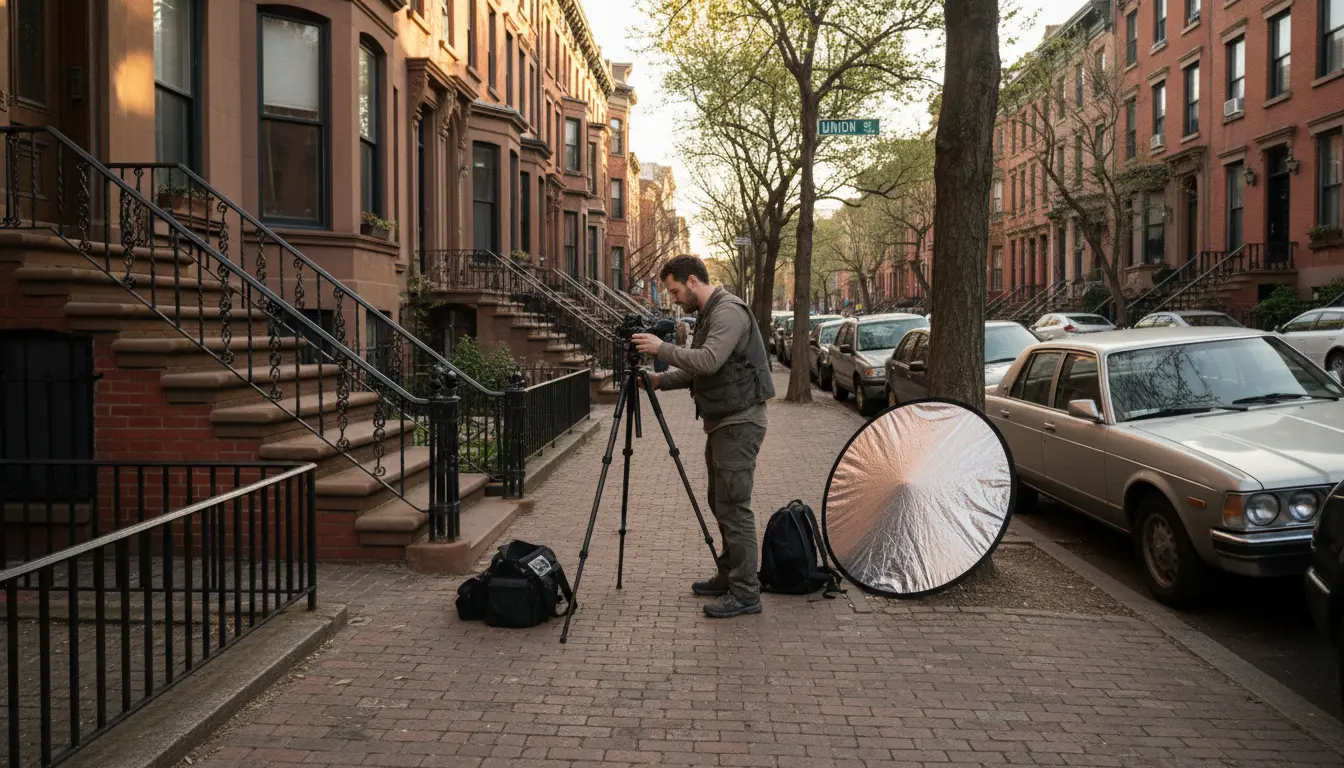
Shows how standard gear fits on typical Park Slope sidewalks and the likely obstructions (stoops, parked cars); buyers can assess how setup affects timing and positioning.
The image demonstrates the actual clearance left once a tripod, reflector, stoops, and parked vehicles are in play; it’s a good reference for how many people can comfortably stand nearby without blocking neighbors.
Permits, Crowds, and Weather Limits Around Prospect Park
Prospect Park is central to many Park Slope photo plans, but it comes with practical rules. Certain organized shoots and chosen lawn areas fall under NYC Parks regulations outlined on Prospect Park – NYC Parks, while smaller, low-impact sessions are often tolerated so long as they don’t obstruct paths or entrances. Rangers tend to focus on main gates and heavily used lawns, so compliance expectations are highest there.
Weekend midday near the 3rd Street/Long Meadow entrances is consistently busy—dogs, runners, families, and picnics all converge—which makes clean backgrounds less predictable. On Saturdays when the Grand Army Plaza Greenmarket is active, vehicle access and parking near the plaza tighten further, and crossing the rotary with formal attire or equipment simply takes more time.
Weather adds another constraint: open park edges catch more wind and carry leaf and branch debris after storms, while interior brownstone streets are more sheltered. Planning both an open-park and a side-street option allows for a quick shift if wind or sudden crowding makes one location impractical.
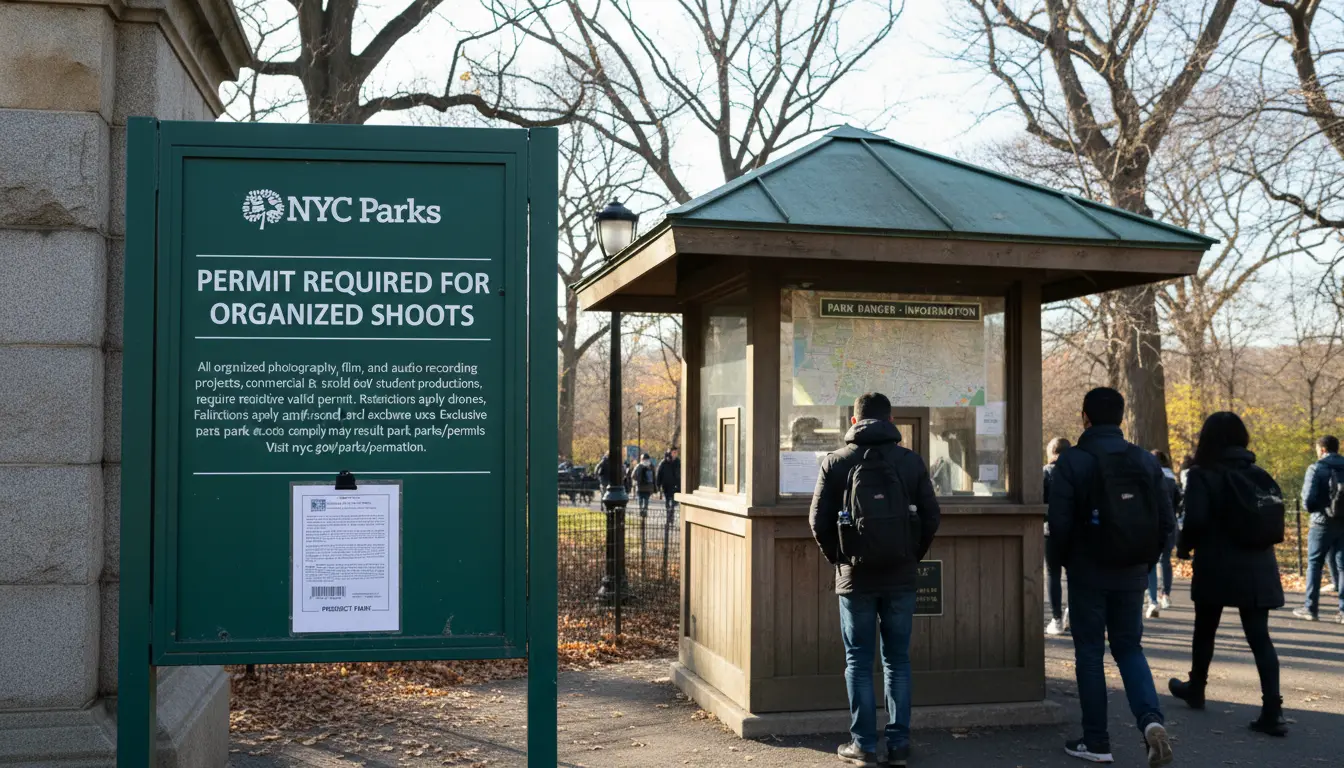
Permits and ranger presence are visible; buyers can verify where organized shoots may require authorization and where casual sessions are commonly tolerated or directed by staff.
The photo makes clear where signage is posted and where rangers typically stand at the gate—these are the points where questions about equipment, group size, or permits are most likely to be raised.
Landmarks and Micro-Areas That Confirm You’re in Park Slope
Grand Army Plaza is the northern gateway into Park Slope and the most unmistakable landmark for orienting visitors and guests. The Soldiers’ and Sailors’ Arch, traffic circle, and adjacent park entrances all compress into one visual node, which is useful for meeting points—but also a hotspot for congestion, especially on market days.
Within the neighborhood, intersections like 5th Avenue at 9th Street or 7th Avenue at Union Street work as wayfinding anchors linking commercial corridors to residential side streets. You can move from storefronts and bus stops to quiet stoops in under a minute, which is why many sessions are structured around these cross streets.
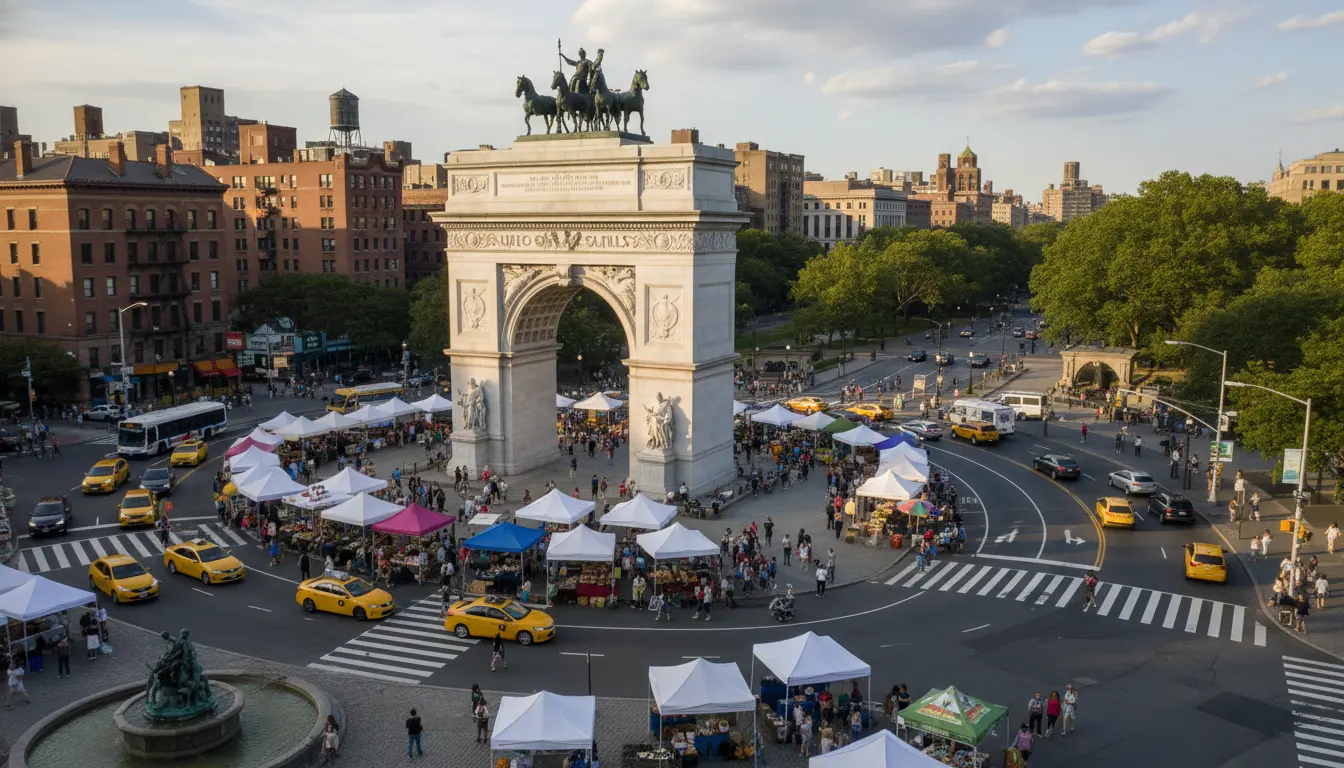
Unmistakable landmark confirms neighborhood identity; buyers can verify proximity to the plaza, market-day congestion, and likely approach routes for sessions and venues.
This image captures the blend of landmark architecture, market tents, and circulating buses and cars that defines Grand Army Plaza—helpful for visualizing how busy the area may be at various times of week and year.
How Light Behaves on Park Slope Streets and Along the Park Edge
Park Slope’s 3–4 story brownstones create a repeating vertical rhythm that shapes both light and mood. On east–west side streets, these mid-height facades cast long, early shadows, leaving one sidewalk in shade for much of the day while the opposite side holds a narrow stripe of direct sun. Tree canopies add another filter, creating patterned bands of light across stoops and pavement.
Along Prospect Park West, light opens up dramatically. With the park’s open horizon to the east, mornings near the park entrances have earlier, more even light, while evenings hold usable glow longer than the interior streets. Couples standing just inside the park edge often have sky behind them instead of building mass, which softens contrast and reduces the heavy-shadow effect you get deeper into the grid.
South Slope blocks, where building mass sometimes steps down and gaps appear between rows, can feel less enclosed. That lower building height slightly lifts the “ceiling” of shade and allows more ambient light, which can be useful for late-afternoon portraits without relying entirely on the park.
Small Frictions and Visual Quirks Specific to Park Slope
Several Park Slope traits show up in photographs whether you plan for them or not. Because there are essentially no true alleys, all building services—trash collection, deliveries, moving trucks—happen right at the curb. A single recycling pickup or a grocery truck can temporarily fill a frame with bins or pallets, even on an otherwise quiet residential block.
The neighborhood’s local visual language is also distinct. Warm brownstone and rust-red facades, black iron railings, and deep tree shadows repeat from block to block. On avenues, that palette is interrupted by bright shop awnings in blues and greens and by sandwich boards on the sidewalk. If you prefer a consistent, muted backdrop, you’ll usually work one or two blocks off the commercial corridors.
Micro-boundaries influence crowd behavior more than any map line: above Union Street and close to Grand Army Plaza, stroller and commuter traffic spikes; below 9th Street, you see more long-term residents and fewer pass-through visitors. These subtle shifts affect how often strangers appear in the background or how easy it is to briefly occupy a stoop area from the sidewalk without feeling like you’re on display.
What Finished Park Slope Wedding Images Usually Look Like
Final images from Park Slope tend to include real street elements rather than studio-clean space: railings, mailboxes, parked cars, and layered tree shadows. Brownstone stoop shots are typically framed from the opposite sidewalk or curb, respecting private property by keeping the photographer in public space, which means wider compositions that naturally pull in more of the street.
In Prospect Park, finished photos often balance open grass and trees with hints of other park users in the distance. Rather than an entirely empty lawn, you’re more likely to see carefully blurred joggers or picnickers far behind the couple, reflecting how shared the space is in actual use.
For school portraits or rehearsal coverage, these same constraints apply: slightly angled compositions to avoid door numbers, timing sets between dog walkers, and an acceptance that dappled light from trees will be part of the look.
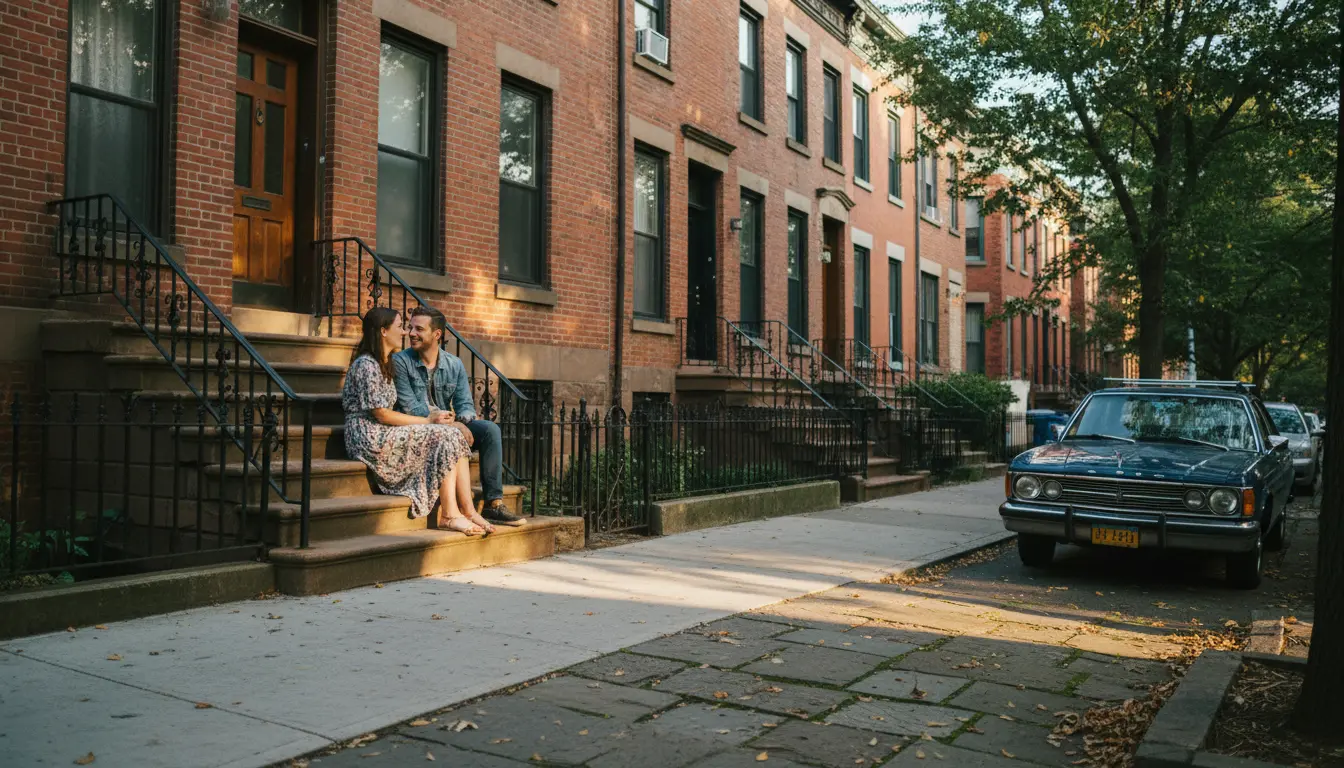
Represents a realistic final image clients can expect in Park Slope: constrained framing by stoop access, filtered light from trees, and street elements included rather than studio-clear backgrounds.
The photo shows how tree shadows stripe the pavement and how nearby cars and infrastructure naturally sit at the edge of the frame—useful for setting expectations about the balance between architecture, greenery, and everyday street life.
Related Brooklyn Neighborhoods for Split-Day Coverage
Some couples and families use Park Slope for one part of their day—getting-ready coverage, a portrait window, or school photos—and then move to other Brooklyn neighborhoods for ceremonies or receptions. It’s common to see combinations like Park Slope prep with a reception in Williamsburg, a waterfront ceremony in DUMBO, or an event in Brooklyn Heights or Carroll Gardens.
From a logistics standpoint, that usually means starting on Park Slope’s quieter brownstone blocks or near the Prospect Park edge, then building in extra travel time for cross-borough moves, especially if you’re crossing the Gowanus Expressway corridors or heading to busier waterfront zones.
Neighboring Areas in Brooklyn
Questions About Wedding Photography Logistics in Park Slope
When is light best near Prospect Park for photos?
Morning at the park edge usually offers the most even light, especially along Prospect Park West and near the Long Meadow entrances, because the open horizon lets the sun clear building shadows earlier than on interior streets.
How crowded are weekends, and does that affect backgrounds?
Weekend late mornings through mid-afternoon are busiest—particularly at 3rd Street, Long Meadow, and Grand Army Plaza—so you should expect more people in the distance and occasional pauses while joggers or families pass through.
Is it acceptable to use brownstone stoops for photos?
Stoops themselves are private property, so lingering on the steps requires explicit permission from the owner or tenant. Many photographers work from the sidewalk, using angles that feature the facade without blocking doorways or treating steps as public seating.
How does weather, especially wind, affect Park Slope sessions?
Open park edges and Grand Army Plaza catch more wind and debris, which can lift veils or move hair unpredictably. Interior side streets are more sheltered, making them a common backup when gusts on the lawn become disruptive.
Are there alleys or hidden lanes for more private photos?
Park Slope has almost no true alleys; service and deliveries take place curbside. Privacy is achieved by choosing quieter residential blocks or less-trafficked park paths, not by ducking into off-street passages.
How far is it to walk from the park to brownstone locations in formal attire?
Most popular combinations—such as Long Meadow to nearby side streets—are within a 3–7 minute flat walk. The main variable is crossing time at 7th or 5th Avenue, where lights and foot traffic can slow movement.
What should couples expect when moving through crowds in wedding attire?
On 7th Avenue and near major park gates, people will naturally react—congratulations, glances, occasional photo requests. If you prefer to minimize that, it’s better to use side streets and secondary park entrances and schedule main-avenue crossings as short, functional transitions rather than photo locations.
Can rooftop views be used for wedding photos in Park Slope?
Rooftop access is entirely controlled by building owners or boards and usually not available on short notice. Any plan involving rooftops should be coordinated well in advance, with the understanding that each building has its own rules about guests, equipment, and timing.