
Williamsburg in Brooklyn as a practical setting for wedding photography
How Williamsburg fits into the rest of Brooklyn
Williamsburg sits on the East River in northern Brooklyn, facing the Midtown and Lower Manhattan skyline. For wedding days, that means fast access from Manhattan over the Williamsburg Bridge, but most on-foot movement during photo sessions happens between the waterfront, Bedford Avenue, and a few predictable park edges.
According to Williamsburg, Brooklyn – Wikipedia, the neighborhood runs roughly from the East River eastward past the Brooklyn–Queens Expressway, with Greenpoint to the north and Bedford–Stuyvesant and East Williamsburg to the south and east. On the ground, couples rarely cover that full footprint during photos; instead, movement concentrates in three bands: the waterfront strip along Kent Avenue, the Bedford Avenue retail corridor a few blocks inland, and the Broadway/bridge area at the southern edge.
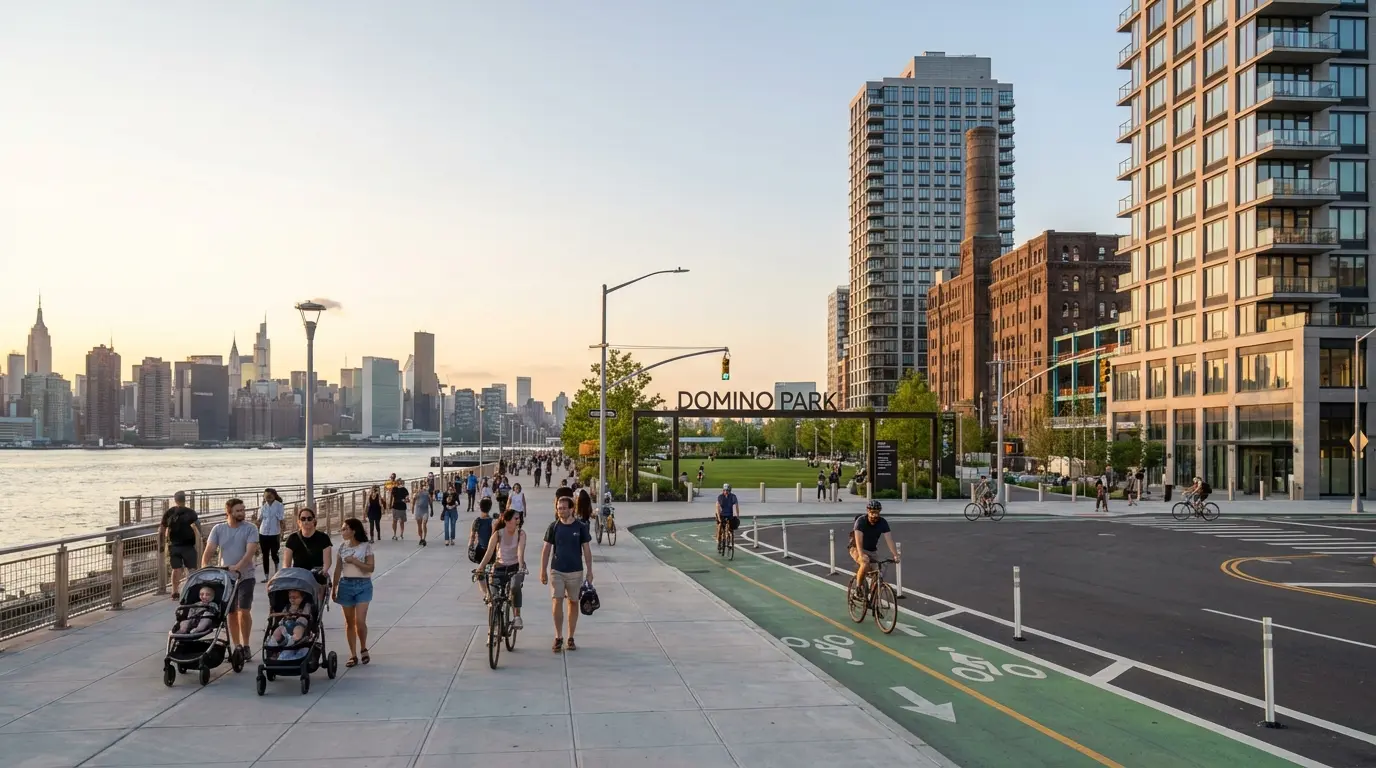
This Kent Avenue view confirms how close Domino Park sits to the street and how new towers line the river, casting long afternoon shadows back over the park. It also shows typical pedestrian density and lane layout, which affects how quickly a photographer can cross or reposition between shots.
Getting around: movement patterns that shape photo sessions
Most couples and photographers arrive via the L train at Bedford Avenue, then walk west toward the water or north/south along Bedford itself. N 7th Street is the main east–west funnel from the subway to the river; Grand Street and Metropolitan Avenue serve similar roles further south.
North–south, two main spines matter during a wedding session:
- Bedford Avenue: dense shops, narrower shooting windows between pedestrians.
- Kent Avenue: more open river views but heavier bike traffic and stronger winds.
To the north, McCarren Park marks a transition toward Greenpoint; paths here tend to “funnel” diagonally toward Manhattan Avenue, so pedestrians concentrate at those entries. To the south, Broadway and the J/M/Z elevated line define the edge with Bedford–Stuyvesant, adding train noise and hard shadows—useful for certain looks but less stable for long, posed sequences.
Walking patterns change through the day: morning brings directional commuter flows to the Bedford L and bridge; afternoons and golden-hour draw slower, more stationary groups toward Domino Park and the piers. In summer, that shift happens earlier and more abruptly, making clear, empty frames harder to find.
Waterfront and bridge zones where wedding photography naturally happens
For Wedding Photography in Williamsburg, three micro-areas see the most realistic use on a wedding day:
-
Domino Park and the waterfront lawns
Narrow lawns, stepped seating, and a linear boardwalk provide skyline views with limited foreground space. On weekends, a “park edge effect” develops at lawn boundaries where people pause, chat, and cluster, tightening the usable shooting strip along the railings. -
Piers and small lawns along the East River
South of Domino Park, smaller lawns and pier structures offer clearer backgrounds but even less depth. Here, a wedding photographer often has only a few meters between railing and path; any passerby stopping to look at the skyline can quickly enter the frame. -
Under and around the Williamsburg Bridge
South Williamsburg, near the bridge approaches, offers grittier industrial textures and more controlled street environments. Light under the bridge is compressed and directional, with quick transitions when clouds move or trains pass overhead—good for short, intentional setups rather than extended, leisurely sessions.
Seasonal shifts matter: in winter, low sun angles push shadows from waterfront towers farther inland, making late-afternoon waterfront portraits noticeably darker. In summer, lawns effectively “shrink” as picnic blankets occupy space hours before golden hour, reducing flexible movement for photographer and couple.
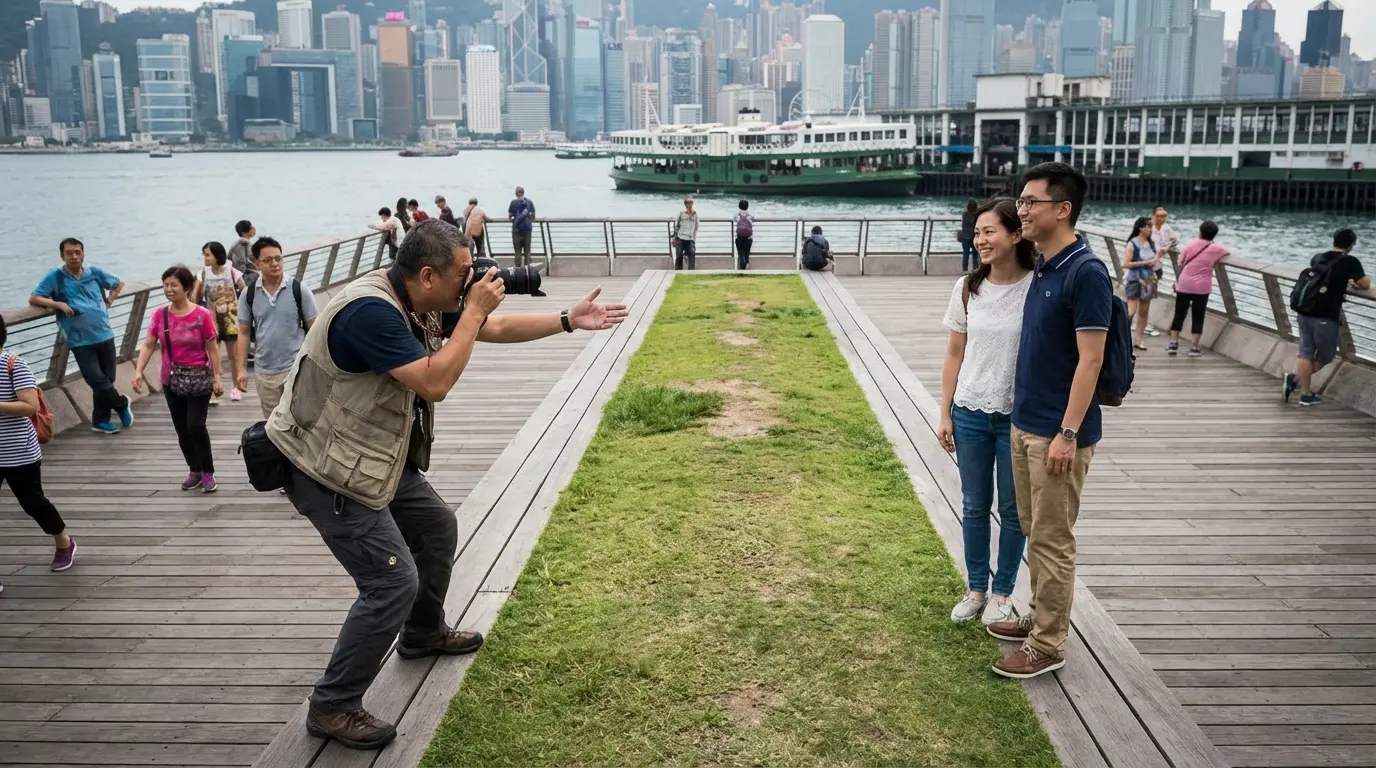
This pier-lawn image verifies how tight the usable space is between steps, path, and railing, and how close other park-goers typically are during usable light. It also shows the kind of skyline backdrop couples often expect from a Williamsburg waterfront session.
Choosing between busy corridors and quieter side streets
Not every couple wants the visual busyness of Bedford Avenue in their wedding photos. The retail corridor is lined with signage, café seating, delivery trucks, and constant crossing pedestrians; it offers an unmistakable sense of location but little privacy.
Just one or two blocks inland, cross-streets carry less foot traffic and feature low-rise housing or converted warehouses. These streets offer:
- Fewer interruptions during key moments like first looks.
- Cleaner backgrounds, with brick, painted walls, or scattered street art instead of storefront clutter.
- Short walking links back to Bedford or the water if the session needs to pivot.
Street art density tends to increase as you move east of Wythe and Kent, particularly near industrial strips and active construction. Murals and temporary pieces on plywood walls turn over quickly; a wall used in spring might be repainted or replaced by fall, so a photographer treating Williamsburg as static will quickly be out of date.
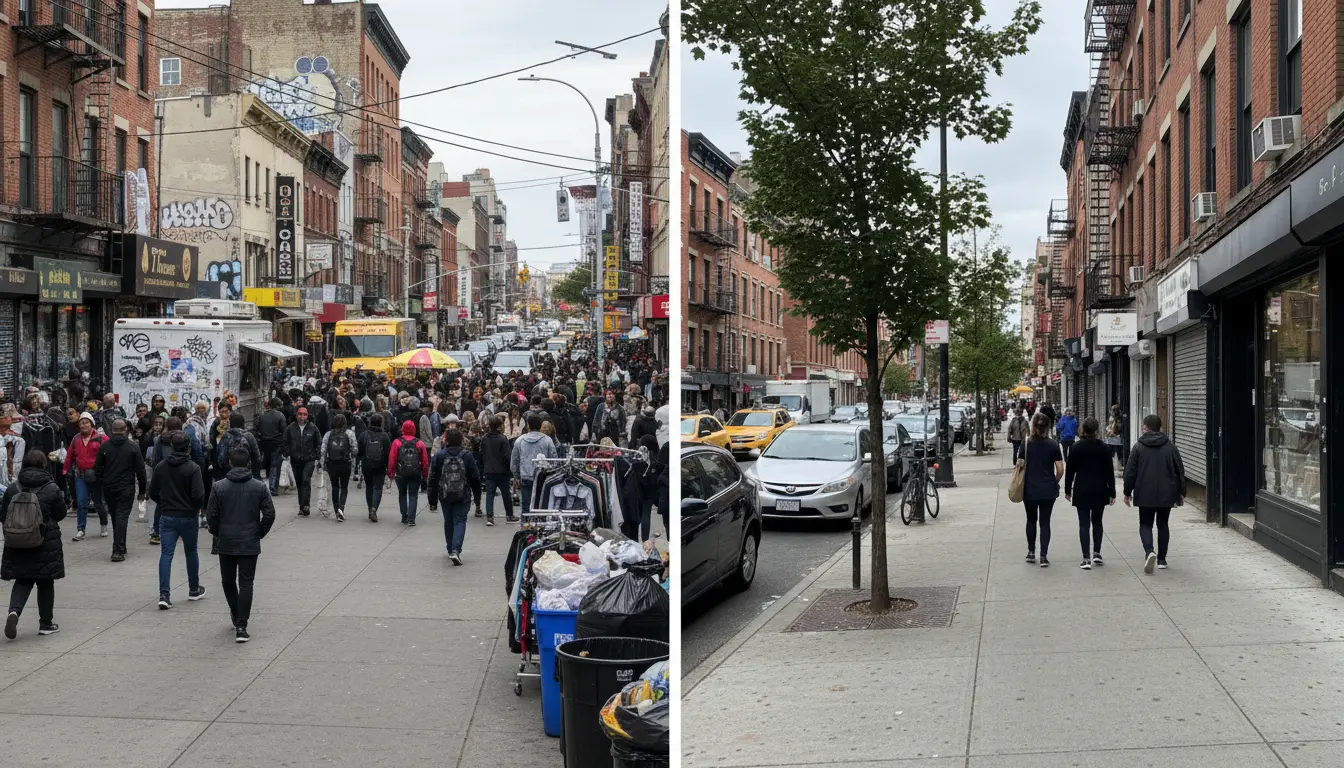
This Bedford Avenue view, contrasted with the quieter side street, confirms how crowd levels and signage clutter differ within just a half-block. It’s a realistic reference for deciding whether to prioritize energy and crowds or calmer, more contained backdrops.
How a wedding photo session actually moves through Williamsburg
On a typical wedding day, photographers rarely stay in one spot. Movement often follows a pattern like:
- Short first-look sequence on a side street near the hotel or venue.
- Quick walk to a waterfront lawn or pier for skyline frames.
- Brief stop under or near the bridge or an industrial facade for contrast.
- Return inland to avoid evening crowd compression at the park edges.
Under the Williamsburg Bridge and along nearby streets, setups must be compact and fast. Passing cars, changing light through the steel structure, and occasional strong gusts make it impractical to spread out gear. Crowds here move in bursts—groups emerging from trains or buses—so clear frames appear in short windows between pulses.
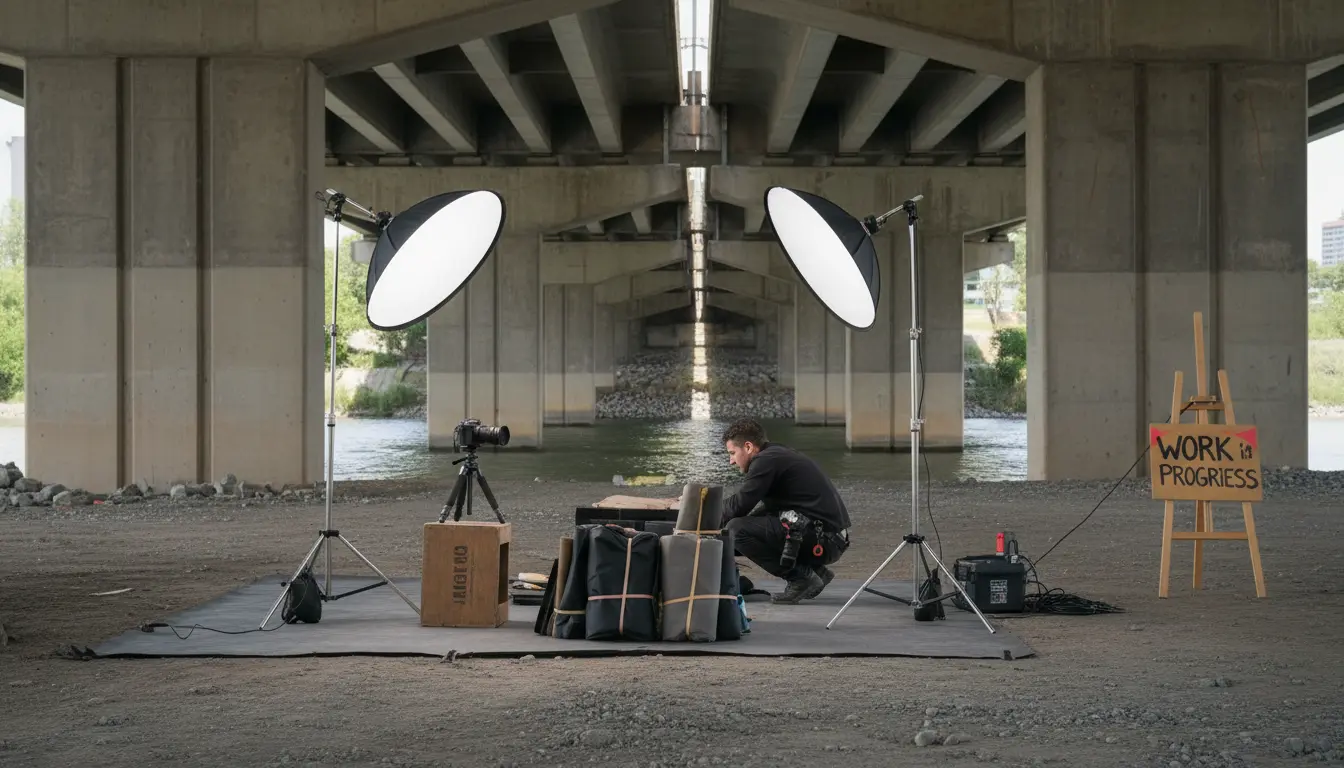
This under-bridge setup shows the real constraints: slim sidewalks, low overhead clearance, compact stands weighted down, and light that shifts abruptly. It verifies why bridge-adjacent shots are usually quick, intentional stops rather than long, staged sequences.
Wind, crowds, and permit awareness along the river
Domino Park and the Kent Avenue waterfront are fully exposed to the river. Even on otherwise calm days, wind accelerates through the open corridor between towers and over the water, turning light stands and veils into kites. Sandbags, anchored tripods, and a minimal lighting footprint are standard risk-reduction measures.
Crowd behavior along the park edge is predictable:
- Near fountains, playgrounds, and popular viewpoints, people stop and cluster, creating choke points.
- Lawn edges and railings become informal seating, tightening available room for photographer and couple.
- On warm weekends, golden-hour lawns fill early and stay busy until after sunset.
Commercial-looking shoots in public parks can draw attention from staff or security, especially when stands, modifiers, or delineators are visible. Local expectations and any permit requirements can be influenced by city policies and community feedback through bodies like Williamsburg Community Board 1. Photographers typically plan gear and time windows with that scrutiny in mind, but this is context only, not legal advice.
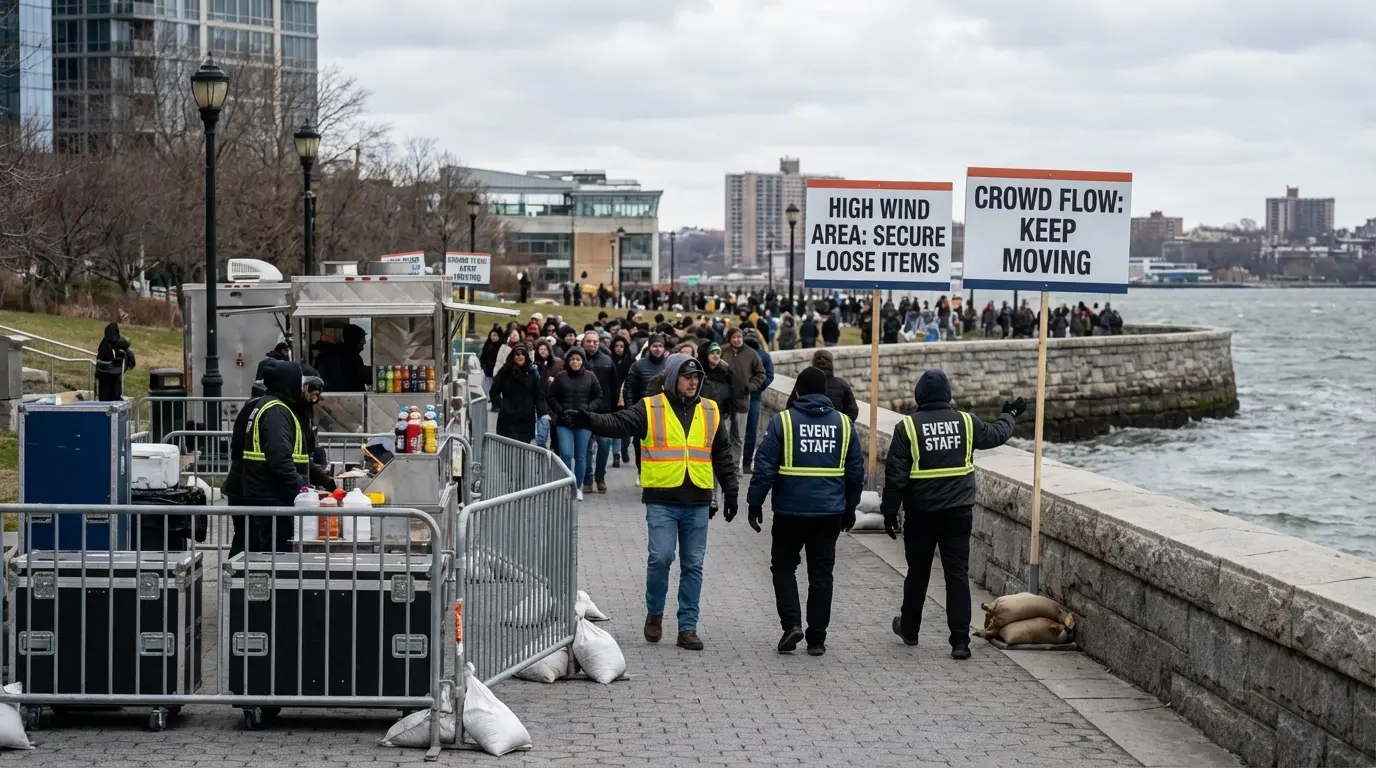
This Domino Park edge scene confirms how exposed the area is and why sandbags, ropes, and attentive crew are common. It also shows how close pedestrians pass to stands, which can factor into both safety and any park staff attention.
Inland alternatives: McCarren Park and the Greenpoint edge
When the waterfront feels overrun or too windy, many photographers shift toward McCarren Park and nearby residential blocks. The park’s northern edge, where paths lead toward Manhattan Avenue and the Greenpoint side, acts as a pedestrian funnel; traffic compresses at those entries, then disperses quickly once inside the park or onto side streets.
For couples, that means:
- Slightly more room to work with trees and open fields in the background.
- Faster transitions between “green” frames and brownstone-lined streets.
- Less direct skyline, but also fewer strangers lingering right behind the couple in every shot.
Seasonal change is obvious here: in early spring and late fall, bare trees allow more light and longer sightlines across the park; in summer, full foliage blocks low sun but provides softer, dappled light. After rain, path edges can stay muddy, limiting certain compositions near the lawn borders.
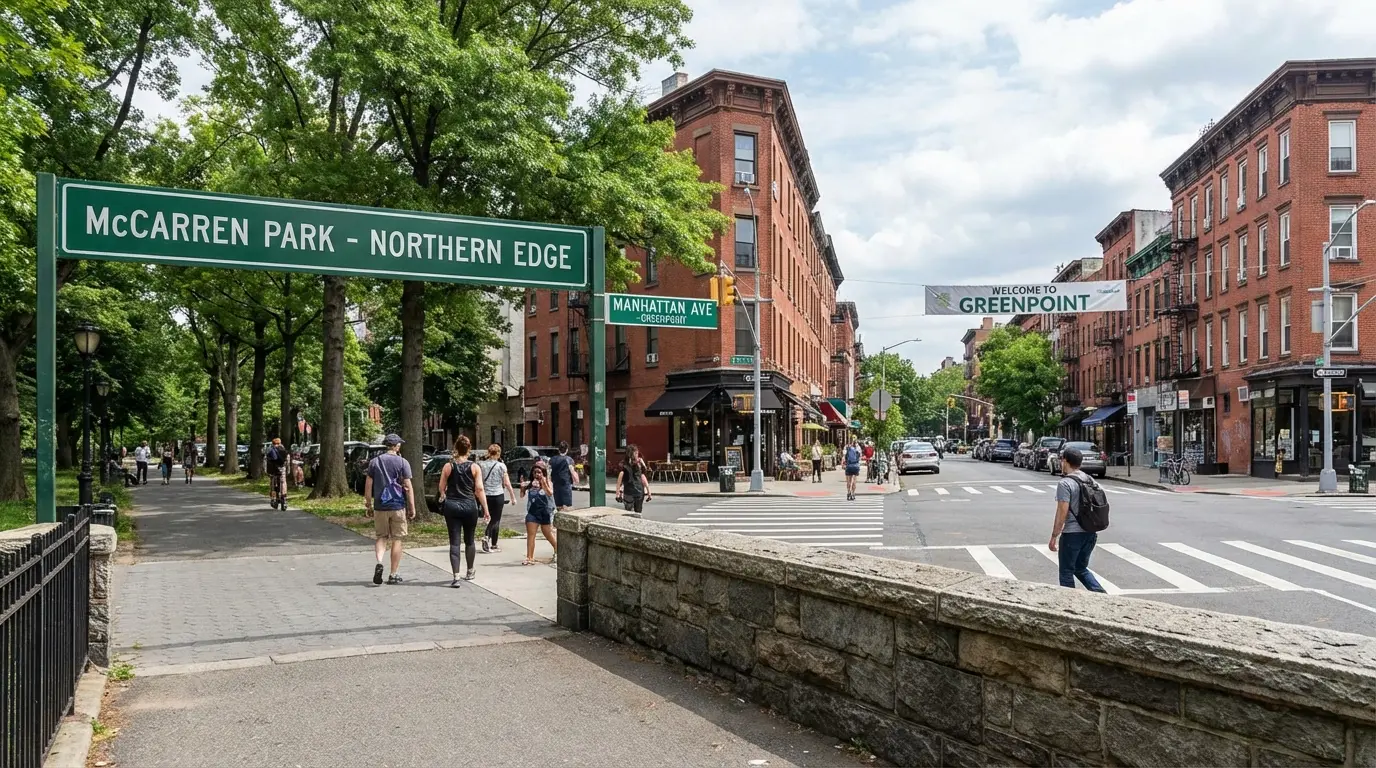
This image of McCarren’s edge verifies the entrance geometry, adjacent brownstones, and steady but manageable pedestrian flow. It illustrates how close the park is to residential backdrops that work well for quieter couple portraits.
Wedding Photography Services in Williamsburg
These related services often intersect locally—for example, school portraits for families who live near McCarren Park, or destination weddings that use Williamsburg hotels for getting-ready and portraits before heading to ceremony locations elsewhere.
Light and shadow patterns specific to Williamsburg
Williamsburg’s mix of low-rise blocks and new glass towers creates very particular light behavior:
-
Morning (east-facing)
Inland streets with east-facing facades receive clean, unobstructed morning light because building heights are modest. This produces gentle contrast for getting-ready portraits near windows or short street sequences before the day’s main events. -
Afternoon (waterfront and inland shadows)
As the sun moves west, waterfront towers along Kent Avenue block direct light to the river’s edge sooner than many couples expect. Lawns and piers can fall into shadow while inland side streets still receive usable light, encouraging a mid-session shift away from the river. -
Reflections and “bounce windows”
Glass residential towers occasionally kick reflected light back onto Kent Avenue or adjacent walkways for a few minutes at a time, creating brief, bright patches. A photographer familiar with the area can anticipate where these spots typically appear, but timing is still variable day to day. -
Under the bridge and along Broadway
The bridge and elevated tracks create hard-edged light stripes and deep shade. When trains pass, reflected and filtered light changes again, so poses that rely on consistent exposure are best kept short.
In winter, low sun extends the reach of tower shadows farther inland, making late-afternoon sets on narrow streets darker than in summer. In high summer, overhead sun can flatten mid-day scenes, so many photographers rely more on architectural shade from warehouses and lofts to shape light.
What a wedding photographer delivers in this neighborhood context
A Wedding photographer working in Williamsburg is effectively translating these micro-conditions—crowded lawns, narrow piers, moving shade—into a coherent gallery. Couples can expect sequences that move from skyline views to brick alleys to tree-lined park edges, often within a short walk.
Because many weddings base themselves in local hotels or loft venues, on-the-day review of a few key images on a laptop or camera screen is common. This allows couples to see how the waterfront light, bridge shadows, and street backgrounds actually rendered and, if time allows, adjust the remaining locations accordingly.
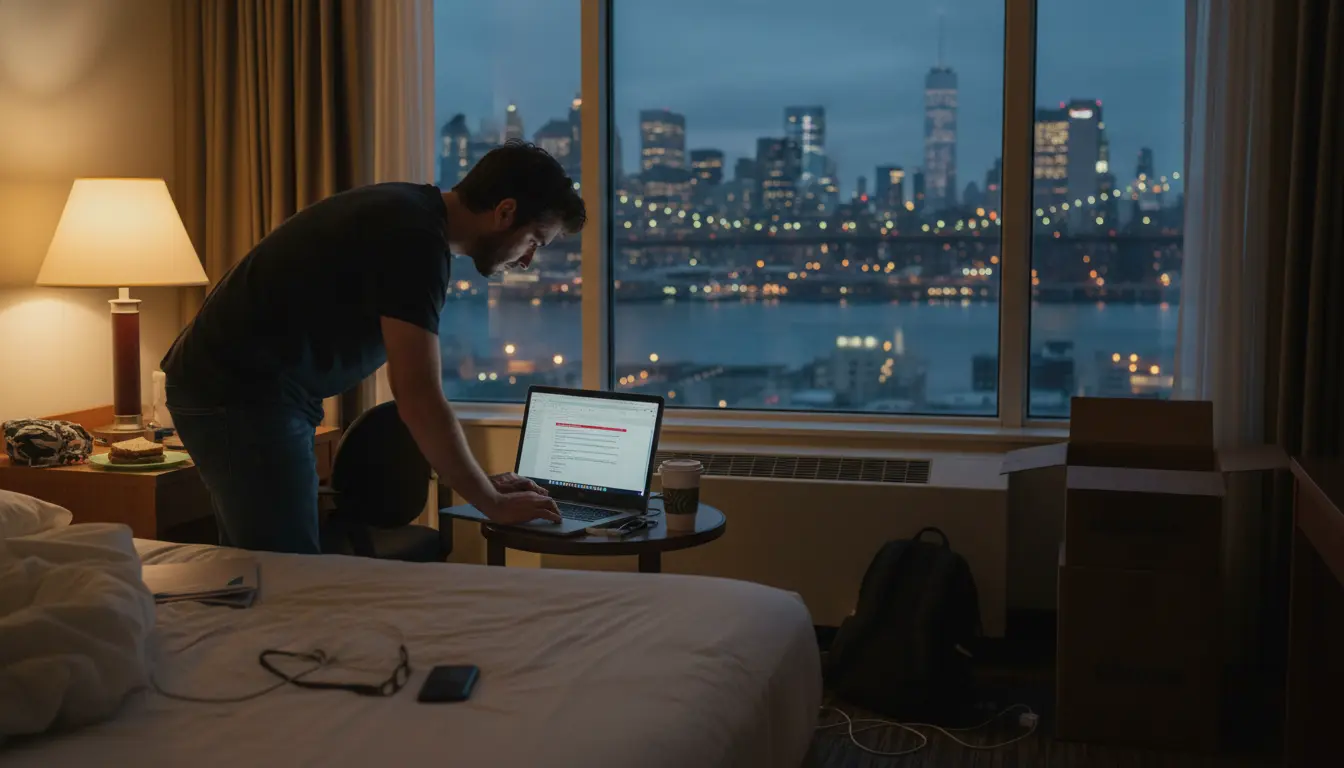
This hotel-room proof review confirms how close many accommodations sit to the river and how local light, tower shadows, and skyline features appear in real delivered images.
Seasonal and everyday unpredictability in Williamsburg
Even with planning, certain “chaos” factors are built into using Williamsburg as a backdrop:
-
seasonal_shift
Summer crowds and long evenings mean lawns and waterfront steps can be full hours before sunset, while winter’s early dusk brings deep, cold shadows but far fewer people. Autumn weekends often combine peak crowds with fast-changing clouds, making light less predictable minute to minute. -
walking_patterns
The flow toward the Bedford L station creates steady pedestrian streams on certain blocks, especially late afternoon as guests head to evening plans. Waterfront walkers, by contrast, move more slowly and are more likely to stop suddenly at rails and viewpoints. -
streetartdensity
Murals and wheat-paste walls east of Kent and near industrial strips change quickly with construction cycles. A wall that made sense for a spring engagement session may be gone by a fall wedding, so relying on a fixed list of “graffiti spots” can backfire. -
parkedgeeffect
At both Domino Park and McCarren, edges where paths meet lawns behave like informal waiting rooms: joggers stretching, families adjusting strollers, cyclists slowing. For photographers, this means extra bodies entering frames exactly where compositions need clean negative space.
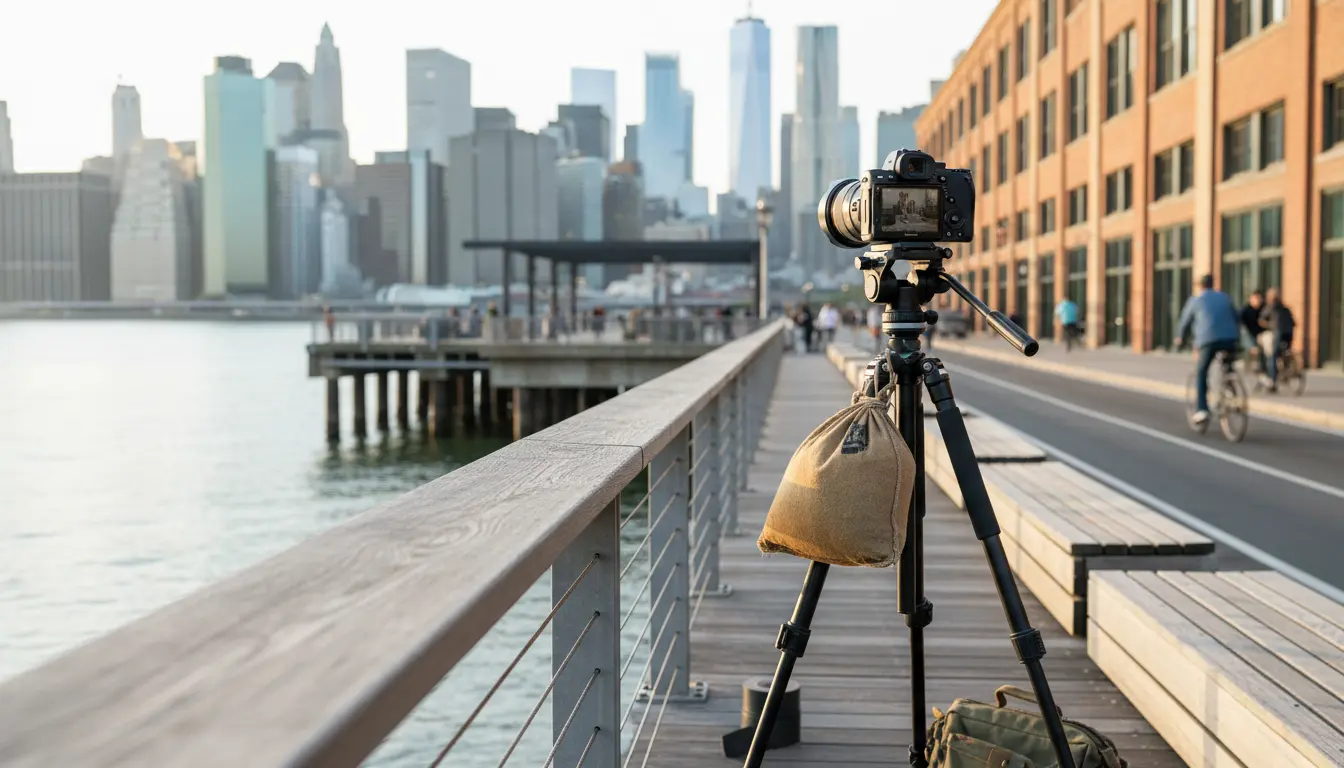
This boardwalk setup confirms the slim width of the path, the need for sandbagged tripods in the open wind, and typical background activity levels. It shows what an on-location wedding-photography configuration actually looks like on the Williamsburg waterfront.
Connections to nearby Brooklyn neighborhoods
Wedding days often cross soft neighborhood lines. A couple might get ready in a Williamsburg hotel, walk to the waterfront for portraits, then travel north toward Greenpoint for a reception, or east toward loft and studio spaces technically considered East Williamsburg or Bushwick. Broadway and the J/M/Z corridor mark a harder southern boundary, where elevated tracks and different building stock change the visual feel quickly.
Adjacent Neighborhoods we serve near Williamsburg
Common questions about wedding photography sessions in Williamsburg
How crowded does the Williamsburg waterfront get during golden hour?
On pleasant evenings, especially in spring and summer, Domino Park lawns and the main boardwalk can feel full by late afternoon. Crowds concentrate around playgrounds, fountains, and main viewpoints, while secondary paths and smaller lawns slightly south or north stay more manageable.
Is wind a serious issue for waterfront portraits?
Yes. The East River funnel and tower gaps along Kent Avenue can create strong, uneven gusts even when inland streets feel calm. Veils, light stands, and loose decor are affected first, so many photographers default to minimal gear or quickly pivot inland if conditions become unstable.
What are realistic alternatives if Domino Park is packed?
Inland options include McCarren Park, quieter riverside segments away from the main lawn, and nearby side streets with brick facades or street art. These locations trade direct skyline views for more space and fewer bystanders in the background.
Is morning or afternoon better for portraits in Williamsburg?
Morning provides softer, more predictable light on east-facing streets and fewer people in parks and on Bedford Avenue. Afternoons offer skyline color but are more impacted by tower shadows, heavier crowds, and the “park edge” compression that develops near lawns and railings.
What should couples expect near the Williamsburg Bridge?
Under and near the bridge, light changes quickly and noise from traffic and trains is constant. Sidewalks and crosswalks are narrow, so sessions there are usually short, with compact gear and simple posing that can pause briefly when traffic or pedestrians surge.
Can we plan on rooftop or loft shots in Williamsburg?
Most rooftops and loft interiors are privately controlled by building owners or tenants, and access varies widely by property and event contract. It’s not safe to assume rooftop access without explicit confirmation from the venue; many photographers treat such spaces as optional bonuses rather than guaranteed locations.
How do seasonal changes affect timing for outdoor images?
In winter, the sun sits lower and tower shadows stretch across the waterfront earlier, so late-afternoon sets can look significantly darker and cooler. In summer, the opposite is true: light stays high and bright longer, but crowds build earlier and occupy lawns and steps well before traditional “golden hour.”