
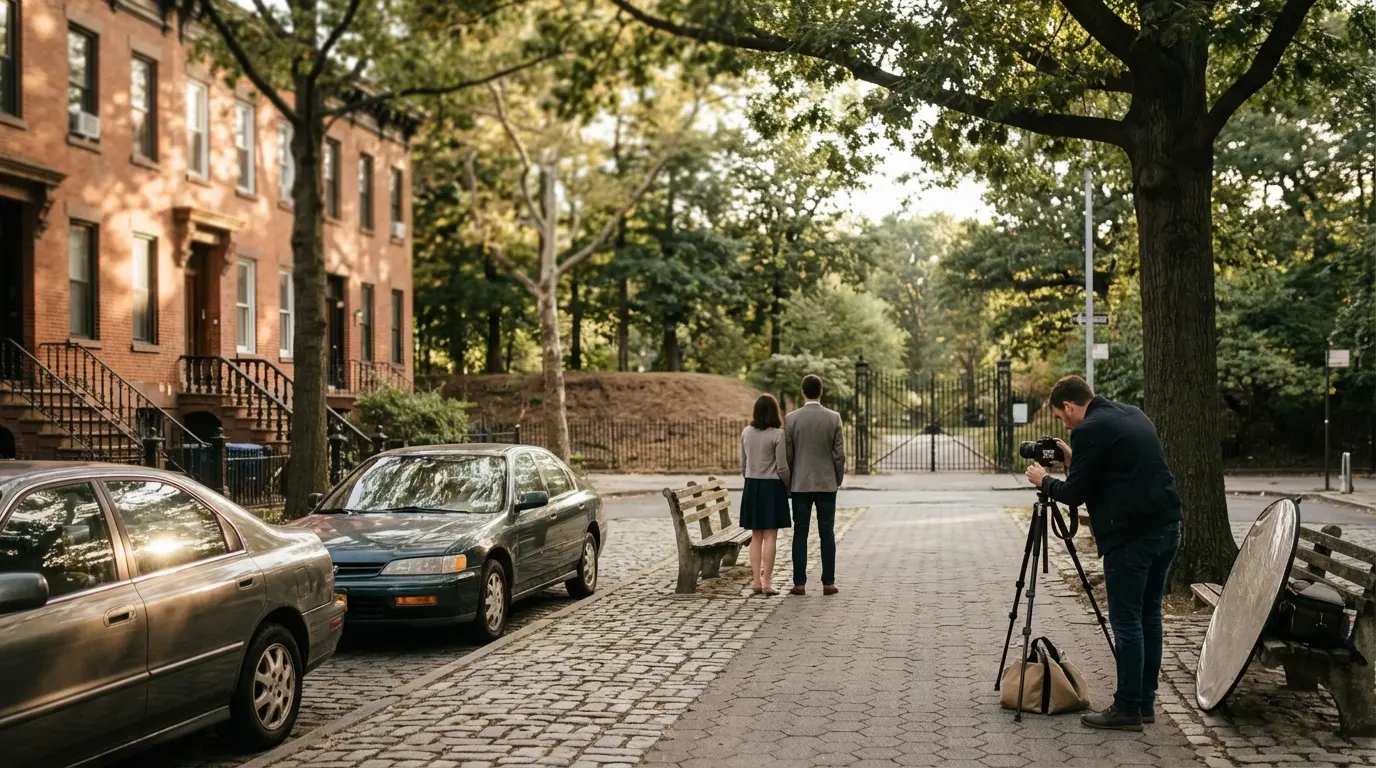
Windsor Terrace in Brooklyn as a setting for wedding photography sessions
Understanding Windsor Terrace’s position along Prospect Park
Windsor Terrace sits on the western edge of Prospect Park, with most session activity stretching along Prospect Park Southwest and the short residential blocks that feed into it. Park Slope is immediately to the north across the Prospect Park West ridge, Kensington continues the residential grid to the south beyond Church Avenue, and the South Slope edge around Prospect Park Southwest is often where people are unsure which neighborhood they’re technically in.
Within Brooklyn, this pocket is compact and easy to grasp: park edge to the east, the quieter Greenwood Cemetery boundary to the west, and a small internal grid of narrow, often one-way streets like Terrace Place and Windsor Place. The general footprint described for Windsor Terrace, Brooklyn lines up with how couples and families actually use the area for photographs: entering at park gates, then stepping back onto side streets when they want more privacy.
Because the neighborhood is small, people regularly chain errands into sessions here—dropping off a dog walk, meeting at a playground entrance, or catching a coffee before walking to the next location. That same compactness means any change in light or weather on the park edge is felt immediately across the whole area.
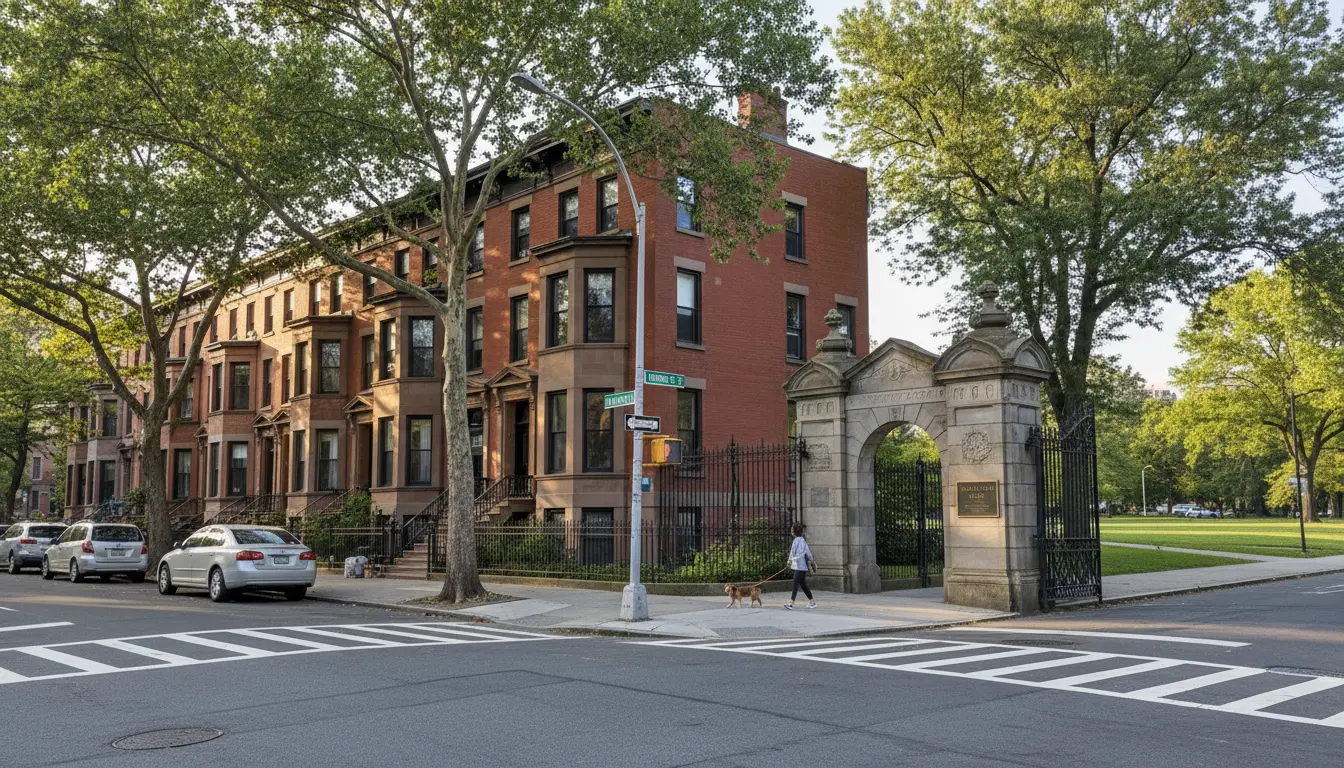
Verifies the park-edge location used for sessions: narrow tree-lined street, visible Prospect Park Southwest entrance and nearby rowhouses; morning glare on parked cars is common at this intersection.
This view toward the Prospect Park Southwest entrance from Terrace Place confirms the low-rise rowhouse scale, tight sidewalks, and side-light that shape real wedding photo sessions here.
How sessions use the park edge and nearby streets
Most wedding-related sessions in Windsor Terrace happen in three kinds of spots:
- At or just inside the Prospect Park Southwest entrances (especially near Vanderbilt Playground and the bike loop).
- On the Southwest Park Edge Zone—berms, benches, and fenced edges looking back toward the trees.
- On residential blocks like Terrace Place, where stoops and shallow front setbacks provide a different texture.
Couples booking Wedding Photography in this area are usually looking for park greenery without being pulled into the busier sections of central Prospect Park. Short walks between gates, benches, and side streets make it easy to alternate between open, leafy backdrops and more intimate rowhouse scenes without a long transit gap.
Families often treat sessions here as part of a longer weekend errand chain: stroller on the sidewalk, a quick set of photos by the fence or on a stoop (with permission), then moving on to the playground or back home. That creates predictable peaks of stroller traffic and kids around 9–11am near playground entrances, which photographers have to work around in both framing and timing.
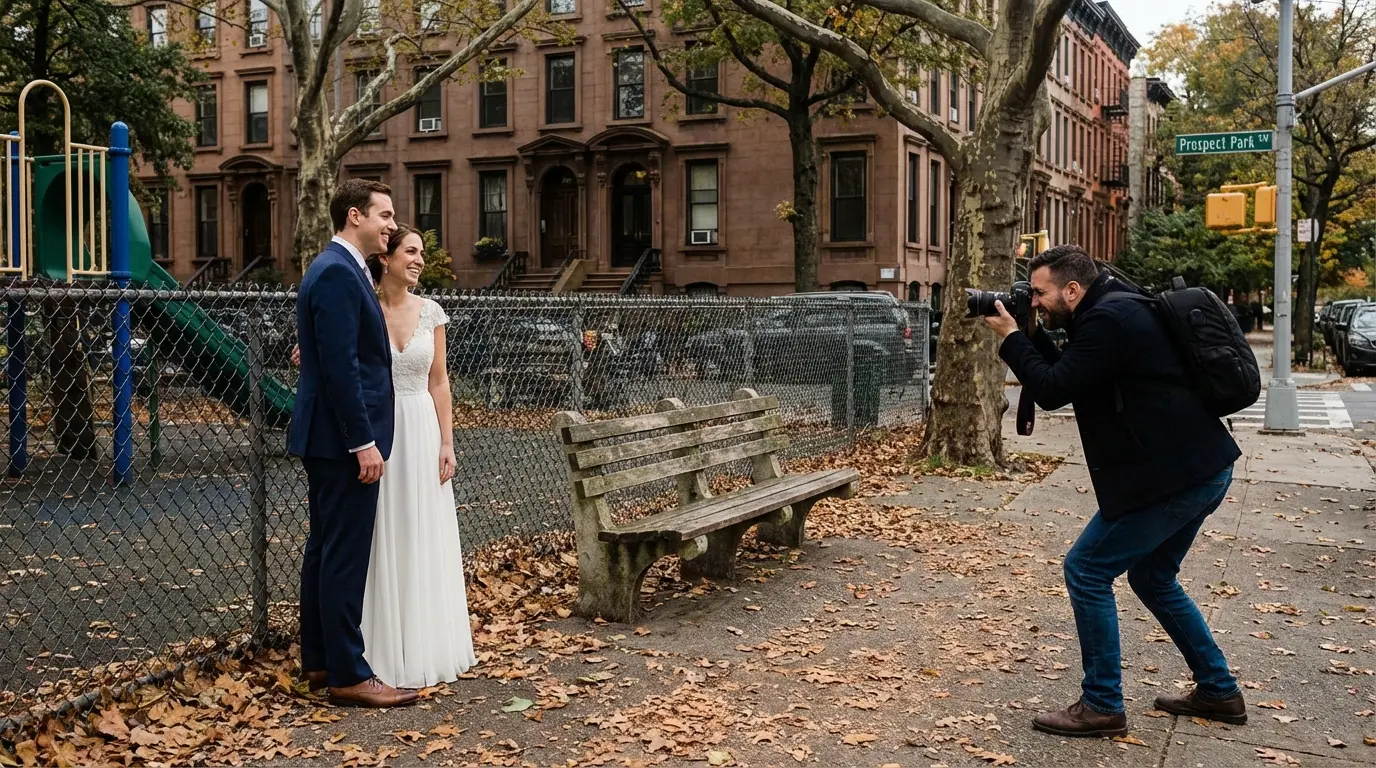
Shows a realistic small-session location at the park edge: bench, fenced playground boundary and berms are common elements; indicates typical background and crowd proximity.
This confirms how close benches, playground fencing, and casual pedestrian flow are to each other along the Prospect Park Southwest edge where many couples actually stand.
Choosing between Prospect Park Southwest and quieter residential blocks
Within a few minutes’ walk, Windsor Terrace offers two contrasting micro-areas:
- Southwest Park Edge Zone – Grassy berms, fences, and benches facing inward toward the park. Backgrounds here include tree canopy, the bike loop, and passing joggers or dog walkers. It rarely feels empty; there is a steady trickle of people, which adds some movement to frames but can limit ultra-wide shots.
- Terrace Place and Greenwood border blocks – Narrow residential streets with two- to three-story rowhouses, shallow stoops, and small or non-existent front yards. The Greenwood side is especially still, with fewer pedestrians and very predictable car patterns.
The image below highlights how this choice plays out in daily use. Morning errand chains—dog walk → playground → corner café—stack up along the park edge, increasing background activity in early hours. By contrast, the side streets are mainly residents entering or leaving buildings and occasional delivery vehicles.
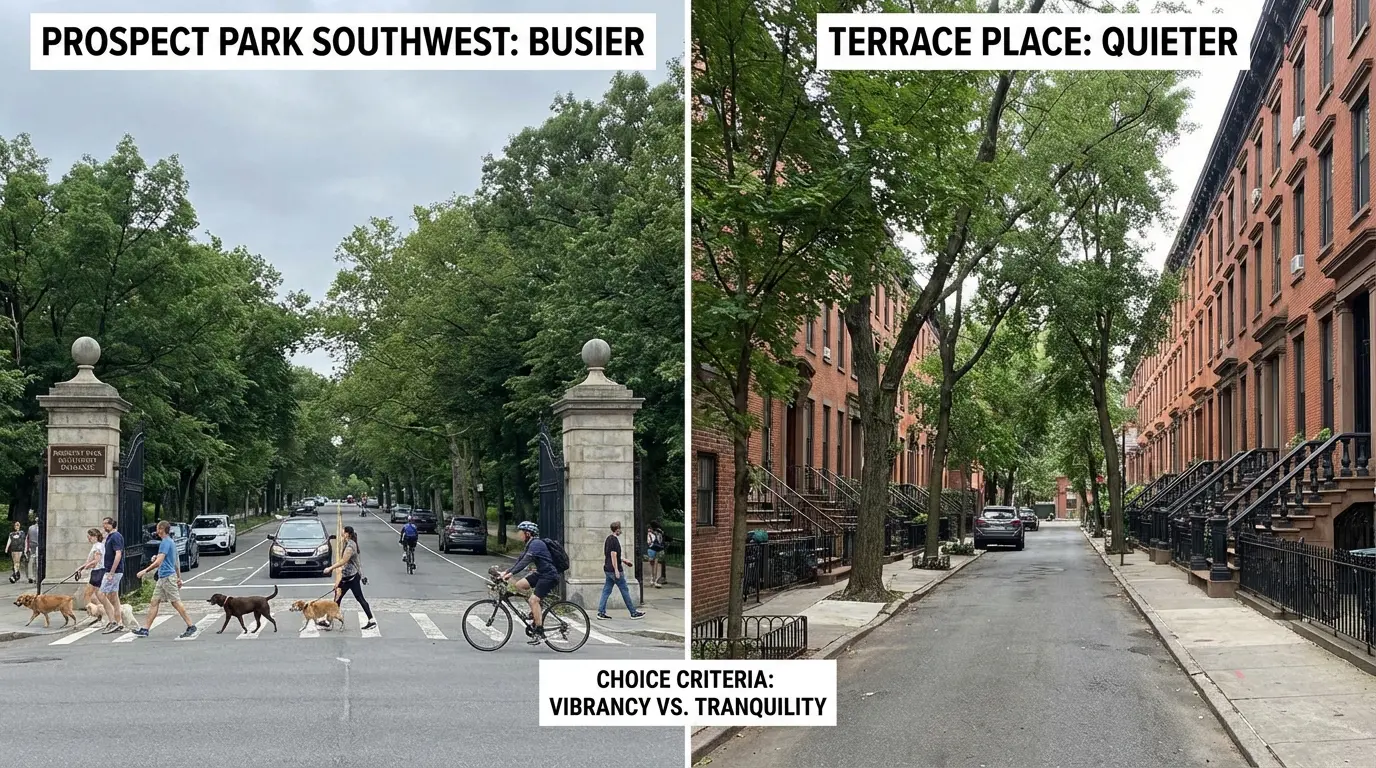
Enables comparison between higher-traffic park-edge areas and quieter residential blocks: crowd levels, sidewalk width, and stoop/front-yard patterns are visible for deciding locations.
You can see how front yards quickly give way to immediate stoops and parked cars, which affects both framing choices and how much space there is for equipment or group arranging.
Getting in and moving around: subways, cars, and walking routes
Most people arrive for sessions via the F/G train at 15 St–Prospect Park. From the subway stairs, it’s a short, slightly uphill walk to the Prospect Park Southwest gates, with narrow sidewalks that require anyone carrying gear to keep things compact. The internal grid is made up of short blocks, some one-way, which slows car traffic but can also make ride-share drop-offs feel a bit improvised at corners.
For drivers, curbside spots along Prospect Park Southwest turn over regularly but rarely sit open for long; it’s usually feasible to pause for a minute or two to unload, but lingering is hard. On residential blocks between the park and Greenwood Cemetery, parking is more stable, but the streets are tight and double-parking quickly clutters the frame if a car happens to stop behind you during a shot.
Sirens are part of the soundscape but not dominant. Ambulances occasionally run along Prospect Park Southwest toward Methodist Hospital, bringing brief bursts of noise during an otherwise calm session. Photographers who record video alongside stills often pause briefly when a siren passes, then resume once the sound drops.
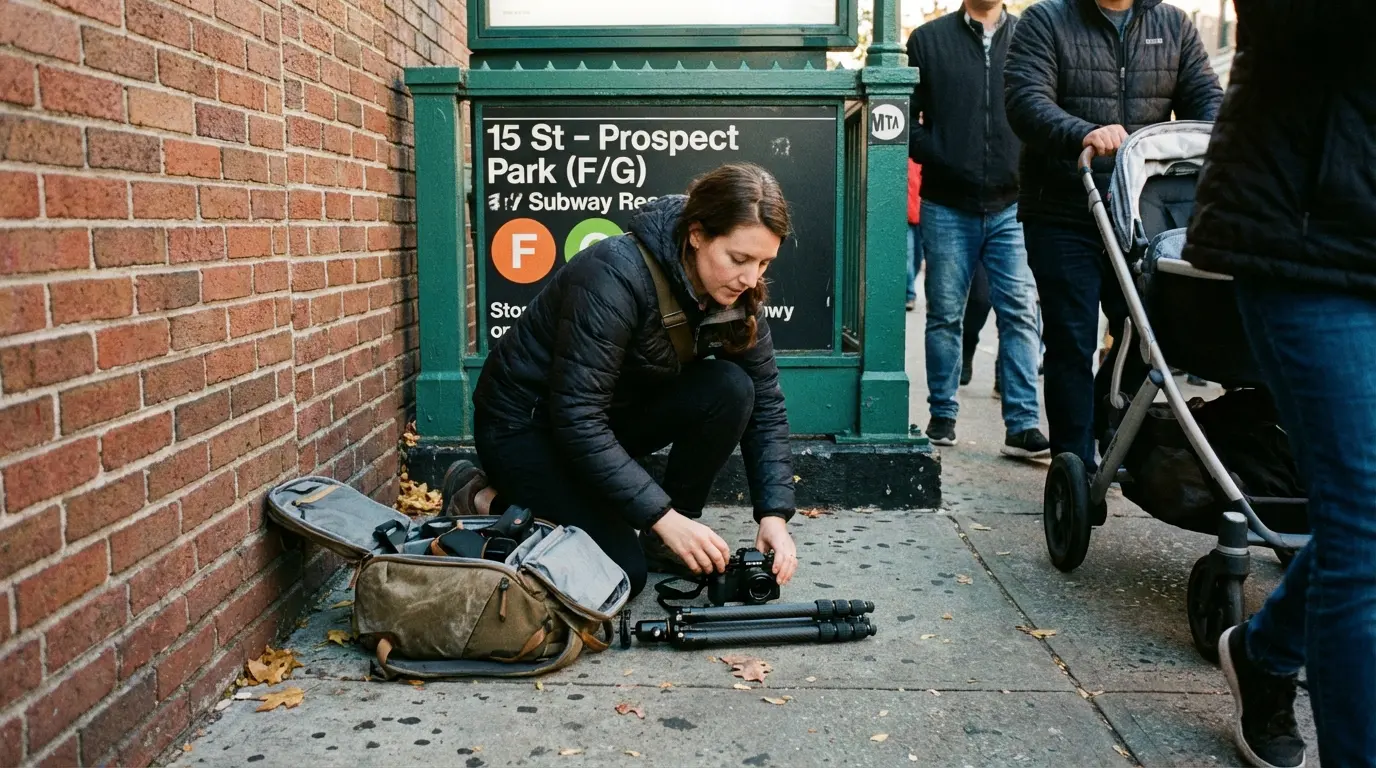
Shows typical setup constraints near the main subway access: narrow sidewalks and passing pedestrians require compact kits and quick setup routines.
The proximity of stoops, stairwells, and pedestrians illustrates why large light stands and oversized cases are rarely practical around the 15 St–Prospect Park entrance.
How we serve Windsor Terrace through Wedding photographer
Managing light, wind, and other on-the-day variables
Light in Windsor Terrace is strongly shaped by the open park horizon to the east and the low-rise rowhouses to the west:
- Morning: Sun comes in cleanly from over the park, hitting Prospect Park Southwest and nearby cross streets (especially Windsor Place) with strong, low-angle light. This creates intense glare zones on parked cars and windows, which can bounce into lenses during early sessions.
- Afternoon: As the sun shifts west, the residential tree canopy breaks light into patches; subjects may move from full shade to bright dapples in a single step, especially on Terrace Place and side streets near the park.
- Park-edge timing: Because there are no tall buildings immediately east, the park-edge zones become usable a bit earlier and stay brighter later than the streets just behind them.
Wind tends to funnel slightly along the park border, especially at exposed corners of Prospect Park Southwest. Small reflectors and weighted tripods handle this better than tall, softbox-style modifiers, which can be risky on narrow walkways with regular jogger and stroller traffic.
Permits and permissions are another layer of feasibility:
- Open lawns deeper in Prospect Park may require permits for formal sessions or larger equipment, even if the park-edge berms and benches do not.
- Playgrounds are automatic no-go zones for posed work that involves non-family groups or significant gear.
- Residential stoops are private property; even in areas where most houses have no front yard and the steps meet the sidewalk, tripod placement can draw quick reactions from residents.
For any questions about how local rules are evolving or how public space is managed, photographers often track updates that flow through Brooklyn Community Board 7, which covers Windsor Terrace and its park interfaces.
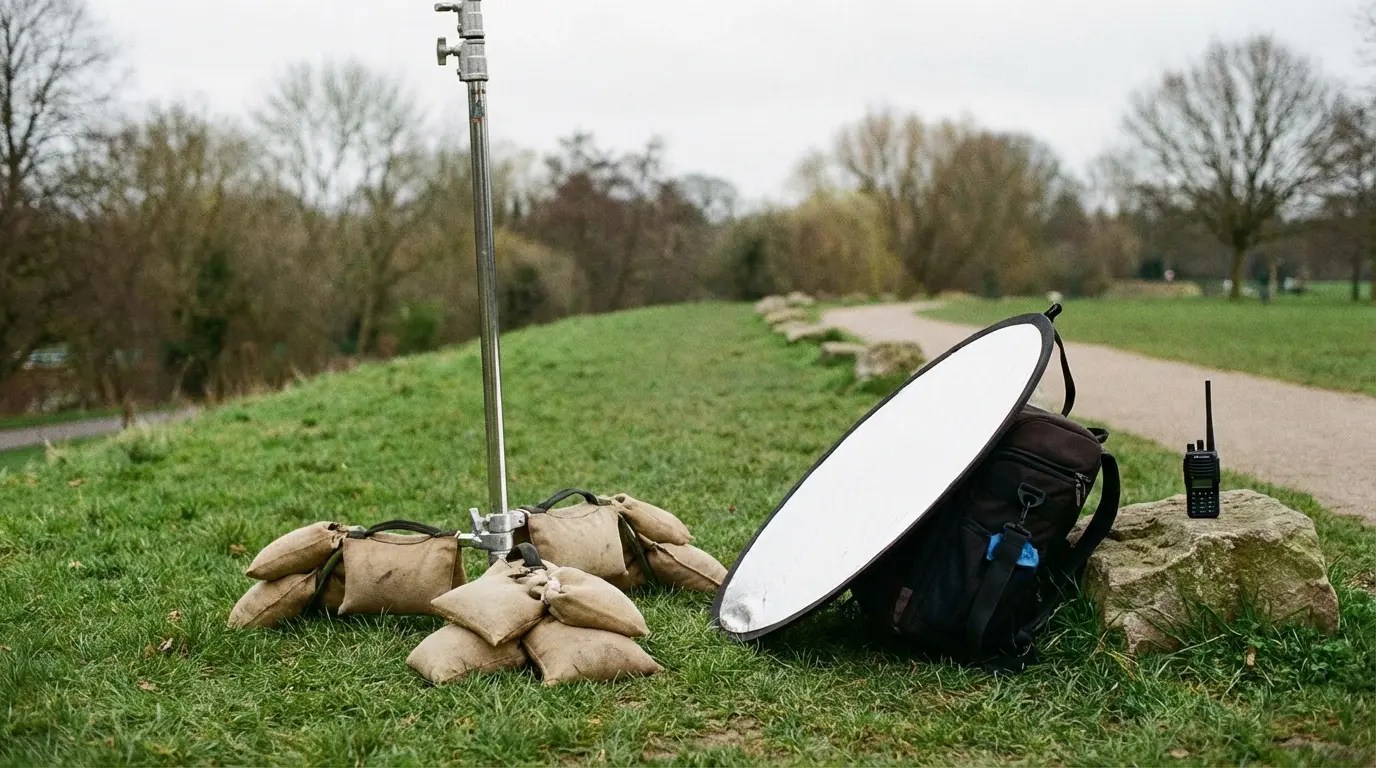
Demonstrates typical equipment choices used to reduce risk from wind, shifting light and restricted staging areas along the park border; shows scale of allowable gear near the berm.
The compact kit on the berm, with sandbag weights and a folded reflector, reflects the scale of gear that fits safely between the fence line and the walkway without obstructing people using the park.
Local visual anchors that signal you’re in Windsor Terrace
Certain physical cues make it clear that photos were taken in Windsor Terrace rather than in neighboring Park Slope or Kensington:
- Two- and three-story brick or brownstone rowhouses, generally consistent in height, without the mid-rise interruptions seen closer to 7th Avenue.
- Narrow sidewalks with tree pits that squeeze walking space and require people in formal wear to move single file in some spots.
- A mix of shallow front yards (a few steps of grass or plantings) and buildings where the stoop drops almost directly into the sidewalk—this “frontyardsvs_none” pattern shifts block by block.
- The Prospect Park ridge line and tree canopy sitting just beyond dead-end views down streets like Terrace Place.
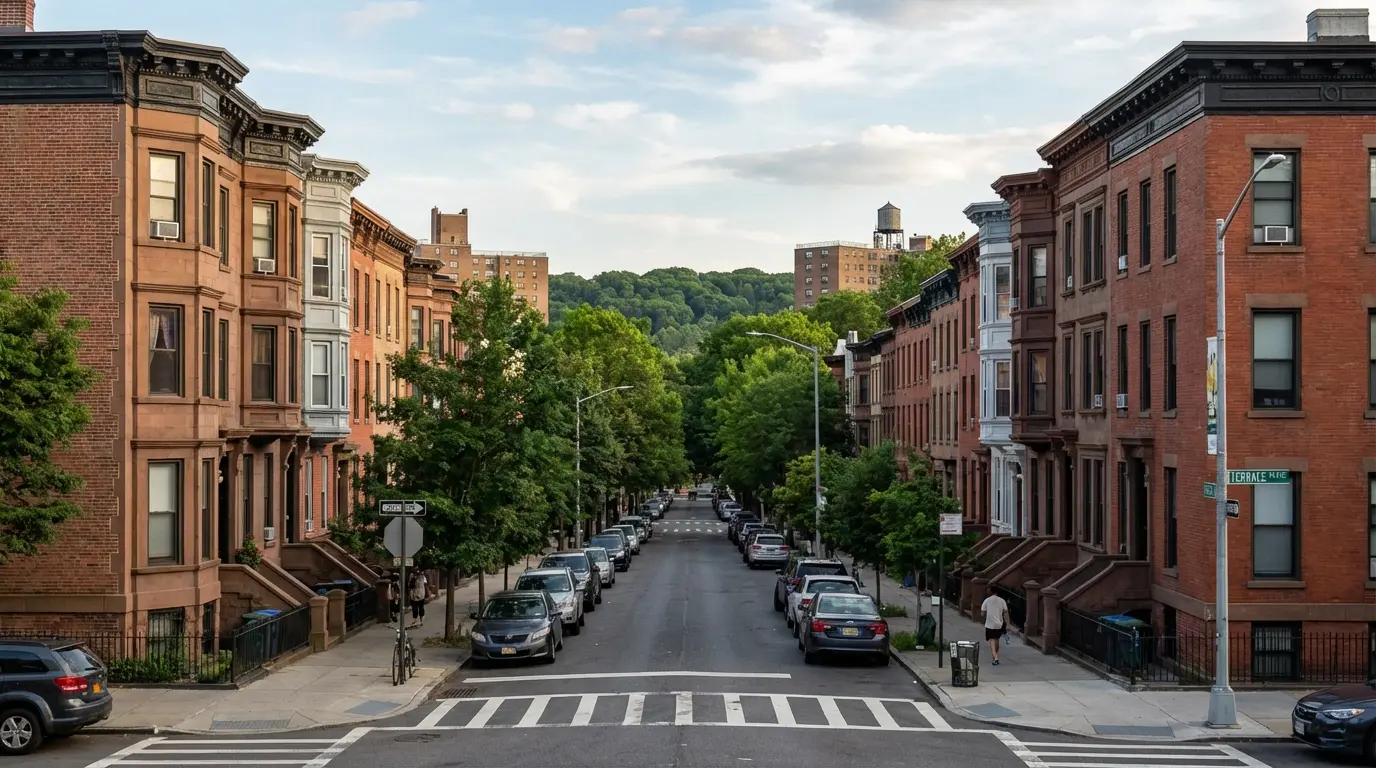
Confirms Windsor Terrace visual anchors: rowhouse scale, patterned tree canopy and the nearby Prospect Park ridge that collectively distinguish this neighborhood.
This block view shows how the park ridge closes the perspective at the end of the street, while tree shade patterns and consistent rooflines define the visual identity of Windsor Terrace sessions.
Noise, errands, and other background patterns to expect
While Windsor Terrace is often described as calm, there are specific “chaos” patterns that shape real sessions:
- Sirens frequency: Ambulances and the occasional fire truck use Prospect Park Southwest as a through-route. It’s not constant, but in a 60–90 minute shoot it’s common to have one or two loud passes that briefly compete with vows, readings, or video audio.
- Errand chains: Morning and late afternoon, many people bundle tasks—dog walk → playground → café or grocery pick-up. This means that park-edge corners near playgrounds have sudden bursts of strollers, scooters, and leashes that can enter or exit the frame quickly.
- Morning glare zones: The Windsor Place and Prospect Park Southwest intersection is notorious for reflective glare off windshields and windows when the sun is low. Photographers often shift a few feet into tree shade or rotate couples slightly to keep eyes from squinting and to avoid flaring across the lens.
- Front yards vs. none: Some blocks offer a slim buffer between stoop and sidewalk; others place front doors almost on top of public space. That affects how comfortable residents are with activity near their steps and how much space there is for group posing. It also means that a planned stoop shot sometimes needs to move half a block if a neighbor is actively using their front area.
Understanding these small but predictable rhythms helps align expectations: sessions here are rarely chaotic, but they are never completely static.
What finished images from Windsor Terrace typically look like
Because of the neighborhood’s structure, delivered galleries from Windsor Terrace share a few visual traits:
- Tree-dappled light, especially in late afternoon, where faces are evenly lit but backgrounds show patterned highlights on leaves and sidewalks.
- Park-edge elements—fences, benches, path curves, and the hint of the bike loop—in the periphery of the frame, even when the couple is the clear focus.
- Occasional background figures (joggers, dog walkers, parents with strollers) at a soft distance, especially in shots taken near Vanderbilt Playground and the main Prospect Park Southwest entrances.
- Tighter compositions on residential blocks due to parked cars and narrow sidewalks; wide environmental portraits are usually reserved for berms or street ends where the park ridge is visible.
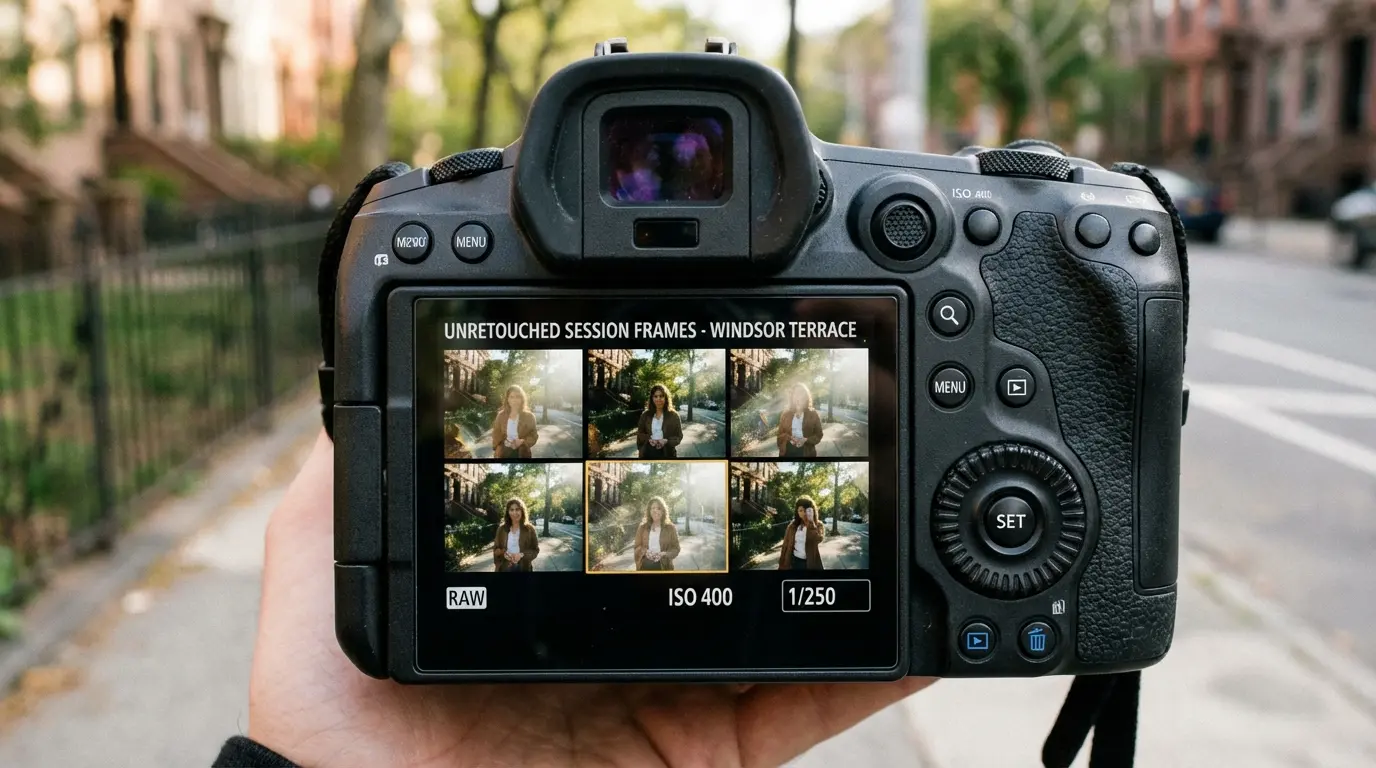
Shows realistic, unedited session frames buyers can expect from Windsor Terrace locations: tree-dappled light, park-edge backgrounds and framing impacted by nearby fences and sidewalks.
These unedited frames illustrate how benches, fences, and narrow paths appear at the edges of images, and how the canopy-filtered light defines the color and contrast of Windsor Terrace work.
Adjacent Neighborhoods we serve near Windsor Terrace
Windsor Terrace wedding photography FAQ
Where do people typically meet in Windsor Terrace for a session start?
Most couples meet either at the 15 St–Prospect Park subway entrance or at a named gate along Prospect Park Southwest near Vanderbilt Playground. Both options keep walking distances short while allowing a quick move either into the park or onto nearby residential blocks.
Is the park edge crowded at certain times of day?
Between roughly 8–10am, the park edge near playgrounds and the bike loop sees concentrated family and dog-walker traffic. Midday is steadier but less dense, and late afternoon tends to be calmer, with more joggers than strollers. Full emptiness is rare; there is almost always some background activity.
Do we need permits for photos on the lawns or deeper inside Prospect Park?
Simple, low-impact sessions on paths and at the edge benches typically proceed without permits, but larger groups, light stands, or use of interior lawns can trigger permit requirements. Photographers planning elaborate setups often check city and park guidance ahead of time rather than deciding on the spot.
How reliable is parking near Windsor Terrace session locations?
Street parking on Prospect Park Southwest turns over regularly but is rarely abundant. It’s usually possible to find a space within a few blocks, but exact spots close to a gate are not guaranteed. Residential streets toward Greenwood Cemetery can be easier, though their narrow width makes loading and unloading more sensitive to double-parking.
What are the best arrival routes if we’re coming from nearby neighborhoods?
From Park Slope, couples often walk or drive down along Prospect Park West and cut across to Prospect Park Southwest. From Kensington, Church Avenue is the main spine before turning up toward the park. These routes feed naturally into the same gates and cross streets used for sessions.
Can lighting or tripods be set up on stoops in Windsor Terrace?
Stoops are private property, even when they appear to blend into the sidewalk. Any tripod, light stand, or extended setup on a stoop should only happen with explicit permission from the resident or building owner. On the public sidewalk itself, compact gear that doesn’t block foot traffic is generally more acceptable than large rigs.
Is early morning light too strong for photos here?
On streets running toward the park, very early morning sun can be intense and directional, especially near Windsor Place and Prospect Park Southwest, creating glare from parked cars and windows. Stepping a few feet into tree shade or turning subjects so the sun falls from the side rather than straight on usually balances the exposure while keeping the park edge recognizable in the background.